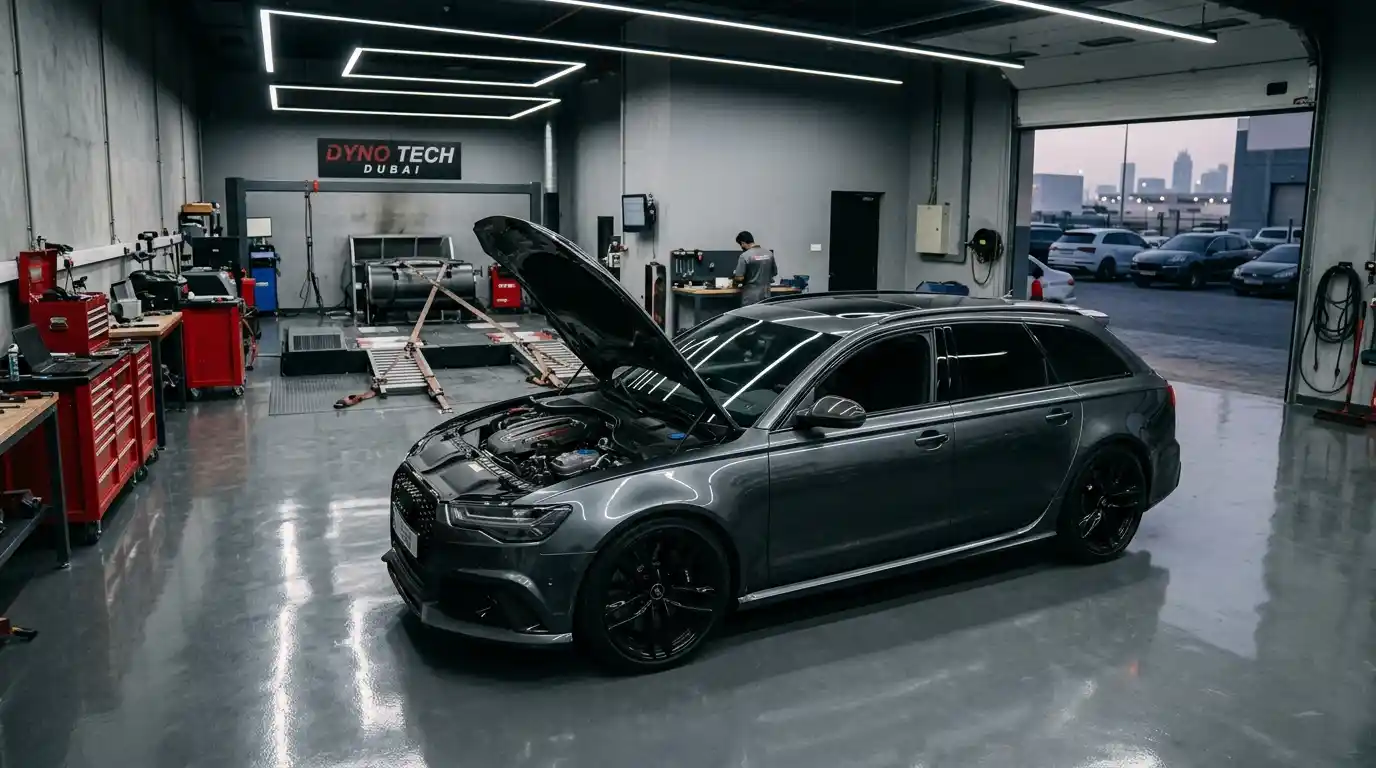
Audi S and RS Performance Repair Hub
Choose the exact S, RS or SQ model first, then choose the decision: routine maintenance, a warning or performance fault, heat-related behavior, a used-car inspection or a modified-vehicle baseline. Performance badges do not make engines, transmissions, chassis systems or service procedures interchangeable.
Open the correct model repair guide
The model page is the starting route, not a substitute for VIN verification. Generations within the same badge can use different engines, gearboxes, driven-axle hardware, suspension, brakes and electrical architectures.
Choose the evidence path from the symptom
Warning or reduced power
Save the first warning sequence, complete scan, voltage baseline and operating condition. Test the affected system before clearing faults.
Noise or vibration
Separate engine speed, road speed, load, braking, steering and temperature. Locate the first vibration path before choosing parts.
Shift or launch complaint
Identify the gearbox, compare ordinary low-speed behavior with hot and loaded operation, and inspect connected mounts, tires and driveline.
Ride, steering or brake change
Record fitted suspension and brake hardware, wheel and tire data, geometry, sensors, voltage and recent impact or access work.
Make a safety decision before a performance test
Stop and recover the vehicle for a red lubrication or coolant warning, visible smoke, fuel smell, rapid fluid loss, severe misfire, heavy internal knock, unsafe steering or braking, serious tire damage, a collapsed suspension corner or transmission behavior that makes control unpredictable.
Ask before driving if reduced power appears with a drivetrain, chassis, temperature or higher-voltage message. If a short trip is approved, use low load, avoid boost and hard braking, monitor the cluster and stop if anything worsens.
A public road is not the place to reproduce circuit loads or prove launch performance. Use the smallest safe condition that creates diagnostic evidence. A written description cannot declare an unseen performance car safe.
Identify the performance hardware by generation
| Identity layer | Questions to answer | Why it matters |
|---|---|---|
| Powertrain | Engine code, aspiration, cylinder arrangement, gearbox and driven axles. | Changes oil procedure, cooling, fault strategy, fluids and access. |
| Chassis | Air suspension, DRC, adaptive dampers, steering, sport differential and rear-drive hardware. | Changes lifting, testing, calibration and component scope. |
| Brakes and tires | Steel or ceramic equipment, wheel size, tire specification and previous heat use. | Changes inspection methods, measurements, parts and completion checks. |
| Electrical | 12-volt, 48-volt or high-voltage systems, assistance sensors and software state. | Changes safety controls, scan interpretation and commissioning. |
| Modifications | Software, intake, exhaust, cooling, fueling, suspension, wheels and brakes. | Changes the reference baseline, compatibility, legal and warranty questions. |
Diagnose performance loss without repeated hard pulls
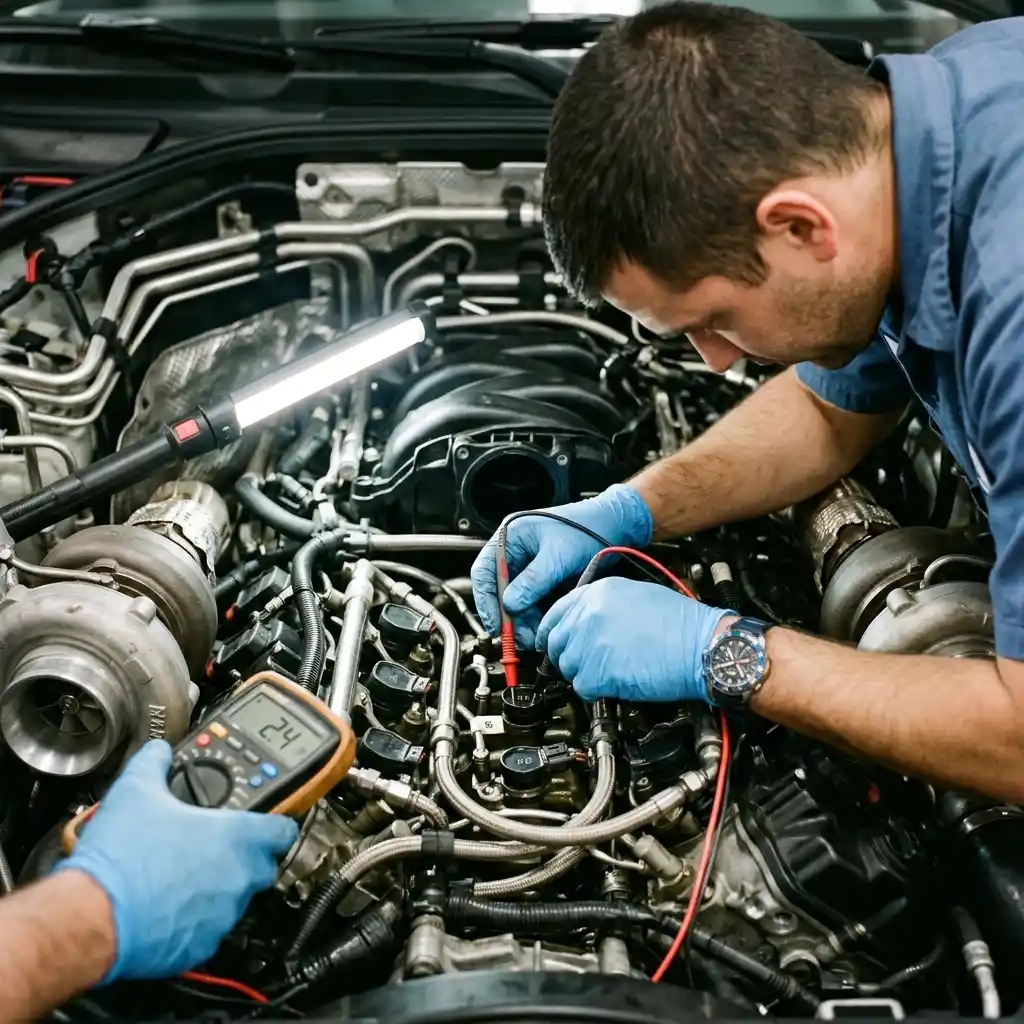
Record the exact rpm, gear, temperature, fuel history and time since startup. Compare requested and actual torque, ignition, fueling, air and boost information where the fitted system supports it. Cylinder faults need cylinder comparison; turbo or cooling claims need pressure, control and leakage evidence; a stored code alone does not select the part.
Heat management includes recovery. Observe coolant and oil information available to the diagnostic route, intake-temperature recovery, fan operation, airflow through heat exchangers and behavior after parking. Do not open a hot cooling system or repeat maximum acceleration to create data.
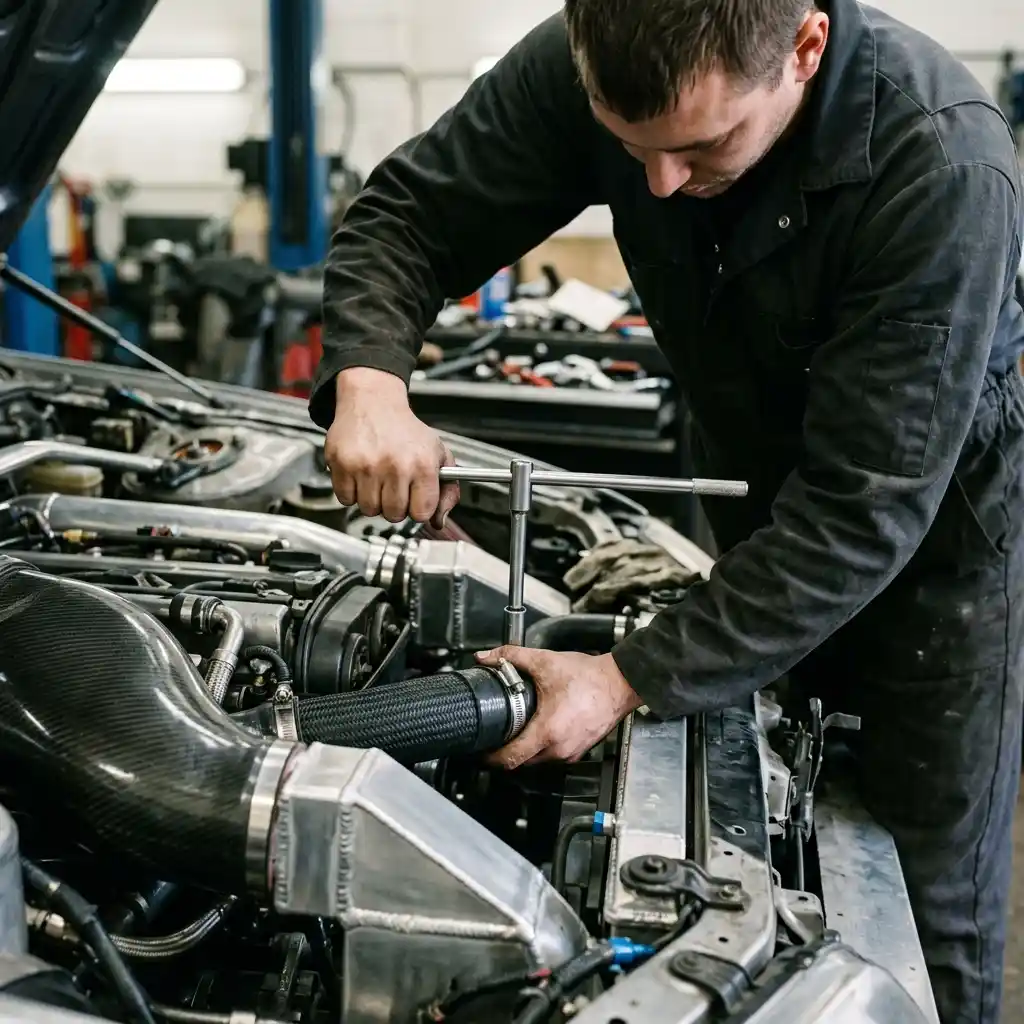
For a new rattle or vibration, inspect mounts, exhaust shields, valves, undertrays, wheels, tires, brakes and driveline joints as well as the engine or gearbox. The location felt in the cabin may not be the component that created it.
Keep the transmission connected to the engine and tires
S tronic, Tiptronic, R tronic and manual configurations require different tests and service procedures. Describe cold selection, parking maneuvers, shift timing, full-temperature behavior, overrun and warnings under load. Engine torque intervention, mounts, tire mismatch and driven-axle components can alter the way a shift feels.
Launch-control use adds history but does not prove clutch or internal damage. Preserve adaptation and software state before resets. A repair estimate should name the failed test and include required fluids, filters, seals, software work and the completion drive.
On quattro, sport-differential or torque-splitter systems, identify the installed hardware before selecting fluid or repair scope. Tire circumference and pressure evidence belongs in the same diagnostic record.
Measure the systems that turn speed into control
Inspect all four tires for specification, date, pressure, tread, repairs and damage. Measure wheel condition and separate road-speed vibration from engine-speed, braking and steering inputs. Alignment is a measured result, not a cure for worn joints or damaged wheels.
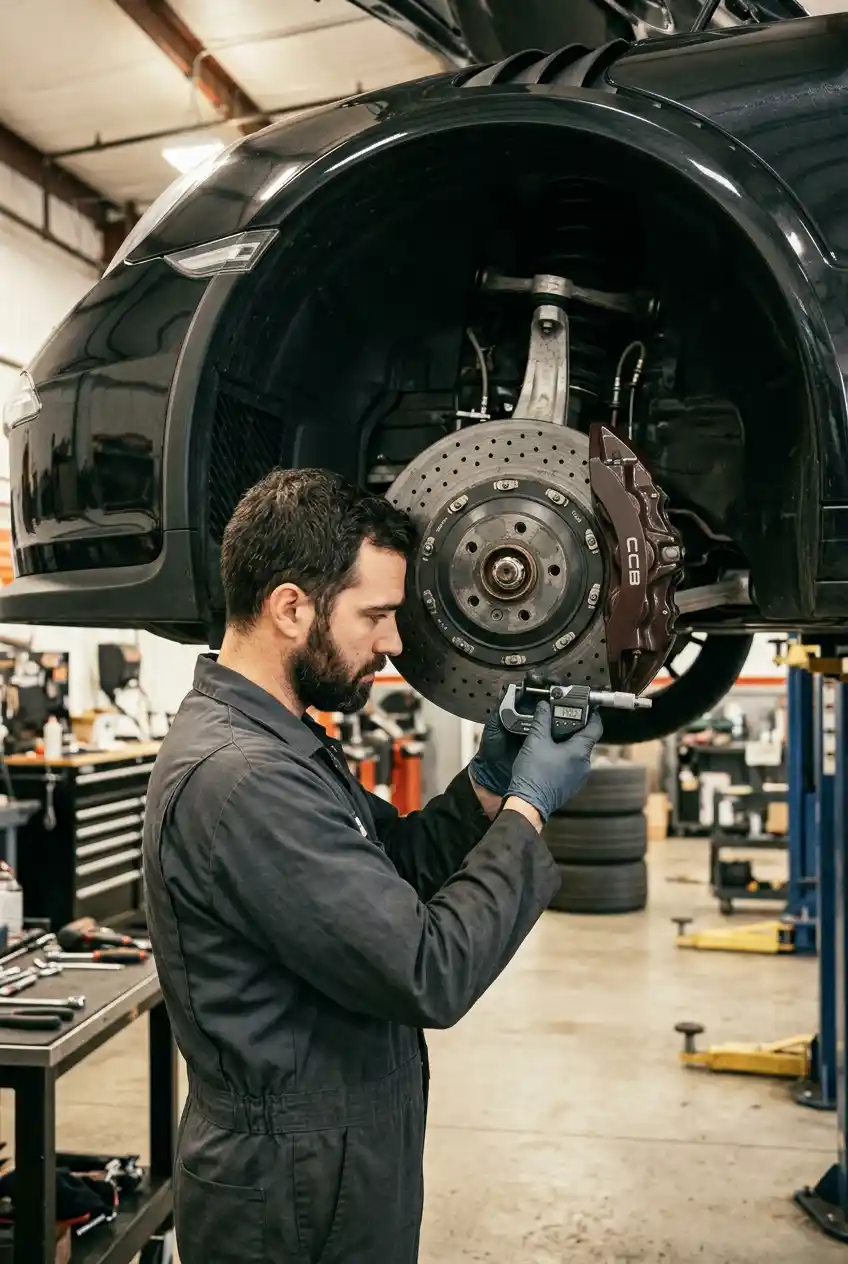
Confirm the fitted brake package. Record the material-appropriate condition, pad or friction evidence, calipers, hubs, hoses and fluid history. Do not estimate remaining life from mileage or a photograph alone.
For air suspension, DRC, adaptive dampers, active roll or all-wheel steering, test voltage, sensors, leaks, mounts, geometry and calibration as applicable. Never work beneath a vehicle supported only by a jack or its air suspension.
Separate four estimate lanes
Scheduled maintenance
Selected from VIN, time, mileage, service history, approved specification and actual use.
Measured wear
Tires, brakes, battery and chassis items with current values and review limits.
Confirmed fault
Reproduced condition and failed test linked to parts, access and completion.
Unresolved exposure
A staged diagnostic plan with spending cap, next test and clear limitation.
Do not approve an open-ended instruction to “fix anything.” Conditional work should have a defined inspection point and separate authorization. At handover, repeat the original condition and save the final scan, measurements, fluid and part identity, alignment or calibration records.
Document modified cars before changing the baseline
List software version, tuner, intake, exhaust, cooling, fueling, ignition, suspension, wheels and brakes. Record installer evidence and whether original parts remain available. Modification does not prove the cause of every warning, but it can change load, temperature, compatibility and warranty questions.
Do not flash, reset or remove the current setup before preserving faults and measured behavior. Some testing may need a known stock reference or a staged return to standard. Confirm UAE road-use, insurer and warranty consequences with the relevant authority or provider.
Plan the visit as four controlled handoffs
Owner to workshop
Send the VIN, exact warning or behavior, photographs, trigger conditions, recent work, service evidence and safe-to-drive status. Preserve a cold start when it matters.
Diagnosis to approval
Receive the reproduced condition, scan or measurement evidence, system boundary and a staged estimate. Ask what remains uncertain.
Repair to verification
Record parts identity, fluids, related hardware, software, alignment or calibration, then repeat the original condition.
Handover to ownership
Keep final scans, values, warranties and next review triggers with the service history. Do not lose intermittent-fault monitoring instructions.
Check body and sensor work as a connected repair
Performance models often carry large cooling openings, assistance sensors, cameras and costly lighting close to impact zones. Map paint, fastener and panel-gap findings to brackets, ducts, wiring and sensors in the same area. Windscreen, bumper, wheel or suspension work can require mounting, geometry and calibration evidence.
Test current function one system at a time. A prior calibration invoice supports history, but a recurring warning or visibly disturbed mount still needs diagnosis. Moisture near load-area or cabin electronics needs source tracing before trim or module replacement.
Choose parts and warranty routes before dismantling
Name genuine, OEM, aftermarket, remanufactured and used parts accurately. Record manufacturer or source, part number where available, included hardware and warranty terms. Safety, high-voltage, emissions and calibration-sensitive parts need a particularly controlled recommendation.
If manufacturer, extended or third-party coverage may apply, check the contract, claim authorization and facility or parts conditions before work begins. A repair invoice should document the evidence and procedure clearly enough for future warranty and resale questions.
Choose the next page from the ownership decision
Routine service due
Open the model guide, confirm generation and history, then compare exact fluid, filter, ignition, transmission and brake-fluid items.
Buying a performance Audi
Use the model page plus the used-Audi inspection hub. Verify cold condition, modifications, heat history, tires, brakes, structure and scan evidence.
Warning after modification
Document hardware and software before changing the baseline. Preserve faults and decide whether stock-reference testing is required.
Heat or circuit-use concern
Record actual use, temperatures, recovery, brake and tire evidence. Do not use a road test to recreate competition loads.
Related decision guides include the Audi repair cost guide, parts guide, fault-code index and used Audi inspection hub.
Use manufacturer information as configuration evidence
Audi model archives and service information can confirm the systems offered on a generation, while the VIN and physical vehicle establish what is fitted. Check the applicable owner information, campaign status, fluid approval and service procedure before converting general advice into a work order.
Do not copy a specification from another market or model year. Connected services, warranty, software and parts availability can differ. Confirm current UAE coverage with the authorized provider when the decision depends on it.
Keep the hub useful after repair
Return to the model page when a new symptom appears and carry forward the original scan, measurements, invoices and modification record. A strong history shows what was confirmed, what was repaired, what was declined and what remains under observation.
For repeat faults, compare the original trigger and failed test with the new event. This prevents a different symptom from being assumed to be the old failure and helps the workshop decide whether warranty, new diagnosis or a related-system check is appropriate.
S and RS repair questions
Does every RS model use the same engine or gearbox?
No. Configuration and generation differ substantially. Confirm VIN and physical equipment before any service or repair procedure.
Can a performance Audi be driven with reduced power?
Ask before driving. Recovery may be necessary when reduced power accompanies red warnings, temperature, severe misfire, unpredictable shifting or unsafe control.
Does tuning make diagnosis impossible?
No, but the installed hardware and software must be documented, and some tests may require a known reference configuration.
What should a completion report include?
Original condition, failed test, approved work, parts and fluids, adaptations or calibration, final scan and repeated verification.