
Audi SQ7 Repair and Service in Dubai
The SQ7 combines a large family SUV with market-dependent V8 TDI or V8 TFSI powertrains, high-capacity cooling, quattro, air suspension and complex chassis electronics. Some vehicles add 48-volt equipment, active roll control, rear steering or a sport differential. Correct work begins by reading the VIN and option codes, then checking how the fault affects both vehicle control and passenger use.
Identify the SQ7 powertrain and chassis before estimating
Engine and emissions
Confirm petrol or diesel application, engine code, turbo layout, cooling arrangement and emissions equipment. Imported specifications can require different parts and procedures.
Transmission and quattro
Read the gearbox and rear driveline codes, then review fluid history, tire circumference and installed sport-differential hardware.
Suspension and 48 volts
List the fitted air springs, dampers, rear-steering and active-roll equipment together with any 48-volt system. Electrical isolation and work on energized components belong to trained personnel using the specified procedure.
Compare the smaller Audi SQ5 repair page and the coupe-style Audi SQ8 repair page. Use the Audi fluids guide for approval checks.
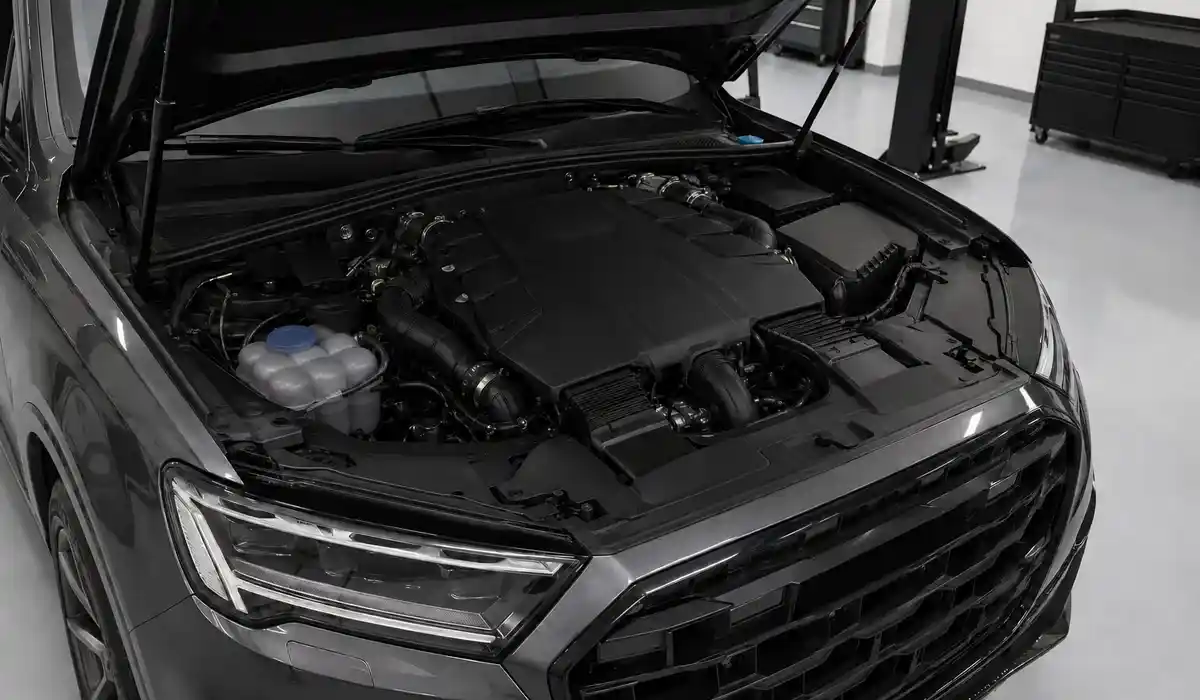
Reproduce SQ7 performance loss without guessing at the turbo system
Record ambient temperature, time in traffic, vehicle load, requested and actual torque, charge pressure, fuel delivery, coolant and intake temperatures, and electrical supply. On diesel applications, include the installed aftertreatment system and its operating history. On petrol cars, keep ignition and fueling evidence separate from airflow and boost control.
Shut down the SQ7 for a red oil-pressure or coolant alert, visible smoke, fuel smell, rapid leakage or heavy internal noise. A reduced-power strategy may be reacting to several systems, so it cannot identify the turbocharger by itself.
Measure the heavy SUV before blaming air suspension or quattro
Corner height
Set the specified cold tire pressure, place the SQ7 on a level surface and allow a consistent settling period before comparing corner heights. Review level-sensor data, inspect air lines and connections, and evaluate compressor operation only after mechanical condition is checked.
Tires and wheels
Record approved size, load and speed rating, age, repairs, tread, pressure and rolling circumference. Large wheels can hide impact damage and cannot be balanced around a bent rim.
Braking
Measure pads, discs, hub condition and fluid history. Separate steering shake, pedal pulsation and wheel vibration by speed and brake input.
Rear steering and roll control
Where installed, include controller data, geometry and mechanical inspection. A chassis warning can originate in voltage, communication, sensors, actuators or damaged suspension hardware.
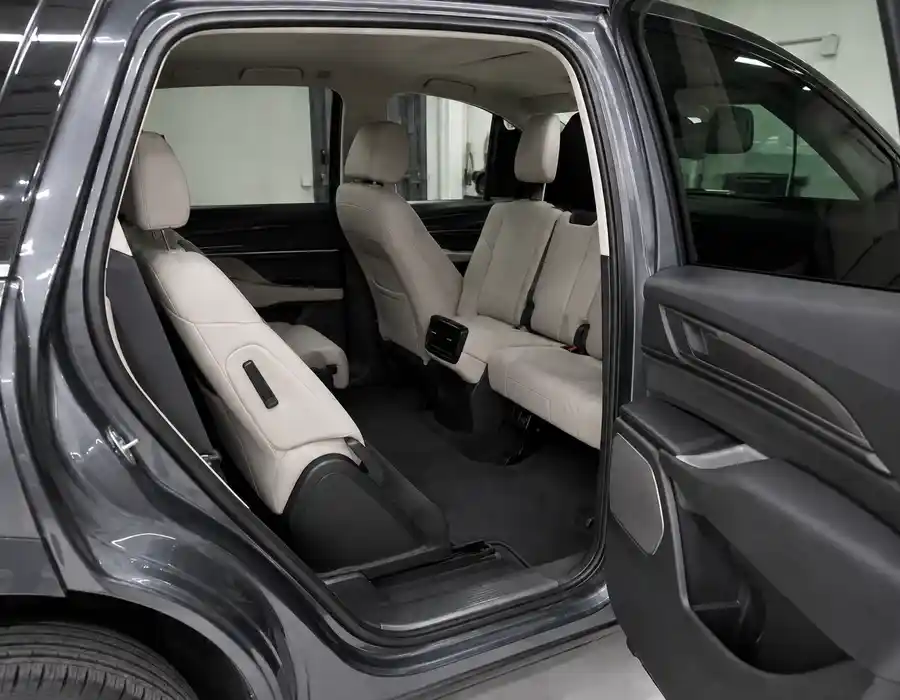
Test the third row, tailgate and rear climate as repair systems
Operate seat folding, latches, head restraints, restraint warnings, rear climate outlets, powered tailgate, camera and cargo-area lighting. Inspect rear wiring and water paths after glass, roof, lamp or collision work. Do not treat a body-function warning as unrelated to the main diagnostic scan.
If the vehicle tows, document the installed tow equipment, wiring and use history. Check cooling, brakes, tires and suspension in the normal unloaded condition before reproducing a load-related concern. Do not overload the vehicle for testing.
Build the SQ7 plan from actual use and measured condition
Build three estimate groups: scheduled operations, measured wear and diagnosed failures. The vehicle identity selects the maintenance procedure; the job record must show the products used, quantities, component identifiers, inspection values and completed control-unit checks.
A pre-purchase SQ7 check begins before startup. Preserve the first warning sequence, inspect the vehicle underneath, compare ride heights, warm the drivetrain fully and operate the third-row and rear-body systems. Separate urgent safety findings from overdue service, confirmed faults and observations that need later review.
Verify the SQ7 at the load and temperature that exposed the fault
Close the repair by recreating the original SQ7 trigger, whether it was a height change, low-speed steering maneuver, cabin load, trailer-electrical event or hot restart. Save the final scan and the specific physical value that demonstrates the system returned to its expected behavior.
If a complaint depends on a full passenger load or trailer, do not recreate unsafe loading merely for diagnosis. Use the owner’s event history, inspect the related hardware and agree on a controlled confirmation plan. An intermittent result should leave with a precise monitoring trigger rather than an unsupported declaration that the issue is gone.
Audi SQ7 repair FAQs
Does every SQ7 have the same V8 engine?
No. Diesel and petrol V8 applications vary by market and production period. Read the VIN and engine identifier before choosing specifications, parts or a diagnostic route.
Can a weak battery cause several SQ7 warnings?
Yes. Low or unstable voltage can create warnings across several modules. Stabilize and test the 12-volt and, where fitted, 48-volt supply, then investigate any warning that returns.
When should an SQ7 be recovered?
Arrange recovery for a red lubrication or cooling warning, smoke, fast fluid loss, compromised steering or braking, serious tire damage, one corner resting abnormally low or unreliable selection of drive.
Arrange Audi SQ7 diagnosis in Dubai
Provide the VIN, dashboard wording, the first abnormal behavior, ambient and vehicle temperature, passenger or cargo state, previous work and the SQ7’s present steering, braking and gear-selection condition.