Vehicle identity
Use the VIN, production date, market, engine, transmission and installed options. One Audi badge can cover several mechanical systems.

The correct Audi fluid is selected by manufacturer approval, exact vehicle application and service procedure. Color, brand, viscosity or a bottle that says “European vehicles” cannot confirm compatibility. Use this guide to identify what must be checked for engine oil, coolant, brake fluid, transmissions, quattro systems, hydraulic circuits, air conditioning and electric-vehicle thermal systems.
Send the VIN and Fluid QuestionDo not choose an Audi fluid from color or viscosity alone. Confirm the VIN, component code and current manufacturer information, then use a product carrying the required approval. The job also needs the correct quantity, seals, filter, fill temperature, bleeding or level procedure and post-service check. If the existing fluid is unknown or mixed, stop adding products until the system and contamination risk are identified.

The container is the final choice, not the starting point. The VIN, installed component and supported service procedure must agree first.
Use the VIN, production date, market, engine, transmission and installed options. One Audi badge can cover several mechanical systems.
Identify the engine sump, clutch circuit, gearbox section, final drive, coupling, cooling loop, brake system or refrigerant circuit being serviced.
Match the manufacturer specification or part number in current service information. A similar viscosity or color is not an approval.
Confirm quantity, temperature window, level method, filter, seals, one-time hardware, bleeding, evacuation and any adaptation.
Check final level, leaks, pressure, temperature, shift quality, pedal operation or cooling performance under the condition relevant to the job.
A product may be technically suitable for one Audi and wrong for another of the same model year. Audi’s official official Audi Middle East aftersales information uses model and vehicle identification to route technicians toward current documents. The Audi Middle East owners and aftersales information also provides vehicle-specific warning and maintenance guidance. Market-specific service information for the exact car remains the controlling source.
Arrange recovery for a red oil-pressure instruction, overheating, steam, heavy leakage, loss of brake pressure, severe transmission malfunction, smoke, fuel contamination risk, a damaged high-voltage cooling area or any warning that instructs the driver to stop. Do not open a hot cooling system.
If a new warning appears with rough shifting, reduced power, rising temperature, a soft brake pedal, strong fluid odor or visible leakage, stop demanding driving. Park safely and call before attempting a workshop journey. More fluid may hide the leak without protecting the component.
A stable service reminder, uncertain invoice, small noncritical seep or suspected wrong product still deserves prompt inspection. Avoid mixing or flushing by guesswork. This guidance does not declare the vehicle safe before its exact warning and condition are assessed.
| System | Identify before selection | Procedure variables | Wrong shortcut | Related guide |
|---|---|---|---|---|
| Engine oil | Engine code, emissions equipment, service regime, market and required Audi or VW approval | Permitted viscosity within the approval, fill quantity, filter, drain method, seals and final level | Choosing the thickest oil for heat or the thinnest oil for fuel economy without the required approval | Audi oil interval and specification |
| Coolant | Exact engine or electric thermal circuit, production date and current compatible specification | Concentration, water quality, vacuum fill or bleeding, valves, pumps, leak repair and temperature verification | Matching by pink, purple or another color and repeatedly topping up an unidentified leak | Audi coolant specification guide |
| Brake fluid | Vehicle requirement, time history, braking and stability equipment, contamination condition | Reservoir protection, pressure or bleeding sequence, diagnostic functions where required and pedal verification | Replacing fluid to cure a soft pedal without checking leakage, air, hoses, calipers and hydraulic faults | Audi brake fluid interval |
| S tronic | Exact gearbox code and whether it has separate clutch, hydraulic and gear sections | Correct fluids, filter, pan or seals, temperature-based level, scan data and adaptation when applicable | Ordering one “DSG oil kit” from the badge or vehicle model alone | Audi gearbox oil guide |
| Tiptronic or other automatic | Transmission manufacturer and code, drivetrain and approved fluid | Drain versus pan service, filter, fill temperature, engine-running level procedure and leak check | Using a universal ATF or a power flush to solve an undiagnosed shift fault | Audi transmission diagnosis |
| quattro and final drives | Center system, coupling, front or rear final drive and sport differential where fitted | Separate fill points, fluid or additive, level position, seals, pump screens and basic settings where applicable | Assuming every quattro Audi has one shared oil and one service interval | Audi service planning |
| Hydraulic steering or chassis | Whether the vehicle actually uses hydraulic assistance and the installed suspension equipment | Reservoir, bleeding, temperature, leak source, ride-height or steering calibration | Adding generic power-steering fluid to an electrically assisted car or the wrong hydraulic system | Audi steering repair |
| AC refrigerant and oil | Under-hood label, refrigerant type, exact charge, compressor type and hybrid or EV safety requirements | Recovery, vacuum, leak test, weighed charge, approved compressor oil and performance verification | Topping up from a can by pressure or mixing refrigerant and sealant products | Audi AC repair |
| e-tron thermal circuits | Model platform, battery and drive-system circuit, coolant specification and high-voltage work boundary | Isolation precautions, contamination control, vacuum filling, pump and valve activation, bleeding and thermal test | Opening a battery cooling circuit or touching orange components without qualified procedures | Audi e-tron repair guide |
Use these pages as a document checklist. The codes are examples of identifiers an Audi owner may encounter, not universal fill instructions. The correct selection still comes from the exact VIN, engine or gearbox code, market information, current repair literature and container approval.
These are examples of Audi or VW oil-quality standards found across different engines and years. They are not interchangeable. Confirm the exact standard first, then the permitted viscosity, quantity, filter, drain procedure and reset.
Names and colors do not prove compatibility. Record the Audi or VW part number, concentration, water requirement, system capacity and bleeding or vacuum-fill procedure. Do not mix generations from an internet chart without application confirmation.
Confirm the specified standard in current service information. Record the opened-container control, pressure-bleed procedure and whether ABS hydraulic work requires guided functions. A dark color or pedal complaint needs diagnosis, not only fluid replacement.
S tronic, tiptronic and other transmissions do not share one fluid or fill method. The job file should name the gearbox code, fluid part number, filter or pan scope, one-time hardware, fill-level temperature and adaptation needs.
One vehicle can have separate gear oils and coupling fluids. Record each housing, plug, seal, capacity and part number independently. Do not treat “quattro service” as one universal fluid change.
The under-hood label defines the refrigerant and starting charge for the vehicle. Compressor-oil type and quantity depend on the installed system and repaired component. Recover and measure before charging, then test pressures, temperatures and leakage.
Battery-electric Audis may use separate thermal circuits and vehicle-specific filling or bleeding procedures. Confirm that the technician is working on the correct circuit with the required high-voltage safety state and approved fluid.
A viscosity grade describes how oil flows at standardized cold and hot conditions. It does not describe every requirement for deposits, wear, aftertreatment compatibility, fuel economy, oxidation and extended-drain performance. The required Audi or Volkswagen approval brings those performance tests together for the exact engine and service regime.
Confirm the engine code and production date before selecting the approval. Petrol, diesel, particulate-filter, performance and market variations can differ. A newer specification may replace an older one only when the manufacturer permits that relationship for the application. Do not assume that a higher-looking number is an upgrade.
Dubai heat does not automatically justify moving outside the permitted viscosity range. Engine design, oil pump control, turbocharger lubrication and hydraulic timing systems still depend on the approved product. If oil pressure, consumption, fuel dilution, sludge or leakage is suspected, diagnose the condition instead of trying to hide it with a thicker oil.
The filter, drain method and level procedure matter as much as the bottle. Overfilling, underfilling or a damaged housing seal can create a new problem after an otherwise correct oil choice.
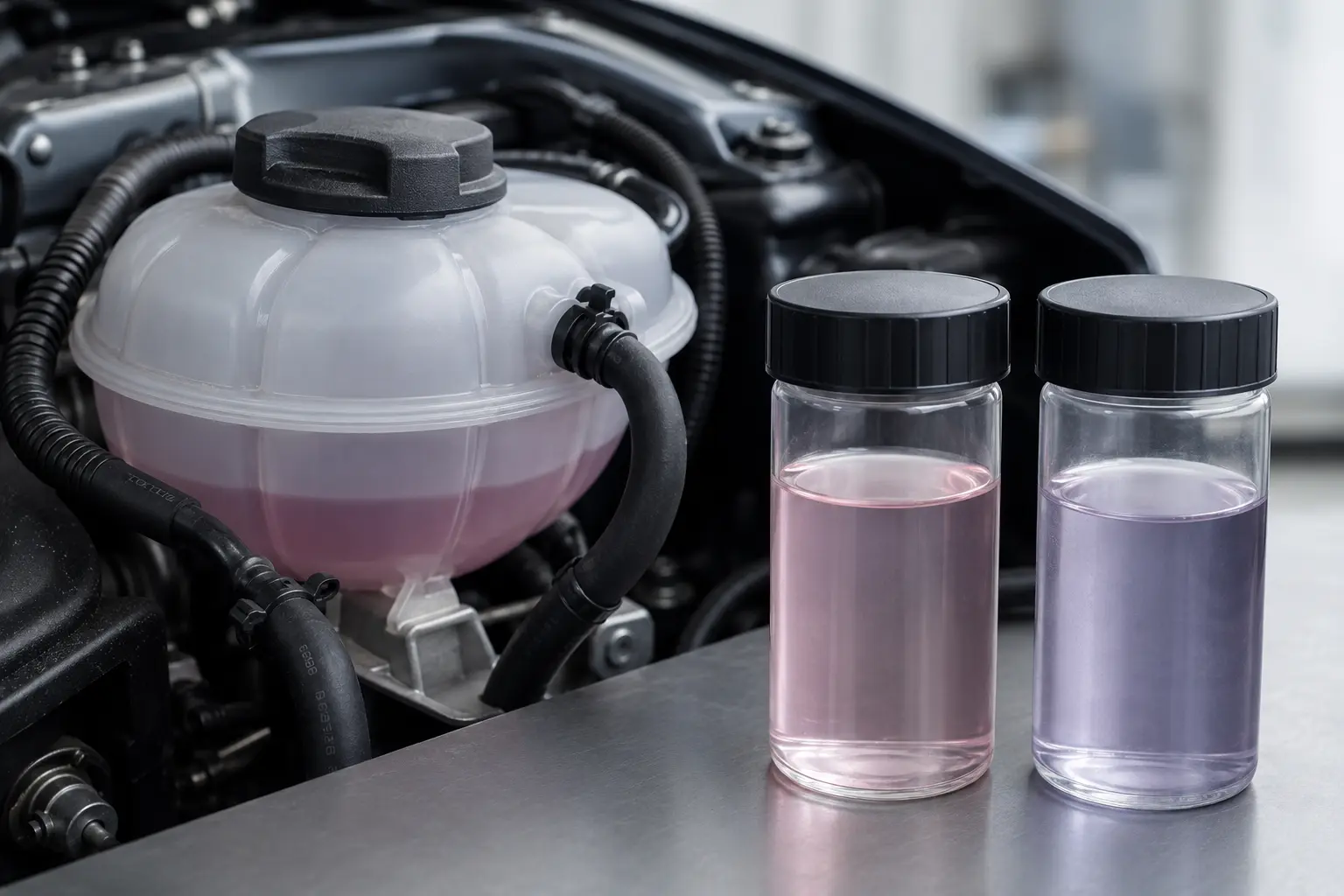
Coolant color can change between brands, batches and service history. Different products can look similar while using different additive systems. Select the current approved specification for the exact engine or electric thermal circuit, then follow permitted mixing and replacement guidance.
Low level is evidence of fluid leaving the system unless a documented recent service explains the change. Inspect cold, record the amount needed and diagnose cap, hose, radiator, water pump, thermostat housing, heat exchanger and internal leak possibilities as applicable. Repeated topping up can dilute the mixture and allow a small leak to become an overheating event.
After repair or replacement, the system may need vacuum filling, controlled bleeding and scan-tool activation of pumps or valves. Verify warm-up, cabin heat, fan operation, pressure stability and temperatures under a suitable load. Do not open a hot reservoir or assume that a cool gauge excludes a localized problem.
Identify the engine code, auxiliary circuits, charge-air cooling and any separate reservoir. A supercharged or high-performance application may contain more than one thermal loop.
Battery, motors, power electronics, charger and cabin climate can use connected or separate loops. High-voltage access requires qualified isolation and contamination control.
Record appearance and test results, identify what was previously added when possible and select a supported correction plan. Do not promise that a quick drain removes all incompatible fluid.
Brake fluid absorbs moisture over time, which can reduce boiling resistance and contribute to corrosion. The applicable interval and fluid requirement must come from the exact maintenance information. A moisture test can add condition evidence, but it should not be used to ignore a manufacturer time requirement.
A fluid service cannot repair a sinking or soft pedal, leakage, damaged hose, sticking caliper, worn friction material, hydraulic-control fault or incorrect bleeding. Inspect the complete braking system and decide whether the symptom requires recovery before opening the reservoir.
Use clean equipment, protect the fluid from contamination and follow the correct bleeding sequence. Some repairs require diagnostic activation of hydraulic components. Finish with a stable pedal, leak check, warning status and controlled road verification. Never substitute a lower requirement because the product is easier to obtain.
Identify the refrigerant type and specified mass from the exact vehicle label and service information. Recover and weigh the existing charge when diagnosis calls for it. Pressure alone cannot show the correct quantity, especially when airflow, compressor command and ambient conditions are unknown.
Find the leak instead of repeatedly topping up. Inspect condenser, hoses, seals, service ports, evaporator evidence and compressor operation as applicable. Refrigerant sealants can contaminate service equipment and should not be used as a shortcut.
Compressor oil type and quantity depend on the installed system and work performed. Hybrid and battery-electric compressors require strict electrical-insulation compatibility. Mixing unsuitable oil can create high-voltage safety and reliability risks.
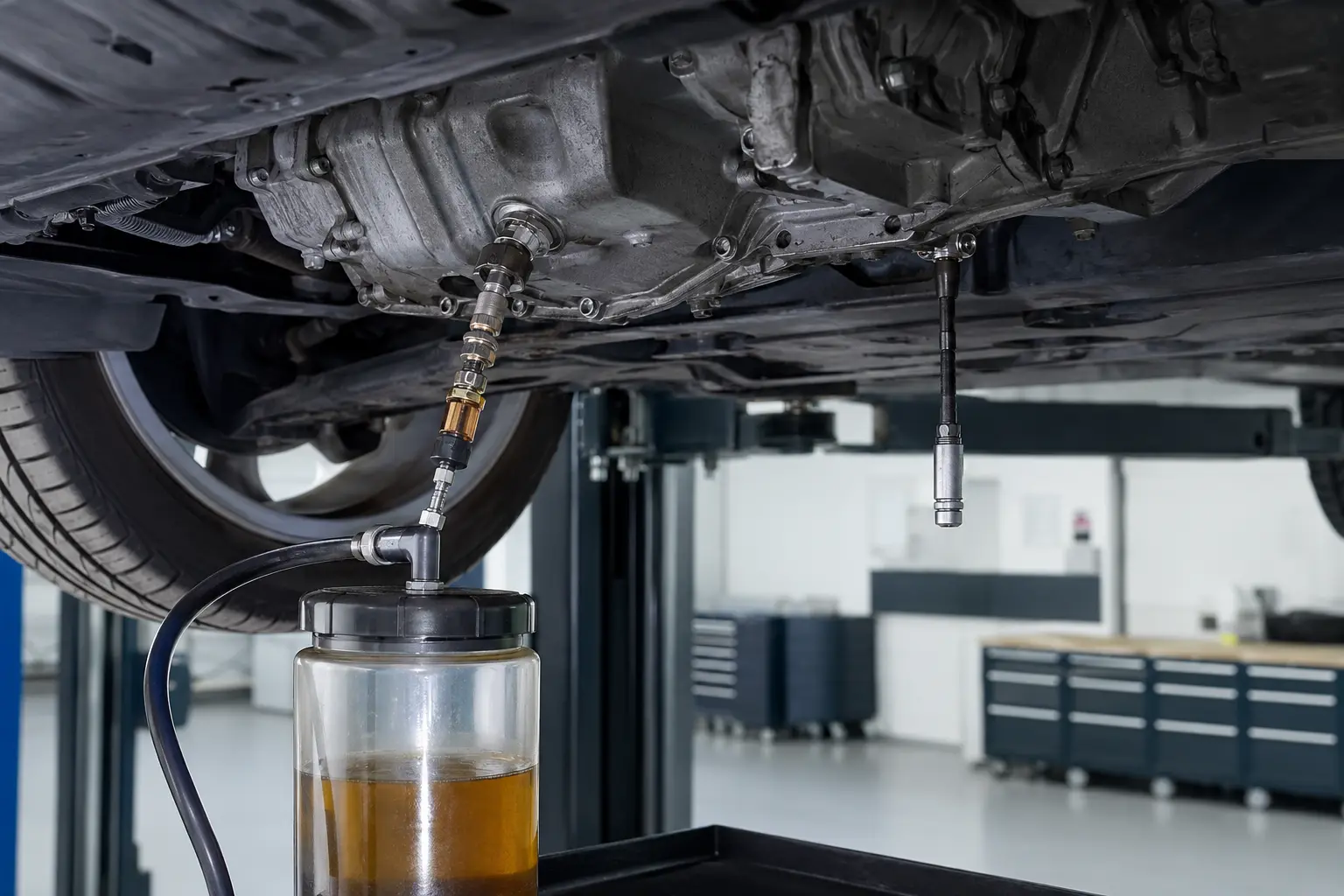
Gearbox code, fill temperature and level method matter more than a generic transmission label when selecting and verifying the service route.
Identify the transmission by code, not by the words S tronic, Tiptronic or automatic alone. S tronic gearboxes can differ in clutch design, capacity, filters and whether clutch, hydraulic and gear sections use separate lubricants. Conventional automatics also vary by manufacturer, pan, filter and level procedure.
Delayed engagement, flare, shudder, harsh shifting, leakage or a warning needs diagnosis. Fluid service is maintenance or part of a supported repair, not a guaranteed cure for mechanical wear or control faults.
List the gearbox, front or rear final drive, transfer case, center coupling and sport differential where fitted. Do not assume they share fluid or drain together.
Record quantity, color, odor, water contamination, debris and magnet or pan findings without diagnosing by appearance alone. Photograph unusual material before cleaning.
Vehicle position, engine state, selector sequence and fluid temperature can control the final level. Too much and too little fluid can both affect operation.
Follow the supported procedure for the exact gearbox and repair. Resetting learned values is not a general cure and can worsen behavior when the mechanical condition is unknown.
Check for leaks, warning status, engagement, shift quality and the original complaint. Document any remaining condition separately from the completed service.
Many newer Audis use electromechanical steering and have no conventional power-steering reservoir. Older hydraulic systems and some chassis equipment use specific fluids, reservoirs and bleeding procedures. Identify the installed system before buying a product from a generic application chart.
A low reservoir indicates leakage or an incomplete earlier fill. Inspect hoses, pipes, seals, rack, pump and related components as fitted. Noise can also come from belt drive, mounts, air in the system or mechanical steering parts. Do not use a thick additive to quiet an unconfirmed fault.
After hydraulic work, bleed using the supported method and verify assist, noise, leaks and level at the required condition. Steering or active-chassis calibration may be needed after related mechanical work, but fluid replacement alone does not substitute for geometry and sensor checks.
Do not disconnect orange cables, open the battery, probe high-voltage components or open an electric compressor or battery cooling circuit without the required qualification and isolation process. Collision, flooding, smoke, unusual heat or visible battery-area damage requires hazard assessment and suitable recovery.
Use dedicated, clean equipment where electrical insulation or cross-contamination matters. The repair report should identify the circuit opened, fluid used, isolation and leak checks, filling method, pump or valve activation and final temperature behavior.
Keep the container, invoice or photograph of what was added. Record the amount, location, mileage and whether the vehicle ran afterward.
Confirm whether the product entered engine oil, coolant, fuel, brake, transmission, differential, steering, refrigerant or another system. The response changes completely.
Decide whether operation could affect braking, lubrication, cooling, high-voltage insulation or component sealing. Arrange recovery when further use may spread damage.
Preserve useful evidence. Check separation, debris, water, odor and relevant measurements. Appearance helps document the event but rarely proves complete compatibility.
The supported plan may involve a drain, multiple exchanges, component cleaning, filter replacement, seal work or disassembly. One generic machine flush is not appropriate for every circuit.
Confirm level, pressure, temperature, shift quality, pedal operation, insulation or cooling performance as applicable. Record any monitoring point and remaining uncertainty.
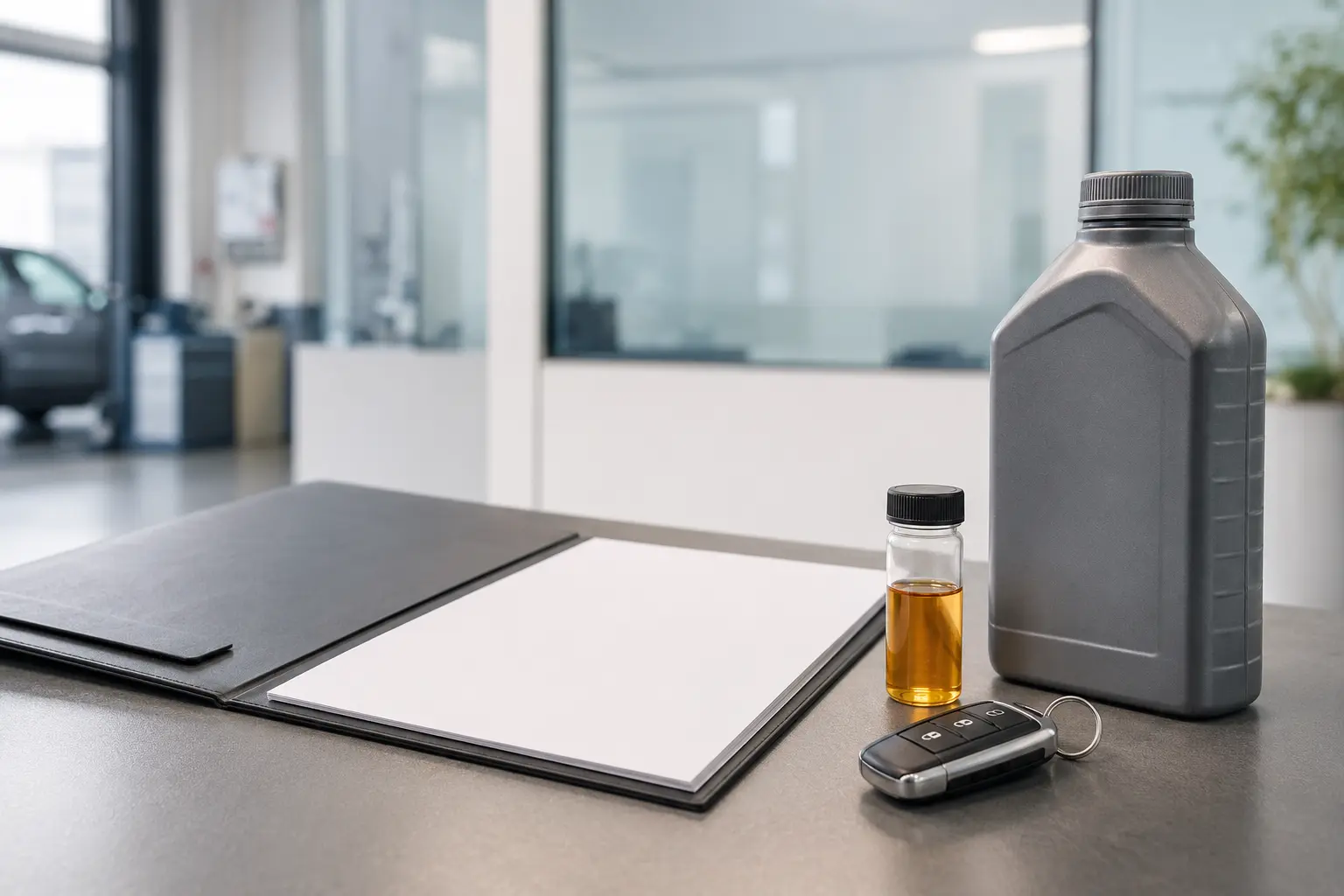
A useful estimate names the system, product specification or exact part-number route, brand and quantity. It also lists filters, seals, drain hardware, labor, diagnostic or bleeding operations, adaptations and verification. If contamination or leakage is present, the estimate should separate its correction from routine fluid replacement.
The invoice should not use only “oil,” “coolant” or “gearbox service.” Another workshop and the owner need enough information to confirm what entered the vehicle. Keep the empty product label or batch details when a warranty or contamination concern makes traceability important.
Public prices, when offered elsewhere on the site, are indicative and non-binding. The final written estimate depends on inspection, exact vehicle specification, existing contamination or leakage, fluid and parts choice, access, required procedures and current conditions.
No. Color is not a reliable specification. Confirm the exact vehicle and current approved coolant, then follow the supported mixing, filling and bleeding procedure.
No. The product must carry the required manufacturer approval for the exact engine and service regime. Choose a permitted viscosity within that approval.
No. Gearbox codes, clutch design, filters, fluid sections and service requirements differ. Identify the transmission before ordering parts or choosing an interval.
Not automatically. Diagnose the symptom and inspect fault memory, fluid condition, leakage, clutch or torque-converter behavior, mounts and adaptations before promising an outcome.
Weak cooling needs performance and leak diagnosis. Recover and weigh the charge when appropriate, repair leaks and refill the exact refrigerant mass with compatible compressor oil procedures.
Send the VIN, model, year, engine and gearbox when known, a clear photo of the bottle or invoice, the system involved, amount added and any warning, leak or operating symptom.
Have the engine or gearbox code, previous invoice, product label and current warning or leak information ready. That prevents a color-based or badge-based guess.
These market ranges help plan routine fluid work. The exact Audi approval, quantity, filter, filling method and any leak or contamination diagnosis must appear on the estimate.
| Service or repair | Typical Dubai market range | Confirm in the estimate |
|---|---|---|
| Engine oil and filter service | AED 350 to AED 1,100 | Correct approval, filter, drain hardware and level check |
| Brake-fluid service | AED 250 to AED 600 | Correct fluid and complete bleeding procedure |
| Coolant service or minor cooling repair | AED 400 to AED 1,500 | Approved coolant and bleed or vacuum-fill procedure |
| Gearbox fluid service | AED 900 to AED 2,800 | Gearbox-specific fluid, filter or pan and temperature level process |
| AC diagnosis and recharge | AED 350 to AED 1,200 | Correct refrigerant handling and performance check |