
Compact Audi configuration first
Audi Q2 Repair and Service in Dubai
The Q2 has one body generation but many engine, gearbox, drivetrain, infotainment and equipment combinations. Good diagnosis starts by identifying the actual car, then matching tests to its installed systems and the correct Audi maintenance schedule.
Start with the Q2 configuration rather than a generic model checklist
Audi introduced the Q2 in 2016 and revised it during its production life. The range has included different TFSI and market-dependent TDI engines, manual and S tronic gearboxes, front-wheel-drive and quattro versions, plus the higher-output SQ2. Equipment can also change by year and market. The registration card and badge do not identify every part or procedure. For the related compact hatchback platform, use the dedicated Audi A1 repair page.
Send the chassis number before a parts estimate. A VIN-led lookup helps separate a 1.4 TFSI from later 1.5 TFSI applications, distinguishes gearbox and brake variants, and shows whether the vehicle was built with systems that may need calibration after repair. Record the production month, installed software level and any non-standard wheel, suspension, intake or infotainment work. A modification can change fault behavior, parts compatibility and the meaning of a previous service entry, even when the car still appears factory-standard from outside. Imported cars require extra care because a schedule or part listing from another market may not match the vehicle in Dubai.
Official Audi model information confirms that the Q2 range changed over time, including a 2024 infotainment update with virtual cockpit and an 8.8-inch touchscreen on then-current variants. Use that detail only for cars built with the update. Earlier rotary-controller layouts and other equipment should not be diagnosed as if they are the same system.
Audi’s Q2 model archive documents the production range and later technology changes. The vehicle VIN and current Audi repair information still control the workshop procedure.
The first safety decision
Use symptoms to choose recovery, limited movement or a booked inspection
The recovery decision must follow the current condition, not a general statement about Q2 reliability. When the vehicle cannot select a gear, has collision damage near a wheel, or shows severe tire or steering change, moving it can enlarge the repair or create a safety risk.
Complaint-led testing
Five Q2 symptom routes lead to different evidence

Rough running, smoke or warning lights
Capture faults and freeze-frame information before clearing. Check battery voltage, intake leakage, ignition, fueling, crankcase ventilation and engine-specific timing or compression evidence as the symptom requires. Do not replace coils merely because a misfire cylinder is named.
Note whether the issue appears after refueling, overnight parking, recent intake work or a battery event. Those details change the first test order.
Coolant loss or heat warning
Inspect the system cold for residue around the pump, thermostat housing, hoses, radiator and expansion tank. Pressure testing, live temperature comparison, fan command and proper bleeding may be required. A top-up is not a repair when the level keeps falling.
On an overheated engine, the report must assess possible consequences as well as the component that caused the event.
Judder, delay or protective mode
Identify the exact gearbox before applying any fluid interval or adaptation process. Review service history, clutch or pressure data, temperature, mounts and the behavior cold and fully warm. A software update cannot correct every mechanical or hydraulic fault.
Record whether the complaint occurs in reverse, on an incline, during low-speed maneuvering or under full acceleration.
Vibration, hum or tire wear
Separate engine-speed vibration from road-speed vibration. Measure tire condition, wheel runout, bearing play, brake temperature, alignment and driveline behavior. Q2 wheel size and tire specification vary, so a matching appearance does not confirm approval.
For quattro cars, circumference differences and axle matching deserve attention before a coupling or differential is blamed.
Sensor, camera or pre sense messages
Inspect contamination, impact, mounting position, wiring, voltage and fault status. A bumper repair, windscreen replacement, wheel alignment or suspension work can affect calibration requirements. Verify the installed hardware before ordering a sensor.
Repeat the original parking or driving condition after repair, and record any calibration result.
MMI reboot, blank display or connectivity fault
Identify the infotainment generation and preserve software and event information. Test power, grounds, communication networks, external devices and temperature behavior. A 2024-style touchscreen system should not inherit repair steps written for an earlier controller-based unit.
Confirm the user account, phone, cable and feature entitlement separately from a hardware failure.

Maintenance architecture
Build the Q2 service plan from four separate layers
| Layer | What belongs here | Evidence the invoice should retain |
|---|---|---|
| Scheduled service | Engine oil and filter, inspection items, brake fluid, spark plugs, filters and powertrain-specific fluids when due for the exact application | Date, mileage, Audi or applicable approval, part references, quantity and next-due logic |
| Measured wear | Tires, brake friction, discs, wipers, battery condition, joints, dampers and other condition-based items | Millimeters, test values, age, photographs, wear pattern and accepted limit |
| Active fault | Warning lights, leakage, misfire, cooling concern, shifting complaint, noise or electrical malfunction | Complaint, fault status, test result, confirmed cause, authorized repair and repeat verification |
| Planning item | Stable observations that are not yet urgent or proven to need replacement | Present measurement, review date or distance, and the exact condition that moves it into repair |
Do not compare a basic oil package with a full inspection and fault diagnosis as if they are the same service. Ask the estimate to separate parts, labor, fluids, VAT, coding or calibration and any inspection-dependent work. Public AED examples are not quotations unless the exact scope and vehicle have been inspected.
Engine oil
Use the approval for the identified engine and market. Viscosity alone does not prove suitability. Record the quantity added and investigate a meaningful change in level or consumption.
S tronic and quattro
Do not apply one universal interval or fluid. Identify the transmission and all-wheel-drive hardware, then verify service history and the applicable procedure.
Brakes and tires
Measure both instead of using traffic-light labels. Tire age, damage, inner-edge wear and axle compatibility matter even when tread appears adequate.
Dubai operating conditions
Heat, short trips and road impacts change the Q2 evidence
Parking heat and low-voltage reserve
Repeated heat soak can expose a weak battery, marginal connection or control unit that fails only after the cabin and dashboard become hot. Record whether the warning appears immediately after unlocking, during cranking or after the AC begins working. Test battery condition and voltage drop before replacing several modules that reported the same low-voltage event.
Traffic cooling and AC load
A concern that appears only while idling in summer may involve airflow, fan operation, refrigerant performance, coolant circulation or electrical demand. Compare vent temperature and engine thermal data stationary and moving. Do not assume that refrigerant quantity explains every weak-cooling complaint.
Curbs, speed bumps and construction roads
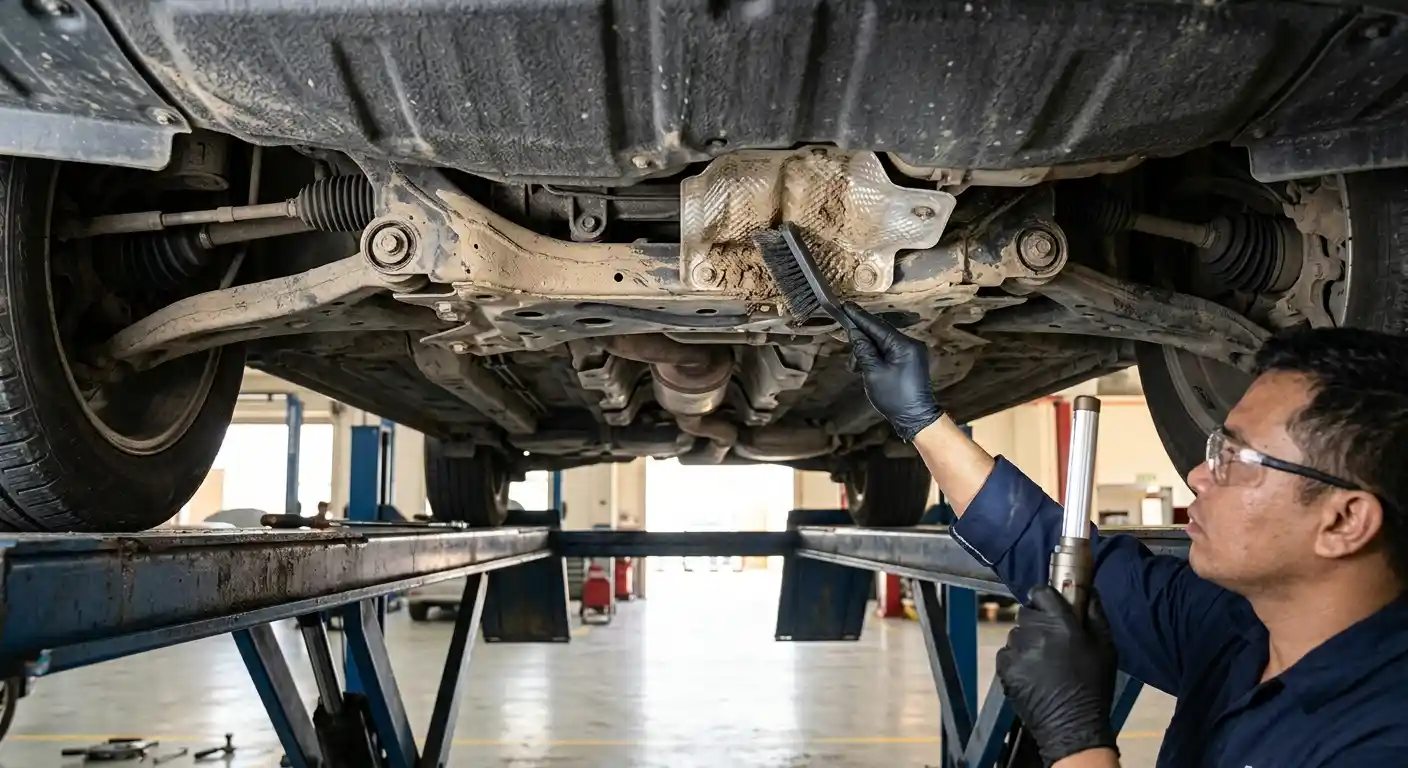
After an impact, inspect the inner wheel, tire sidewall, undertray, alignment, suspension and nearby cooling panels. A repaired wheel face can hide barrel damage. Steering pull or irregular wear should not be corrected with alignment until loose or bent parts are excluded.
Short journeys also make service history harder to judge from mileage alone. Oil may reach operating temperature less often, the battery may not recover fully, and AC or cooling fans may spend more time working while the vehicle covers little distance. Combine time, actual use and measured condition when planning maintenance.
Used Q2 inspection
Buy the condition and configuration rather than the dashboard appearance
Arrange a cold start and ask the seller not to warm or move the vehicle before the appointment. Check temperature indication, initial warning lights, idle quality, smoke, battery behavior and the first selection of drive or reverse. A warm five-minute demonstration can hide information that appears only after overnight parking.
Identity and records
- Match VIN, registration, model year and seller details.
- Confirm engine, gearbox, drive layout and installed options.
- Review invoices for oil approval, gearbox or quattro work, coolant repairs, battery replacement and software campaigns.
- Check whether modifications, collision repairs or imported-market equipment change support and parts availability.
Physical and diagnostic evidence
- Scan every control system before and after the road test.
- Inspect underbody, cooling residue, engine and gearbox leakage, tire dates, wheel repair and brake measurements.
- Test AC, MMI, camera, parking, lighting, keys and driver-assistance functions fitted to that car.
- Price overdue maintenance separately from confirmed faults and cosmetic choices.
Pause the purchase if the seller refuses a cold start, full scan, lift inspection or independent drive. Stop the test if oil pressure, temperature, braking, steering, tire condition or severe noise becomes unsafe. A lower asking price is not a saving when immediate tires, cooling work, gearbox diagnosis and overdue maintenance exceed the difference.
Authorization and handover
A complete Q2 repair report should close the original complaint
Before parts
The report should identify the car, copy the complaint accurately, preserve original faults and show the measurement or inspection that confirms the repair direction.
During repair
Record part numbers, fluid approvals, one-time hardware, coding, calibration, contamination findings and any scope change discovered after access.
Before collection
Repeat the trigger cold, hot, under load, on the same road condition or with the same charging or parking function as relevant. Retain the final scan and values.
Repair, rebuild and replacement should be compared only when the failed boundary is known. A serviceable hose, sensor, seal or actuator may support a targeted repair. Internal engine or gearbox work needs dismantling evidence and measurements. Replacement requires compatibility, coding and commissioning details. Monitoring requires a safe, stable measurement and a written return threshold.
Common owner questions
Audi Q2 repair FAQs
Does every Audi Q2 use the same S tronic gearbox?
No. Gearbox application depends on the engine, drivetrain, model year and market. Identify the gearbox code before choosing fluid, service procedure, adaptation or repair parts.
Is the SQ2 covered by the same repair assumptions?
The SQ2 shares the body family but has performance-specific engine, drivetrain, brake, tire and thermal considerations. Treat it as its exact specification, not as a badge package on a standard Q2.
Can I keep driving with an Audi Q2 warning?
That depends on the warning and vehicle behavior. Stop for red oil-pressure or temperature warnings, smoke, major leakage, unsafe steering or braking, damaged tires or severe mechanical noise. Ask before driving when a warning appears with rough running, poor shifting or reduced power.
Why does a Q2 fault disappear after restarting?
A restart can remove a temporary protective mode while the original event remains stored. Preserve fault status and trigger conditions before clearing or disconnecting the battery.
What information improves an estimate?
Provide the VIN, year, mileage, exact warning or symptom, cold or hot timing, recent repairs and service records. A final written estimate still depends on inspection and the confirmed scope.
Prepare the first test
Send the Q2 VIN and the condition that triggers the concern
Include the exact warning, when it happens, recent work and whether temperature, oil pressure, braking, steering, tires or severe leakage affects safe movement. The Audi warning-light guide explains which dashboard evidence to preserve.