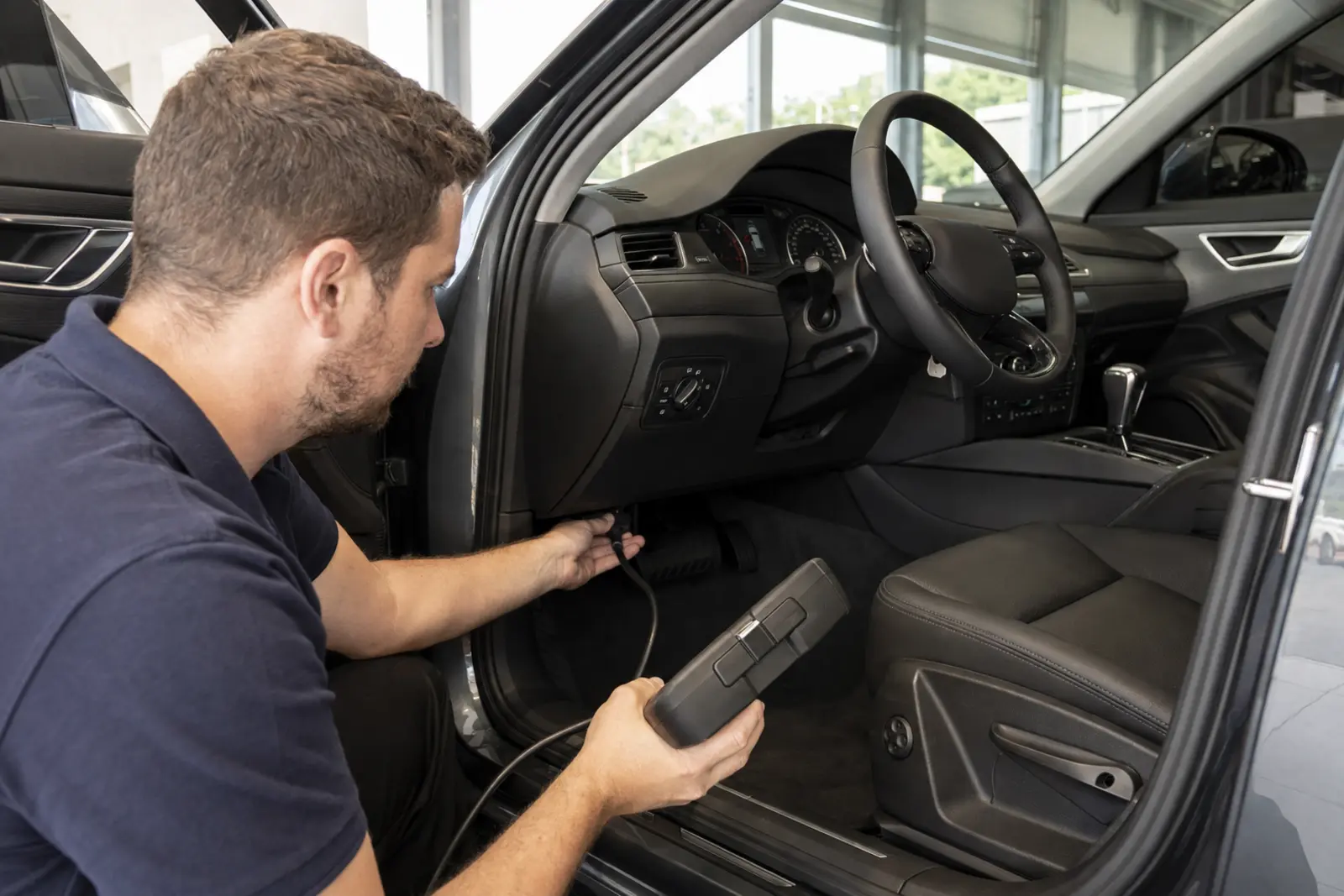
Used Audi decision center

Used Audi Buying and Inspection Hub

Choose a used Audi from evidence, not badge reputation or showroom presentation. This hub links model-specific UAE checklists with one inspection method covering identity, structure, cold operation, diagnostics, a warm road test and first-year ownership exposure.

Send the car details
Five decision gates

Do not move to price until the car passes identity and safety

Each gate answers a different purchase question. A vehicle can look excellent yet fail on identity, structural evidence, powertrain behavior, electronic condition or first-year cost.

1. Identity

Match VIN, market, build data, engine, gearbox, options, keys and registration documents.

2. Structure

Inspect paint depth, panel repairs, glass, underbody, water entry and previous restraint work.

3. Operation

Observe a true cold start, temperatures, leaks, power delivery, shifts, steering and brakes.

4. Electronics

Save a complete scan, battery condition, event data, option behavior and calibration evidence.

5. Exposure

Price urgent repair, due maintenance, measured wear and unresolved uncertainty separately.

Illustrative VIN identity and service history check during a used Audi inspection
Illustrative inspection visual. Match the vehicle identity and records before relying on the seller’s description.
Safety limit: do not road-test a car with red oil-pressure or temperature warnings, steam, rapid leakage, smoke, fuel odor, severe misfire, loss of drive, damaged tires, unstable steering or changed brake feel. The inspection should stop and recovery should be arranged.
Inspection order

Build evidence from stationary checks to a warm test

Stage 01

Before arrival

Request the VIN, registration, advertised specification, service invoices and disclosure of modifications or collision work. Confirm the engine will be cold and that an independent scan and lift inspection are allowed.

Stage 02

Walk-around

Check identity labels, body alignment, paint and glass, tires, wheels, fluids, residue, underbody and evidence of fresh cleaning. Confirm all keys and option equipment.

Stage 03

Cold operation

Record battery response, cranking, warning sequence, noise, idle, smoke, heater or AC behavior and first gear engagement before the seller warms the vehicle.

Stage 04

Whole-vehicle scan

Retain the untouched report. Interpret present state, recurrence and operating circumstances. Recently cleared data or incomplete readiness requires explanation and may justify a later repeat.

Stage 05

Road and load

Use a planned route for light load, moderate load, shifts, braking, steering, bumps and parking. Reach normal temperature without aggressive testing or unsafe speeds.

Stage 06

Post-test review

Recheck leakage, temperature, tire and brake clues, suspension height and returning faults. Convert findings into measured repair scopes rather than a vague pass or fail.

Illustrative full-system diagnostic scan during a used Audi inspection
Illustrative inspection visual. A complete scan records the starting evidence before faults are cleared or parts are discussed.
Interactive evidence board

Tick the evidence you actually captured

This browser checklist is a working aid, not a pass certificate. Tick an item only after you have seen the document, measurement, scan result or repeatable behavior. An unticked high-consequence item is a reason to pause, reinspect or protect the purchase price.

Used Audi deal gate

Complete identity and safety before judging cosmetic condition or negotiating small defects.

Evidence over appearance

01 Identity and history

02 Structure and safety

03 Cold operation and diagnostics

04 Road test and purchase exposure

ProceedCore evidence is complete and no disproportionate risk remains.
RenegotiateDefined, measurable work can be reflected in the purchase terms.
ReinspectA cold start, history item, scan state or access gap can still be resolved.
Walk awaySafety, structural, driveline or seller-obstruction risk is too high.
Illustrative paint-thickness check on a used Audi before purchase
Illustrative inspection visual. Paint measurements are one clue, reviewed with panel alignment, structure and repair evidence.

Do not total the number of ticks into a score. Missing tire safety cannot be cancelled out by working infotainment, and a verified service record cannot cancel an unresolved structural concern. The consequence of the missing evidence matters more than the count.

First-year exposure

Price four categories instead of one repair total

CategoryWhat belongs herePurchase use
Immediate safetyTires, brakes, steering, severe leaks, overheating, restraint or structural concerns that affect normal use.Resolve before driving or treat as a reason to reject the car.
Confirmed repairA fault isolated by scan data and a pressure, electrical, mechanical, leakage or geometry test.Negotiate from an itemized installed estimate and warranty boundary.
Due maintenanceVIN-linked time or mileage items with missing or expired evidence.Add the correct fluids, filters, ignition, gearbox or driveline work to year-one cost.
Measured wearBrake dimensions, tire age and depth, battery condition, suspension wear and alignment evidence.Plan by current value and limit rather than an unexplained advisory.
Unresolved uncertaintyBlocked cold start, unknown software, incomplete scan, hidden water damage or inaccessible history.Pause, re-inspect or keep a realistic contingency. Do not price uncertainty as zero.

Any early price is non-binding until the exact fault, access, parts route, fluids, one-time hardware, coding and calibration are defined. The cheapest car can become the most expensive when several categories arrive together.

Decision file

Leave with evidence that survives the sale conversation

The inspection is useful only when another person can understand the vehicle and reproduce the conclusion. Keep the following items together.

Identity file

VIN decode, market, engine and gearbox identity, option list, registration, keys and modification declaration.

Condition file

Cold-start observations, complete scan, photographs, pressure or geometry results, brake and tire measurements and road-test notes.

Money file

Urgent work, service catch-up, measured wear, repair estimates, parts categories, exclusions and items that cannot yet be priced.

Seller behavior is evidence too. A seller who prevents a cold start, independent lift inspection, complete scan or review of identity documents is removing information required for a confident decision.
Choose the correct route

Change the inspection around body, powertrain and equipment

The universal six-stage process stays consistent, but the stress points change. A compact hatch, long-wheelbase luxury saloon, three-row SUV, performance derivative and battery-electric Audi do not need the same drive route or workshop preparation.

Compact and saloon

A3, A4 and similar cars

Check low-speed clutch or gearbox behavior, boost response, cooling stability, front suspension noise, tire wear and cabin electronics. On older cars, age-related seals, hoses, roof or door drains and repair quality can matter more than the odometer alone.

Executive and luxury

A6, A7 and A8

Allow enough time for every seat, climate zone, display, camera, door, tailgate and assistance function. Air suspension and active chassis equipment need measured ride height, leakage or settling observation and scan evidence, not a quick mode change in the car park.

SUV

Q3, Q5, Q7 and Q8

Inspect load-rated tires, underbody impact, tailgate and rear climate, seating hardware, panoramic-roof drains and suspension. Test at normal temperature with passengers or simulated load only where safe and necessary to reproduce the concern.

S and RS

Performance derivatives

Document software, intake, exhaust, brake, wheel and suspension changes. Review launch or track use, heat evidence, tire matching and fluid history. Avoid repeated high-load demonstrations when live data or a mechanical symptom already shows a problem.

Roadster and coupe

TT and open-roof models

Operate the roof through a complete cycle, test windows and latches, inspect drains and rear cavities, and look for module moisture. Wheel, tire and underbody damage deserve close attention on low vehicles.

Electric

e-tron models

Use trained personnel for high-voltage checks. Review charging history, warning events, thermal behavior, state-of-health evidence available through approved methods, low-voltage battery condition, charge-port operation and cable compatibility. Never disturb orange high-voltage components during a buyer walk-around.

Seller questions

Ask questions that can be checked against the car

A useful answer points to a document, physical component or repeatable behavior. Treat broad phrases such as “dealer maintained,” “no accidents,” “just serviced” and “minor sensor” as claims that still need evidence.

QuestionUseful evidenceConcern if missing
When was the engine last genuinely cold?Arrival plan, temperature data and an untouched start.Pre-warming may conceal noise, smoke, weak cranking or first engagement.
What software and hardware differs from factory?Invoices, part identifiers, calibration record and original components.Unknown tuning can change expected data, legality and warranty boundaries.
Which fluid services were completed?Gearbox and engine codes, approved fluid, quantity, date and mileage.A generic invoice cannot prove the correct circuit or procedure.
Why was body or glass work performed?Repair invoice, photographs, paint measurements and calibration record.Cosmetic repair may conceal structural, water or sensor-mounting damage.
When were faults last cleared?Dated scan reports, readiness status and repair documentation.A clean dashboard immediately after clearing has limited value.
Can the workshop inspect on a lift?Seller permission and access to undertrays, suspension and structure.Refusal removes evidence required to assess leakage, impact and repair quality.

Use four final verdicts, not a vague pass

Buy

Identity and history align, the vehicle operates normally, and only predictable maintenance or measured wear is present.

Renegotiate

Confirmed repairable faults have defined estimates, and the adjusted purchase still fits the ownership plan.

Reinspect

Cold operation, history, software, scan status or access remains incomplete but can be resolved with another controlled visit.

Walk away

Safety, structural integrity, major driveline risk or seller obstruction makes the uncertainty disproportionate to the vehicle.

A verdict should name the evidence that changed it. “Pass” is not helpful when several service items are due, and “fail” can be too blunt when a measured repair is already reflected in the price. The buyer needs the risk, expected first-year cash requirement and remaining unknowns in plain language.

Protect the inspection conditions

Agree the test conditions before paying a deposit

A useful inspection needs access, time and permission. Confirm these terms with the seller before travel so a blocked cold start or refused scan does not become pressure to accept incomplete evidence.

Before the visit

Keep the vehicle genuinely cold

Ask the seller not to start or move the car before arrival. A warm engine can hide startup noise, smoke, idle instability, battery weakness and cooling behavior. If the vehicle is warm, record that limitation and arrange a second cold inspection when the powertrain risk matters.

Access

Confirm scan and lift permission

Agree that all installed controllers may be scanned, the underbody may be inspected and photographs may be taken without exposing private documents. Refusal is not proof of a defect, but it leaves a material gap that should change the verdict or purchase protection.

Road test

Use a safe, repeatable route

The route should allow low-speed maneuvering, ordinary shifts, steering, braking, temperature stabilization and normal-load acceleration. It should not require speeding, repeated launches or aggressive braking. Stop if a warning or vehicle behavior creates immediate risk.

Deposit

Write the inspection condition

If a deposit is unavoidable, document whether it is refundable when independent inspection identifies undisclosed structural work, unsafe condition, identity mismatch or a major fault. The workshop cannot define the sale contract, so the buyer should obtain local legal advice where the amount or wording is significant.

Imported cars

Verify market and repair support

Import status alone does not decide the purchase. Confirm market equipment, software and charging compatibility where relevant, recall or campaign handling, parts support, heat-management specification and the quality of any collision repair. Compare the VIN identity with the physical equipment.

After inspection

Make the seller respond to evidence

Share measured findings, not vague concerns. A clear report lets the seller repair, adjust the price, allow reinspection or decline. Keep screenshots, estimates and the original advertisement so the final decision does not depend on memory or a verbal promise.

Illustrative controlled used Audi road test in Dubai
Illustrative inspection visual. Use an ordinary, repeatable route that allows normal braking, steering, shifts and temperature behavior to be observed safely.
Buying questions

Used Audi inspection FAQs

Is a full Audi service history enough?

No. History helps explain maintenance, but current mechanical, structural, electrical and diagnostic condition still needs inspection.

Should codes be cleared before a test drive?

No. Save the initial report and event data. Clearing first can remove the conditions that explain an intermittent fault.

Does no warning light mean the car is healthy?

No. Mechanical wear, leaks, recently cleared faults and non-monitored conditions may exist without an illuminated warning.

Can an imported Audi be a good purchase?

Yes, when identity, market equipment, repair history, software, parts support and condition are transparent. Import status changes the questions, not the verdict by itself.

How should a buyer use the inspection estimate?

Separate safety, confirmed failure, scheduled work, measured wear and uncertainty. Negotiate from defined scope, not a single unqualified number.

Book the inspection before paying a deposit

Provide the VIN, model, year, mileage, seller location and any known warning or modification so the correct checklist and equipment can be prepared.

Call AMF Auto Services
Cost guide

What a proper used Audi inspection costs in Dubai

Inspection cost is small compared with buying hidden repairs. The scope must state exactly what evidence is included.

Service or repairTypical Dubai market rangeConfirm in the estimate
Basic viewing checkAED 500 to AED 900Visual condition review and basic scan
Pre-purchase inspectionAED 900 to AED 1,800Scan, road test where safe and measured condition checks
Comprehensive inspectionAED 1,200 to AED 2,500Lift inspection, paint and body checks, detailed scan and report