
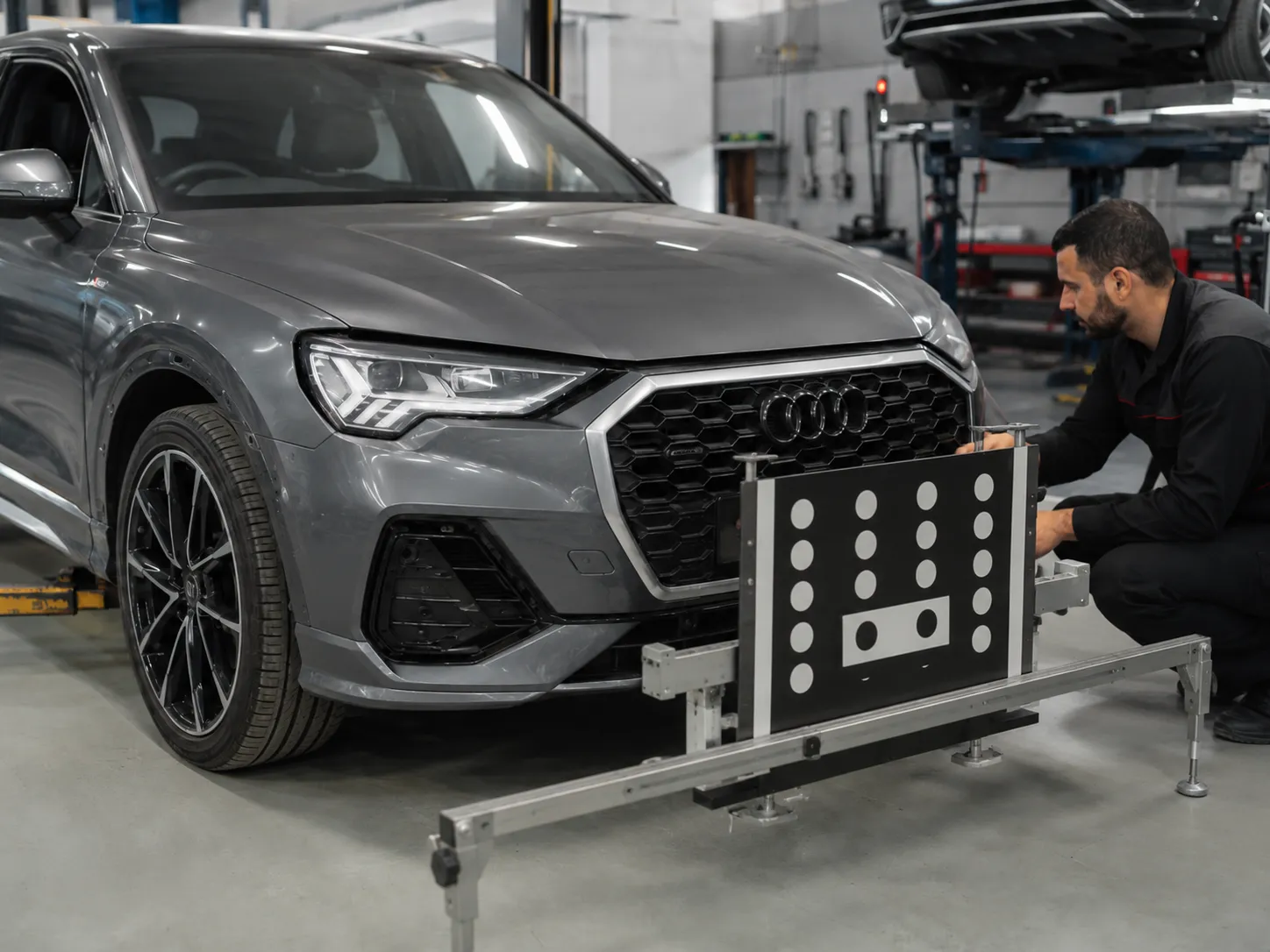
Audi body shop in Dubai
From a shallow dent to collision damage, the repair method should follow the panel material, hidden structure, paint condition, sensor mounting and safe function of the vehicle.
Is the damage cosmetic, functional or safety-related?
A useful first inspection separates appearance from fit, protection and vehicle function. That decision controls whether the Audi can be driven, what must be exposed and which repair methods remain appropriate.
Surface and finish
Paint transfer, shallow clear-coat marks, chips, fading and local contamination may not require the same work as damage that reaches the color coat, primer, plastic or metal.
Shape and fit
Dents, creases, changed gaps, a loose bumper, poor closure or wheel contact indicate that form, attachments and adjacent parts need checking.
Structure and systems
Wheel-area impacts, reinforcement damage, leaks, restraint warnings, lamps, cameras, radar and wiring can turn an apparent body repair into a connected technical job.
Use the least invasive sound repair
Repair does not automatically mean filler and paint. Replacement is not automatically better. Access, material, deformation, previous work, corrosion, edge involvement and sensor mounting decide what can be restored and verified.
What common Audi body damage may require
The table describes inspection routes, not automatic repairs. The final method depends on physical access, exact vehicle specification and the condition revealed after approved disassembly.
| Observed damage | Inspection focus | Possible route | Do not assume |
|---|---|---|---|
| Light surface mark | Contamination, paint transfer, scratch depth and coating thickness. | Cleaning, correction, touch-up or local refinish. | Every visible line needs repainting. |
| Door or quarter-panel dent | Paint condition, crease, edge, inner access, material and previous filler. | Paintless dent repair or conventional panel repair. | Every dent is accessible or suitable for PDR. |
| Cracked or displaced bumper | Cover material, brackets, absorbers, reinforcement, sensors and lamp mounts. | Plastic repair, bracket work, refinishing or replacement. | The bumper cover is the only damaged part. |
| Wheel-area impact | Tire, wheel, hub, steering, suspension, subframe, alignment and body attachment. | Mechanical and geometry checks before body completion. | A straight-looking wheel proves safe operation. |
| Front or rear collision | Cooling pack, lamps, locks, rails, floor, restraint data, sensors and wiring. | Controlled strip-and-assess plan with measured repair or replacement. | Photos reveal all inner damage. |
| Glass or roof damage | Bonding area, aperture, drainage, cameras, roof mechanism and water entry. | Glass, seal, panel, calibration or specialist roof work. | Only the cracked outer surface matters. |
Color matching begins below the color coat
A durable finish depends on the condition and preparation of each layer. Paint code is a starting reference, while age, previous repair, metallic or pearl orientation, substrate and adjacent panels affect the finished match.
Steel, aluminum, plastic, composite and previously repaired surfaces need different preparation.
Adhesion treatment, corrosion protection, seam sealing and underbody protection are restored where disturbed.
Panel work, filler, primer and sealer establish shape and a stable base without hiding poor preparation.
Application, blend strategy, curing, gloss and texture determine whether the repair belongs with the surrounding finish.
The same dent behaves differently across the car
An Audi body can combine steel, aluminum, plastics, glass, adhesives, sealers and composite parts. The repair method must suit the affected material and its function, not just the visible shape.
Shape, stretch and access
Dent depth, crease position, panel edge, reinforcement and tool access influence whether controlled reshaping is viable. Aluminum and steel do not respond identically. Heat, pulling and joining methods must suit the confirmed material and repair instructions.
Plastic condition and mounting
A cover can look repairable while tabs, brackets or sensor mounts behind it are broken. Material identification, crack location, distortion and missing sections determine whether plastic repair can restore dependable fit.
Fit, sealing and safe latching
Doors, bonnet and tailgate depend on hinges, latches, seals, wiring and accurately positioned apertures. A closure that needs force, sits proud or allows wind and water needs more than surface refinishing.
Aperture and viewing systems
Glass work can involve bonding surfaces, corrosion, trims, rain sensors and camera viewing areas. The aperture must support correct fit and water control before related electronic checks are completed.
Show the damage in context
Photos cannot reveal every hidden condition, but a consistent set reduces guesswork and helps decide whether workshop inspection or recovery should come first.
One full vehicle view
Show the complete side, front or rear that contains the impact. This establishes orientation, wheel position and how several damaged areas relate to one another.
One panel-wide view
Frame the entire affected panel and its gaps to adjacent panels, lamps or glass. Reflections along the surface can make a crease or distortion easier to understand.
Close details
Include cracks, chipped edges, broken mounts, displaced trim, exposed wiring, leaking fluid or sharp sections. Do not move a loose part simply to improve the photograph.
Dashboard and wheel view
Photograph warning messages and the wheel area when an impact is nearby. Note steering change, rubbing, vibration, leakage or a closure that does not latch normally.
Receive and make safe
We record keys, warning messages, visible damage, leaks and whether recovery or isolation is required.
Inspect and measure
Panel gaps, mounts, wheel position, closures and relevant dimensions are checked. Scan data is added where the impact or warnings justify it.
Expose hidden damage
Only the affected area is disassembled to inspect brackets, absorbers, reinforcement, inner panels, wiring and cooling parts.
Approve the method
Repairability, material, parts, finish, labor, calibration, availability and owner preference are tied to a written scope.
Repair and refinish
Shape, fit, protection, sealing, color and finish are restored in the correct order.
Reassemble and verify
Gaps, fasteners, closures, lights, glass, sensors, warnings, water paths and road behaviour are checked as applicable.
Function, material and access decide
A repairable outer panel can sometimes remain on the Audi, preserving original joints and avoiding unnecessary replacement. Severe stretch, cracking, damaged mounting areas or safety-critical function can justify another route.
Integrity can be restored
The material allows controlled reshaping or plastic repair, attachments remain dependable, protection can be reinstated and the finished result can be verified.
Damage exceeds a sound repair
Tearing, cracking, severe stretch, inaccessible deformation, affected safety function or poor repair economics make replacement more defensible.
The outer layer hides the answer
Covers, liners, lamps, trims and interior panels can conceal brackets, wiring, reinforcement, absorbers or damaged water paths.
Body alignment can affect electronic functions
A clean dashboard does not confirm correct mounting, aim or calibration. The required checks depend on fitted equipment and what moved during repair.
Radar and parking support
Sensors, cameras, radar, brackets, wiring and absorbers are checked where the impact or repair affects them.
Camera viewing area
Bonding, aperture condition, camera mounting, rain sensors and the clear viewing zone can affect the verification route.
Mounting and aim
Headlamp mounts, leveling, matrix functions, coding and beam aim may need attention after front-end work.
Position and reference
Alignment, steering-angle reference, suspension position and tire condition matter when an impact reaches a wheel area.
Build the repair scope in two stages
Photos help route the first conversation, while workshop access confirms hidden damage, required parts and the checks needed before handover.
Photos guide the first estimate
A wide image establishes location and vehicle orientation. Close views show the finish, edge, gap and attachment area. Photos can help identify likely panels, suggest whether the Audi should be driven and prepare an early parts discussion.
Send the model, year, VIN when available, current location, warning messages and whether the vehicle moves, steers, brakes and closes normally.
Inspection confirms the scope
Clips, brackets, absorbers, reinforcement, wiring, sensors, lamps, seals, corrosion protection and previous repairs can remain hidden until access is created. Extra findings should be documented and approved before supplementary work proceeds.
VIN, body style, material, equipment and paint finish.
Panels, dent shape, coating depth, openings and concealed parts.
PDR, plastic repair, panel work, replacement, blend, glass or trim.
Diagnostics, cooling, restraint, lighting, alignment or calibration.
Stop when impact damage affects control or protection
A bumper scuff can be cosmetic. A similar-looking mark near a wheel, cooling pack, lamp, door opening, restraint sensor or high-voltage area may not be.
- A wheel rubs, vibrates, sits out of position or steering has changed.
- There is a fluid leak, overheating, smoke, exposed wiring or a loose lamp.
- A door, bonnet or tailgate will not latch securely.
- Glass is unstable or visibility is reduced.
- Airbags deployed or restraint warnings appeared.
- An electric or hybrid Audi has underbody or battery-area damage.
Compare the repair scope, not only the total
Two estimates can describe very different jobs. A useful quotation identifies the affected areas, repair method, refinishing scope, parts route and checks required before handover.
Included preparation
The scope should make clear which trims and components are removed, how the surface is prepared, whether corrosion protection or sealing is restored and what masking or blending work is included.
Parts and attachments
A bumper cover may depend on brackets, clips, absorbers, reinforcement, grilles, lamps, sensors and fasteners. The quotation should distinguish confirmed items from parts that can only be assessed after access.
Verification after repair
Panel gaps, closures, lighting, water control, warning messages, wheel geometry, camera or radar work and road behaviour should be included where the damaged area makes them relevant.
Continue to the affected area
The body shop coordinates the overall repair. Dedicated pages explain narrower services when the damage is limited to one component or finish concern.
A finished repair must pass more than a paint check
Audi body shop questions
Can you quote Audi body damage from photos?
Photos support an initial assessment, but the final written estimate depends on physical inspection, vehicle specification, hidden damage, parts, approved work and current availability.
Is paintless dent repair suitable for every dent?
No. Paint condition, dent shape, metal stretch, panel edge, access, material and previous repair determine whether PDR is suitable.
Will one damaged panel always need painting?
No. Paint transfer or shallow marks may correct without refinishing, while deeper damage may need local or full-panel work.
Can a cracked bumper be repaired?
Some plastic bumper-cover damage can be repaired, but material, crack location, deformation, sensor mounts, brackets and underlying impact parts must be assessed.
Why are panel gaps important after a collision?
Changed gaps can indicate damaged hinges, latches, mounts, adjacent panels, openings or deeper structure. They also affect sealing and closure.
Does body repair require camera or radar calibration?
It can. The need depends on fitted equipment, affected area, component removal or replacement, mounting changes, wheel geometry, fault records and repair instructions.
Should I drive my Audi after a minor accident?
Do not decide from appearance alone. Stop and arrange inspection when steering, braking, wheels, suspension, cooling, lights, glass, closures, airbags, loose panels, fluids, wiring or high-voltage areas may be affected.
Send wide and close damage photos
Add the Audi model, year, VIN when available, impact area, warning messages, location and whether the vehicle can move safely.