

Audi A7 repair in Dubai
An Audi A7 warning, leak, vibration, ride-height change or shifting complaint needs more than a generic parts list. We identify the exact generation, engine, gearbox, drivetrain and installed equipment, reproduce the concern, compare electronic and mechanical evidence, then define the repair boundary before work is approved.
Start with what the Audi A7 is doing
The same dashboard message can follow different causes. A scan helps locate the affected system, but the operating pattern decides which tests come next. This symptom map keeps the investigation focused without treating a fault code as a replacement instruction.
EPC, misfire or weak acceleration
Ignition, fuel delivery, air leaks, boost control, sensors, wiring, timing and mechanical sealing can overlap. Freeze-frame data and repeatable road conditions help separate them.
Delay, shudder or gearbox warning
Fluid condition, adaptation, clutch behaviour, mechatronic control, internal wear, mounts and engine-output faults may feel similar. Gearbox identity and temperature matter.
Noise, vibration or uneven height
Tyres, wheels, bearings, arms, dampers, air springs, valves, compressor operation and alignment should be separated before a suspension assembly is condemned.
MMI, key or comfort-system fault
Battery state, charging voltage, network communication, water entry, wiring and module power supply can affect several convenience features at the same time.
Four routes cover most Audi A7 complaints
The A7 combines a low Sportback body with generation-dependent engines, transmissions, quattro hardware, adaptive chassis equipment and networked electronics. Good Audi A7 repair begins by locating the complaint in the correct route, then checking the dependencies around it.
Engine and thermal systems
Oil or coolant loss, overheating, unstable idle, smoke, timing noise, boost concerns and consumption changes require source testing. Fluid can travel across covers and undertrays, so the lowest wet point is not automatically the failed component.
Gearbox and quattro
A hesitation or vibration can begin in the engine, transmission, mounts, driveshaft, differential, wheel or tyre. The installed transmission and drivetrain must be identified before fluid, adaptation or repair advice is given.
Suspension, steering and brakes
Ride-height faults, knocks, pulling, steering vibration and braking judder need a combined chassis view. Replacing one visible part does not correct worn joints, wheel damage, calibration or tyre-force variation elsewhere.
Electrical and comfort systems
Low voltage, charging faults, network interruptions, moisture, damaged wiring and module problems can affect the MMI, parking assistance, lighting, key functions, cameras, windows or tailgate. Power supply comes before module replacement.
The A7 badge does not identify one repair plan
Audi A7 generations and markets can use different petrol or diesel engines, transmission types, mild-hybrid equipment, emissions hardware, suspension arrangements and driver-assistance systems. S7 and RS7 models add their own powertrain, brake, cooling and chassis requirements and should not be treated as ordinary A7 variants.
| Identity | Why it matters | Evidence to confirm |
|---|---|---|
| Generation and model year | Changes platform, control architecture, body systems and service information | VIN, production data and installed equipment |
| Engine and fuel type | Changes cooling, timing, boost, ignition, injection and emissions testing | Engine code, market and physical configuration |
| Gearbox and drivetrain | Changes fluid, adaptation, clutch, differential and road-test procedures | Transmission code, quattro layout and control data |
| Chassis equipment | Changes springs, damping, ride-height control, wheel alignment and calibration | Build data, measured height and installed components |
Parts should be matched to the VIN and installed component information. A model name, engine size or photograph alone may not identify the correct revision.
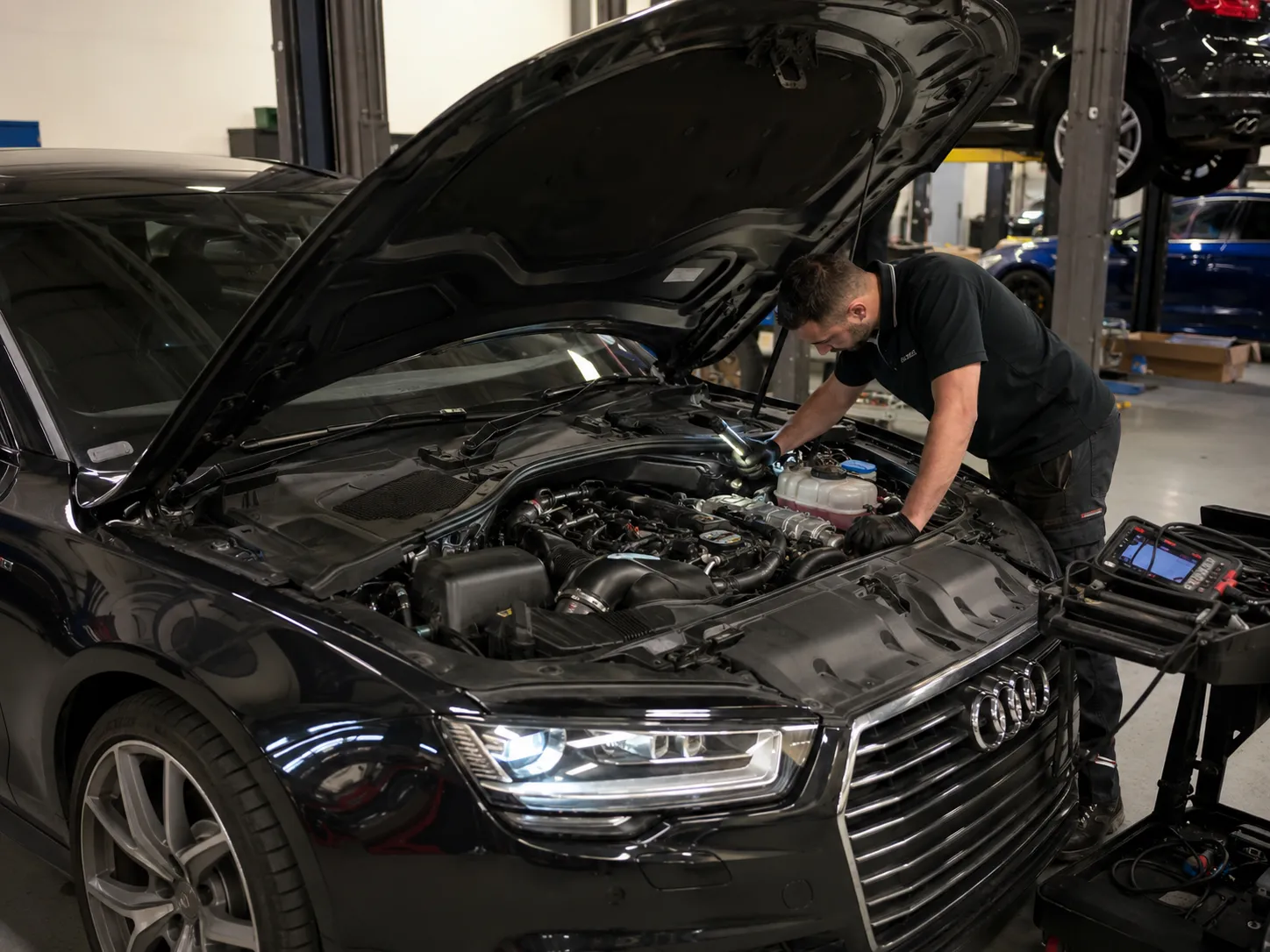
Trace the cause before opening the engine
Oil leaks, coolant loss, overheating, rough running and warning lights can involve accessible external components or deeper mechanical damage. The inspection should establish the source, the operating consequence and whether another system created the failure.
Oil and coolant leaks
Inspect cleanly enough to distinguish covers, housings, pumps, coolers, hoses, seals and connections. Residue on an undertray can hide where the leak began. Pressure, dye or controlled cleaning may be appropriate depending on the fluid and access.
Overheating and circulation
Check coolant level, pressure retention, pump operation, thermostat behaviour, fan command, radiator flow and temperature data. If the engine overheated severely, cylinder sealing and oil condition may need wider assessment.
Misfire and power loss
A fault code may identify the affected cylinder or control limit, not the failed part. Compare ignition, injection, air, fuel pressure, boost, timing and compression evidence before choosing a repair.
For confirmed internal or mechanical damage, continue to the dedicated Audi engine repair route. This A7 page remains focused on model-level diagnosis and service planning.
Shift quality must be tested as a complete system
Jerking, delayed engagement, shudder, reduced drive or a gearbox warning can change with temperature, load, speed and drive mode. The engine may also create torque irregularities that feel like transmission trouble.
Road pattern
Record whether the concern occurs cold, warm, during take-off, a specific shift, coasting, reversing or under acceleration.
Control evidence
Read engine, gearbox and drivetrain faults together, including freeze-frame information and relevant live values.
Mechanical checks
Inspect fluid condition where applicable, mounts, shafts, joints, differentials, wheel condition and evidence of leakage or impact.
Repair boundary
Separate service, adaptation, wiring, sensor, mechatronic, clutch, valve-body and internal mechanical possibilities before approval.
The dedicated Audi transmission repair page explains repair, rebuild and replacement decisions when diagnosis confirms the gearbox itself.
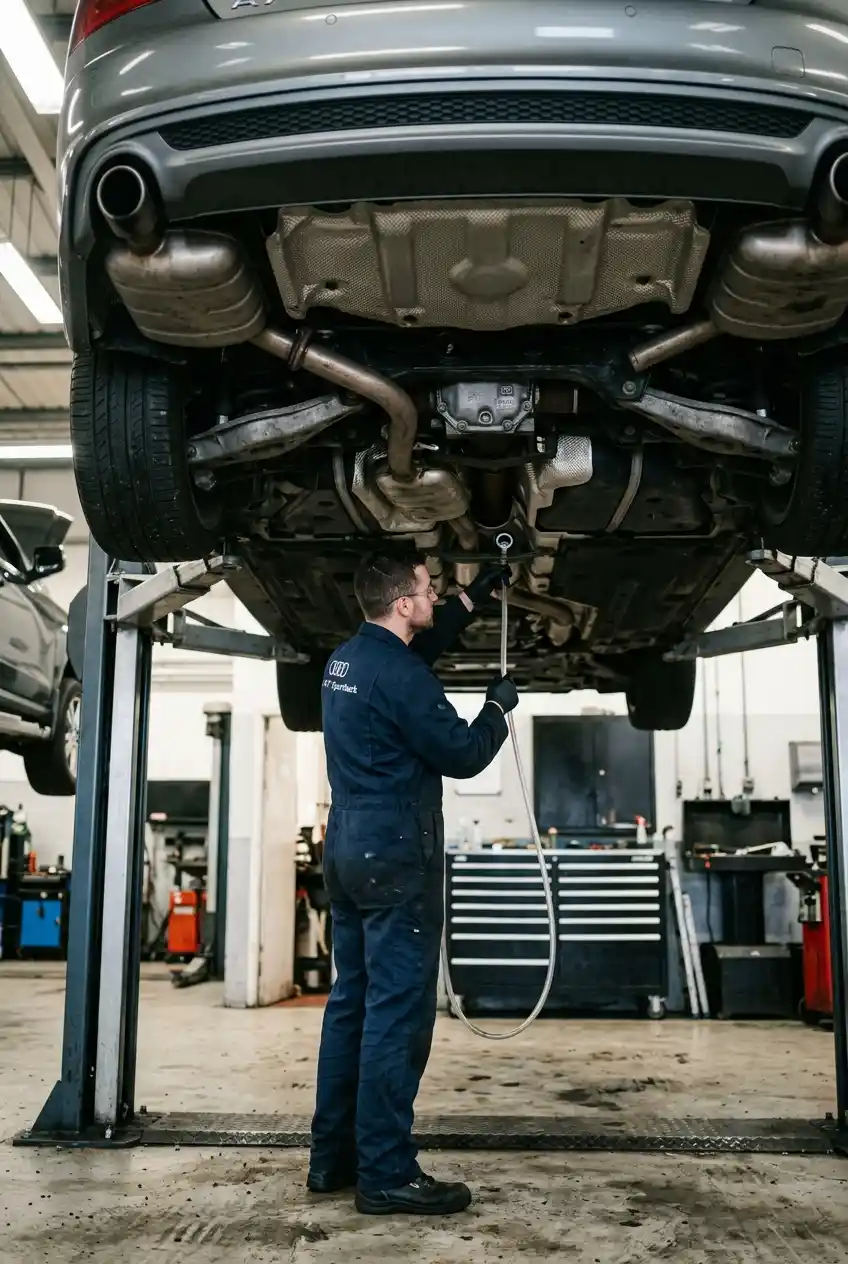
Ride height, vibration and braking interact
The A7 can transmit tyre, wheel, bearing, suspension, steering, brake and drivetrain problems through the same body structure. A vibration at one speed or only under braking should be measured in the condition that produces it.
Measure the stance
Compare corner heights on level ground and note how the vehicle changes after standing, starting or selecting a drive mode. An air leak, sensor, valve, compressor, wiring or control issue can create different patterns.
Inspect tyres and wheels
Check pressure, size, wear pattern, sidewall condition, wheel runout and impact evidence. Alignment cannot correct a bent wheel, damaged tyre or loose joint.
Load the joints
Inspect arms, bushes, ball joints, bearings, dampers and steering connections under the conditions that reveal play or noise. Visual condition alone may not reproduce the complaint.
Separate brake vibration
Measure disc and hub condition, pad wear, caliper movement and wheel mounting. A vibration felt through the body can also involve tyre force, suspension movement or drivetrain load.
Align and calibrate last
Perform geometry and any applicable steering, ride-height or driver-assistance calibration after worn or damaged parts and wheel concerns have been corrected.
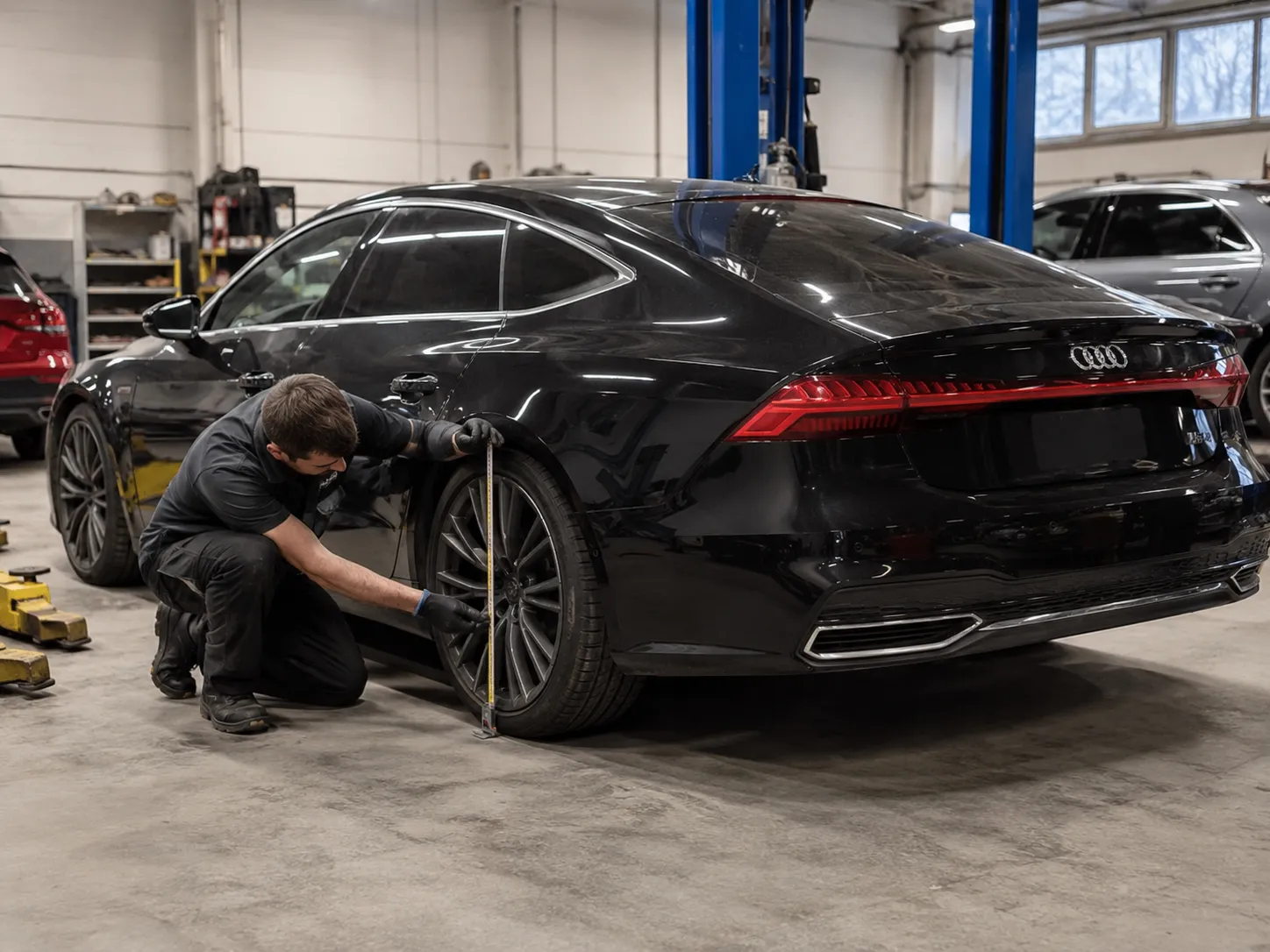
For a confirmed chassis concern, the Audi suspension repair page covers noise, sagging and ride-control faults in greater depth.
Voltage comes before control-module replacement
An Audi A7 may record many unrelated-looking faults when the battery is weak, charging voltage is unstable, a ground connection has resistance or a network module loses power. The electrical route begins with the complaint conditions and a complete scan, then moves through supply, communication and component tests.
Battery and charging
Test battery condition, state of charge, charging behaviour and current draw in context. If replacement is confirmed, specification and any applicable battery registration must match the vehicle. See Audi battery replacement.
Communication and power
A module that does not communicate may have lost power, ground or network access. Check fuses, connectors, wiring, moisture evidence and shared network faults before ordering a controller.
Programming and calibration
Replacement is not complete if the installed component requires coding, parameterisation, adaptation, calibration or component-protection handling. The requirement follows the exact module and repair route.
Evidence moves the A7 from symptom to handover
A clear process limits unnecessary dismantling and makes the quotation easier to understand. The exact tests change with the complaint, but every repair should retain a line from the original symptom to the final verification.
Record
Confirm VIN, mileage, history, recent work, warning wording and the conditions that reproduce the concern.
Inspect
Check the vehicle safely, preserve visible evidence and identify immediate risks before an extended road test.
Test
Select scan, pressure, electrical, mechanical, leak, measurement or road tests that distinguish the leading possibilities.
Approve
Explain the confirmed finding, required work, dependencies, parts route, exclusions and any further decision point.
Verify
Repeat the relevant test, check disturbed systems, review faults and confirm the original operating condition where safe.
Service history matters more than a universal package
The previous page repeated fixed minor and major service intervals as if every A7 shared the same schedule. The correct plan should use the vehicle-specific service display, model year, engine, transmission, time, mileage, market information and documented history. Unknown history needs inspection, not automatic replacement of every item.
A useful maintenance quotation separates due work, condition-based recommendations and diagnosis of an active fault. It should not hide all three inside a generic major-service label.
What shapes Audi A7 repair cost
A fixed figure without vehicle identity and diagnosis can conceal exclusions. The previous generic price list has been removed because engine layout, transmission type, access, confirmed damage, parts source and programming requirements can change the same named job substantially.
Vehicle identity
Generation, VIN, engine, gearbox, drivetrain, wheel and chassis equipment.
Diagnostic depth
Whether the complaint is confirmed externally or requires pressure tests, wiring checks, access or controlled dismantling.
Repair boundary
The failed part, seals, fluids, fasteners, connected damage and work needed to correct the cause.
Parts route
Compatibility, availability, revision, supplier terms and whether reusable components pass inspection.
Completion work
Setup, coding, adaptation, calibration, leak checks, heat cycle and post-repair road verification where applicable.
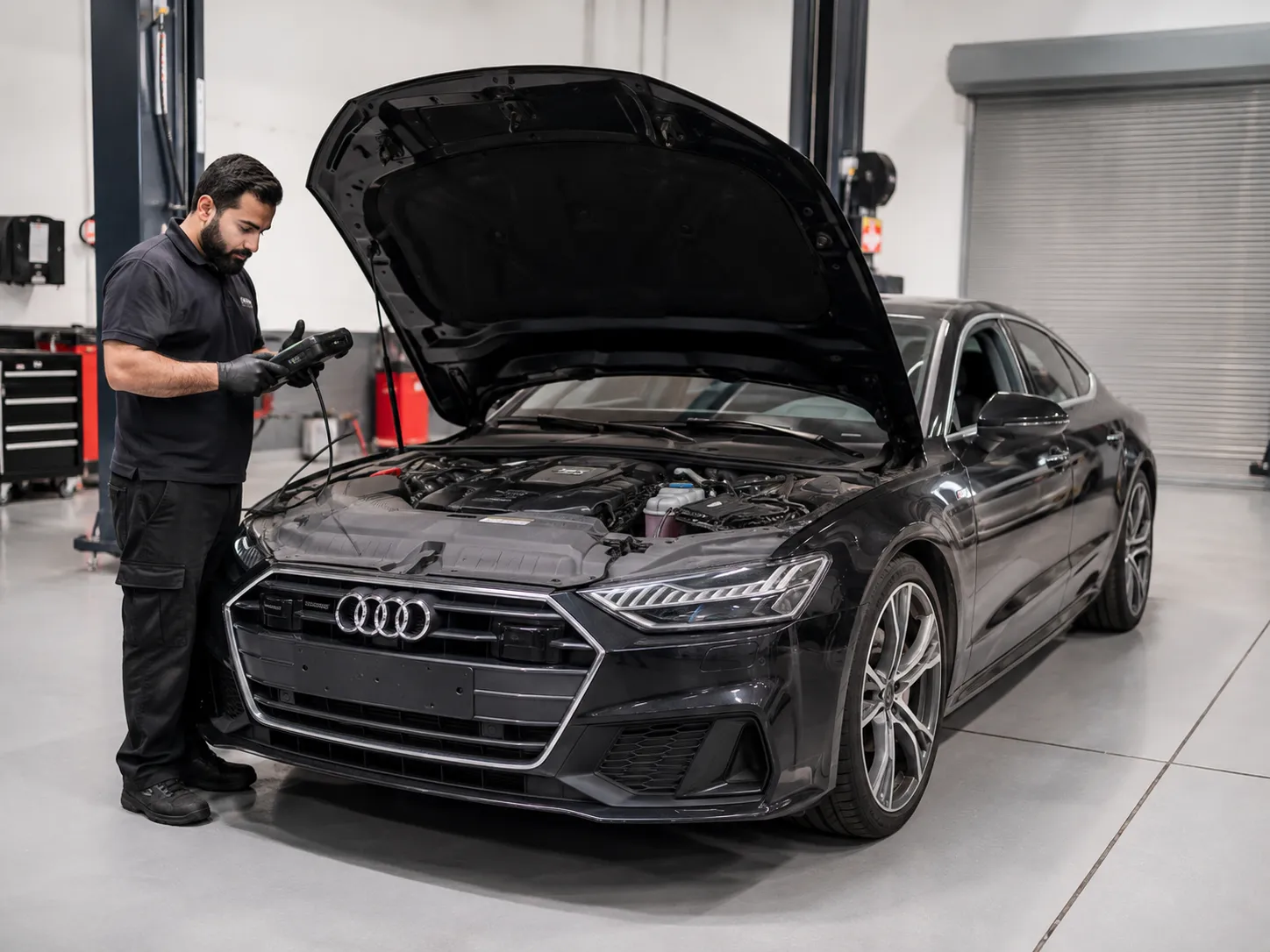
The original symptom must be tested again
A cleared warning light is not the same as a completed repair. Verification should match the fault and cover systems disturbed during access.
Repeat the condition
Check the cold start, temperature, speed, load, steering input, braking event or ride-height change that originally produced the complaint.
Review control data
Confirm relevant values, adaptations and fault status. Clear faults only when the repaired condition and any unrelated records are documented.
Inspect disturbed areas
Recheck connections, fluid paths, seals, fasteners, harness routing and components moved during access.
Explain the handover
Record what was found, what was repaired, what was tested and which separate observations were not included.
Continue to the confirmed Audi system
This page owns Audi A7 model-level repair and maintenance intent. The following published pages provide deeper information once the affected system is known.
Audi A7 repair questions
What Audi A7 problems can be diagnosed?
Diagnosis can begin with engine, gearbox, drivetrain, suspension, steering, brake, battery, charging, MMI, lighting, parking-assistance, air-conditioning and comfort-system complaints. The useful starting point is the exact symptom, vehicle identity and conditions that make it appear.
Does an Audi A7 gearbox warning prove the transmission needs rebuilding?
No. A warning can relate to voltage, temperature, wiring, sensors, hydraulic or electronic control, clutch behaviour, adaptation, engine torque delivery or internal wear. Fault status, fluid evidence, road behaviour and gearbox identity must be interpreted together.
What can cause coolant loss or overheating in an Audi A7?
Possible sources include pumps, thermostat housings, coolers, hoses, radiators, caps, seals, connections and internal engine faults. Pressure testing, residue tracing and operating-temperature data help locate the source and establish whether overheating caused further damage.
Can the Audi A7 be inspected before parts are replaced?
Yes. The inspection route can combine history, a complete scan, visual checks, measurements, pressure or electrical tests and a controlled road test where safe. The required depth depends on the symptom and whether access is needed to confirm the finding.
How is an Audi A7 repair quotation prepared?
A meaningful quotation follows vehicle identification and diagnosis. It should state the confirmed finding, included labour, parts basis, fluids, seals, fasteners, coding or calibration, connected damage, exclusions and the verification planned after repair.
Does Audi A7 maintenance differ by generation and engine?
Yes. Service requirements can change with model year, engine code, transmission, drivetrain, market and installed equipment. Use the vehicle-specific schedule, service display and documented history rather than assuming every A7 follows one universal minor or major package.
What should I send before booking Audi A7 repair?
Send the model year, mileage, VIN if available, exact dashboard message, when the symptom appears, whether the vehicle remains driveable and details of recent repairs or fluid loss. A short recording can preserve an intermittent noise but does not replace workshop diagnosis.
Send the warning and driving conditions
Include the Audi A7 year, mileage, VIN if available, dashboard message, recent work and the conditions that reproduce the symptom. Tell us immediately if there is a red warning, overheating, heavy noise, smoke, brake concern or major loss of ride height.