
Audi Dashboard Warning Lights Guide
A dashboard symbol is a prompt to check the message and vehicle condition, not a diagnosis. Match the symbol, color, exact text and driving behavior to the urgency below, then preserve the stored evidence for testing.
The warning color is only the first filter
Exact symbols and wording vary by model year, market, options and display. A red message usually needs immediate attention, amber generally requires prompt inspection, and white, green or blue messages may be informational. Vehicle behavior can make any warning more urgent.
Red warning or dangerous behavior
Stop when safe for oil-pressure warnings, overheating, serious brake warnings, smoke, major fluid loss, heavy steering, severe noise or a warning combined with unsafe operation. Switch off when appropriate and call before continuing.
Amber warning with stable operation
Book diagnosis for check-engine, transmission, ABS, stability, suspension, airbag, lighting, emissions, charging or driver-assistance warnings. Limit driving if performance changes.
Information or status message
Some messages show an active system, disabled function, service reminder or temporary condition. Read the full text and the VIN-specific manual before assuming a fault.

Record the warning before the next action
Park safely before photographing the instrument cluster. The full message and the way the Audi behaves are more useful than the icon alone.
- Capture the complete warning and any accompanying chime.
- Note changes in steering, braking, temperature, power or shifting.
- Follow an explicit stop instruction before attempting any reset.
Find the symbol, then see whether you can drive and what to do next
Use the icon as a recognition aid, then read the complete message shown in your Audi. Audi’s official online manual is VIN- and model-specific, so the exact artwork, color, wording and required action can vary by model year and equipment.
Critical or red warnings
Means: Engine lubrication pressure may be unsafe.
Do now: Stop safely and switch the engine off if instructed. Do not keep restarting it.
Means: Engine temperature may be too high.
Do now: Stop if temperature rises, steam appears or the display says stop. Never open a hot cooling system.
Means: A hydraulic, fluid, parking-brake or brake-system fault may be present.
Do now: If pedal feel, braking or fluid level is abnormal, stop and recover the car.
Means: Steering assistance or control may be reduced.
Do now: If steering is heavy, jerky or unpredictable, stop safely.
Means: The 12 V, alternator, DC-DC, wiring or supply system may not be maintaining voltage.
Do now: Switch off unnecessary loads. Stop if the display says so or systems begin shutting down.
Means: Engine, transmission, driveline or electric propulsion may be in a serious fault state.
Do now: Stop if propulsion is unstable, gear cannot be selected or the display tells you to stop.
Means: An electric-drive or high-voltage system fault may be present.
Do now: Follow the exact display instruction. Do not touch orange high-voltage components.
Means: An occupied seat is not properly restrained.
Do now: Buckle the seat belt before driving.
Means: A body opening may not be fully latched.
Do now: Stop and close it securely before continuing.
Means: The parking brake is applied or a parking-brake fault is active.
Do now: Release it before driving. If it will not release or a fault remains, inspect it.
Amber or yellow warnings
Means: The engine or emissions system detected a fault.
Do now: If it flashes, the engine misfires or power drops, limit driving and arrange diagnosis.
Means: Electronic power control detected an engine-management or throttle-related fault.
Do now: Drive gently only if smooth. Reduced power or rough running needs prompt diagnosis.
Means: Anti-lock braking may be unavailable.
Do now: If normal braking feels unchanged, drive cautiously to repair. Red brake warning too means stop.
Means: Stability or traction control is intervening, disabled or faulted.
Do now: Reduce speed on slippery roads. A steady fault warning needs diagnosis.
Means: A tire may be underinflated, punctured or the monitoring system may need attention.
Do now: Stop safely, inspect the tires and confirm cold pressures before resetting.
Means: Part of the occupant-restraint system may be unavailable.
Do now: Do not bypass or clear it to hide the warning. Arrange SRS diagnosis.
Means: Gearbox, clutch, mechatronic, fluid, temperature, voltage or driveline may be faulted.
Do now: Avoid hard acceleration. Stop if engagement is lost, shifts become severe or the display says stop.
Means: A brake-pad wear circuit has reached its threshold.
Do now: Measure pads and discs rather than replacing parts from the light alone.
Means: Oil quantity may be low or the level-sensing system may need attention.
Do now: Check the level using the correct Audi procedure. Red oil pressure is more urgent.
Means: Coolant may be low or the level circuit may be reporting a fault.
Do now: Let the engine cool, check for leaks and level correctly. Stop if temperature rises.
Means: Fuel reserve is low.
Do now: Refuel soon.
Means: Washer-fluid level is low.
Do now: Top up suitable washer fluid.
Means: An exterior light or its circuit may have failed.
Do now: Check the named lamp and restore safe lighting.
Means: Automatic leveling, adaptive lighting or a related component may be faulted.
Do now: Confirm both headlights work. Limit night driving if beam aim or output is poor.
Means: Ride-height, damping, air suspension or chassis control may be faulted.
Do now: If the car sits low, uneven or rides harshly, limit driving and inspect it.
Means: The diesel particulate filter may be loaded or regeneration incomplete.
Do now: Follow the exact Audi instruction. Limp mode or a flashing engine warning needs diagnosis.
Means: Normal briefly on diesel startup, but flashing while driving can indicate an engine-management fault.
Do now: If it flashes or power changes, arrange diagnosis.
Means: AdBlue level, quality, dosing or SCR emissions control needs attention.
Do now: Top up when requested. A restart countdown or persistent fault needs repair.
Means: Automatic start-stop is unavailable or disabled.
Do now: The car can usually be driven normally. Persistent faults may need battery or system checks.
Means: The key may not be detected, authorized or communicating correctly.
Do now: Try the spare key or specified emergency-start position and check the key battery.
Means: Emergency-call communication may be unavailable.
Do now: Normal driving may still be possible, but the emergency-call function needs diagnosis.
Means: Parking assistance may be unavailable or a sensor may be obstructed or faulted.
Do now: Park using mirrors and direct observation until the system is restored.
Means: A camera, radar, calibration, visibility or assistance-system fault may be present.
Do now: Keep full manual control. Clean obvious obstructions only when safe.
Means: Audi pre sense may be warning of collision risk or may be unavailable.
Do now: React to the road first. If unavailable, drive without relying on automatic intervention.
Means: Lane guidance may be unavailable, limited or unable to see markings.
Do now: Keep manual lane control and diagnose a persistent fault.
Means: Adaptive cruise or distance sensing may be unavailable.
Do now: Control speed and following distance yourself until repaired.
Means: Blind-spot assistance may be unavailable.
Do now: Use mirrors and shoulder checks. Do not rely on the warning lamps.
Means: The camera may not be reading road signs reliably.
Do now: Follow actual road signs and speed limits, not the display alone.
Means: A 12 V, 48 V, battery-management, charging, wiring or network issue may be present.
Do now: If multiple warnings appear together, test voltage and supply before replacing modules.
Means: Electric propulsion, inverter, motor, battery or thermal management may be limited.
Do now: Follow the exact message. Stop if propulsion becomes unstable or the display says stop.
Means: Vehicle, cable, charge port, station or battery control may have interrupted charging.
Do now: If there is heat, smell, damage or repeated failure, stop charging and inspect the system.
Means: Scheduled maintenance is due or approaching.
Do now: This is not the same as a fault warning. Service it and reset only after the work is completed.
Green and normal active indicators
Means: Direction indicators or hazard lights are operating.
Do now: No action unless the indicator flashes unusually fast or fails.
Means: Dipped headlights are switched on.
Do now: No action.
Means: Front fog lights are active.
Do now: Use only when conditions justify them.
Means: Cruise control is active.
Do now: Stay ready to brake and steer.
Means: Brake hold is maintaining the vehicle at a stop.
Do now: Confirm it releases normally when moving off.
Means: Lane guidance is available or assisting.
Do now: Keep hands on the wheel and remain responsible for lane position.
Means: Adaptive cruise or distance control is operating.
Do now: Maintain attention and be ready to take over.
Means: Electric drive is ready even though the vehicle may be silent.
Do now: Treat the vehicle as live and ready to move.
Means: The high-voltage battery is charging or connected.
Do now: Follow the charge-port and MMI status.
Blue and information indicators
Means: Main-beam headlights are on.
Do now: Dip the beam when required to avoid dazzling other road users.
Means: Some Audi displays use blue, white or gray for information and assistance states.
Do now: Read the accompanying text because colors vary by model and operating state.
Engine warning or reduced power
Misfire, air, fuel, sensor, emissions, boost, timing and mechanical faults can overlap.
Open engine warning guideGearbox malfunction message
Fluid, voltage, wiring, clutch, mechatronic and internal concerns require separation.
Open transmission guideCoolant level or temperature
Low coolant, leaks, circulation, fans, pressure and sensor faults need safe testing.
Review coolant warningsBrake lamp or brake-system warning
Separate exterior lamp faults from pad, fluid, ABS, parking-brake and hydraulic concerns.
Open brake warning guideSteering malfunction
Voltage, sensor, calibration, module, rack and mechanical faults can alter assistance.
Open steering guideChassis or stabilization warning
Wheel-speed data, steering angle, ride height, voltage and chassis faults can interact.
Open chassis warning guideAirbag or restraint warning
A restraint-system warning needs proper scan and circuit testing. Do not bypass safety devices.
Open restraint-system guideBattery or charging warning
Test the battery, alternator or DC system, wiring, drain and stored energy-management faults.
Open charging-fault guideHeadlight range-control warning
Level sensors, wiring, control units, lamps and calibration can trigger the message.
Open headlight-control guideCamera or assistance unavailable
Obstruction, voltage, alignment, calibration, wiring and module faults require different fixes.
Open camera warning guideSOS call-system failure
Backup power, antenna, communication, software and module faults can be involved.
Open SOS warning guideParking or exterior-light warning
Check the correct lamp, connector, moisture, wiring, control output and coding.
Open exterior-light guideUse the dashboard route first, then interpret the stored fault code
The warning tells you what the driver saw. A scan identifies controller records and conditions captured by the vehicle. Neither proves a failed part on its own.
Already have a scan report?
Open the Audi Fault Code Index to understand code families, freeze-frame context and the tests that should follow. Record the full code, status, controller address, mileage and environmental data.
Open the Audi Fault Code Index →Need immediate next actions?
Use the focused action guide for what to record, when to stop and what not to reset before diagnosis.
Review stop-or-drive guidance →Capture what the dashboard actually showed
Intermittent warnings can disappear after a restart. A clear photo and short note can preserve evidence that a generic description loses.
- Photograph the symbol and full message without using the phone while driving.
- Record whether the warning was steady or flashing and whether a chime sounded.
- Note engine temperature, speed, gear, road condition and whether the car was cold or hot.
- Describe power, idle, shifting, brakes, steering, suspension, sound and smell.
- Do not clear codes or disconnect the battery before diagnosis unless safety requires it.
Copy every word and photograph the symbol
Cold start, idle, acceleration, braking or after rain
Power, shift quality, temperature, steering or braking
Stayed active, disappeared or returned
How an Audi warning is diagnosed
Full-system scan
Read current, stored and intermittent faults across related control modules.
Operating data
Review voltage, temperatures, pressures, speeds, status values and freeze-frame data.
Physical system
Use electrical, leak, pressure, mechanical and road tests appropriate to the warning.
Repair result
Clear only after recording, repeat the triggering conditions and rescan after repair.
The Audi repair workshop in Al Quoz 4 combines Autel scan data with physical testing. A warning that returns immediately after clearing is evidence that the cause remains, not proof that the control unit is faulty.
The same icon can carry model-specific instructions
Audi provides digital owner manuals by vehicle. Use the exact model year and specification, then follow the warning instructions shown in the vehicle. The official Audi owner’s manual portal is the right external reference for symbol wording and immediate actions.
Service reminder or fault warning
A maintenance reminder indicates scheduled attention. A system warning indicates a detected condition. Either can appear near a due service, but one does not prove the cause of the other.
Use the maintenance hub for time and mileage planning, and use this page when the car reports a system concern.
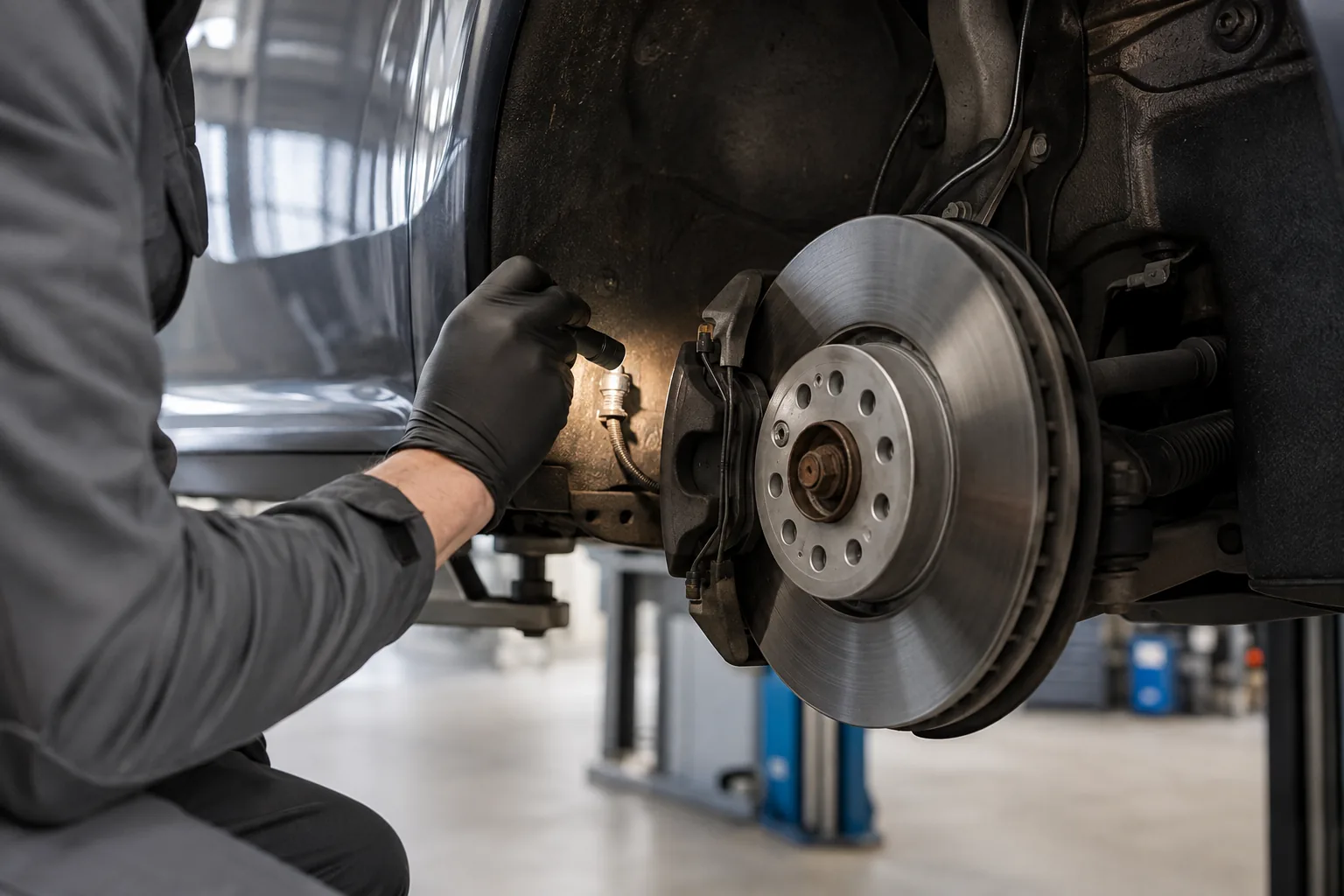
Match a brake warning with how the car behaves
A stored code identifies the affected circuit, not automatically the failed part. Pedal feel, fluid condition, wheel-speed data and a physical brake inspection decide the next step.
- Treat changed pedal feel or a red brake warning as urgent.
- Inspect pads, discs, wiring and hydraulic condition.
- Confirm sensor data before approving replacement parts.
Use the message, affected system and vehicle behavior together
Dashboard symbols are designed to get attention quickly, but the text shown with the symbol often provides the more useful instruction. Write down every word. “Drive system malfunction,” “electrical system fault,” “vehicle may be driven,” and “stop vehicle safely” are not equivalent messages even if owners describe them all as a warning light.
| Warning family | What the driver should record | What diagnosis may need to separate |
|---|---|---|
| Oil pressure or oil level | Red or amber color, exact message, engine noise, oil level by the correct procedure, leaks and whether the warning changes with engine speed. | Oil quantity, pressure, pickup restriction, pump, sensor or wiring, incorrect oil, internal wear and recent engine work. A red oil-pressure warning is not a request to keep driving until the next service. |
| Coolant level or temperature | Gauge position, temperature message, coolant warning color, steam, leak evidence, fan behavior and heater output. | Low level, external or internal leaks, water pump, thermostat, fan control, pressure cap, trapped air, sensors and engine damage. Do not open a hot system. |
| Check engine or emissions | Steady or flashing light, idle quality, power, smoke, fuel smell, recent refueling and whether reduced-power mode started. | Ignition, fueling, boost, intake leaks, exhaust aftertreatment, oxygen sensing, timing, compression, wiring and voltage. A flashing light with misfire can damage the catalyst. |
| Transmission or drive system | Exact gears available, engagement delay, shift quality, temperature, restart behavior, fluid leak and whether the vehicle moves. | Battery voltage, selectors, wiring, clutch, mechatronic, hydraulic pressure, fluid, adaptation, cooling, internal damage and related engine faults. |
| Brake, ABS or parking brake | Pedal feel, braking distance, fluid warning, noise, vibration, wheel involved and whether ABS, ESC or parking-brake messages appear together. | Hydraulic safety, pad wear, fluid level or age, wheel-speed sensors, wiring, hubs, control units, parking-brake motors and voltage. A normal-feeling pedal does not make every brake warning safe to ignore. |
| Steering | Change in assistance, steering angle, noises, whether the wheel returns normally, battery condition and recent alignment or suspension work. | Low voltage, calibration, steering-angle data, wiring, rack, motor, module, mechanical binding and chassis faults. Heavy or unpredictable steering can require recovery. |
| Airbag or restraint system | Exact seating position named, recent seat removal, water entry, collision repair, battery work and whether the warning is intermittent. | Seat wiring, occupancy sensing, belt buckles, airbags, crash sensors, control units and network faults. Never install a resistor or bypass to extinguish the light. |
| Tire-pressure monitoring | Actual cold pressures, tire temperature, puncture evidence, recent tire work, reset history and whether one wheel loses pressure. | A real leak, pressure setting, damaged tire, valve or sensor where fitted, indirect wheel-speed learning and reset procedure. Resetting does not repair a puncture. |
| Suspension or level control | Vehicle height, low corner, compressor run time, temperature, overnight change, ride quality and recent lifting or tire work. | Air leaks, compressor, relay, valve block, level sensors, calibration, dampers, voltage and chassis-control communication. |
| Lighting or headlight range | Which lamp is affected, moisture, startup movement, recent bulb or headlamp replacement and whether the warning follows bumps or rain. | Lamp, LED module, ballast or driver, connectors, wiring, level sensors, control unit, coding and calibration. |
| Battery or electrical system | Starting behavior, battery age, recent replacement, warning combinations, voltage if safely measured and whether systems shut down. | Battery condition, alternator or DC-DC system, grounds, belt drive where applicable, wiring, registration, abnormal drain and network effects. |
| Driver assistance unavailable | Weather, dirt, glare, windshield or bumper work, impact, wheel alignment and which functions are unavailable. | Temporary obstruction, camera or radar alignment, calibration, voltage, sensor damage, wiring, control units and software. |
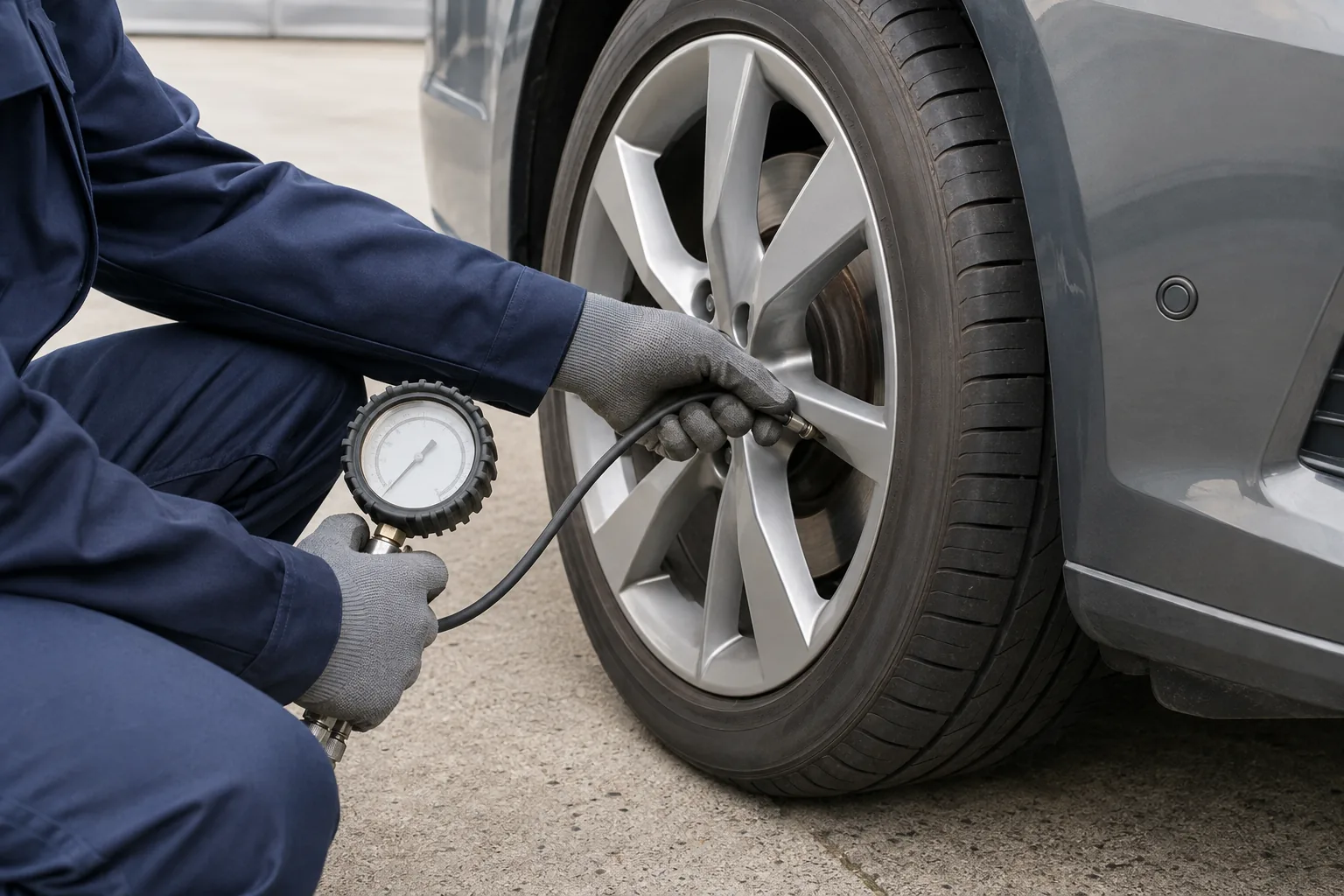
Check pressure and tire condition first
A reset should record the correct pressure after inspection. It should never be used to hide a puncture, sidewall injury or repeated pressure loss.
- Inspect each tire for puncture or visible damage.
- Measure cold pressure against the correct specification.
- Investigate repeated loss before storing new values.
Several lights may share one underlying fault
Audi control modules exchange data. One missing wheel-speed signal can affect ABS, stability control, steering assistance, parking functions and driver assistance. Low voltage can set faults in many modules during the same start. Multiple warnings do not automatically mean multiple expensive failures.
Check shared chassis data
Wheel-speed sensors, wiring, hub condition, steering-angle data, voltage and network communication can affect several functions. The first chronological fault and live wheel data may be more useful than the longest warning list.
Test voltage before condemning electronics
A weak battery, poor ground, alternator or DC-DC concern, interrupted power supply or recent battery replacement can create a cluster of faults. Test the supply and then reassess which faults return.
Separate cause from protective response
An engine torque or communication fault can make the transmission enter protection, while a transmission fault can request reduced engine torque. Read both systems, timing and freeze-frame data before choosing the repair.
Review ride-height information
Ride-height sensors or chassis faults can also affect automatic headlight leveling. Recent suspension work, incorrect ride height and calibration should be considered.
Inspect the event history
Disconnected seat connectors, low voltage, water entry or collision work may explain timing, but safety circuits still require the approved diagnostic procedure.
Check visibility and calibration
Obstruction can temporarily disable functions, while windshield, bumper, suspension or alignment work may create a calibration requirement.
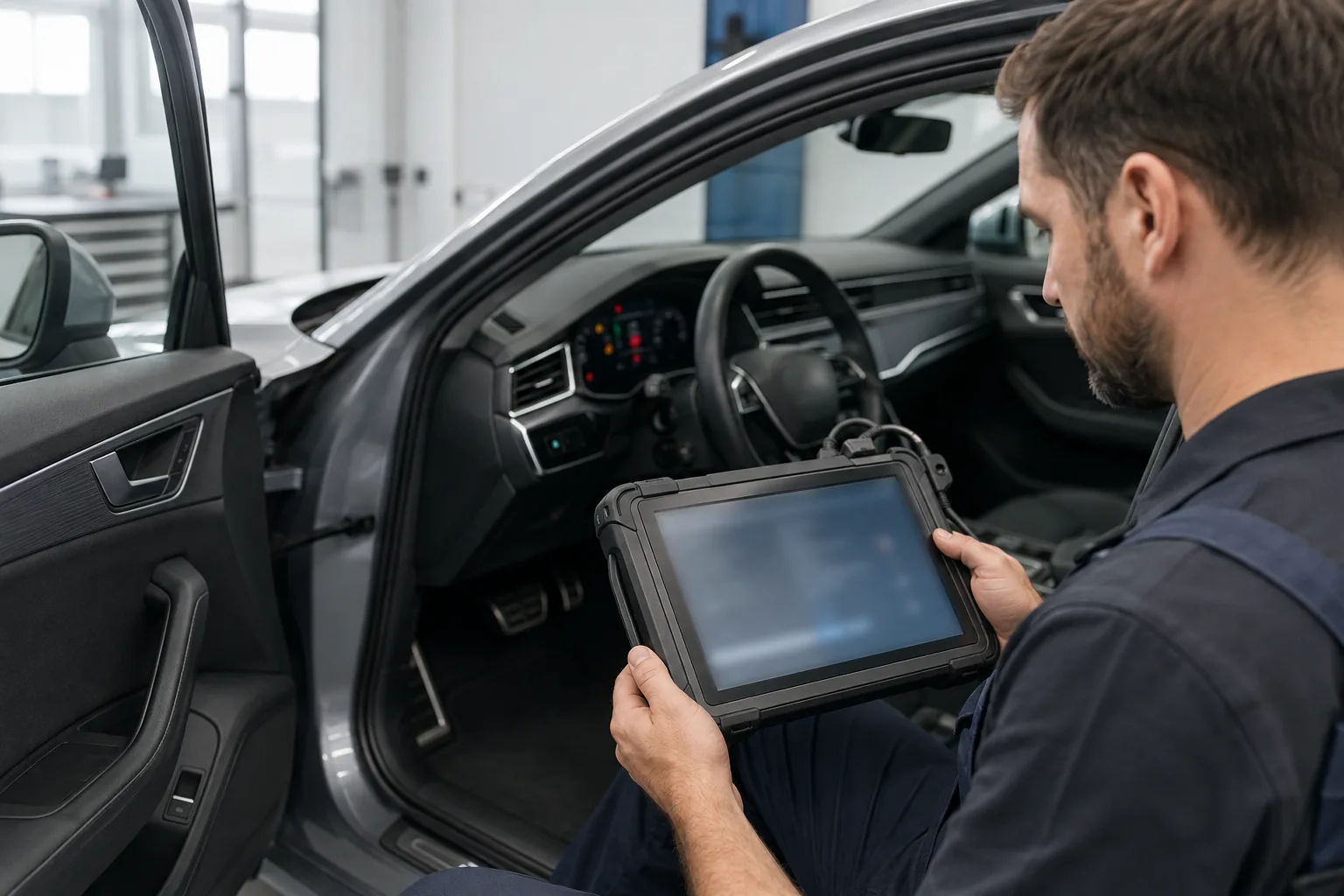
Save the original scan before clearing codes
Module, status, mileage and event data help separate the first fault from secondary warnings. Clearing everything first can remove the evidence needed for an efficient diagnosis.
- Save the complete module report and warning status.
- Record mileage, voltage and available event data.
- Clear faults only as part of testing or repair verification.
Do not erase the warning before understanding it
Preserve data and inspect safely
- Park safely and photograph the complete display.
- Read the manual instruction for the exact model and warning.
- Check visible tire damage and cold pressure when a tire warning appears.
- Check engine oil or coolant only by the correct procedure and only when safe.
- Look for obvious leaks, smoke or unusual odor without touching hot or high-voltage parts.
- Send the warning photo, VIN, mileage and vehicle behavior before deciding to drive.
Do not create a second problem
- Do not clear all codes with a generic scanner before saving the report.
- Do not disconnect the battery simply to switch off a light.
- Do not keep restarting an overheating, low-oil-pressure or severely misfiring engine.
- Do not refill brake fluid without finding why the level is low.
- Do not reset a tire warning until pressures and tire condition are checked.
- Do not bypass airbags, restraint sensors, emissions systems or safety warnings.
Different warnings require different physical tests
| Warning route | Useful tests beyond scanning | Completion evidence |
|---|---|---|
| Engine or emissions | Battery supply, smoke or leak testing, fuel pressure, ignition output, compression or leak-down, boost control, exhaust testing and wiring checks as indicated. | Stable operation under the original trigger condition, no relevant returning faults and verified emissions or sensor behavior. |
| Cooling | Cold pressure test, leak inspection, temperature comparison, pump and thermostat behavior, fan command and combustion-gas testing when justified. | Correct level and bleeding, stable temperature, fan operation, no pressure loss and no returning warning. |
| Transmission | Fluid leak and condition review, electrical supply, selector data, clutch or pressure values, adaptation, cooling and controlled road testing. | Engagement and shifting verified cold and hot, leak-free repair and rescan after the correct adaptation procedure. |
| Brake and chassis | Pad and disc measurements, fluid and hydraulic checks, wheel-speed data, sensor wiring, bearing play, steering and suspension inspection, ride-height measurement and calibration. | Safe braking and steering, correct measurements, calibrated systems where needed and no returning chassis faults. |
| Electrical and communication | Battery capacity, charging output, voltage drop, grounds, current draw, network testing, connector and water-entry inspection. | Stable voltage through start and load, corrected circuit fault and confirmation that unrelated module faults do not return. |
| Lighting and assistance | Lamp output, modules, level sensors, camera or radar mounting, alignment, wiring, coding and calibration targets. | Function test in correct conditions, documented calibration where required and clear final scan. |
A cleared warning light is not enough verification
A fault may take a certain temperature, speed, load, steering angle or drive cycle to return. The completion check should recreate the original condition when safe and practical. If the warning was caused by low voltage or a communication interruption, verify the supply under load and confirm which module faults remain after the root cause is repaired.
Save the original report
Keep the fault code, status, freeze-frame, mileage and module list. This creates a baseline if the warning returns later.
Repeat the trigger
Warm the vehicle, road test, charge, brake, steer or operate the affected system only as required and safe for verification.
Explain what remains
State the confirmed cause, repair completed, codes cleared, test performed and any unrelated stored or intermittent faults still needing attention.
Audi warning lights FAQs
What should I do when a red Audi warning light appears?
Read the exact message and stop safely when instructed. Oil-pressure, overheating, serious brake, steering, high-voltage, smoke, major fluid-loss or dangerous vehicle-behavior warnings should not be treated as normal driving conditions.
Can I drive with an amber Audi warning light?
Often only for a limited trip when the car operates normally and the display permits it. Reduced power, rough running, harsh shifting, brake changes, abnormal ride height or rising temperature increases the urgency.
What does a flashing Audi check-engine light mean?
A flashing check-engine light is more urgent than a steady one and can occur with an active misfire. Reduce load and arrange diagnosis promptly, especially if the engine shakes, loses power or smells strongly of fuel.
Can I drive with the Audi EPC light on?
If the EPC light is on but the engine runs smoothly, a gentle trip for diagnosis may be possible. Reduced power, unstable idle, poor throttle response or additional red warnings mean you should limit or stop driving as the vehicle instructs.
Can I drive with the Audi ABS light on?
If the brake pedal and normal braking remain unchanged, the car may still have conventional braking but anti-lock operation can be unavailable. Drive cautiously for repair. If a red brake warning appears too or braking feels abnormal, stop.
What should I do with an Audi tire-pressure warning?
Stop safely and inspect the tires. Check cold pressures using the correct specification and look for puncture or sidewall damage. Do not simply reset the warning without checking the tires first.
Why did several Audi warning lights come on at the same time?
Several systems can share voltage, wheel-speed, steering-angle, network or other data. A weak supply or one missing signal can create warnings in multiple modules, so the first fault and live data matter more than replacing every system named on the dashboard.
Why did warning lights appear after an Audi battery replacement?
Low voltage, interrupted power, battery registration, steering or window initialization and stored faults can all affect the dashboard after battery work. Test the battery and charging supply and confirm which warnings return before replacing modules.
Why did the Audi warning disappear after restarting the car?
A restart can remove a temporary protective state while stored or intermittent faults remain. Photograph the original message and scan the vehicle before clearing the evidence.
Should I clear an Audi warning light before diagnosis?
No. Clearing faults or disconnecting the battery can remove useful status and event data. Save the warning, fault codes and freeze-frame information first, then clear only as part of diagnosis or repair verification.
What if my exact Audi symbol is not shown on this guide?
Audi symbols and wording vary by model, year, market and equipment. Use the complete dashboard message and the VIN-specific official Audi Owner’s Manual, then send a safe photo of the display if the meaning or driving decision is still unclear.
Send the exact Audi warning and vehicle behavior
Include the model, year, mileage, a safe photo of the display and what changed when the warning appeared.
Typical cost after an Audi warning light appears
A dashboard light does not price the repair by itself, but these market ranges help with the first budget decision after checking vehicle behavior.
| Service or repair | Typical Dubai market range | Confirm in the estimate |
|---|---|---|
| Full scan and first-stage check | AED 150 to AED 500 | Extended electrical testing or road testing |
| Battery and charging-system correction | AED 650 to AED 1,800 | Battery registration, alternator or wiring repair |
| Common sensor-related repair | AED 500 to AED 2,500 | Cause testing, wiring, coding and calibration |
| Brake or ABS repair | AED 700 to AED 6,000+ | Wear parts, hydraulic work, module and exact brake package |