
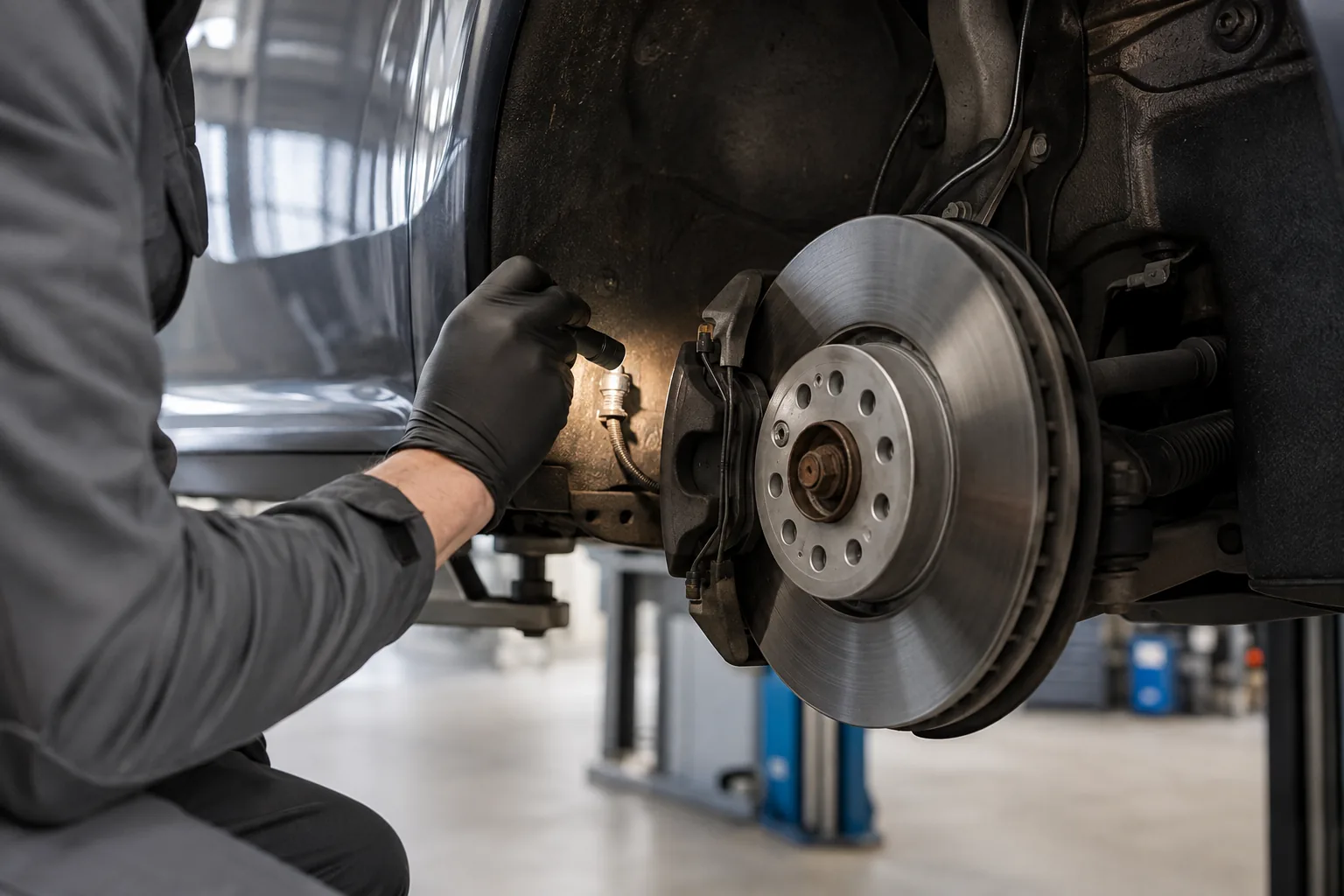
Audi ABS Module Repair in Dubai
Audi ABS module repair should follow proof that the electronic controller, hydraulic pump, or valve block has failed. We first test wheel-speed signals, tone rings, wiring, power, grounds, network communication, brake hydraulics, and related sensors so a module is not blamed for a fault elsewhere.
Find the cause of ABS warnings
Several warning lights can come from one sensor or wiring fault. We check the system before recommending module repair.

Wheel sensors
Compare wheel-speed readings and inspect sensors, encoder rings and connections.
Wiring and power
Check the electrical supply, connectors and communication with the ABS controller.
Module and hydraulics
Test the controller, pump and valves to identify whether repair or replacement is needed.
A fault code alone does not confirm a failed ABS module. The repair recommendation follows testing.
Light combinations change the urgency
Read the exact symbols and messages, then consider pedal feel, fluid level, braking behavior, recent battery or wheel work, and whether the warning is constant or intermittent.
Anti-lock function may be unavailable
Conventional hydraulic braking may remain, but stopping behavior can change and related stability functions may be disabled. The car still needs prompt diagnosis, and a web page cannot declare it safe to drive.
Shared data has been lost
A wheel signal, steering-angle reference, yaw sensor, voltage event, network issue, or controller fault can affect several functions. Capture the complete scan before clearing anything.
Treat as a higher-risk condition
Low fluid, hydraulic failure, parking-brake status, pressure loss, or another serious condition may be present. Stop safely and seek guidance, especially with a soft pedal, leak, noise, pulling, or reduced braking.
Voltage or calibration context
Low voltage, lost reference values, steering-angle learning, sensor supply, or coincidental stored faults may follow battery disconnection. Test the cause rather than assuming every light only needs clearing.
Inspect disturbed components
Sensor seating, connector damage, wiring routing, encoder orientation, wheel bearing fitment, tire-size mismatch, or contamination can create implausible speed signals.
Reproduce movement and heat
A broken conductor, excessive bearing play, changing sensor gap, damaged encoder, low supply, or internal electronics can fail only with steering, suspension movement, vibration, or temperature.
For symbol-specific urgency beyond ABS, use our Audi dashboard warning lights guide.
The module is one suspect in a larger network
Each zone has different confirming evidence. Replacing a controller cannot fix a missing wheel signal, poor power feed, contaminated encoder, or hydraulic leak.
Wheel-speed input
Compare all four signals from standstill through controlled movement. Look for dropouts, implausible direction, unequal speed, noise, delayed pickup, or a signal that changes with steering.
Sensor and encoder
Inspect correct sensor specification, mounting, air gap where applicable, contamination, rust, impact, bearing play, magnetic encoder condition, tone ring, and previous hub work.
Power and ground
Test battery condition, charging history, fuses, relays where fitted, terminal tension, supply voltage under load, ground-path loss, water entry, and evidence of heat or corrosion.
Wiring and network
Check continuity only with the circuit safely isolated, then confirm short-to-power, short-to-ground, terminal fit, shielding, connector condition, and CAN communication with related modules.
Motion references
Review brake switch, pressure sensor, steering-angle value, yaw and lateral sensors, wheel and tire fitment, alignment context, ride-height information, and calibration status where relevant.
Hydraulic and controller
Evaluate pump command, valve response, pressure behavior, internal fault status, communication stability, temperature sensitivity, and whether a hydraulic or electronic portion is separately serviceable.
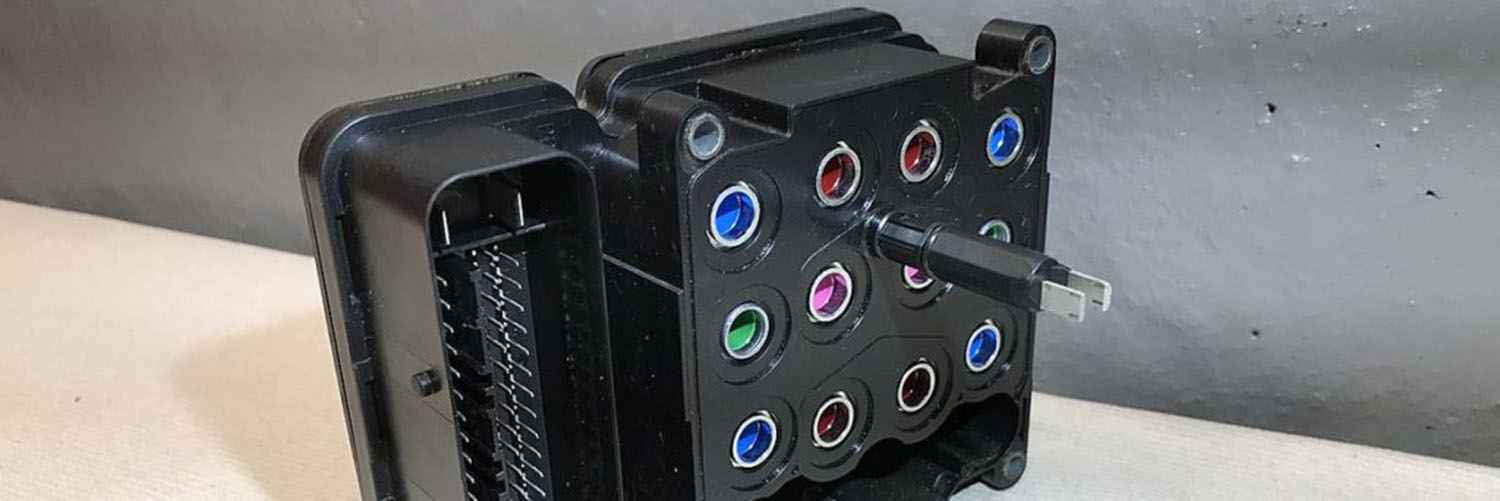
How the failed stage is isolated
Sensor, wiring, rebuild, or replacement
The repair must match the failed part, hydraulic configuration, controller identification, software requirements, and the safety verification that follows.
Correct an external cause
A sensor, encoder, bearing, wiring section, terminal, fuse, ground, battery-voltage problem, brake switch, calibration issue, or tire mismatch may be the complete repair.
- Failure is reproducible outside the module
- Correct signal returns after repair
- No internal pump, valve, or controller fault remains
- Related disturbed work is documented
Rebuild a serviceable unit
A specialist rebuild can suit certain electronic or pump faults when the exact unit is supported, hydraulic contamination or mechanical damage does not exclude it, and testing can verify the result.
- Original identity and configuration are preserved where possible
- Known failed section is repairable
- Rebuild scope and test evidence are clear
- Removal and refitting protect hydraulic cleanliness
Install a matched replacement
Replacement may be needed for unsupported electronics, severe water or heat damage, failed pump or valve block, damaged housing, or a unit that cannot be rebuilt reliably.
- Part number and supersession are verified
- Hardware and hydraulic configuration match
- Coding, parameterization, or protection requirements are planned
- New, remanufactured, or used status is disclosed
A used unit can introduce incompatible software, coding, component-protection, identity, or hydraulic-variant problems. Audi ABS module repair planning must evaluate total installed risk, not only the purchase price.
Opening the brake circuit changes the job
The electronic controller can be attached to a hydraulic modulator containing pump passages and solenoid valves. Some repairs remove only an electronic portion without opening brake lines. Other repairs require removing the complete hydraulic unit. The exact design and supported procedure determine the safe route.
Once a hydraulic circuit is opened, cleanliness, fluid compatibility, line identification, controlled bleeding, and trapped-air removal are critical. A normal manual bleed may not move air from every internal valve or pump chamber. Where the repair procedure requires it, guided activation and a defined bleed sequence are followed before pedal and road verification.
Brake fluid can damage paint and absorbs moisture. Contamination by petroleum products, dirt, incompatible fluid, or careless storage can harm seals and braking performance. The workshop must protect open ports and never reuse questionable fluid.
- Brake lines identified before disconnection
- Open ports capped and protected from moisture and dirt
- Specified brake fluid used from a suitable sealed supply
- Bleeding sequence and diagnostic activation followed where required
- Pedal feel, leakage, pressure behavior, and fluid level verified
- No hydraulic repair approved from an electrical fault code alone
Brake warnings deserve conservative decisions
ABS and ESC assistance can be unavailable even when the pedal still feels normal. Surface grip, emergency braking, tire condition, and the underlying fault determine real risk.
Single amber ABS light
Avoid assuming normal braking equals full system availability. Drive only after obtaining vehicle-specific guidance and avoid conditions that demand emergency intervention.
Several amber chassis lights
ABS, ESC, traction, TPMS, parking-brake, or driver-assistance functions may share the lost data. Explain the exact combination and recent work.
Pedal or braking changes
Do not continue with a soft or sinking pedal, strong pull, grinding, overheating, reduced braking, wheel locking, fluid loss, or new mechanical noise.
Red warning or visible leak
Recover the vehicle for a red brake warning with uncertain cause, low fluid, hydraulic leak, severe pedal change, smoke, overheated wheel, or unsafe stopping behavior.
For friction, caliper, rotor, fluid, pedal, and hydraulic concerns, see our Audi brake repair guide.
Part numbers, coding, and calibration are vehicle-specific
Hydraulic hardware changes
A3, A4, A6, Q-series, S, RS, R8, and other models can use different controller families, pumps, pressure sensors, brake sizes, parking-brake integration, and stability functions. VIN identification comes first.
More systems consume ABS data
Adaptive cruise, lane functions, parking systems, trailer stabilization, and other features can depend on wheel speed or stability data. Repair verification must include related warnings and calibrations where relevant.
Reference values must agree
Alignment, steering-angle calibration, ride-height sensors, adaptive suspension, tire circumference, and wheel-bearing condition can affect plausibility without an internal ABS fault.
Regenerative braking coordination
Electrified vehicles can coordinate hydraulic brakes with regenerative deceleration. High-voltage safety and powertrain-specific test procedures apply, but the ABS warning still requires evidence-led diagnosis rather than assumption.
What happens after a module fault is confirmed
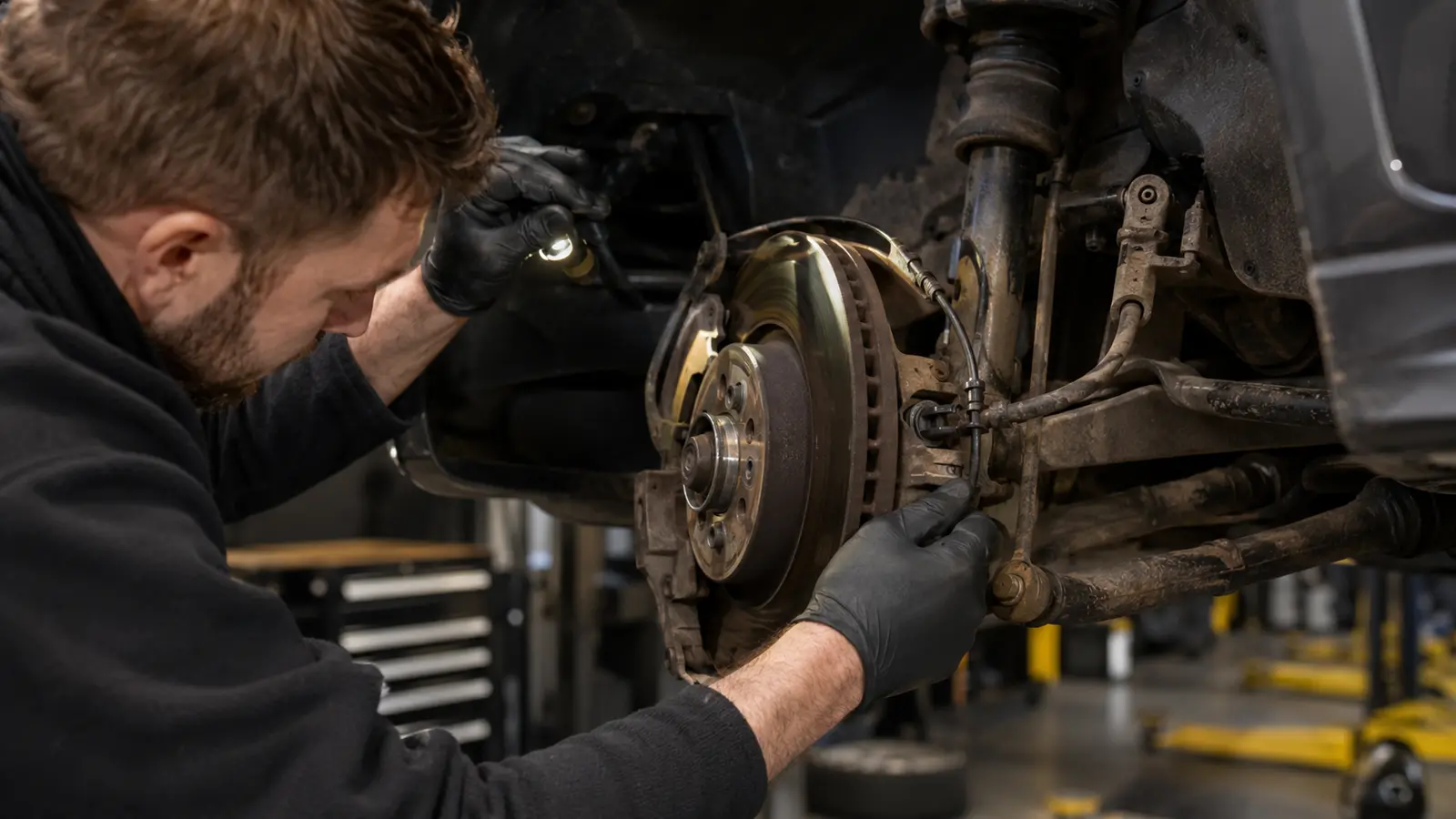
Verification goes beyond turning off the light
The repaired system must communicate consistently, receive four plausible wheel-speed signals, retain power and ground under load, and show coherent steering, pressure, pedal, and motion references. If hydraulics were opened, the pedal, fluid level, leakage, pressure response, and bleeding result are checked before road work.
A controlled road test confirms warnings do not return through steering, bumps, heat, different speeds, and safe braking events. Calibration or basic-setting completion is verified rather than assumed. Any unrelated stored fault is separated from the repaired complaint and explained.
What changes the written estimate
- Diagnostic time for intermittent speed, temperature, or movement-dependent faults
- Sensor, encoder, bearing, wiring, connector, power, ground, or calibration repair
- Electronic controller rebuild versus complete hydraulic-unit replacement
- Exact part number, software, coding, parameterization, and protection requirements
- Brake-line access, seized fittings, fluid service, bleeding, and guided activation
- Water entry, crash damage, overheated wiring, corrosion, or previous repair attempts
- Related tire, steering, suspension, parking-brake, or driver-assistance work
The estimate follows fault isolation and exact component identification. A scan-code screenshot alone is not enough to price a safe repair.
Audi ABS module repair FAQs
Does an ABS warning mean the module has failed?
No. A wheel-speed sensor, magnetic encoder or tone ring, wheel bearing, damaged wiring, connector, fuse, power supply, ground, low-voltage event, brake switch, steering-angle reference, motion sensor, or network fault can trigger the warning. Live data and circuit testing must isolate the failed stage.
Can I drive with the ABS light on?
Anti-lock and related stability functions may be unavailable even if conventional braking remains. Obtain guidance before driving. Stop and arrange recovery for a red brake warning, soft or sinking pedal, fluid leak, pulling, grinding, overheating, smoke, wheel locking, or clearly reduced braking.
Can an ABS module be rebuilt?
Some units and fault types can be rebuilt when the exact electronic or pump failure is supported, the housing and hydraulic portion remain suitable, and specialist testing can verify the result. Water damage, severe heat, mechanical damage, contamination, or unsupported components may require replacement.
Does a replacement ABS module need coding?
Requirements depend on the vehicle, controller family, software, installed equipment, and replacement route. Coding, parameterization, basic settings, component-protection handling, or steering and motion calibrations may apply. These needs must be established from the exact VIN and part identity.
Why did ABS and traction-control lights appear together?
ABS, ESC, and traction functions share wheel-speed and motion data. One missing sensor signal, voltage problem, network fault, steering-angle issue, or module failure can disable several systems at once. The full vehicle scan and live data show the common link.
Can a wheel bearing cause an ABS fault?
Yes. Excessive play can change the sensor gap, and many hubs include a magnetic encoder that can be damaged, contaminated, installed incorrectly, or supplied in the wrong specification. Compare live speed signals and inspect the sensor, encoder, fitment, and bearing condition together.
Why is brake bleeding needed after ABS-unit work?
Bleeding is required when the hydraulic circuit has been opened. Air can remain in internal pump or valve passages, so the vehicle procedure may call for a defined sequence and diagnostic activation. Controller-only work may not open hydraulics. The exact design and repair route decide the process.
How long does ABS module repair take?
Time depends on reproducing the fault, wiring access, sensor or bearing work, unit removal, rebuild support, exact replacement availability, coding, hydraulic bleeding, seized brake fittings, calibrations, and controlled road verification. A schedule follows diagnosis and parts confirmation.
What should I send for an ABS quotation?
Send the VIN, mileage, exact warning symbols and messages, when they appear, pedal behavior, recent battery, tire, hub, brake, alignment, suspension, or accident work, fault codes if available, and whether the warning changes with speed, turns, bumps, rain, or temperature.
Arrange an Audi ABS diagnosis in Al Quoz 4
For Audi ABS module repair planning, send the VIN, exact warning combination, pedal behavior, recent wheel or battery work, and when the fault appears. If there is a red brake warning, fluid leak, severe pedal change, smoke, overheating, or reduced braking, stop safely and call for recovery guidance.