Temperature, oil and boost
Separate coolant loss, oil leakage, misfire, airflow, turbo and thermal-management causes with pressure, scan and physical evidence.

A Q7 repair plan must match the VIN, generation, engine, transmission and suspension equipment. We diagnose the complaint across engine, quattro driveline, air suspension, cooling and vehicle electronics before approving parts.
The nameplate spans two generations, multiple updates, petrol and diesel powertrains, electrified variants and different suspension specifications. A symptom list without build identity can send diagnosis in the wrong direction.
The original Q7 uses generation-specific engines, electrical architecture and chassis systems. Age, previous repairs and parts supersessions matter alongside the current symptom.
Later Q7s add a newer platform, driver-assistance networks and broader powertrain and suspension variation. Updates introduced in 2019 and 2023 change equipment and diagnostic context again.
The diagnostic plan follows the first symptom and operating condition, then checks connected systems without replacing modules or assemblies by guesswork.
Separate coolant loss, oil leakage, misfire, airflow, turbo and thermal-management causes with pressure, scan and physical evidence.
Identify whether vibration, shudder, delay or noise follows engine speed, road speed, gear, steering angle or load.
Leak-test the pneumatic system and review compressor, valve block, sensor and control evidence before condemning an air strut.
Check friction condition, tire specification, pressure, age, alignment and wheel integrity when braking or vibration is involved.
Battery condition, supply voltage, grounds, communication faults and the first event matter when many warnings appear together.
Electrified Q7 variants require powertrain identification and high-voltage-safe procedures. Orange-cable systems are not general DIY work.
We record when the Q7 drops, how quickly height changes and whether the compressor repeatedly runs. Air spring, line, fitting, valve block, compressor and ride-height inputs can create overlapping symptoms.
Driving with severe lean, tire contact or unstable handling can damage more components. Arrange recovery if safe ride height cannot be maintained.
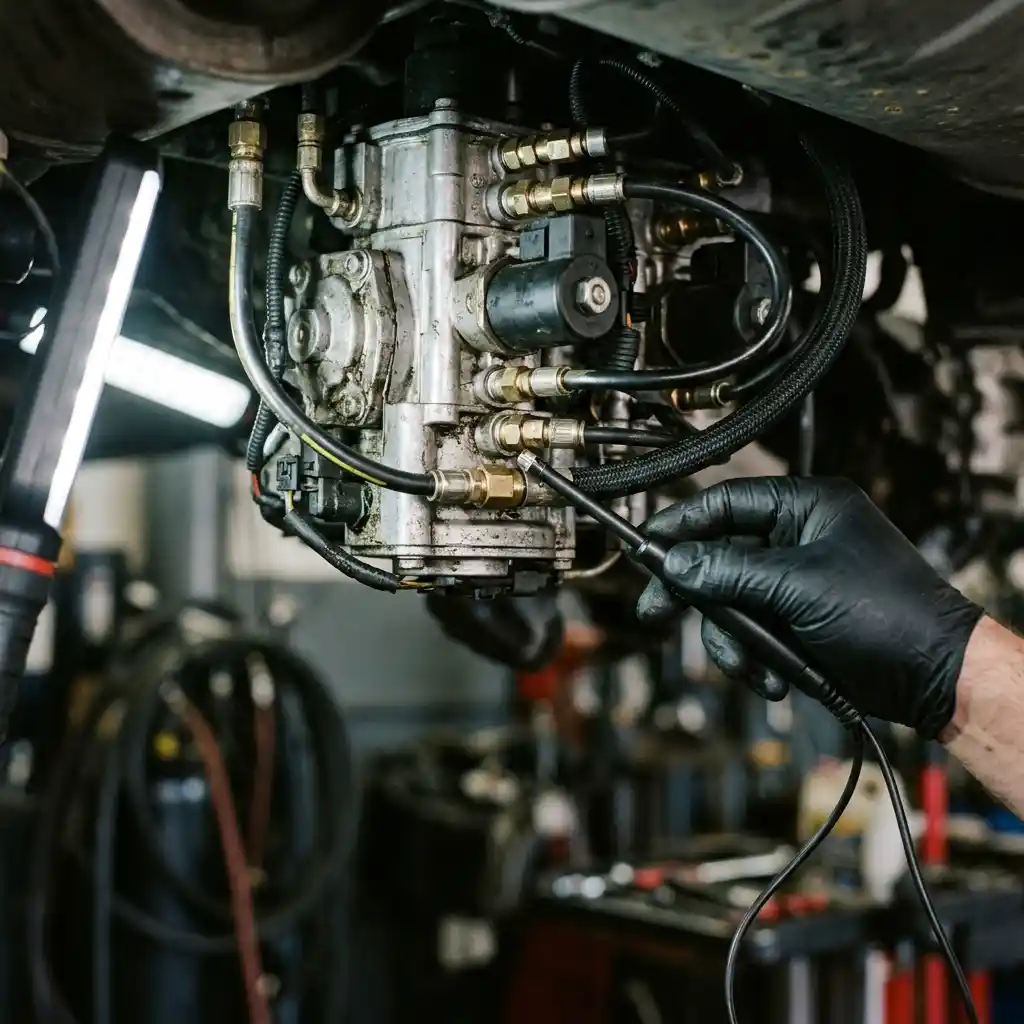
Low supply voltage, communication interruption or one primary fault can produce a cascade of messages. A useful scan preserves timestamps, freeze-frame data and the first-fault pattern before codes are cleared.
Use our Audi fault-code guide to understand why a code is a starting point rather than a finished diagnosis.
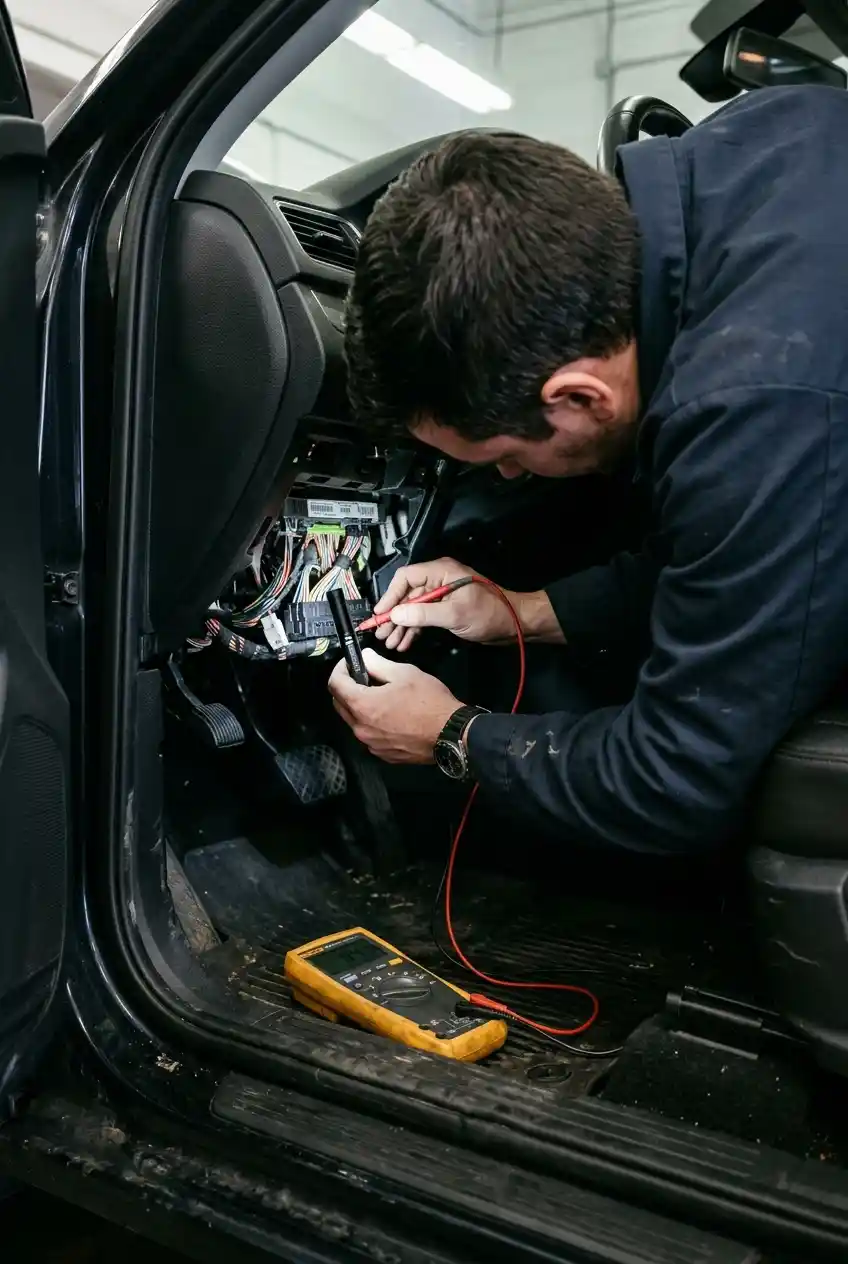
The most useful booking message includes when the issue starts, what makes it worse and whether the vehicle can move safely.
Road-speed vibration points toward wheels, tires, hubs or driveline; engine-speed vibration remains when vehicle speed changes. Brake or steering input adds another clue.
Temperature and rest time help separate leaks, pressure loss, thermal-management faults, oil smoke, battery behavior and air-suspension settling.
Acceleration, overrun, selected gear and steering lock help localize quattro, gearbox, joint, mount and wheel-related complaints.
A photo of the first warning and the circumstances around it is more valuable than a cleared dashboard with no event history.
Switch off when a red oil-pressure warning, overheating, heavy coolant loss or severe mechanical noise appears. Continuing can turn a contained fault into major damage.
Do not drive with a sinking pedal, major fluid loss, severe lean, tire-body contact or sudden steering change.
After underbody impact, flooding or visible damage around high-voltage components, keep clear and arrange qualified assessment.
The route considers tire circumference and pressure, wheel condition, mounts, joints, shafts, bearings, transfer components and differential evidence. Fluid or assembly replacement is not approved from one generic symptom.
Matching tires and correct pressures are especially important before interpreting driveline behavior.
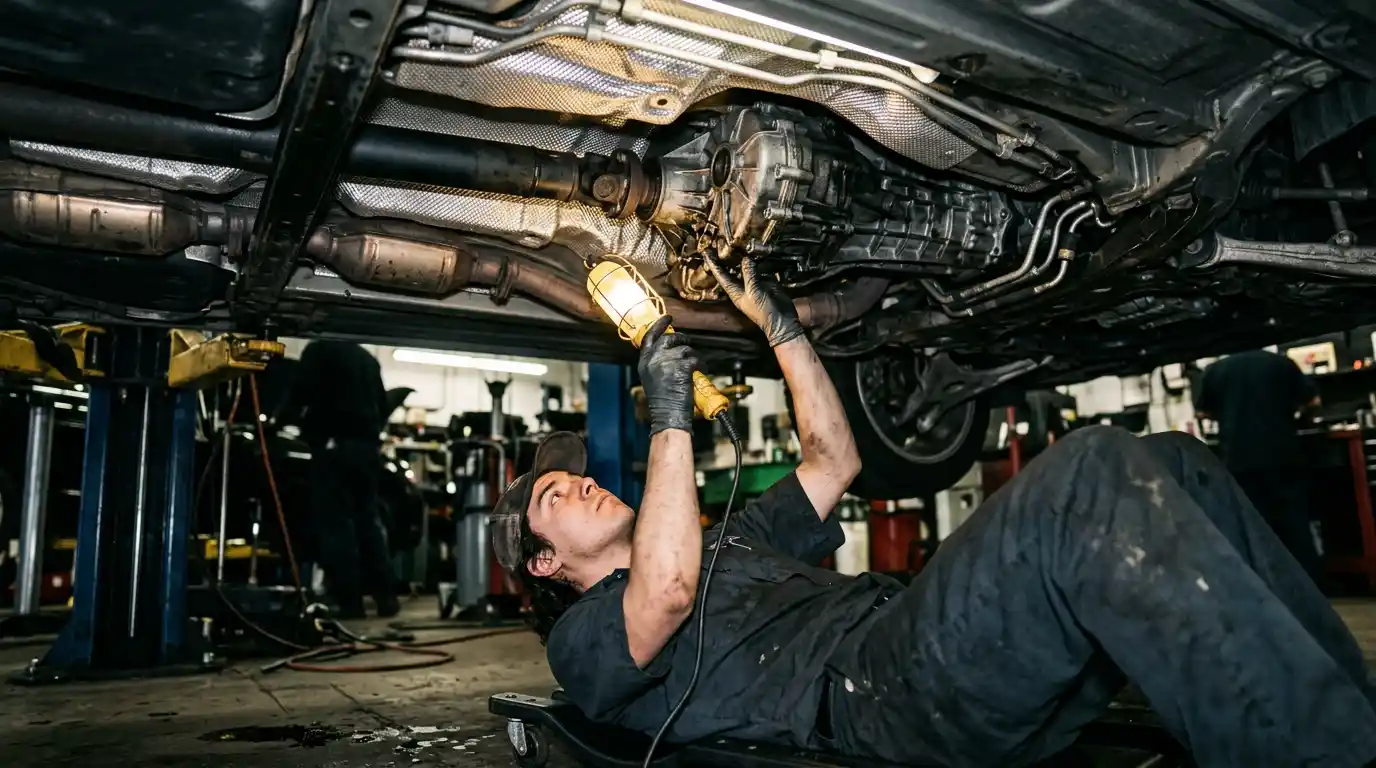
Completion may include a clean rescan, pressure or leak recheck, ride-height observation, road test under the trigger condition, fluid-level confirmation and a record of remaining advisory items.
For recurring patterns across models, see common Audi problems; the Q7 still needs its own VIN-based diagnosis.

Dubai heat, short trips, traffic, towing, long idling and heavy-load use can change inspection priorities. Service timing must follow the exact engine, market specification, mileage and history rather than a universal Q7 interval copied from another build.
Match oil specification, filters, spark plugs, brake fluid and transmission or driveline work to the build and documented history. Start with the Audi maintenance schedule guide.
Brakes, tires, bushings, cooling components, batteries and air-suspension parts are assessed from measurement and condition.
A scan, road test, underside inspection and option verification reduce uncertainty. See our used Audi buying inspection.
| Estimate factor | Why it changes scope | Evidence to request |
|---|---|---|
| Generation and powertrain | 4L, 4M, diesel, petrol and electrified variants use different parts and procedures. | VIN, year, engine and market build. |
| System and access | External components, internal assemblies and network faults require different labor and tests. | Confirmed fault path and access plan. |
| New, OEM-equivalent or remanufactured part | Availability, warranty and supporting parts vary. | Brand, part number and inclusions. |
| Calibration and verification | Ride height, steering, driver assistance or control modules may need settings and road tests. | Required procedure and completion proof. |
See the Audi repair cost guide for estimate principles. A fixed number without build and findings is not a reliable Q7 quote.
Provide the VIN or year and engine, mileage, first warning, symptom, trigger condition, recent repairs and whether the vehicle can move safely.
An air spring, line, fitting, valve block, compressor or ride-height input can be involved. The system should be leak-tested and its behavior recorded before parts approval.
Yes. Low voltage, a network interruption or one primary sensor or control fault may trigger several dependent warnings. The first-event pattern matters.
Usually not reliably. A code identifies a monitored condition, not always the failed part. Testing, build identity and physical findings determine the repair scope.
No. Engine, transmission, market, equipment, mileage, history and operating conditions affect the schedule and inspection plan.
Send the VIN, mileage, dashboard photo, when the fault appears and any recent repair. We will separate the diagnostic route from the parts decision.
Independent Audi specialist workshop in Dubai. Audi model names are used for service identification; no affiliation with Audi AG is implied.