Engine warning or power loss
Record the exact message, whether the engine shakes, when power falls and whether the condition changes cold or hot. Air, fuel, ignition, boost, cooling and control faults can overlap.

A warning light, vibration, coolant loss or harsh shift is evidence, not a parts list. We identify the Q5 by VIN, generation, engine, gearbox and drivetrain, test the affected system and define the repair before parts are approved.
Direct answer Audi Q5 repair in Dubai should begin with the exact vehicle and the evidence around the fault. Q5 generations can use different engines, gearboxes, quattro layouts, suspension equipment and control systems. A dependable quotation follows identification and testing, not a generic model-name checklist.
The same warning can have several causes, while one failing system can create complaints in several places. Describe the behaviour before deciding which component needs attention.
Record the exact message, whether the engine shakes, when power falls and whether the condition changes cold or hot. Air, fuel, ignition, boost, cooling and control faults can overlap.
Note whether the complaint appears selecting drive, pulling away, changing a particular gear, turning tightly or cruising. Gearbox, clutch, mount, axle and quattro symptoms need separation.
Road speed, engine speed, steering angle, braking and road surface help locate the source. Tires, wheel bearings, control arms, mounts, brakes and drivetrain parts can feel similar from the cabin.

A first-generation, second-generation and newer Q5 may share a name while using different hardware, software and service requirements.
We begin with the VIN, model year, engine code where available, gearbox type, drivetrain and fitted equipment. Petrol, diesel, hybrid-supported and performance variants do not follow one repair map. Even two visually similar cars can require different fluids, parts, test plans or calibration steps.
Previous repairs matter as much as the badge. A recently replaced battery, disturbed wiring connector, non-standard suspension component, incorrect fluid or incomplete software work can change the diagnostic path. Service records and old invoices can prevent repeated work.
Identification also keeps a quotation honest. It confirms which assembly is fitted, whether a component is supplied separately, what access is required and whether coding, adaptation, alignment or another final check belongs in the job.
This page owns the complete Q5 repair journey. Dedicated service pages explain individual systems in greater depth once the affected area is known.
Misfire, oil loss, smoke, rough running and reduced power need mechanical condition, ignition, fueling, air-path and control evidence. Use the Audi engine repair service for the deeper repair route.
Coolant loss or unstable temperature may involve a pump, thermostat, housing, hose, radiator, fan, sensor or trapped air. The first leak point and heat history define the scope.
Harsh shifts, delayed drive, judder and driveline vibration are separated by gearbox identity, adaptation data, fluid evidence, mounts, axles and all-wheel-drive behaviour. See Audi gearbox diagnosis and repair.
Knocks, pulling, uneven tyre wear or unstable steering require tyre, alignment, joint, bushing, bearing, damper and steering checks. Replacing one visible part does not correct every geometry or noise problem.
Pad thickness, disc condition, caliper movement, fluid leaks, warning indicators and road behaviour must agree. The Audi brake repair service covers measurement-led decisions.
Starting, charging, lighting, sensor, MMI, comfort and AC complaints need voltage, communication, wiring and component tests. An electrical code can identify a circuit without proving the named component failed.
A scan supports the diagnosis, but physical tests and operating conditions decide whether the fault is mechanical, electrical, hydraulic, software-related or the result of another system.
Low supply voltage, poor connections and communication faults can create several warnings at once. Replacing the most visible module may leave the original cause untouched.
We check battery state, charging behaviour and relevant power and ground paths before interpreting clusters of control-unit faults. A circuit test should reflect the load and condition in which the complaint appears. A connector that looks clean can still have poor terminal tension or an intermittent interruption.
Sensor and actuator faults are tested through their supply, ground, signal, wiring and commanded response where appropriate. Software, coding or adaptation is considered only when the hardware and vehicle history support that route. Clearing codes alone is not a completed repair.
For an intermittent issue, do not clear warnings before the appointment if the vehicle remains safe to leave as it is. Photograph the dashboard and record whether the problem followed a battery replacement, jump-start, water exposure or earlier repair.

There is no dependable universal 50,000 km or 100,000 km list for every Audi Q5. The applicable plan depends on time, mileage, powertrain, equipment, history and measured condition.
| Planning layer | What is reviewed | Why it changes the work |
|---|---|---|
| Vehicle identity | VIN, engine, gearbox, drivetrain, model year and fitted equipment. | Confirms the correct fluid approvals, parts, procedures and applicable service items. |
| Time and mileage | Recorded intervals, current odometer and the time since each completed item. | Separates scheduled work from early replacement and overdue maintenance. |
| Service evidence | Digital or paper records, invoices, reset history and visible part condition. | Prevents unnecessary repetition and reveals uncertain or incomplete previous work. |
| Measured wear | Brakes, tyres, battery, fluid condition, leaks, filters and suspension movement. | Wear items are approved from remaining condition and driving needs, not mileage alone. |
| Active faults | Warnings, symptoms, diagnostic evidence and driving risk. | A diagnosed repair is kept separate from routine service so the quotation remains clear. |
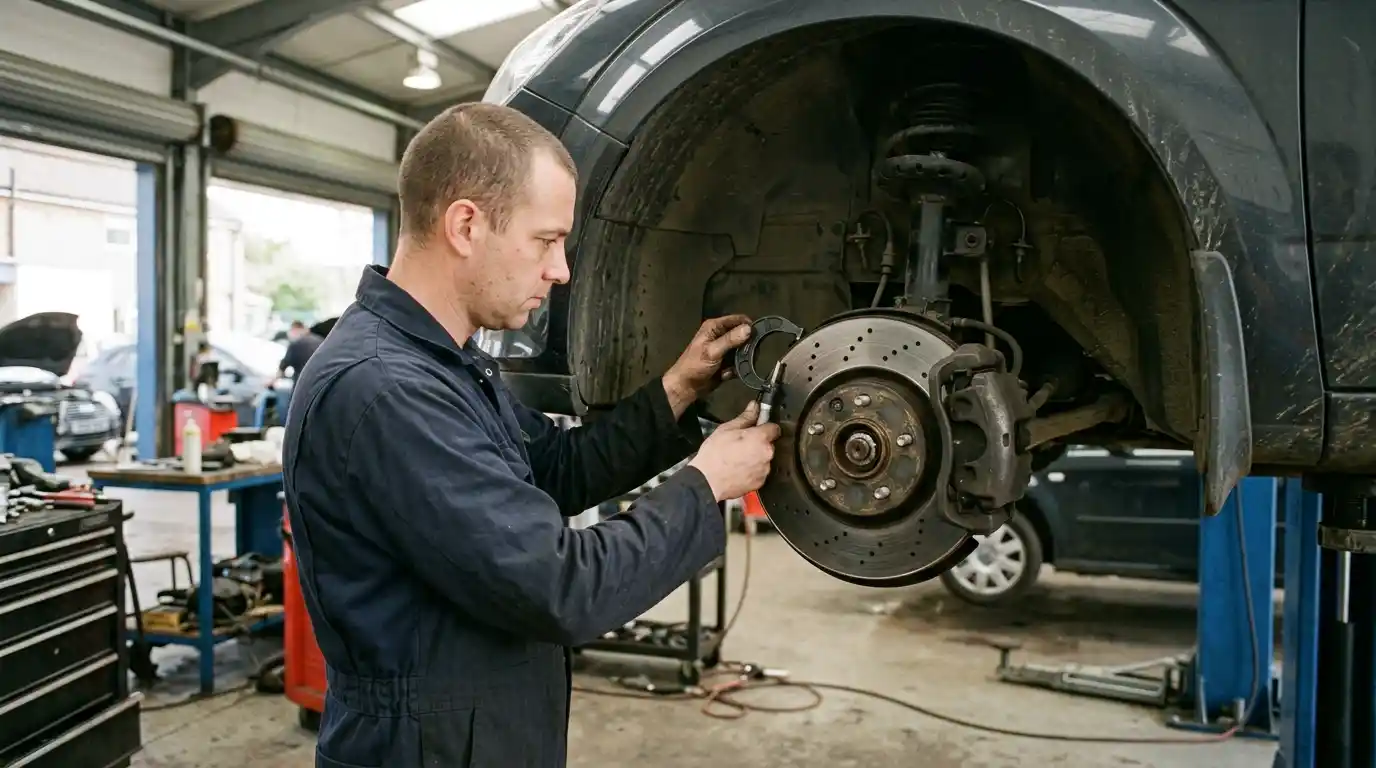
Brakes, tyres and suspension should not be sold as one automatic package because a dashboard warning or noise appears.
Brake inspection compares pad thickness, disc condition, caliper movement, hydraulic evidence and warning status. Steering and suspension checks look for loaded movement, split bushes, joint play, damper leakage, spring condition and wheel-end noise. Tyre wear and alignment readings help explain whether geometry or another worn component is involved.
The result should distinguish work needed now from items that can be monitored. If alignment is required, it should follow repair of the movement that would prevent stable settings. If a vibration occurs only while braking or at a particular road speed, reproducing that pattern helps avoid replacing unrelated chassis parts.
Parts are matched to the exact vehicle and confirmed scope. The Audi parts guide explains how genuine, OEM-supplier, aftermarket, remanufactured and used options differ by fit, safety relevance, availability and installed risk.
The sequence keeps diagnosis, approval and final checks visible instead of hiding them inside one vague repair label.
Record the VIN, generation, engine, gearbox, drivetrain, mileage, equipment and recent work.
Capture the warning, noise, leak, temperature, speed, load and cold or hot conditions.
Combine controller information with physical, mechanical, electrical or pressure evidence.
Separate the failed part from related access work, fluids, seals, coding and calibration.
Confirm the parts route and work before installation. Additional findings require separate approval.
Recheck the repaired system and reproduce the relevant operating condition where practical.
The old page listed broad prices without enough scope. A useful estimate must identify the vehicle, failed layer, parts choice, access and required final checks.
A seal, connector or bushing has a different scope from a complete engine, gearbox, module or suspension assembly.
Engine, gearbox, quattro hardware, brake size and equipment determine compatible parts and procedures.
Genuine, OEM-supplier and suitable alternatives differ by application, availability and customer approval.
Required fluid, seals, adaptation, calibration, alignment and verification belong in the installed scope.
A front-end knock can travel through the body and appear to come from a different side or component.
Inspection is performed with the suspension in the condition needed to reveal movement. Control-arm bushes, ball joints, top mounts, stabiliser links, dampers, wheel bearings and steering joints are checked according to the complaint. Marks, torn rubber or age alone do not always prove that a part causes the noise.
Road reproduction matters. A knock over a sharp edge, vibration under acceleration, hum that changes while turning and steering shake during braking point toward different tests. Tire condition and wheel runout are included when the symptom depends on road speed.
After confirmed steering or suspension work, fasteners, ride position, alignment needs and road behaviour are checked according to the repair performed. This keeps the result tied to the symptom the customer reported.

Send the model year, mileage, exact dashboard message, when the symptom appears and any recent repair or battery work. Include a clear photograph or short description of leaks, warnings or damaged parts. The VIN can be confirmed securely when the booking is arranged.
Not by itself. A code identifies a controller, monitored condition or circuit context. The status, event data, related codes and physical system tests are needed before the named component can be approved.
The VIN helps identify the generation, engine, gearbox, drivetrain and installed equipment. Those details affect compatible parts, fluids, test plans, coding and calibration requirements.
No. The applicable schedule varies by vehicle specification, model year, time, mileage and service history. Wear items and diagnosed faults should be assessed separately rather than added automatically to a generic mileage package.
It depends on the warning and vehicle behaviour. Stop and ask for guidance if a red oil-pressure or temperature warning appears, braking or steering changes, the engine runs severely unevenly, power drops sharply or fluid is escaping quickly.
The vehicle and fault are identified first. The quotation then separates the confirmed repair, compatible parts route, access work, fluids or seals and any coding, calibration, alignment or verification required.
Part choice depends on the exact application, safety relevance, availability, repair objective and workshop policy. Genuine Audi parts are normally considered, while suitable OEM-supplier or aftermarket alternatives may be discussed when appropriate and approved.
The repaired system is retested and the original complaint is reviewed under the relevant condition where practical. Depending on the job, this can include leak, pressure, voltage, adaptation, alignment, temperature, road-behaviour or fault-memory checks.
Call or share the model year, mileage, warning message, recent work and the conditions that reproduce the problem. We will identify the right starting point and arrange the appropriate inspection.