
Audi A6 repair and service in Dubai
A warning, vibration, leak or harsh shift is the start of the diagnosis, not proof that a named part has failed. We identify the A6 by VIN, generation, engine, gearbox and drivetrain, then test the affected system before repair work is approved.
Direct answer Audi A6 repair in Dubai should be planned around the exact vehicle and confirmed fault. C6, C7 and C8 cars can use different engines, transmissions, quattro layouts, suspension systems and electronic architecture. A useful quotation follows identification and testing rather than a generic list of parts.
Read the first warning
One A6 symptom can cross several systems. The timing, temperature, road speed and recent work often reveal more than the component named by a scan result.

The badge is not the specification
Two Audi A6 cars can look similar while requiring different fluids, parts, test plans and completion procedures.
We start with the VIN, model year, engine and gearbox information, drivetrain, installed equipment and service history. That avoids assuming that a procedure for one generation applies to another. It also helps separate an A6 saloon or Avant from an A6 allroad or performance model whose chassis and drivetrain require a different route.
Previous work matters. A recently replaced battery, disturbed connector, incorrect fluid, non-standard suspension part or incomplete software procedure can create new symptoms or change the meaning of stored faults. Invoices, old inspection results and photographs can prevent a repeated repair.
Correct identification also improves the quotation. It confirms the fitted assembly, compatible parts route, access work and whether coding, adaptation, alignment, bleeding or another final check belongs in the job.
- VIN, model year and generation
- Engine, gearbox and quattro configuration
- Exact warning and driving behaviour
- Recent service and repair history
- Cold, hot, speed and load conditions
Audi A6 repair services in Dubai
This page covers the complete A6 repair journey. Once the affected system is known, dedicated service pages provide the deeper technical route.
Engine and oil control
Misfire, smoke, oil loss, rough running and reduced power can involve mechanical condition, ignition, fuel, air, boost, crankcase ventilation or control faults. The Audi engine repair service explains the deeper test route.
Cooling and temperature
Coolant loss or unstable temperature may involve a pump, thermostat, housing, hose, radiator, fan, sensor or trapped air. Pressure evidence and the first leak point matter before replacement.
Gearbox and quattro
Delayed drive, harsh shifts, judder and driveline vibration must be separated by gearbox identity, fluid evidence, adaptation data, mounts, axles and all-wheel-drive behaviour. See Audi gearbox diagnosis and repair.
Suspension and steering
Knocks, pulling, uneven tyre wear and poor control require tyre, alignment, joint, bushing, bearing, damper and steering checks. A visible worn part may not be the only source.
Brakes and wheel ends
Pad thickness, disc condition, caliper movement, bearings, fluid condition, ABS evidence and road behaviour must agree. The Audi brake repair service covers measurement-led decisions.
Electrical and cabin systems
Battery drain, intermittent MMI faults, sensor warnings and comfort failures require voltage, communication and circuit testing. Clearing a code does not establish why it returned.
Decide what happens next
The same appointment should not treat every finding as equally urgent. The decision depends on risk, fault evidence and the effect of delay.
Describe the condition before driving or restarting. Recovery may be safer than continuing.
Preserve the symptom and arrange testing before a smaller fault causes secondary damage or leaves the vehicle unavailable.
Match the work to parts availability, access overlap and the vehicle-specific maintenance plan.
Record frequency, conditions and measurements rather than replacing a likely part without confirmation.
C6, C7 and C8 need different plans
Generation names help organise the investigation, but the VIN and installed equipment still decide the exact procedure.
Engine and transmission choices vary within each family and between markets. A part, fluid or interval should never be selected from the C6, C7 or C8 label alone. Performance and allroad variants also deserve their own specification check rather than being treated as ordinary A6 configurations.
A scan is only one layer
A fault code identifies a monitored condition or communication context. It does not automatically identify the part to replace.
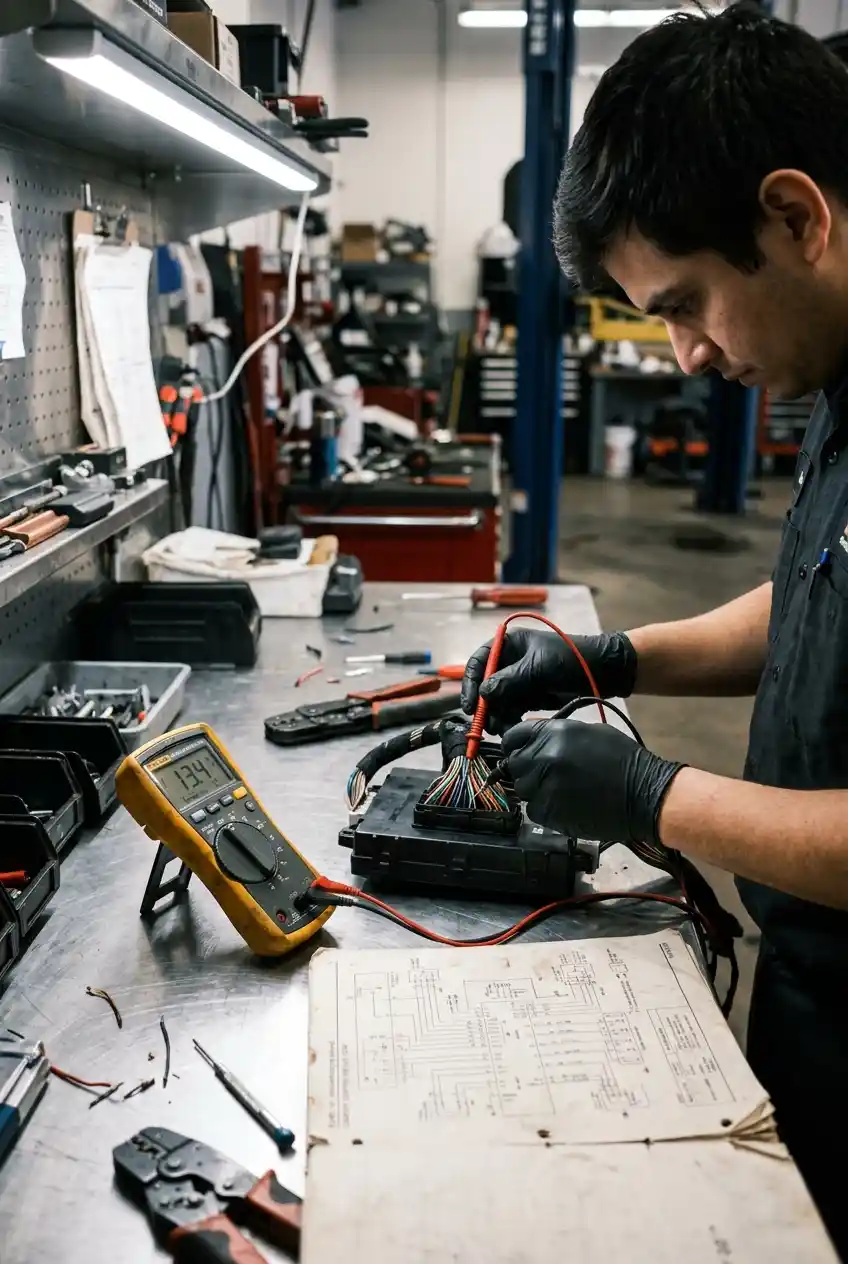
Useful electrical diagnosis connects the complaint with battery and charging condition, controller communication, wiring integrity, live values and a physical inspection. Low voltage can create faults across several modules. A damaged connector can imitate an expensive controller problem. A stored code may describe an event that is no longer active.
For intermittent MMI, comfort, sensor or warning concerns, record what was operating when the fault appeared. Note whether it followed a battery replacement, jump start, water entry, interior work or long storage. That history can shorten the route to the affected circuit.
From complaint to verification
The process keeps diagnosis, approval, repair and completion separate so the scope remains understandable.
Record the complaint
Confirm the warning, noise, leak or driving change and the conditions that reproduce it.
Identify the vehicle
Match the VIN, model year, powertrain, drivetrain, equipment and useful repair history.
Test the affected system
Connect scan information with physical, pressure, voltage, temperature or mechanical evidence as appropriate.
Define the repair
Separate the confirmed work from optional maintenance and explain compatible parts or completion procedures.
Approve before work
Confirm the quotation and do not add unrelated work merely because the vehicle is already in the workshop.
Verify the result
Retest the repaired system and review the original complaint under the relevant condition where practical.

Use the correct schedule
There is no responsible single interval table for every Audi A6. The applicable plan depends on the exact specification, time, mileage, history and operating conditions.
Routine planning can include engine oil and filter service, air and cabin filters, brake inspection, fluid condition, cooling-system checks, tyres, battery condition and other items required by the correct vehicle schedule. Spark plugs, gearbox service, brake fluid and other interval work should be confirmed for the fitted application rather than added automatically to a generic package.
Wear and faults are separate from scheduled service. A control-arm bushing, wheel bearing, coolant leak or weak battery is assessed by condition and evidence. It does not become due simply because the odometer reaches a rounded number.
Dubai heat, traffic, short trips and long storage can change what an inspection discovers, but they do not justify inventing a different manufacturer schedule. Review the vehicle history, identify missed items and inspect systems affected by the actual use pattern.
For a broader explanation, use the Audi maintenance schedule guide or book the Audi service and maintenance route.
What shapes the repair cost
A price becomes useful only when it belongs to the correct vehicle, confirmed fault, parts route and completion scope.
| Quotation factor | Why it changes the scope | What should be confirmed |
|---|---|---|
| Vehicle specification | Engine, gearbox, drivetrain and installed equipment affect parts and procedures. | VIN and fitted assemblies |
| Fault extent | A seal leak, damaged housing and secondary heat damage are different repairs. | Test results and affected components |
| Parts route | Availability, compatibility and whether a component is supplied separately affect the choice. | Exact part and approved option |
| Access work | Some repairs share removal steps, seals or fluids while others do not. | Labour boundary and related materials |
| Completion work | Coding, adaptation, bleeding, alignment or road verification may belong to the job. | Required final checks |
Do not compare a parts-only number with a complete repair quotation. Ask whether diagnosis, seals, fluids, access work and required verification are included. The Audi repair cost guide for Dubai explains broader price drivers without pretending that one figure fits every A6.
Useful parts tell a story
Replaced components should agree with the original symptom, inspection evidence and completed repair.
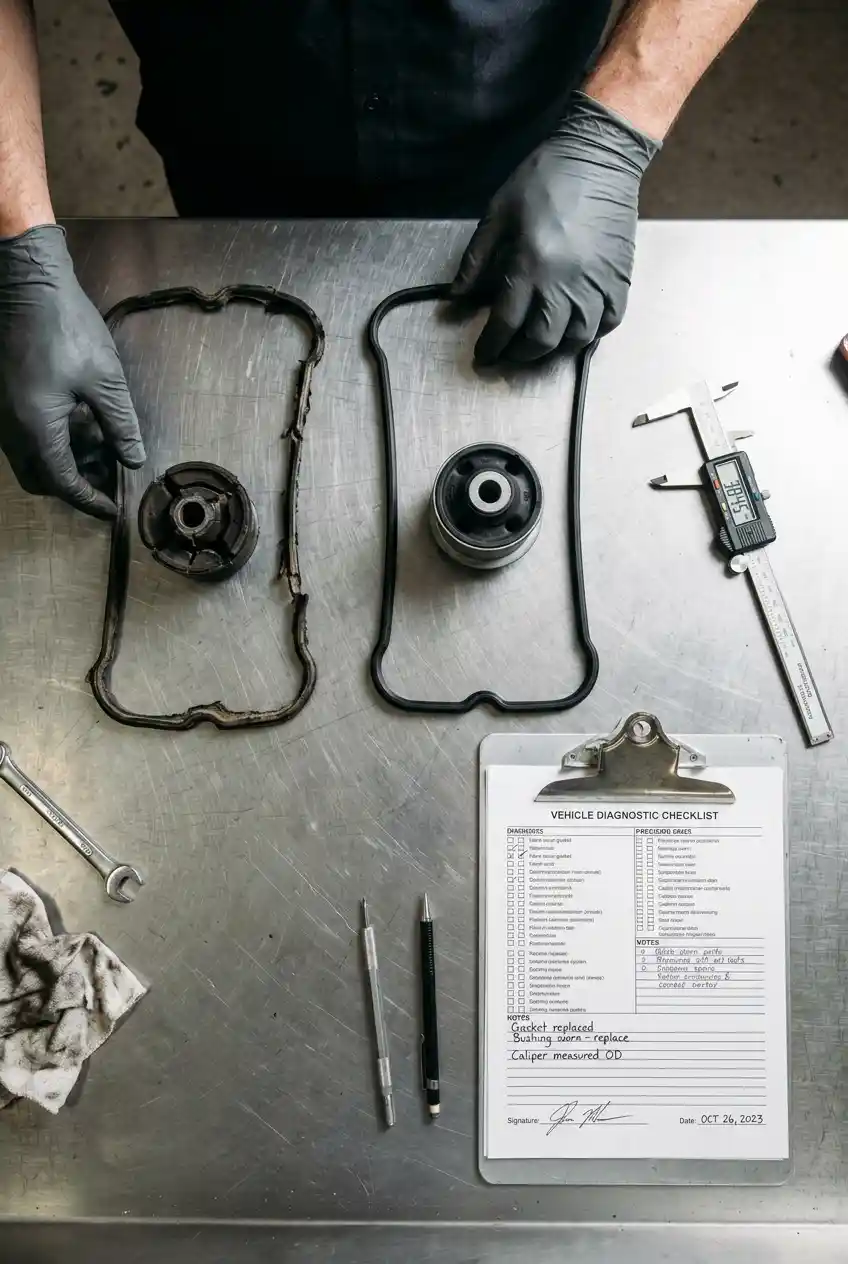
A removed part can help confirm wear, contamination, leakage or electrical damage, but appearance alone is not enough for every failure. Measurements and system behaviour remain important. Where practical, the quotation should distinguish a confirmed failed component from related seals, fluids, one-time fasteners and optional preventive work.
After repair, the original complaint should be checked again. Depending on the job, this may involve leak inspection, temperature monitoring, voltage or charging checks, fault-memory review, adaptation, alignment measurement or a controlled road test.
Clear evidence also helps future maintenance. Record what was changed, why it was changed and what verification was completed. That history can prevent unnecessary repetition if a different symptom appears later.
Continue with the affected system
Use these routes when the vehicle evidence already points to a specific system. If it does not, begin with inspection rather than choosing a repair page by guesswork.
Answers before you book
What information should I send before booking A6 repair?
Send the model year, mileage, exact dashboard message, when the symptom appears and any recent service, battery or repair work. A description of leaks, sounds or driving changes helps select the first test.
Can a fault-code scan identify the failed A6 part?
Not by itself. A code identifies a monitored condition, circuit or controller context. Current status, related codes, live data and physical tests are needed before a component is approved.
Why does the VIN matter for an Audi A6?
The VIN helps identify the generation, engine, gearbox, drivetrain and installed equipment. Those details affect compatible parts, fluids, test procedures and completion work.
Do all Audi A6 models follow the same service schedule?
No. The applicable schedule varies by specification, model year, time, mileage and service history. Wear items and diagnosed faults should be assessed separately from scheduled maintenance.
Why is my A6 showing a gearbox warning?
The message can relate to a control, voltage, temperature, fluid, clutch, hydraulic, internal gearbox or communication condition. Preserve the exact warning and note how the vehicle shifts before deciding on parts.
Can you inspect A6 suspension and steering noises?
The inspection can separate tyres, wheel bearings, brakes, joints, bushings, dampers, mounts, steering and driveline sources by connecting the noise to speed, load, steering angle and road surface.
How is an Audi A6 repair quotation prepared?
The exact vehicle and fault are identified first. The quotation then separates the confirmed repair, compatible parts route, access work, related materials and any coding, alignment, bleeding or verification required.
What is checked after an A6 repair?
The repaired system and original complaint are reviewed under the relevant condition where practical. The check may include pressure, leak, voltage, temperature, adaptation, alignment, fault-memory or road-behaviour verification.
Describe what your A6 is doing
Share the year, mileage, exact warning and the conditions that reproduce the problem. That gives the workshop a clearer starting point before the vehicle arrives.