Compact sports car workshop guide

Audi TT Repair and Service in Dubai

A proper Audi TT workshop plan needs a sports-car inspection, not a renamed saloon service. Low ride height, coupe or roadster body systems, turbocharged engines, manual or S tronic transmissions, and front-wheel-drive or quattro configurations change the evidence a technician should collect.

Send TT details
Identity first

Separate 8N, 8J and 8S requirements

The TT badge spans very different electrical architectures, powertrains and chassis equipment. Confirm the VIN, generation, engine and gearbox code, drive layout, body style, market specification and any modifications before selecting parts or fluid. Higher-output derivatives have separate guidance on the Audi TTS and Audi TT RS pages.

Audi TT 8N, 8J and 8S generation comparison inspection
8N generation

Age and repair history

Inspect boost and vacuum plumbing, cooling integrity, timing-service evidence where applicable, cluster and convenience electrical behavior, suspension wear and previous repairs. Age can matter as much as mileage.

8J generation

Mechatronics and body condition

Check the exact transmission, engine timing arrangement, direct-injection history, electronic damping where installed, coupe or roadster water management and the quality of previous diagnostic work.

8S generation

Network and calibration

Later cars add integrated displays, more networked control and option-dependent assistance. Voltage condition, complete scans and correct post-repair coding or calibration become increasingly important.

Import and modification check: wheels, suspension, engine software, intake or exhaust changes can alter parts compatibility, emissions configuration, alignment targets and fault behavior. Record them before diagnosis.
TT-specific fault paths

Match the test to the installed system

Audi TT installed system and engine bay inspection before testing
Boost or power loss
Check air and charge plumbing, diverter or wastegate control, requested and actual pressure, ignition stability, fuel delivery and exhaust restriction. A boost code does not by itself condemn the turbocharger.
Cold-start noise
Identify the engine and timing design, confirm oil level and approval, record noise duration and location, and compare timing or pressure data where justified. Avoid parts decisions based only on a short phone recording.
Manual shift concern
Separate clutch slip, release behavior, linkage, mount movement and internal gearbox noise. Road-test under controlled load and document engagement point and temperature effect.
S tronic behavior
Save faults and event data, confirm gearbox identity and fluid history, then assess clutch and hydraulic behavior cold and fully warm. Adaptation is not a substitute for mechanical or hydraulic repair.
Quattro concern
Verify tires match in approved size, pressure and effective circumference. Identify the coupling generation, fluid history, pump or control data, and distinguish binding from wheel-bearing or differential noise.
Roadster water entry
Inspect roof seals, drains, rear body cavities and evidence around modules without forcing water through seals. Trace the entry path and dry the affected area before replacing electronics.
Ride or vibration
Measure tire wear, wheel and hub runout, joints, bushings, dampers and alignment. Check magnetic or adaptive damping only if it is actually installed and correct mechanical faults before calibration.
Display or module faults
Test battery condition, charging and voltage drop before interpreting many communication events. Confirm software, wiring and module inputs instead of replacing a control unit from one stored code.
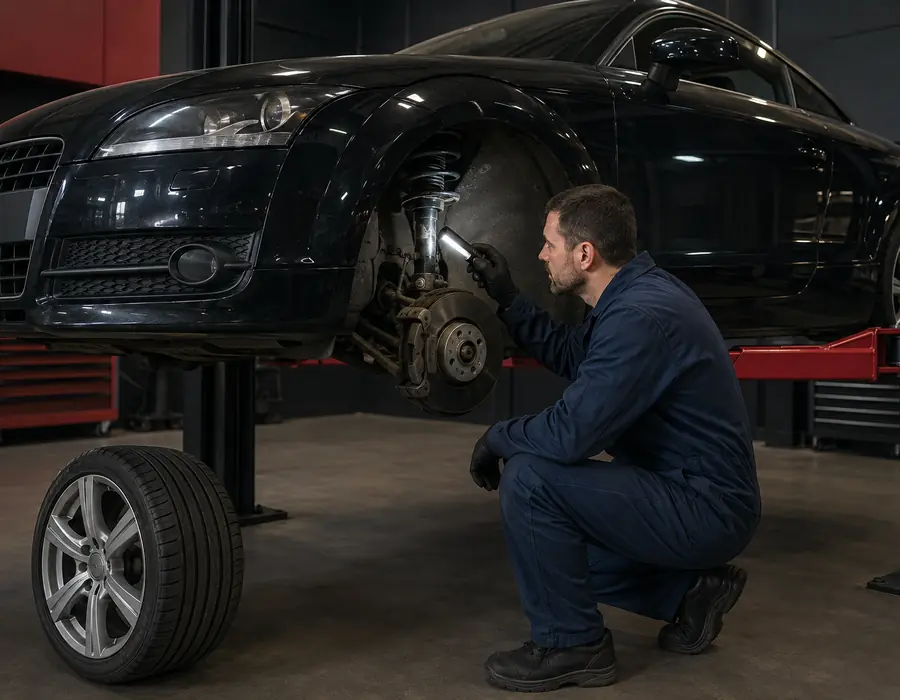
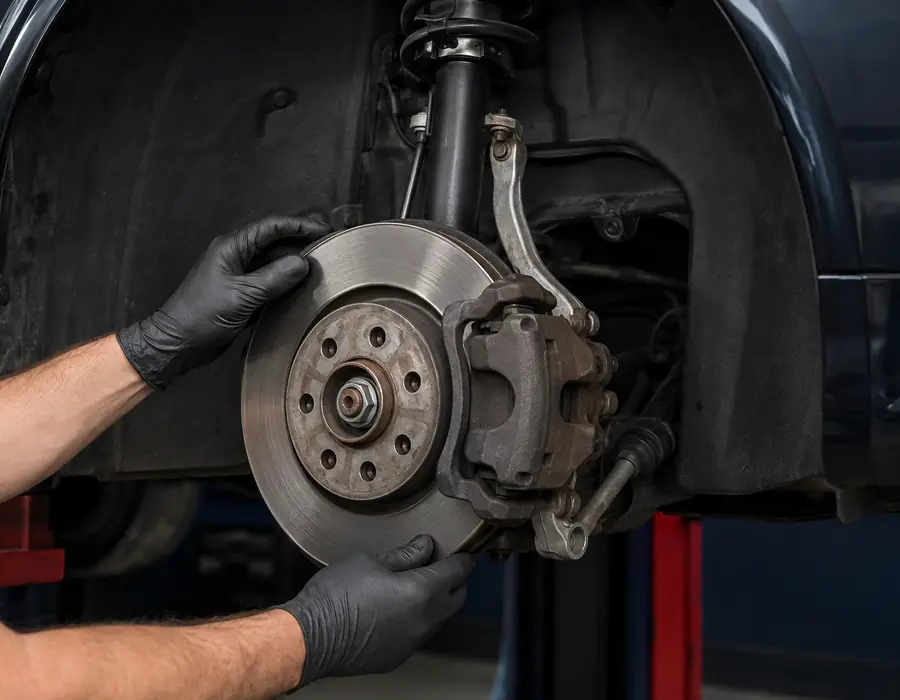
Audi TT brake and suspension condition inspection for maintenance planning
Maintenance without guesswork

Use the VIN schedule plus measured condition

Engine oil, filters, ignition, brake fluid, gearbox and coupling service depend on the exact TT and service regime. Dubai heat, traffic, dust, short trips and performance use may justify closer condition checks, but they do not create one universal interval.

Scheduled work

Record the date, mileage, approved fluid or part specification, quantity, hardware and the source of the next due calculation. Confirm whether the engine uses a belt, chain or another arrangement.

Wear work

Measure brakes, tires, wheel runout, joints, bushings, dampers and battery condition. State the present value and limit so the owner can plan rather than react to an unexplained advisory.

Fault work

Keep warning, leak, noise and drivability diagnosis outside the routine package. Diagnostic time is valuable when it produces a tested cause and a defined completion result.

Estimate rule: parts route, access, fluids, single-use hardware, coding and calibration can change the installed price. Treat an early phone number as a non-binding planning range until vehicle identity and repair scope are confirmed.

Owner decision cases

Turn common TT findings into clear next steps

Oil residue without a drop
Clean only after photographing the highest fresh point and identifying the fluid. Recheck after a defined distance and temperature cycle. Monitoring needs a review point; it is not the same as declaring the area leak-free.
Power loss only when hot
Log charge temperature, boost request and delivery, ignition correction, fuel pressure and protective interventions during a controlled warm test. Do not repeat high-load runs once the limiting condition is captured.
Vibration at one road speed
Separate tire force variation, wheel and hub runout, bearing noise, driveshaft behavior and engine-load vibration. Note whether coasting, braking or changing gear alters the frequency.
Roadster moisture after washing
Dry and protect affected electronics, then test drainage and sealing in small controlled zones. A full-volume water test can overwhelm a healthy path and conceal the actual entry point.
Harsh first engagement
Record cold-soak temperature, delay, engine speed and gearbox data. Compare with warm behavior and fluid history before authorizing clutch, hydraulic or mechatronic work.

Decide what belongs in one visit

Combining work can be sensible when access is genuinely shared or when one system must be disturbed to reach another. The estimate should still show each component, fluid, seal and single-use fastener. Ask whether a suggested extra item is required by the repair procedure, measured near its limit, convenient preventive work or simply an optional preference.

For an older TT, reliability planning may prioritize fluid leaks, cooling integrity, tires, brakes and overdue documented service before cosmetic or performance upgrades. For a later TT, voltage stability, software records and correct calibration can be equally important. The sequence should follow risk and evidence rather than the visual appeal of the proposed work.

Use a handover test that matches the original complaint

A completed repair should not be signed off only because the warning is absent at idle. If the concern appeared during a morning start, after traffic, under moderate boost, over a rough road or during roof operation, verification should safely recreate that condition. The handover record should state the pre-repair result, corrective work, post-repair measurement and any condition that remains under monitoring.

Owners can improve this record by keeping the removed-part explanation, photographs, scan summary, alignment sheet or pressure result with the invoice. That evidence makes future diagnosis faster and supports a used-car buyer more than a vague stamp saying the car was “fully checked.”

Owner questions

Audi TT repair FAQs

Can the TT use the same service package as an A3?

Not automatically. Shared components do not make the complete schedule, body systems, driveline, tires or calibration requirements identical.

Does a turbo fault code mean the turbo has failed?

No. Leaks, controls, sensors, fueling, ignition and exhaust conditions can produce related faults. Test the air path and commanded response first.

Should S tronic fluid be called lifetime?

Use the schedule for the exact gearbox and market. Different S tronic designs have different fluid circuits and procedures.

Can a roadster leak be fixed by adjusting the roof?

Only if testing proves adjustment is the cause. Drains, seals, glass position and previous repair may create a similar symptom.

What should a completed TT repair include?

A pre- and post-repair scan, relevant measurements, installed parts and fluids, coding or adaptation records, and a repeat test of the original complaint.

Prepare a focused Audi TT assessment

Send the VIN, body style, mileage, warning or symptom, trigger condition and recent work so the correct diagnostic route can be prepared.

Call the workshop