

Audi Q8 repair and service in Dubai
An Audi Q8 can connect engine, gearbox, quattro, air suspension, braking, driver assistance and electrical networks in one complaint. We identify the exact vehicle, reproduce the symptom and test the affected system before recommending parts or repair work.
Audi Q8 repair should be based on the vehicle in front of us. Engine, market, model year, suspension equipment, electrical architecture and service history can change the correct test, part and procedure even when two Q8 vehicles show the same warning.
How urgent is the symptom
The message on the display matters, but vehicle behaviour matters too. Use this as a booking guide rather than an online diagnosis.
Stop and ask first
Park safely and call if there is a red oil-pressure warning, overheating, unsafe braking, smoke, fuel smell, sudden loss of control, a vehicle sitting dangerously low or severe drivetrain noise. Recovery may be safer than continuing to drive.
Arrange an early inspection
Reduced power, repeated suspension warnings, harsh engagement, coolant loss, steering changes, several electrical messages or weak air conditioning should be recorded and inspected before the condition creates secondary damage.
Plan the service visit
A service reminder, gradual brake wear, normal maintenance item or non-urgent comfort fault can usually be booked with the mileage, service records and exact vehicle details available.
The Q8 badge does not define every system
The Q8 family includes different production years, markets, engines and equipment. The vehicle identity must come before a generic service list.
Petrol and diesel applications may use different emissions, fuel, cooling and boost systems. Some Q8 configurations use 48-volt mild-hybrid equipment with a belt starter generator and separate power-management concerns. Air suspension, adaptive damping, rear steering, larger brake packages, camera systems and assistance functions also vary by equipment.
We therefore begin with the VIN, model year, engine and gearbox identification, installed equipment and available service history. That prevents a routine service item from being confused with a diagnosed repair and reduces the risk of ordering a part from the model badge alone.
One warning can cross several systems
Modern vehicle systems exchange power, sensor information and control messages. A fault in one layer can change the behaviour of another, so a list of codes must be read as a connected event rather than a shopping list.
Power supply
The 12-volt battery, charging output, grounds and 48-volt equipment where fitted can influence several controllers at once.
Network evidence
Stored events, communication faults and live values show which controllers reported the problem and in what order.
Mechanical condition
Leaks, wear, pressure, temperature, movement and noise still need physical checks even when electronic faults are stored.
Calibration and verification
Basic settings, adaptations or calibration are considered only after the physical and electrical conditions are correct.
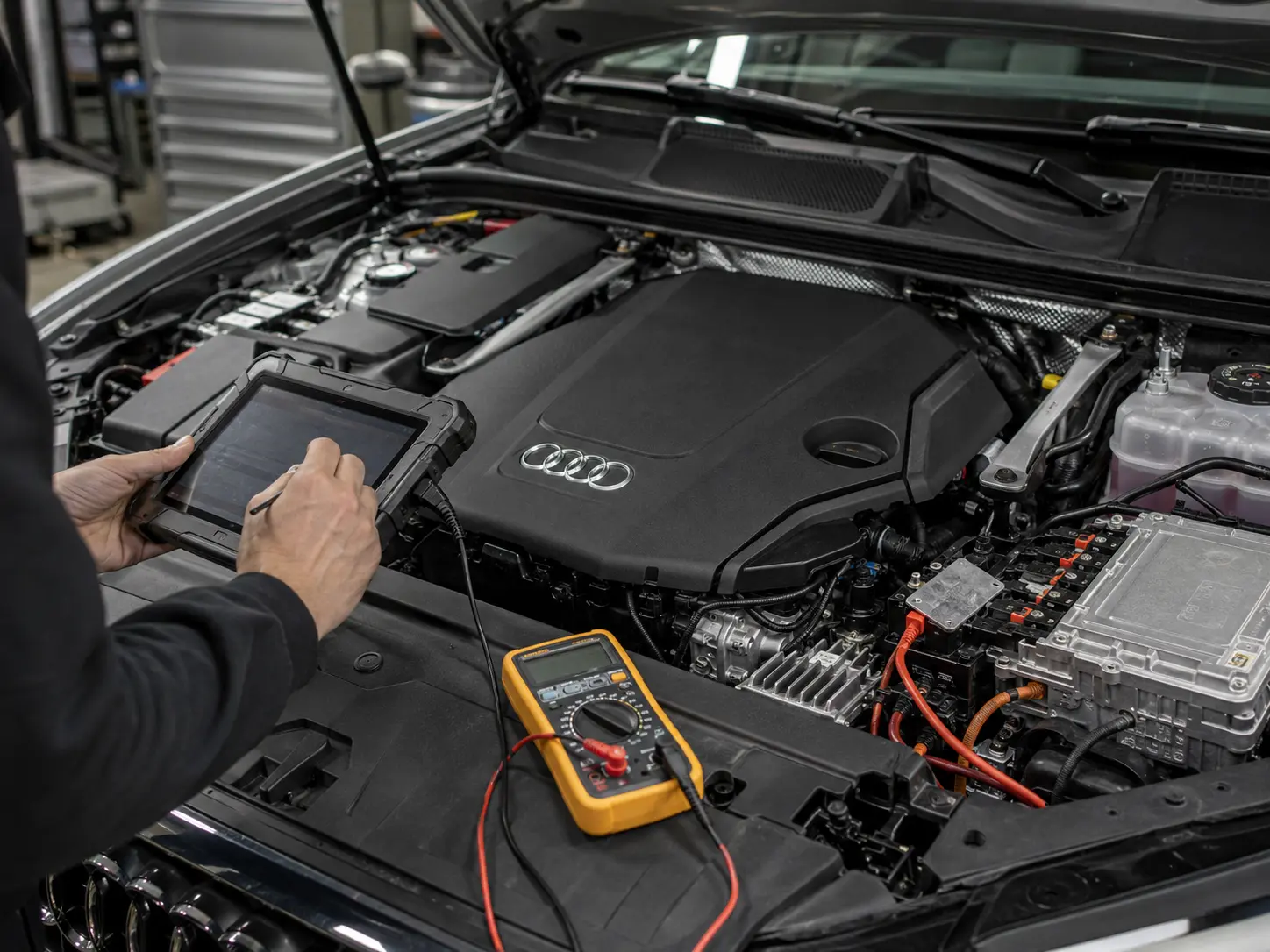
Test the cause before naming the part
Weak acceleration, a drivetrain message, rough running or a no-start condition can involve more than one layer of the powertrain.
Engine diagnosis can include fault status, freeze-frame information, live values, oil and coolant condition, visible leaks, crankcase ventilation, ignition, fueling, boost control, timing evidence and compression-related tests when justified. Overheating or coolant loss should be traced through pressure testing and inspection rather than answered automatically with a water pump or radiator.
On a Q8 equipped with a 48-volt system, low-voltage messages, starting behaviour and several apparently unrelated warnings may require checks of both the conventional electrical supply and the installed mild-hybrid components. The exact architecture and safe procedure are confirmed before testing. A discharged 12-volt battery can also disturb module communication without proving that every reporting controller is defective.
Gearbox and quattro complaints need context
A harsh shift, delayed engagement, vibration or drivetrain warning can be influenced by engine torque, gearbox control, mounts, tires, shafts, differentials or electrical supply.
Describe the event
State whether it happens cold or hot, during engagement, acceleration, coasting, turning or a particular road speed.
Check shared causes
Engine running quality, voltage, tires, mounts and drivetrain play can imitate or worsen a transmission complaint.
Read operating evidence
Fault status, fluid condition where applicable, temperatures, commanded values and adaptation evidence guide the next test.
Approve the right depth
A service, external repair, control issue or internal fault is separated before deeper work is authorized.
Chassis symptoms influence each other
A Q8 that sits low, pulls, vibrates or wears tires unevenly needs the mechanical and electronic chassis layers checked together.
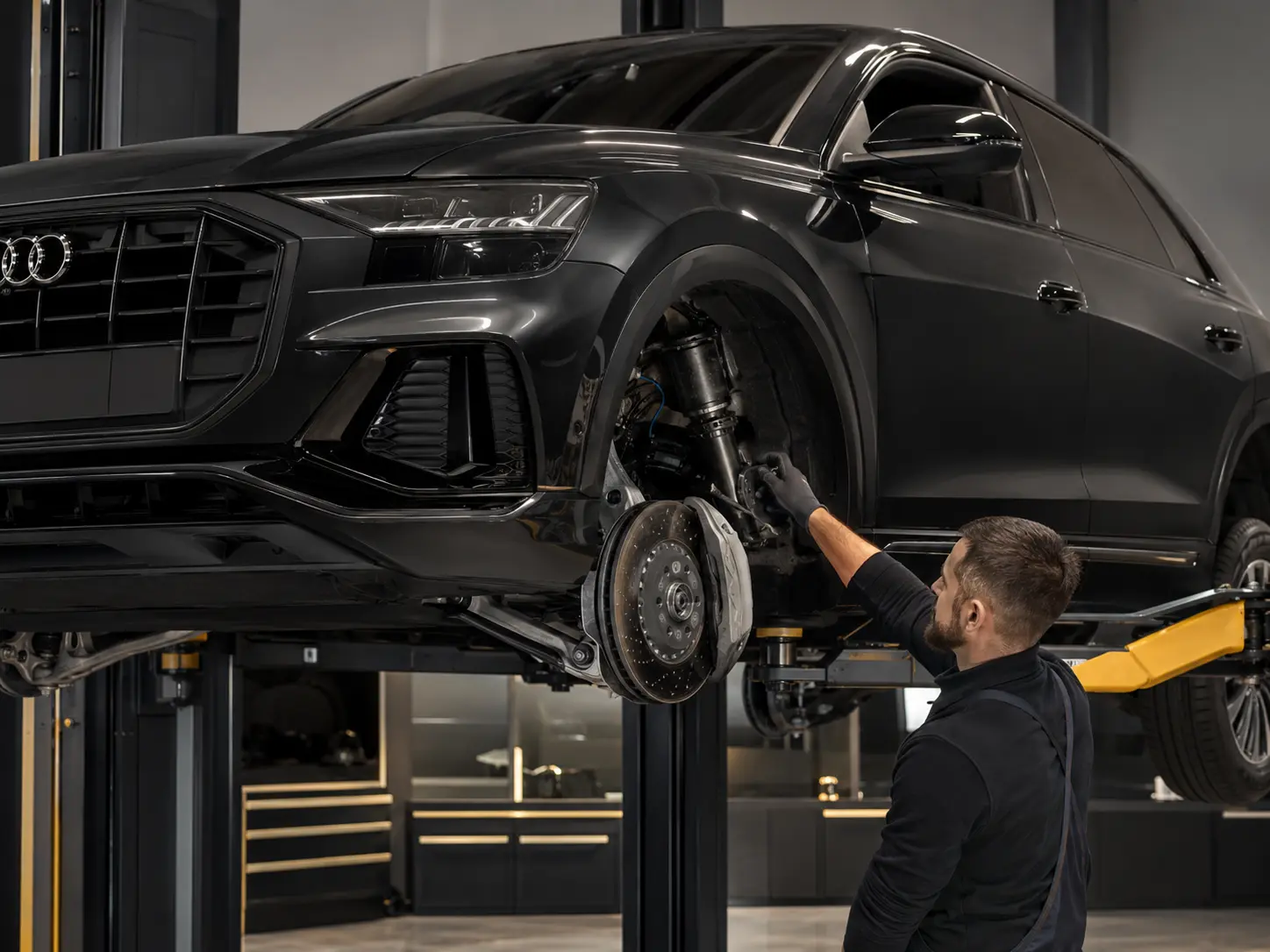
Where air suspension is fitted, the visible ride height is only the starting clue. Air springs, lines, valve control, compressor operation, height sensors, power supply and leaks can produce different versions of the same warning. Replacing a compressor without finding a leak can leave the original cause unresolved.
Brake diagnosis includes pad thickness, rotor condition, caliper movement, warning sensors, hydraulic evidence and the electronic parking-brake procedure where applicable. Steering feel, alignment and tire wear should be considered alongside suspension joints and wheel condition. The correct tire size, load rating, pressure and matched circumference also matter to a heavy quattro SUV.
- Record the normal and faulted ride height
- Inspect mechanical wear before alignment
- Measure brake wear rather than estimating visually
- Check tire condition across the complete tread
- Function-test the repaired system before handover
Electrical warnings need a fault sequence
MMI interruptions, camera warnings, parking-assistance faults and several messages appearing together should be traced through supply, communication and physical condition.
Power and communication
Battery condition, grounds, fuses, wake-up behaviour and network faults are checked before a screen, camera or controller is condemned.
Physical condition
Wiring, connectors, impact damage, water entry, mounting position and recent body work can change the correct electrical test.
Calibration decision
Camera or assistance calibration is performed only where required and after mounting, alignment, tires, ride height and related faults are correct.
Build the schedule from the exact Q8
There is no single online interval that proves what every Audi Q8 needs. Mileage, elapsed time, market, engine, equipment, usage and verified history shape the service plan.
| Information reviewed | What it helps decide | What it does not prove |
|---|---|---|
| VIN and model year | Applicable engine, gearbox, parts and installed systems | Current condition or previous work quality |
| Mileage and elapsed time | Which scheduled items should be checked against the applicable plan | That every listed component needs replacement now |
| Service records | What was completed, when and with which specification if recorded | That a current warning is only a maintenance issue |
| Inspection measurements | Brake, tire, fluid, leak, battery and chassis condition | A hidden fault outside the inspected scope |
| Warnings and symptoms | Which diagnostic route should be added to the visit | Which part has failed without testing |
From complaint to verified repair
The sequence keeps the repair decision connected to the symptom and gives the final check a defined purpose.
Record the concern
We note the exact warning, conditions, recent work, service history and any photos or previous diagnostic information.
Identify the vehicle
The VIN, engine, gearbox, electrical architecture and installed chassis or assistance equipment are confirmed.
Reproduce the symptom
The complaint is checked safely under the relevant cold, hot, stationary or road condition when appropriate.
Test the affected layer
Scan evidence is combined with electrical measurements, physical inspection, pressure, movement or mechanical tests as required.
Approve the scope
Findings, parts choices, access, connected work and remaining uncertainty are explained before repair begins.
Verify the result
The affected system is rechecked, resolved faults are reviewed and a function test or road test is completed where suitable.

What changes the repair cost
A useful estimate depends on the actual failure, access, parts route and verification required. A warning name alone is not enough to price every Q8 accurately.
Cost can change with engine and equipment, fault depth, test time, previous repairs, fluid contamination, secondary damage, calibration needs and part availability. Genuine Audi, OEM-supplier, aftermarket, remanufactured or used parts are not treated as interchangeable labels. Compatibility, condition, warranty terms and suitability for the repair must be discussed for the exact vehicle.
Before approved work begins, the quotation should distinguish diagnosis from repair and identify known parts and labour. If dismantling reveals a connected problem outside the agreed scope, additional work requires a separate explanation and approval.
Related Audi Q8 variants
Performance and electric Q8 models require their own powertrain and chassis context. Choose the page that matches the badge and vehicle identity.
Related Audi repair services
Use the service that matches the confirmed system, or begin with diagnosis when the warning crosses several systems.
Audi Q8 repair questions
What should I send before booking an Audi Q8 repair?
Send the model year, VIN when available, mileage, exact warning text, the conditions in which the problem appears and any recent battery, body, tire, service or repair work. A photo of the display and a short safe video of the symptom can help prepare the first inspection.
Can you diagnose a Q8 warning before replacing parts?
Yes. The warning and fault record are used to select tests. Electrical supply, communication, live data and physical condition are then checked as appropriate. A stored code identifies a reporting system or condition, but it does not automatically prove which component should be replaced.
Does every Audi Q8 use a 48-volt system?
No universal assumption should be made from the Q8 badge alone. Electrical architecture varies by model year, market and powertrain. The VIN and installed equipment are confirmed before 12-volt or 48-volt testing and repair procedures are selected.
Why can several Q8 warnings appear together?
Controllers share power, grounds, sensor information and network communication. Low voltage, a communication interruption or one primary system fault can produce messages from several connected systems. The event sequence and vehicle behaviour help identify the first failure layer.
What can make an Audi Q8 sit low or unevenly?
On an air-suspension-equipped vehicle, possible causes include an air leak, air spring, line, valve control, compressor, height sensor, wiring or power-supply problem. Mechanical damage and incorrect calibration can also affect height. The system should be inspected before a compressor or air spring is selected.
How is the Audi Q8 service schedule confirmed?
The applicable plan is checked against the exact VIN, model year, market, engine, mileage, elapsed time and available service records. Inspection findings and active warnings are recorded separately so scheduled maintenance is not used as proof of a fault.
Can I receive an accurate Q8 repair price before diagnosis?
An initial range may be discussed when the symptom and likely scope are clear, but a reliable final quotation normally follows the inspection needed to identify the cause, access, parts and verification. A warning name can describe several materially different repairs.
What is checked after an Audi Q8 repair?
The affected system is function-tested against the original complaint. Relevant fault status and operating values are reviewed, leaks or mechanical movement are rechecked, and a road test is used where safe and appropriate. Only resolved faults should be cleared as part of the completed scope.
Is the Q8 e-tron repaired in the same way?
The general evidence-led approach remains useful, but the Q8 e-tron has a high-voltage electric drivetrain and dedicated battery, charging and thermal systems. It belongs on the separate Q8 e-tron service path rather than being treated as a petrol or diesel Q8.
Send the warning and driving condition
Call first if the vehicle may be unsafe to drive. For a normal booking, send the Q8 model year, mileage, exact warning and the condition in which the symptom appears. We will prepare the visit around the correct vehicle and system.