
Audi Problems Guide for Symptoms and Repair Priorities
Start with what the car is doing, when it happens, and whether it is safe to continue driving. This hub connects Audi symptoms to the right diagnostic guide or repair page without treating a fault code as proof that a part must be replaced.
Know when an Audi problem can wait
A warning message, noise, leak, smell, vibration, temperature rise, or change in braking can mean very different things. Use the behavior of the vehicle, not the dashboard wording alone, to choose the next step.
Visible leakage, overheating, smoke, unsafe braking and severe mechanical noise should change the plan before the car is driven again.
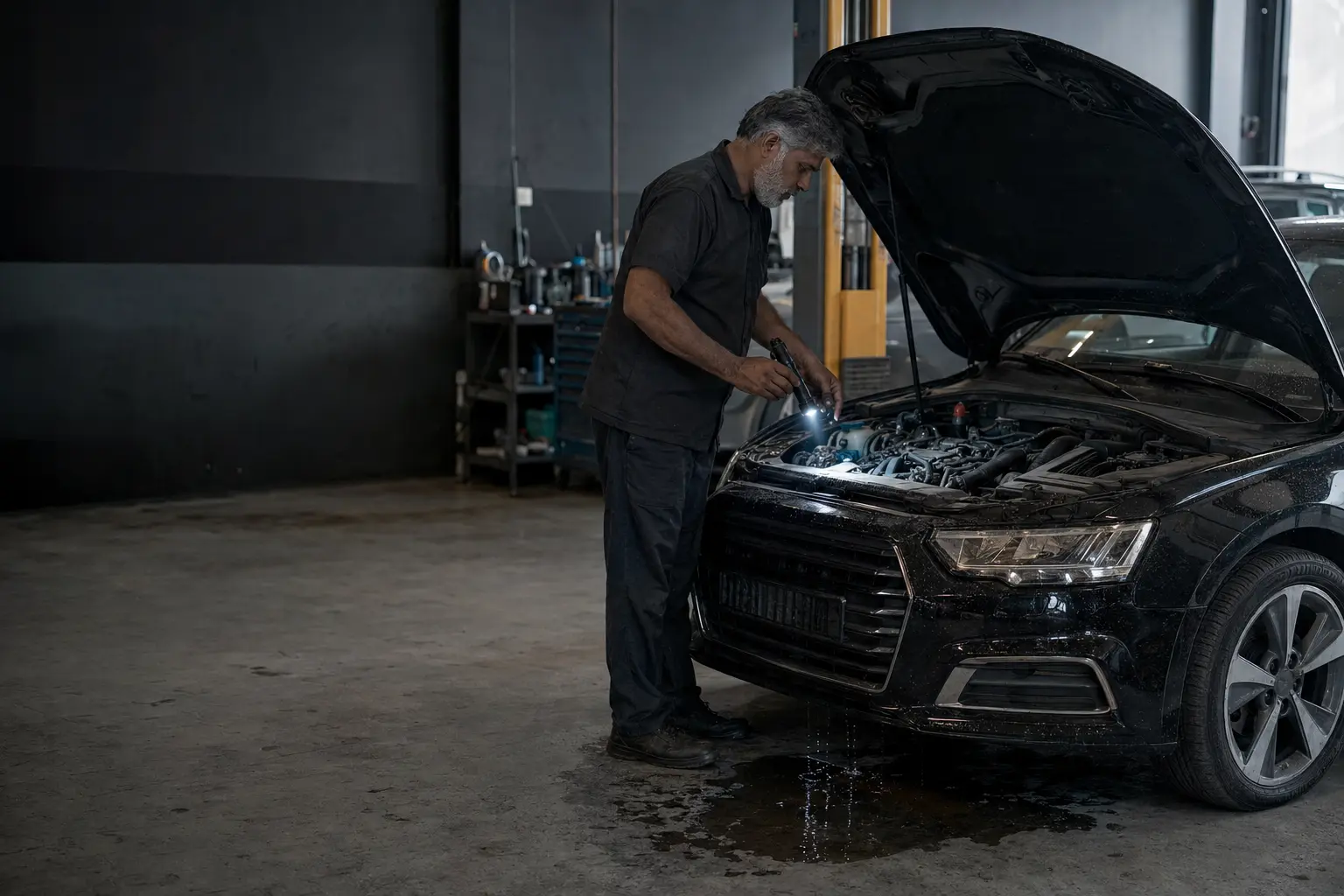
Do not keep driving
Stop for overheating, low oil-pressure warnings, smoke, fuel smell, heavy coolant loss, a soft brake pedal, severe steering change, loud mechanical knocking, or a flashing warning with loss of power.
Limit the journey
Arrange diagnosis for an amber warning, rough running, delayed engagement, repeated battery discharge, new suspension noise, reduced AC cooling, or a leak that is not yet severe.
Monitor with evidence
For minor intermittent concerns, record the exact message, temperature, speed, road condition and whether the engine was cold or hot. Do not clear codes before inspection.
Find the Audi problem you can feel, hear, see or smell
The same part can create several symptoms, and the same symptom can come from several systems. Choose the closest behavior below, then compare the focused guide with the actual vehicle.
Rough idle, misfire or smoke
Separate ignition, fueling, air, compression, timing, oil and coolant causes.
Open the engine problems guide → TransmissionJerking, slipping or delayed drive
Compare clutch, mechatronic, fluid, electrical and internal gearbox symptoms.
Review transmission symptoms → CoolingTemperature rise or coolant loss
Understand pumps, thermostats, fans, leaks, pressure and bleeding faults.
Check overheating priorities → ClimateWarm AC or weak airflow
Separate refrigerant, compressor-control, blower, flap and sensor concerns.
Find the AC fault path → ChassisLow corner, knocking or rough ride
Compare leaks, compressor operation, dampers, arms, bushings and ride height.
Diagnose suspension symptoms → BrakesSqueal, vibration or warning
Use measured pad, disc, fluid, caliper and sensor condition to decide the repair.
Review brake warning signs →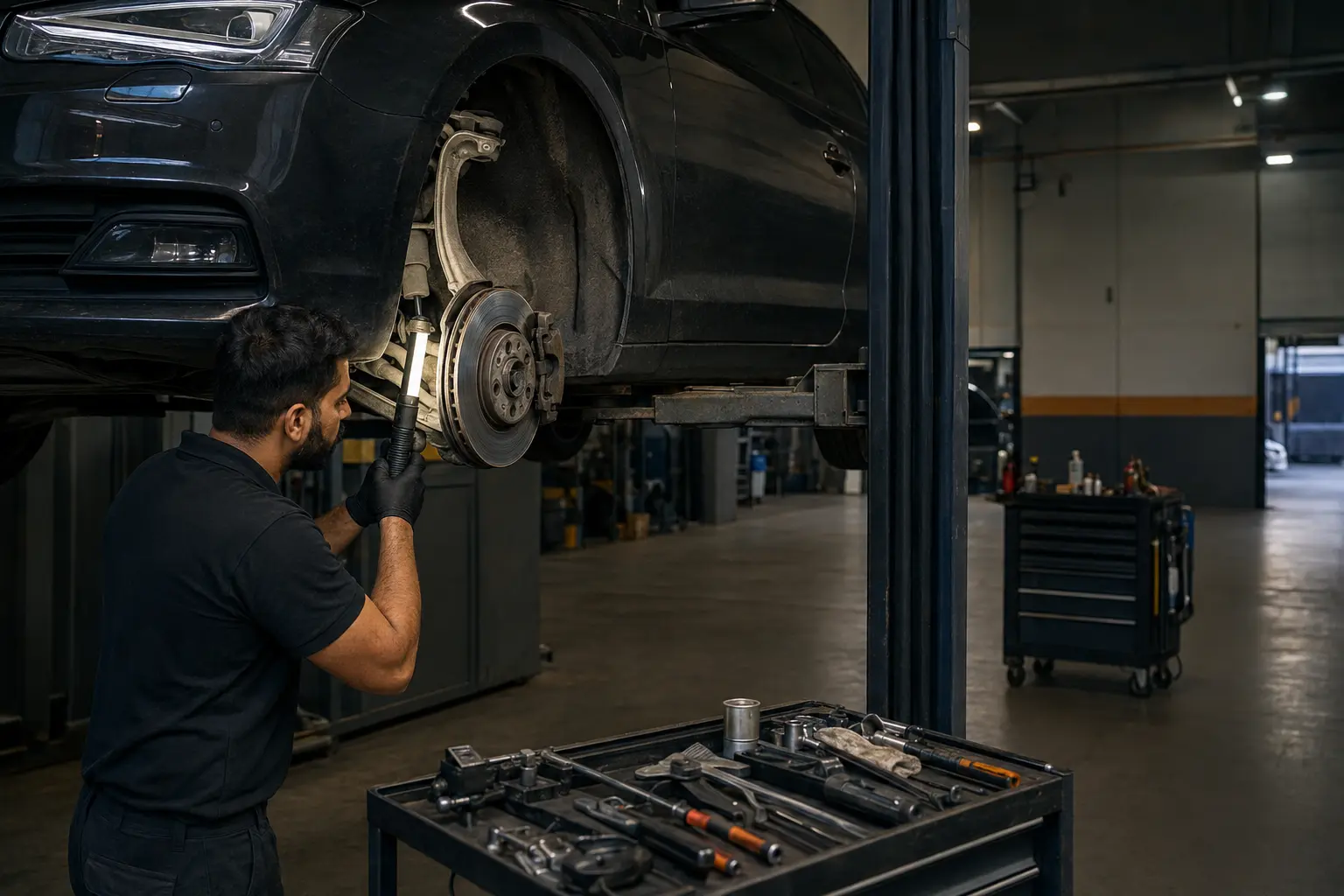

A fault code is the starting clue
A code identifies the control module and test condition that detected a fault. It may not identify the failed component. Voltage, wiring, connectors, leaks, pressure, temperature, mechanical condition and previous repairs can all change the result.
Capture the original evidence
Record every warning, full scan result, freeze-frame data and symptom timing before clearing anything.
Test the affected system
Compare live data and electrical values with physical inspection, pressure or leak testing, measurements and a controlled road test where safe.
Confirm the cause and scope
Explain what failed, what remains unproven, related damage, parts options and completion checks before approved work begins.
For a deeper explanation, see how Audi diagnostics use scan data and physical testing.
Browse Audi problems by the affected system
Use these routes when the symptom clearly belongs to one system. Each page explains a narrower repair scope, while this hub remains the overview.
Choose the symptom route that matches what the Audi does
Open the route closest to the vehicle behavior. More than one route may apply, but these guides are starting points for evidence, not automatic parts lists.
01Rough running, hesitation or power lossMisfire, weak acceleration, boost behavior, unstable idle or deposits
Start with when the symptom appears and whether a warning flashes, power is reduced or the engine runs unevenly. Then use the guide that matches the evidence.
02Coolant loss, temperature change or oil consumptionLeak evidence, warm-up behavior, repeated top-ups or engine-specific exposure
Fluid level, temperature behavior and leak location matter more than the color of residue or a single dashboard message. Stop if temperature or oil-pressure behavior becomes unsafe.
03Noise, vibration or steering changeSeparate engine-speed, road-speed, cabin, suspension and steering behavior
Record whether the symptom changes with engine speed, vehicle speed, road surface, steering angle, braking, temperature or load. That split prevents unrelated systems from being grouped together.
04Engine family, timing or recurring mechanical concernUse the engine code, production period and repair evidence before applying a common-problem label
A model badge may contain several engines and revisions. Confirm the actual engine before using family-level guidance or deciding whether timing, cooling or oil-use information applies.
05Electrical warnings or a fault report with several codesPreserve the first event, voltage condition, controller name and complete code wording
Do not clear the report before its order and operating conditions are saved. Shared voltage, ground or network faults can produce warnings in several control units.
Common diagnostic shortcuts that waste money
- Replacing the component named in a code without checking its circuit or operating conditions
- Assuming every misfire requires coils or spark plugs
- Calling every shift problem a complete gearbox failure
- Refilling refrigerant without locating an AC leak
- Replacing an air-suspension compressor without testing for leaks and relay control
- Fitting a battery without testing the charging system, drain and registration requirements
Audi diagnosis in Al Quoz 4
Our Audi repair workshop in Dubai uses Autel diagnostics alongside electrical and mechanical testing. Send the model, year, mileage, exact warning and symptom timing so the inspection can begin with useful evidence.
AMF AUTO SERVICES LLC is at 39, Al Quoz 4, Dubai. Pickup, drop-off or recovery can be discussed based on the vehicle condition and location.
When the Audi problem happens can be more useful than the symptom name
“It shakes,” “it loses power,” or “it makes a noise” is not enough to choose a repair. The conditions surrounding the symptom help separate systems that feel similar from the driver’s seat. Record the first start of the day, warm restart, idle, light throttle, hard acceleration, braking, steering input, road surface, outside temperature and the moment a warning appears.
| When it happens | Useful observations | Diagnostic direction |
|---|---|---|
| Only on a cold start | Duration of rattle, smoke color, idle quality, warning delay, outside temperature and whether the car was parked overnight | Oil-pressure build-up, timing components, fuel mixture, secondary air, ignition, coolant entry, battery voltage and mount behavior may need comparison. |
| Only when fully warm | Coolant and oil temperature, idle speed, fan operation, restart behavior, heat soak and whether AC is on | Heat-sensitive sensors, pressure loss, cooling control, fuel delivery, electrical resistance, clutch or mechatronic behavior and thermal protection become more relevant. |
| Under acceleration or boost | Engine speed, gear, throttle, load, warning text, smoke, sound and whether power returns after restart | Boost leaks, ignition breakdown, fueling, exhaust restriction, transmission slip, drivetrain mounts and protective-mode triggers require controlled testing. |
| While braking or turning | Pedal feel, steering angle, speed, road surface, wheel involved, vibration frequency and warning lights | Brakes, tires, wheel bearings, control arms, steering, ABS wheel-speed data and stability-control inputs can overlap. |
| After rain, washing or humidity | Which function failed, water location, odor, damp carpets, lighting behavior and whether faults clear after drying | Water entry, connectors, grounds, lighting modules, sensors, drains and control-unit locations should be checked before replacing electronics. |
| After recent repair or battery work | Exact work completed, parts fitted, coding, adaptations, disconnected grounds and when the new symptom began | Installation, connector seating, vacuum or coolant bleeding, battery registration, calibration and disturbed components should be reviewed first. |
Use sound, vibration, leaks and smells as evidence
Describe rhythm and operating condition
A single “knock” can describe combustion knock, a suspension impact, driveline lash or internal mechanical noise. Record whether it follows engine speed, road speed, steering movement or bumps. Note whether it is a metallic tick, deep knock, rattle, hum, squeal, scrape, hiss or clicking sound. A recording made from a safe position can help, but do not place a phone or hand near belts, fans, hot parts or moving wheels.
Noise location can travel through the body. A front-wheel bearing may be heard through the floor, a mount can transmit vibration into the cabin, and an exhaust shield can sound like an engine fault. The car may need a lift inspection or controlled road test before the source is confirmed.
Separate engine speed from road speed
If vibration occurs while stationary and changes with engine speed, the starting routes include engine operation, mounts, pulleys and accessories. If it appears only while moving and follows road speed, tires, wheels, hubs, bearings, driveshafts and brake components become more relevant. A vibration that appears only under acceleration can involve powertrain load, inner joints, mounts or transmission behavior.
Record where the vibration is felt. Steering-wheel shake, seat vibration, pedal pulsation and body shudder point toward different tests. Do not authorize wheel balancing repeatedly when the symptom is actually a brake, tire-structure, suspension or driveline problem.
Identify fluid, location and rate
Clear water under the passenger side after AC use may be normal condensation. Engine oil, gearbox fluid, coolant, brake fluid, fuel and washer fluid require different urgency. Record color, odor, the area where the vehicle was parked and whether the level changes. Do not taste or touch an unknown fluid, and never open a hot cooling system.
A wet lower engine does not prove the lowest seal is leaking. Airflow and gravity spread fluid across undertrays. Cleaning, dye, pressure testing or observation from the highest wet point may be needed before the leak source is named.
Treat fuel or electrical odor as urgent
A fuel smell, burning wiring odor, visible smoke or hot brake smell can require stopping immediately. Sweet odor may indicate coolant, burnt-oil smell may follow a leak onto hot exhaust parts, and musty airflow may involve the cabin filter, evaporator or water entry. Smoke color and timing matter, but color alone is not a diagnosis.
Note whether smoke comes from the exhaust or engine bay, whether it appears on startup, idle, acceleration or deceleration, and whether oil or coolant level is changing. Recovery is safer than “testing it again” when fire, major leakage or lubrication risk is possible.
Check what is safe without disturbing the evidence
Useful checks an owner can record
- Photograph the exact warning message, odometer and relevant gauge when safely parked.
- Check visible fluid levels only by the vehicle procedure and only when safe and cool.
- Record tire pressures cold, tire age, obvious damage and whether all four tires match the approved specification.
- Note whether the concern changes with AC on or off, steering input, gear selection, load or temperature.
- Gather the VIN, invoices, recent parts, previous scan reports and the date the symptom began.
- Leave fault codes stored. Avoid disconnecting the battery or clearing warnings before the original data is captured.
Tests that should match the complaint
- Full-system scanning with fault status, freeze-frame and live-data review rather than one generic code read.
- Battery, charging, ground and voltage-drop testing when several modules report unrelated faults.
- Smoke, pressure, vacuum, compression, leak-down or fuel tests when engine behavior requires them.
- Fluid-condition, adaptation, clutch, mechatronic and mechanical checks for transmission symptoms.
- Brake, tire, wheel, bearing, suspension and alignment measurements for noise or vibration.
- A controlled verification drive or repeat of the triggering condition only when the vehicle is safe.
The badge does not define the engine, gearbox or installed systems
An A4, Q5 or A7 name can cover several generations and different powertrains. Even two cars from the same year can have different brake packages, suspension systems, lighting, driver-assistance hardware or market coding. Search results that call a problem “common” may refer to a different engine code or production period.
Confirm the platform and production date
Facelifts and software revisions can change parts, control modules, wiring and procedures. Use the VIN and production information before applying a repair story from another vehicle.
Identify engine, gearbox and quattro system
A TFSI, TDI, mild hybrid, plug-in hybrid or e-tron requires a different diagnostic route. S tronic, Tiptronic and other transmission applications also differ by code and calibration.
Include previous work and software
A newly fitted battery, used control unit, repaired wiring, engine rebuild, gearbox service, collision repair or software change can completely alter the likely cause and test order.
Repair, rebuild, replace or monitor only after the failure is defined
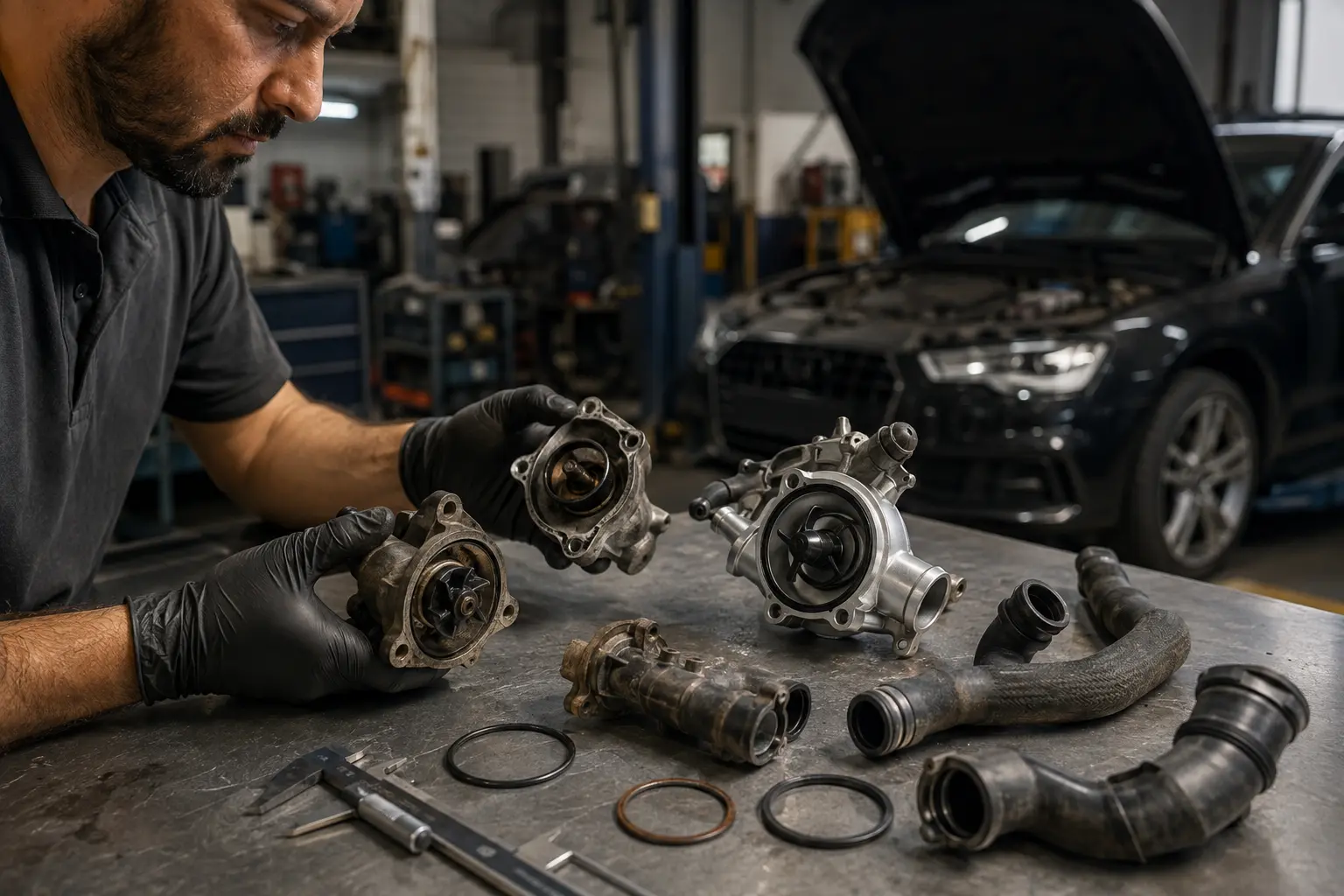
The cheapest headline option is not always the lowest total cost, and the most expensive assembly is not always necessary. A defensible decision compares the confirmed damage, serviceability, parts quality, warranty terms, downtime and the condition of related components.
| Decision | When it may fit | What the estimate should explain |
|---|---|---|
| Targeted repair | The failed component or circuit is accessible, testable and separately serviceable, with no evidence of wider damage. | Confirmed cause, exact part, labor, related seals or fluids, coding or calibration, and how the result will be verified. |
| Rebuild | An engine, gearbox, mechatronic, steering unit or other assembly can be inspected internally and restored to a defined standard. | Disassembly findings, reusable and replaced parts, machining or specialist work, contamination control, measurements and warranty limits. |
| Replacement | Damage, safety, availability, time or economics make component repair unsuitable. | New, genuine, OEM, aftermarket, remanufactured or used status; part number; compatibility; coding; fluids; and return or core conditions. |
| Monitor | The condition is minor, stable, safe and documented, with no evidence that immediate intervention improves the outcome. | What was checked, current measurement, warning threshold, review date and symptoms that require earlier action. |
Ask for the estimate to separate urgent safety work, work that prevents further damage, maintenance due now, comfort concerns and unproven recommendations. If the scope changes after disassembly, the new finding and cost should be explained before additional work proceeds.
Bring evidence that helps reproduce the Audi problem
Intermittent faults are easier to diagnose when the appointment starts with a short, factual timeline. Avoid a long list of guesses about parts. Describe the first event, every condition that makes it return, what changed after restarting, and any work completed immediately before the symptom appeared.
Identity and history
Provide the VIN, model year, mileage, engine or powertrain when known, service invoices, recent battery work, collision repair, software changes and previous diagnostic reports.
Timing and behavior
Send the exact warning, safe photos or video, temperature, speed, gear, road condition, sound, smell, leak location and whether the symptom occurs cold, hot or under load.
Can the vehicle move
State whether brakes, steering, temperature, oil pressure, smoke, fluid loss, tire condition or severe noise makes driving unsafe. This helps decide between a booked visit and recovery.
At handover, ask for the original scan report, confirmed cause, test values or photographs, parts fitted, coding or adaptation performed, warranty terms and the final verification result. If a symptom cannot be reproduced, the report should say what was tested and what evidence would justify the next step rather than recommending parts by guesswork.
Audi problems FAQs
What are the most common Audi problems?
Reported patterns include oil or coolant leaks, misfires, timing concerns, water-pump or thermostat faults, gearbox or mechatronic symptoms, suspension wear, battery and charging faults, and electrical warnings. The actual pattern depends on the model, generation, engine, gearbox, mileage and repair history.
Can an Audi fault code tell me which part to replace?
Usually not by itself. The code records a detected condition. Wiring, voltage, leaks, mechanical wear, software, sensors and related components may create the same code, so guided testing is needed.
Should I drive with an Audi engine warning light?
A steady amber light with normal operation may allow a short, careful journey for diagnosis, but a flashing light, rough running, smoke, overheating, oil-pressure warning or severe power loss requires stopping and advice before driving.
Why does an Audi problem disappear after restarting?
A restart can temporarily restore normal operation after a control unit enters protective mode. The stored fault, freeze-frame data and conditions that triggered it remain important and should be captured before codes are cleared.
What details should I send before booking?
Send the VIN when available, model, year, mileage, exact warning text, symptom timing, recent repairs and whether the vehicle is safe to move. Photos or a short video can help document intermittent symptoms.
Describe the Audi problem before approving a part
The workshop can advise whether to drive, arrange recovery, or book diagnosis after reviewing the model and symptoms.
What a common Audi problem may cost to solve
These market ranges are for common repair routes after the fault is confirmed. Model, parts route, access and related damage determine the final written estimate.
| Service or repair | Typical Dubai market range | Confirm in the estimate |
|---|---|---|
| Scan and first-stage diagnosis | AED 150 to AED 500 | Need for extended testing or road data |
| Cooling-system repair | AED 1,500 to AED 5,500 | Leak source, parts and engine access |
| Conventional brake repair per axle | AED 700 to AED 6,000 | Pads only versus discs, sensors and brake type |
| Gearbox or mechatronic repair | AED 4,000 to AED 15,000+ | Transmission type and internal repair need |