
Audi chassis stabilization malfunction diagnosis in Dubai
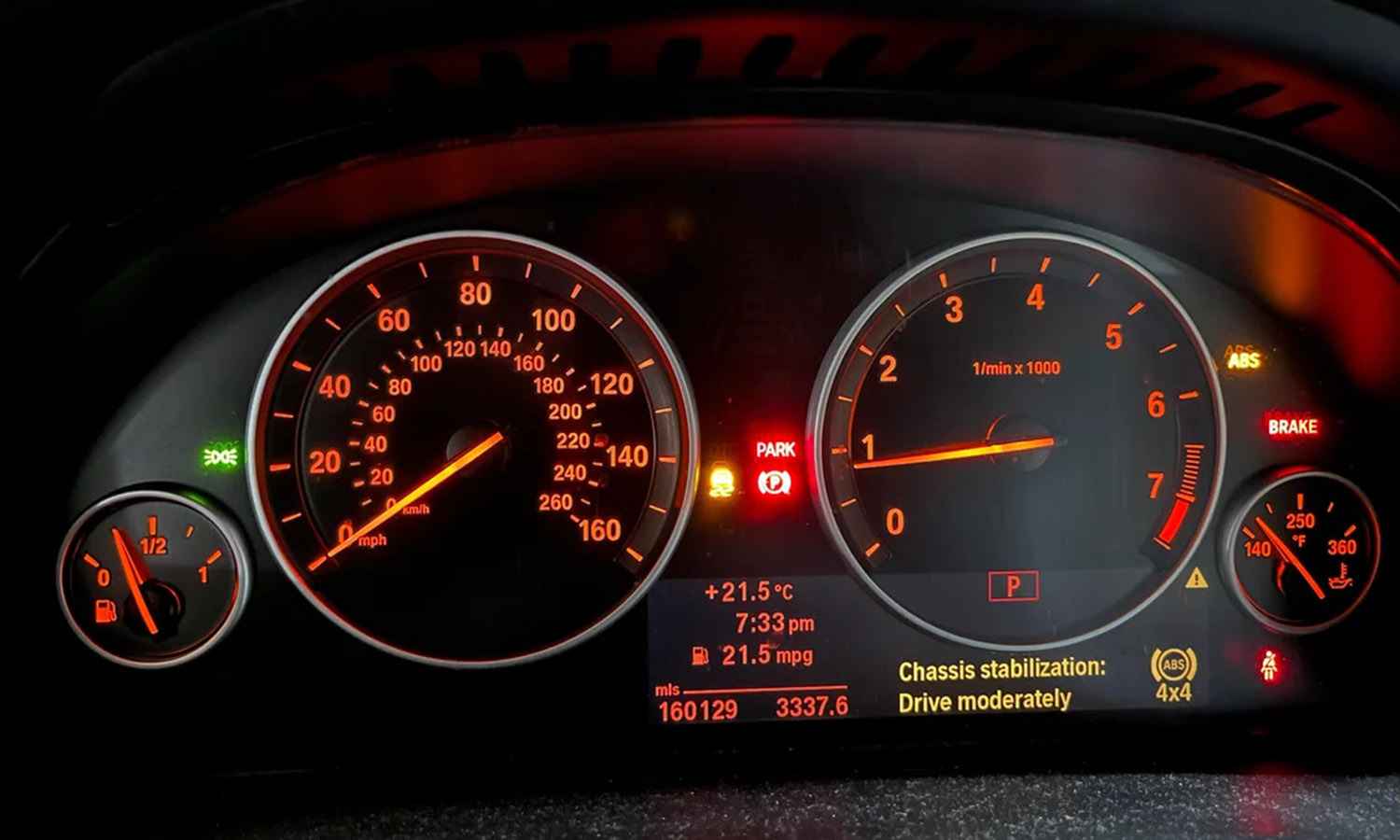
An Audi chassis stabilization message means the car has detected a fault in a system that stability control depends on. It does not identify one failed part. The exact warning, vehicle behaviour, controller faults and measured data decide whether the car should stop, travel under reduced load or come in for prompt diagnosis.

Control or braking feels unsafe
Stop safely and call for recovery if steering or braking changes suddenly, the car leans or drops severely, a tire is damaged, a red instruction appears, or several critical warnings arrive together.
The warning changes how the car drives
Avoid speed, hard acceleration and demanding turns if assistance is reduced, power is limited, ride height is abnormal or the warning returns immediately. Call before deciding on a workshop journey.
The warning is yellow and behaviour is normal
A cautious next step may be possible when steering, braking, tires and ride height remain normal, but the vehicle-specific message still governs. Preserve the warning and arrange diagnosis.
One message can begin in several systems
Electronic stability control compares wheel movement, driver input, braking information and vehicle response. A disagreement, missing signal or unstable supply can trigger the warning. The surrounding evidence determines which route deserves testing first.
Battery and charging voltage
Low voltage during starting, a weak battery, charging instability or resistance at a connection can create faults across ABS, steering and other controllers at the same time.
The warning is a relationship fault
Stability control depends on several systems agreeing about what the Audi is doing. Diagnosis should compare the message, code sequence, live values and physical condition before any sensor, module or suspension part is approved.
Wheel-speed signal
A sensor, harness, connector, magnetic encoder or bearing condition can disturb one wheel-speed signal. Tire size and wheel condition also need to be checked before the sensor is blamed.
Steering-angle information
The measured steering angle must make sense beside wheel speeds and vehicle movement. Alignment work, battery events, impact, wiring or calibration history can change this route.
ABS and pressure data
The ABS controller, hydraulic functions, brake-pressure information and power supply may be relevant. An ABS warning beside the chassis message changes both urgency and test priority.
Suspension and ride height
On equipped models, ride-height sensors, air suspension, damping control, wiring and actual corner height can affect chassis monitoring. A visibly low corner needs physical inspection.
Network and software state
Invalid data, missing communication, coding mismatch or incomplete basic settings can produce dependent warnings. Power and network access must be proven before a controller is condemned.
Match the clue to the next measurement
Similar dashboard messages can require different equipment and repair scopes. This matrix shows why the warning alone cannot support a parts estimate.
| Observed clue | Possible direction | Evidence needed before repair |
|---|---|---|
| Warning appears after a weak start or battery work | Low supply, charging, connection, lost settings or stored secondary faults | Battery capacity, charging behaviour, loaded voltage drop, event timing and complete controller scan |
| ABS and traction warnings appear together | Wheel-speed signal, ABS supply, wiring, encoder, bearing or controller issue | All four live wheel speeds, harness inspection, tire and wheel check, bearing condition and ABS fault details |
| Steering warning follows alignment or impact | Geometry, damaged component, angle data, calibration prerequisite or steering fault | Physical steering and suspension inspection, measured geometry, steering-angle value and correct basic-setting conditions |
| One corner is low or the ride changes after parking | Air leak, height signal, valve, compressor, wiring or mechanical suspension condition | Corner-height measurements, leak pattern, pressure behaviour, sensor data, supply and installed suspension type |
| Several unrelated systems report communication faults | Shared voltage, ground, gateway or network interruption | Fault order, module list, power and ground under load, network access and signs of water or recent electrical work |
| Warning returns only during a repeatable turn or speed | Intermittent wheel signal, wiring movement, geometry, tire variation or sensor plausibility | Controlled road data, safe reproduction, wheel and tire measurement, connection inspection and final rescan |
Prove the repair boundary in six stages
The aim is not to make the warning disappear for a few kilometres. The aim is to identify the first fault, correct what caused it and verify the vehicle under the condition that originally produced the message.
Confirm the exact Audi
Record the VIN, model, year, drivetrain, installed chassis equipment, tire sizes, mileage and recent work. The same model name can cover different suspension, steering and controller arrangements.
Save the original fault record
Scan the connected controllers before clearing anything. Compare static and intermittent events, timestamps, mileage and voltage. Photograph the dashboard warning and note whether it appeared during starting, braking, turning, rain, impact or recent service.
Stabilize the electrical supply
Where voltage or communication events are present, test battery capacity, charging response, connections and voltage drop. Resting voltage alone does not prove that the battery can support starting and controller operation.
Compare electronic and physical evidence
Read live wheel speeds, steering angle, brake information and ride-height values where applicable. Inspect tires, wheels, bearings, suspension joints, sensor wiring and connectors. The electronic clue must agree with the physical condition.
Repair only the confirmed cause
The supported repair could involve a connection, harness, sensor, bearing, battery fault, suspension component, calibration prerequisite, software state or controller. State what the tests proved and what remains outside the approved scope.
Repeat and rescan
Reproduce the original condition safely after the work, confirm required basic settings or calibrations, then scan again. A cleared dashboard at idle is not enough when the original warning appeared only during a turn, at speed or after standing.

What changes the estimate and timing
A useful estimate follows diagnosis. The dashboard wording starts the investigation, but access, physical damage, component revision and calibration requirements determine the actual work.
Diagnosis sets the scope
A wheel-speed sensor circuit may require access and wiring work that a code description cannot show. A damaged encoder may be part of the wheel-bearing assembly. Steering-angle calibration can depend on correct geometry and undamaged steering components. Air-suspension diagnosis may require leak observation over time. A network fault may lead back to one shared supply rather than the module that reported the warning.
Parts and access
Parts availability, component revision, seized fasteners and the access needed to reach the confirmed fault can change the repair plan.
Previous work
Recent battery, alignment, steering, suspension, coding or accident work gives the technician an important starting condition.
Calibration needs
Any required alignment, coding or basic setting should follow the mechanical and electrical repair, not replace it.
Final verification
The estimate should separate diagnosis, the confirmed repair and the checks needed to reproduce and verify the original condition.
Audi configuration changes the test route
An A3 with conventional suspension, an A8 with height control and a Q7 with air suspension do not present the same chassis architecture even when the dashboard wording looks similar. S and RS applications can add different brake packages, damping control, tire specifications and calibration requirements.
Electric and hybrid models combine the chassis warning with their own low-voltage, high-voltage and network arrangements. The VIN, build data and installed parts should guide the test plan instead of a model list copied from another vehicle.
Wheel and tire changes deserve specific attention. Different rolling circumferences, incorrect pressure, impact damage or a replacement bearing with an unsuitable encoder can affect the signals compared by the controller. Dubai heat, water entry and previous wiring repairs are test directions, not automatic explanations. The recorded event still needs to agree with voltage, physical inspection and live data.
Bring the fault sequence
For a wider code record, use the Audi fault-code guide. If braking, steering or geometry becomes the proven repair route, continue to the relevant Audi brake diagnosis, Audi steering repair or Audi wheel alignment page.
Audi stabilization warning questions
These answers cover the first decision. Advice for a specific Audi still depends on the exact message, warning colour and how the vehicle behaves.
What does an Audi chassis stabilization malfunction mean?
It means a controller has detected a fault or implausible condition in a system used for stability, traction or chassis control. The message does not prove that the ESC module, a wheel-speed sensor or a suspension component has failed. The complete fault record and measured values are needed.
Can I drive with the chassis stabilization warning?
That depends on warning colour and vehicle behaviour. Stop and arrange recovery if braking or steering feels abnormal, the car drops or leans severely, a tire is damaged, or a red instruction appears. With a stable yellow warning and normal vehicle control, a cautious next step may be possible according to the vehicle-specific message, but diagnosis should not be delayed.
Can a weak battery trigger several chassis warnings?
Yes. Low voltage during starting or an unstable supply can affect several controllers and create communication or plausibility events. The battery, charging system and connections should be tested when the scan and event timing support that direction. Battery replacement should not be assumed without capacity and supply evidence.
Does a wheel-speed fault always mean the sensor needs replacement?
No. The sensor, wiring, connector, magnetic encoder, bearing condition, air gap, tire size and wheel condition can affect the signal. Compare all four live wheel speeds and inspect the physical route before choosing a part.
Will wheel alignment clear the warning?
Alignment can be relevant when geometry, steering position or recent suspension work affects calibration, but it is not a universal reset. Worn or damaged components, incorrect tires and active electronic faults must be addressed first. Calibration should follow the correct mechanical prerequisites.
Should the fault codes be cleared before the appointment?
Keep the original scan whenever possible. Clearing faults can remove status and event information that shows when the problem occurred. The workshop can save the report, test the suspected route and clear or reset the system at the correct stage.
How is the repair verified?
Verification should address the original trigger. After the confirmed repair, required calibrations or basic settings are completed, the vehicle is checked safely under the relevant condition and the connected controllers are scanned again. A warning that disappears only at idle has not necessarily been verified.
What should I send when booking diagnosis?
Send the Audi model, year, mileage, VIN when available, a clear photo of the complete warning, the full scan report, recent battery, tire, alignment or suspension work, and a description of when the warning appears. Also state whether steering, braking and ride height feel normal.
Send the warning before clearing it
Share the model, year, mileage, complete dashboard message and scan details. We can prepare the correct diagnostic route and advise whether the Audi should be driven or recovered.