
Tyre pressure sensor service · Al Quoz 4
Audi TPMS Sensor Replacement in Dubai
TPMS warning or a missing wheel-pressure reading? Book Audi TPMS sensor replacement with system checks, compatible sensor fitting and the required relearn.
TPMS sensor replacement and valve repair
We replace a wheel-mounted TPMS sensor when testing confirms a failed transmitter, exhausted sealed battery or damage that cannot be repaired with an approved service part. If the sensor works but its valve leaks, a suitable valve repair may be enough.
Not every Audi has a pressure sensor inside each wheel. Some use indirect monitoring through the ABS system. We identify the fitted system and inspect tyre pressure before ordering parts, so the repair addresses the warning you actually have.
Direct and indirect Audi TPMS

Direct pressure sensors
Transmitters inside the wheels report to the vehicle. A sensor can fail electrically, lose battery power or suffer physical damage during tyre work. Diagnosis checks the individual units and their communication. A missing pressure reading does not automatically mean the receiver or all four sensors need replacement.
Indirect pressure monitoring
The system uses wheel-speed information to recognise changes associated with pressure loss. It does not have a pressure transmitter in every wheel. Correct tyre pressures, tyre condition and the stored baseline matter; ABS-related faults can also affect monitoring.
Audi systems vary by model year, market and equipment. A familiar A3, A4, A6 or Q-model badge cannot select the repair. VIN and option information, the fitted hardware and the vehicle’s available settings are checked together. Wheel size alone is not enough.
TPMS warning signs
Tell us the exact dashboard message and whether one wheel or the whole system is affected. Pressure loss and a monitoring malfunction need different checks. Note whether the problem began after tyre fitting, wheel rotation, a puncture repair or a wheel change.
| What you notice | Possible cause | What we check |
|---|---|---|
| Low-pressure warning | A real pressure drop, temperature-related change or an incorrect stored baseline. | Measure the tyres and inspect for leakage before resetting. |
| One wheel reading missing | A non-reporting sensor, incompatible unit, damaged valve assembly or unfinished relearn. | Test that transmitter and compare it with the other wheels. |
| Monitoring unavailable | System communication, receiver, sensor compatibility or an indirect-system fault. | Read the exact warning and relevant faults; identify the system first. |
| Warning after tyre replacement | Incorrect pressure, valve leakage, sensor damage or missing calibration. | Check the recently serviced wheel, parts fitted and setup procedure. |
| Repeated slow pressure loss | Puncture, bead leakage, wheel damage or a valve seal problem. | Locate the leak; a new sensor will not repair a damaged tyre. |
| Displayed pressure seems wrong | Different measurement conditions, stale information or a faulty reading. | Compare a reliable gauge with current sensor data under suitable conditions. |
TPMS testing before replacement
Tyre pressure and leaks
Measure the tyre pressures against the vehicle’s specified cold-pressure settings for the load. Inspect the tread, sidewalls, bead areas, wheel and valve. A slow leak can be present even when the sensor reports correctly. Record pressures before correcting them so the original condition is not lost.
Sensor response
On a direct system, check sensor identity, transmitted pressure and other available information, including battery status where supported. Compare the affected wheel with the others. A sensor that does not respond may be asleep, incompatible, damaged or depleted; the result needs to be interpreted with the right application selected.
Faults and recent work
Read relevant faults and check the parts fitted during earlier tyre or wheel work. If all readings disappear together, investigate system-level causes as well as the wheel units. On an indirect system, wheel-speed and related faults are assessed rather than ordering pressure transmitters that the vehicle does not use.
If an ABS warning accompanies the tyre-pressure message, the cause needs separate confirmation. Our Audi ABS diagnosis service covers the related sensor, wiring and module checks. An ABS warning alone does not prove that the module requires replacement.
Replace the sensor or repair the valve?
Replace a failed sensor
A confirmed internal failure, exhausted sealed battery or damaged transmitter normally calls for a compatible replacement. One failed sensor does not automatically justify replacing the complete set. We explain any reason to assess the remaining units, especially when they are of similar age.
Repair a serviceable valve
A healthy transmitter may be retained when an approved valve or sealing kit addresses the leak. The correct core, seal, nut, cap and stem arrangement depend on the sensor. Corrosion or a damaged valve hole can change the repair, so fitting a new seal is not always sufficient.
Repair the tyre or wheel
A puncture, leaking bead or damaged wheel requires its own repair decision. TPMS replacement will not stop that pressure loss. If inspection finds tyre damage that cannot be repaired safely, our Audi tyre replacement service is the relevant next step.
The correct sensor for your Audi
Frequency and vehicle compatibility
The radio frequency alone does not establish compatibility. Protocol, application coverage, part revision and vehicle software all matter. Imported vehicles and replacement wheel sets can use a different specification from a similar-looking local car. We check the VIN and the installed system before confirming the part.
Valve and wheel fitment
The valve type, angle, mounting and clearance must suit the wheel and sensor. A universal programmable unit still needs to support the exact application. Tell us about aftermarket wheels, a second wheel set or previous sensor replacements so those details are included in the parts check.
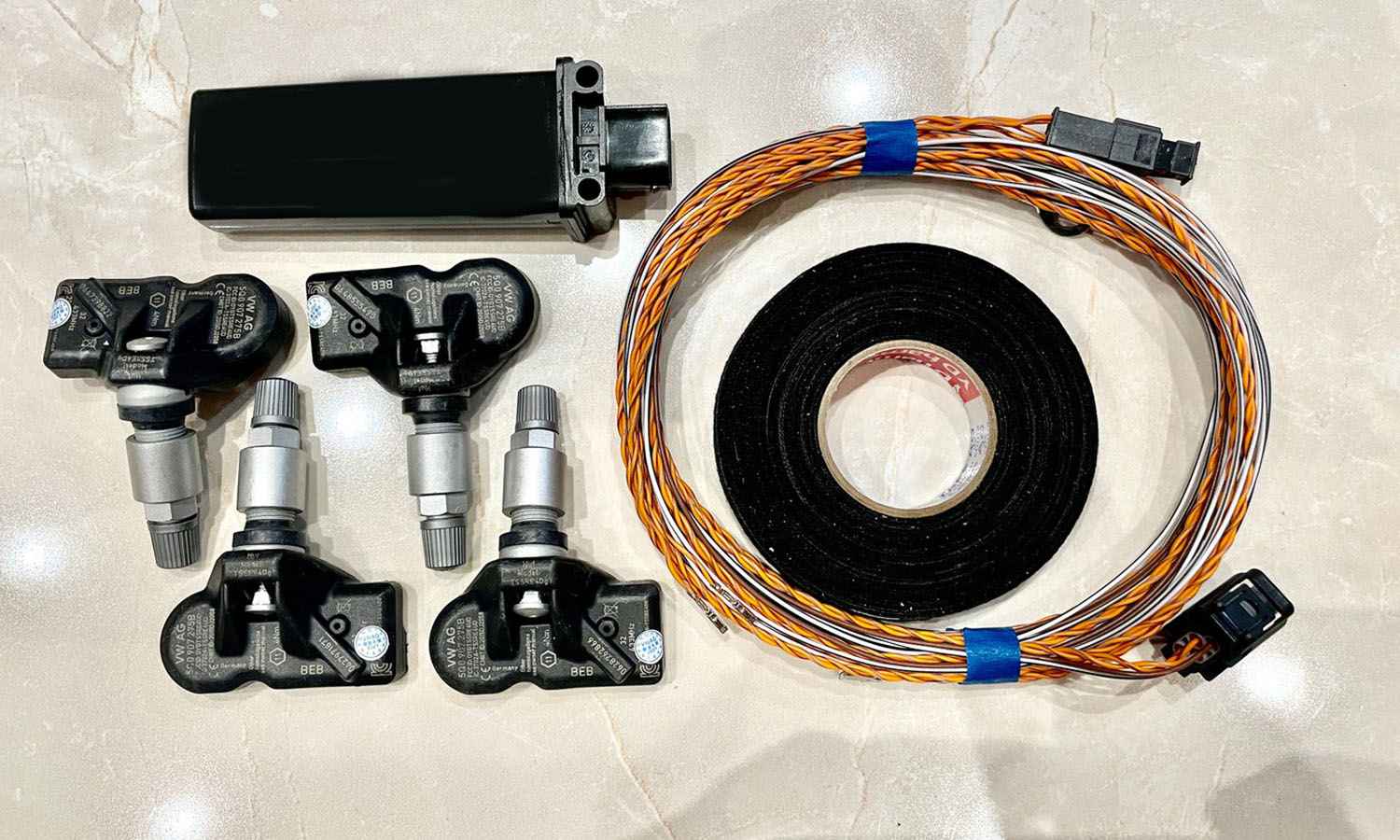
Ask whether the quote specifies Audi Genuine or a named compatible alternative and which terms apply. A cheap online listing or a matching connector photograph does not prove that the vehicle can learn the sensor. Retrofit hardware is a separate project from replacing a failed factory-installed unit.
How TPMS sensors are replaced

Remove and inspect
Record the wheel position and pressure, then remove the wheel and open the tyre using the appropriate tyre-service procedure. The technician avoids loading the bead against the sensor and checks the valve hole, wheel surface and tyre condition before fitting parts.
Fit the replacement
Install the confirmed sensor and specified service hardware. Use the applicable tightening procedure for the stem and retainers; excess force can damage small valve components. Sealing parts and valve cores must match the assembly rather than being selected solely because they fit physically.
Refit and check for leaks
Refit the tyre, set the correct pressure and check the valve and bead for leakage. Check wheel balance after tyre dismounting and refitting, and secure the wheel correctly. The final setup follows the vehicle’s direct or indirect monitoring procedure.
This work needs safe lifting and suitable tyre-service equipment. Do not loosen a sensor valve nut while the tyre is pressurised or attempt to change the sensor through the valve opening. Tyre sealant use should be disclosed because the tyre, valve and sensor may need inspection after its use.
Sensor programming and relearn
Programming the sensor
Some replacement sensors are supplied for a specific application. Others need compatible programming before installation or use. Programming prepares the transmitter; it is not the same as teaching the vehicle which sensor identities belong to its wheels.
Learning the wheel sensors
A direct system may learn automatically under specified conditions or require a guided procedure. An indirect system may need its pressures stored after correction. We follow the installed system’s requirements and explain whether a drive cycle is needed; there is no universal reset sequence for every Audi.
Wheel alignment is not an automatic requirement for sensor replacement. It may be relevant if separate tyre wear, steering or impact findings justify it. Coding and calibration charges should name the actual procedure required, rather than treating every TPMS repair as the same software package.
Checks after TPMS replacement
Pressure checked, warning retested
After Audi TPMS sensor replacement, we check the wheel, valve and monitoring response. Clearing a warning without checking the tyre pressure and learned sensor operation is not enough.
- Valve and bead sealing
Confirm that the serviced wheel holds pressure and no leak was introduced during fitting.
- Sensor communication
Check the fitted unit’s response and the vehicle’s recognition of the relevant sensors where supported.
- Displayed readings and faults
Compare available readings with measured pressures and rescan for relevant returning faults.
- Handover information
Explain the part replaced, setup completed and any follow-up check needed for an intermittent complaint.
Audi TPMS sensor replacement cost
Request a vehicle-specific quote
Send your VIN, model year and dashboard warning. We can then identify the system and explain which checks are needed before confirming the sensor and fitting cost.
The price depends on the confirmed number of failed sensors, chosen part, valve hardware, tyre access and required programming or relearn. Ask whether tyre dismounting, refitting, balancing, leak testing and applicable taxes are included. Puncture repairs or wheel damage should be quoted separately.
Replacing several sensors together may reduce repeated tyre-access work, but it should remain an informed choice. Ask for the findings for each unit and compare individual replacement with a complete-set quotation. Sensor age is useful context, not proof that all units have failed.
Appointment length depends on part availability, wheel condition and setup requirements. A fault that appears only after a journey may need a road check or a longer visit. Confirm whether the first appointment is for diagnosis or an already agreed replacement, and bring any earlier repair report.
Can you drive with a TPMS warning?
Stop for tyre damage or pressure loss
Stop safely if a tyre looks deflated, pressure falls quickly, the sidewall is damaged or the vehicle pulls, vibrates or handles differently. Do not inflate a visibly damaged tyre and continue driving. Arrange recovery when structural damage is suspected or the tyre cannot hold the specified pressure.
Book a monitoring fault promptly
When tyre condition and pressures have been checked but monitoring remains unavailable, arrange diagnosis and follow advice for the vehicle. A system fault removes a warning function; it does not confirm that the tyres are safe. Manual pressure checks remain necessary, even when TPMS is working normally.
Keep tyre pressures and valves in good condition
Check cold tyre pressures regularly and before longer journeys. Use the vehicle placard and the setting appropriate to its load, not the maximum pressure moulded into the tyre sidewall. Do not bleed a warm tyre down to a cold-pressure figure simply because the reading has risen after driving.
Keep suitable valve caps fitted and report slow leaks early. Tell the tyre technician that direct sensors are fitted before bead work. After pressure correction, rotation or wheel changes, follow the vehicle’s storage or relearn instructions. Resetting an indirect system while a tyre remains low can establish an incorrect baseline.
TPMS sensor replacement FAQs
Does every Audi have TPMS sensors inside the wheels?
No. A direct system uses pressure transmitters in the wheels, while an indirect system uses wheel-speed information to detect changes associated with pressure loss. The model badge or wheel size alone does not identify the system. We check the vehicle equipment before quoting for replacement sensors.
Can you replace just one TPMS sensor?
Yes, when one direct sensor is confirmed faulty and the others operate correctly. Sensors of a similar age may have similar wear, but that does not prove that all four require replacement. Ask for the condition of each sensor and separate prices if replacing several together is being considered.
Can the valve be repaired without a new sensor?
Sometimes. A compatible valve or sealing kit can repair a serviceable leak when the transmitter is healthy. A broken housing, damaged non-serviceable stem or exhausted sealed battery can require a complete sensor. The leak location and sensor design determine which repair is suitable.
Does TPMS sensor replacement include programming?
The quote should state whether sensor programming and vehicle relearn are included. Some sensors arrive configured for the application; others need compatible programming before use. The vehicle may then need to learn the sensor identity. These are different steps, and the required procedure depends on the fitted system.
Why did the warning start after a tyre change?
Possible causes include incorrect pressure, valve leakage, a damaged sensor, incompatible replacement hardware or an unfinished relearn. An indirect system may need its pressures stored again after the tyres are correctly set. We inspect the wheel and identify the system before deciding which explanation applies.
Can I drive with the TPMS warning on?
Check tyre condition and pressure first. Do not drive on a visibly deflated tyre, damaged sidewall or wheel, or with rapid pressure loss, vibration or changed handling. If the tyres are sound but monitoring is unavailable, arrange diagnosis promptly and check pressures manually while following advice for the vehicle.
How long does a TPMS sensor battery last?
There is no single lifespan for every sensor. Age, design, use and operating conditions affect battery life. Most direct-sensor batteries are sealed inside the unit, so a confirmed exhausted battery normally requires sensor replacement. A sensor that does not respond still needs compatibility and communication checks before battery failure is assumed.
Will resetting the warning fix the problem?
A reset does not repair a puncture, leaking valve, incompatible sensor or exhausted battery. Correct the physical tyre condition first. An indirect system can then store the correct pressure baseline where required; a direct system follows its own relearn procedure. Repeatedly clearing the warning can delay finding a real leak.
Book TPMS sensor replacement in Al Quoz
Visit Audi Repair Dubai at Warehouse 39, Al Quoz 4, Dubai. Call before travelling if a tyre is damaged or losing pressure. For a quotation, send the VIN, model year, wheel size, exact warning and details of recent tyre or wheel work.
If available, include a photo of the warning and the pressures measured with a gauge. Tell us whether one wheel reading is missing or the entire system is unavailable. These details help prepare the appointment; sensor compatibility and tyre condition still need confirmation.
Sensor service background: Schrader’s TPMS replacement guidance. The repair and setup procedure must match the sensor and vehicle.