
Audi Parking Sensor Repair and Diagnostics in Dubai
False beeps, a continuous tone, no warning sound or a parking-assist message does not automatically mean that every bumper sensor needs replacement. Test the complete signal path before ordering parts.
Why do Audi parking sensors stop working?
Audi parking sensor faults can come from dirt, ice or water on a sensor face, impact damage, a displaced bumper bracket, paint or repair material over the sensor, wiring or connector damage, low system voltage, a control-module fault or one sensor whose implausible signal causes the system to disable a complete front or rear zone.
The useful question is not simply “which sensor is bad?” It is whether the sensor is receiving power, whether its bracket points it correctly, whether the circuit can carry a stable signal and whether the parking-aid controller sees the expected response. Vehicles with cameras, automated parking or maneuver assistance also require the exact equipment level to be identified before repair.

The symptom changes the first diagnostic route
Use the closest symptom below as a starting point. The same warning can still have different causes across Audi generations and optional parking systems.
A zone may be disabled by one unreliable input
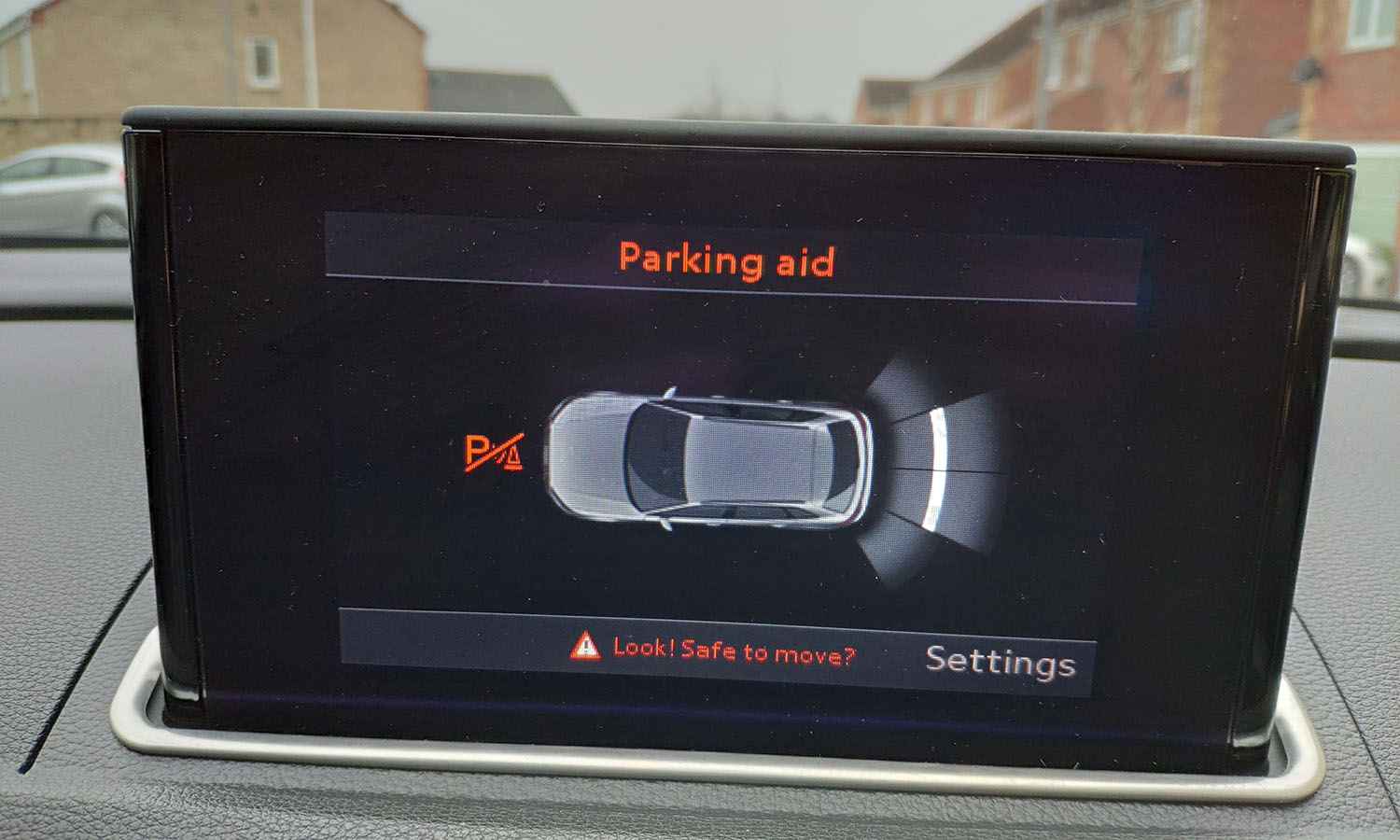
A continuous tone after selecting reverse or activating the system can indicate that the controller has detected a hard fault. One sensor, its connector or the shared harness can prevent reliable distance information.
- Record whether the fault is front, rear or both
- Note any recent bumper contact, repainting or removal
- Read parking-aid fault status before clearing it
Do not assume every sensor failed together
If there is no chime, visual graphic or button response, the problem can sit upstream of the sensors. Power supply, fuse, switch input, controller communication, sound output or MMI integration may be involved.
- Check whether the parking button illuminates or flashes
- Confirm reverse recognition and related camera behaviour
- Scan the correct parking and infotainment controllers
Environment and mounting matter
Water droplets, dirt, a number-plate frame, a tow-bar, bumper distortion, thick paint or a sensor that is tilted in its bracket can create an echo that looks like an obstacle.
- Test in a clear, known-good area
- Clean and dry the sensor faces without abrasive methods
- Compare live distance response across the sensor row
The parking system is more than ultrasonic sensors
A working audible warning with a missing graphic, unavailable camera view or maneuver-assist message may point to display, camera, network, coding or equipment-specific faults rather than the sensor row.
- Record which function remains available
- Identify factory-fitted options from the VIN
- Check communication faults across related controllers
Follow the PDC signal from bumper to driver warning
Park distance control is a chain. Replacing the final sensor named in a generic code description can fail if the bracket, harness, supply or controller is the real cause.
Send and receive
Surface condition, physical damage and correct part specification affect the ultrasonic response.
Hold the angle
A loose, distorted or incorrectly bonded mount can point a healthy sensor at the road or bumper.
Carry the signal
Impact, moisture, corrosion, pin fit and repairs behind the bumper can interrupt one or several channels.
Validate distance
The parking-aid module evaluates sensor plausibility, stores faults and coordinates system availability.
Warn clearly
Chime, display, MMI, camera and assistance functions present the information according to equipment.

How Audi parking sensor faults are diagnosed
The order matters because cleaning, disconnecting or clearing faults can remove evidence of an intermittent condition.
Confirm the exact complaint
Check front, rear or full-system behaviour, whether the issue is constant or weather-related and what changed before it started.
Identify equipment
Use the VIN and installed options to separate basic rear PDC, front and rear assist, camera integration and automated parking features.
Preserve fault evidence
Read the correct controllers, note static or intermittent status and review measurement values before clearing anything.
Inspect the physical row
Look for dirt, moisture, damage, thick paint, poor repair, loose mounts and bumper distortion around each sensor.
Test the circuit
Verify power, ground, connector pin condition and wiring continuity where the fault data points, rather than probing every wire blindly.
Verify after repair
Reassemble correctly, clear only after recording evidence and test in a controlled area from different distances and directions.
Temporary interference to rule out
- Heavy dirt, water, ice or wax residue on the sensor
- A number-plate holder or accessory inside the detection field
- A tow bar, bike rack or temporary load
- Very uneven ground or close reflective surfaces
Vehicle faults that need repair
- Cracked or internally failed ultrasonic sensor
- Loose or angled sensor mounting bracket
- Damaged bumper harness or corroded connector
- Power, ground, controller or network fault
The right fix depends on the failed layer
A scratched sensor face does not always mean electrical failure, and a fault code naming a sensor does not always prove the sensor element itself is defective.
Where the sensor is confirmed faulty, the replacement must match the vehicle and equipment. Paint thickness and finish should not obstruct the sensing surface. Where a bumper was repaired or removed, bracket orientation, harness routing and connector security deserve equal attention.
If the work affects related cameras, radar hardware or automated parking equipment, any equipment-specific setup or calibration requirement should be identified from the vehicle configuration. Basic ultrasonic PDC replacement should not be marketed as a universal “ADAS calibration” job.
Parking sensors are driver-assistance features, not a substitute for mirrors, camera views and direct observation. Until the system is verified, assume an obstacle may not be detected.

| Evidence | Likely route | What must be verified |
|---|---|---|
| One channel is static and the sensor fails comparison testing | Replace the confirmed sensor | Correct part, finish, position and post-repair response |
| Several sensors lose communication after bumper impact | Inspect shared harness and connectors | Pin fit, continuity, routing, power and ground |
| False beeps after repainting | Inspect paint, bracket and sensor alignment | No excess material, distortion or tilted mounting |
| Chime works but the display is missing | Check MMI, coding or network route | Parking-aid data is present and correctly presented |
| Fault only appears when wet | Reproduce moisture-related condition safely | Sensor face, connector sealing and harness entry points |
Audi parking sensor repair FAQs
Can one bad Audi parking sensor disable the whole system?
Yes. On some systems, one implausible or unavailable input can cause a complete front or rear zone to be disabled because the controller cannot trust the distance information.
Why do the sensors give a continuous beep?
A continuous tone can indicate a detected fault, a sensor reading an obstacle at minimum range or a mounting and contamination issue. Fault status and live response should be checked before replacement.
Can washing the car cause temporary false warnings?
Water droplets or residue on a sensor face can interfere temporarily. If the fault continues when clean and dry, inspect the sensor, bracket, connector and wiring.
Do painted parking sensors need special care?
Yes. Excess paint or filler can change the ultrasonic response. The finish and sensor position should match the application without blocking or distorting the sensing surface.
Does a replacement sensor need coding?
Requirements vary by model, sensor type and parking equipment. The correct part and controller fault status must be confirmed. Related systems may have additional setup requirements after bumper work.
Why did the fault begin after bumper repair?
A connector may be loose, the harness may be trapped, a bracket may be angled or the paint and repair material may affect the sensor face. The repaired area should be inspected before assuming a new electronic failure.
Can I keep driving with failed parking sensors?
The vehicle may still be movable, but the assistance cannot be trusted. Use mirrors, camera views and direct observation, and arrange diagnosis before relying on the system in tight spaces.
Is a parking sensor fault the same as a parking brake malfunction?
No. Parking sensors belong to the park distance control system. The electronic parking brake is a braking system. Similar wording on the dashboard does not mean the faults share a cause.
Arrange Audi parking sensor diagnosis in Dubai
Send the model, year, exact warning, affected end of the car and any recent bumper work.