
Audi Parking Light Malfunction Diagnosis in Dubai
A parking-light warning may come from a bulb or LED element, but it can also involve a holder, connector, ground, wiring, lamp control module, vehicle coding or an incorrect replacement part. Identify the exact light and circuit before replacing an assembly.
What does “parking light malfunction” mean on an Audi?
The message normally refers to an exterior position, side-marker or parking-light function, depending on model and market equipment. It does not refer to the electronic parking brake, and it is not the same as a parking-sensor or park-assist fault.
Some Audi lamps use a replaceable bulb and holder. Others use LED elements controlled by a lamp module. A lamp can appear partly illuminated while current monitoring still detects an abnormal load, poor connection or failed channel. The exact message, left or right side, front or rear location and whether other lighting functions are affected provide the starting evidence.
Low-intensity exterior position or marker function.
Visibility lighting with different control logic on many models.
A braking system, not an exterior lamp circuit.
Ultrasonic sensors, cameras and maneuver assistance.
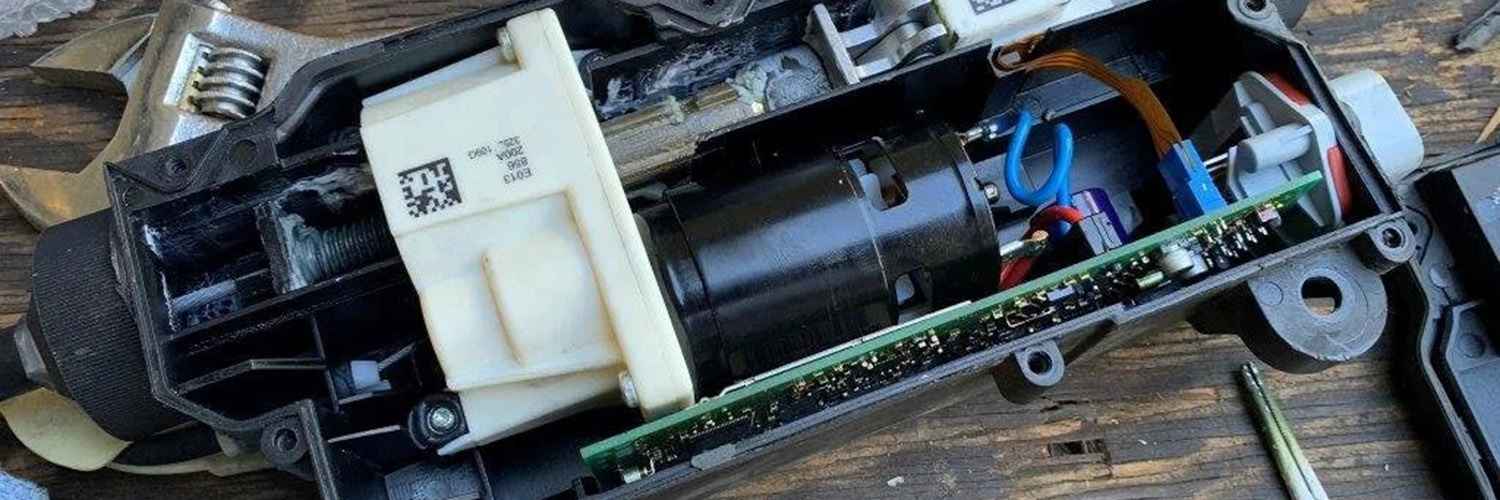
A parking light is one point in a controlled circuit
A correct diagnosis follows the circuit from supply to the illuminated element and back through its ground or monitored return. The failed layer can change with headlamp generation and equipment.
Voltage
Battery condition, fuse protection and module output must support the circuit.
Command
Switch input, vehicle state and body-control logic request the light.
Connection
Wiring, connector pins and sealing carry stable current to the lamp.
Regulation
LED drivers or lamp electronics manage the relevant lighting channel.
Output
A bulb, LED board or light guide creates the visible parking light.
Feedback
The vehicle compares expected and actual circuit behaviour and stores faults.
Open circuit or degraded output
A conventional bulb may fail visibly. An LED assembly can lose one segment, flicker, dim or trigger a warning through its driver circuit.
Heat, looseness or corrosion
High resistance at a terminal can create intermittent operation, discolouration or a warning that changes with vibration or temperature.
Shared return-path fault
A weak ground can affect several functions in one lamp and create differences in brightness or unexpected interaction between circuits.
Output channel problem
A working LED strip with a persistent message can still point to its driver, supply or communication rather than the visible light source.
Load mismatch
An aftermarket LED or incorrect bulb can illuminate yet draw a load outside the monitored range and trigger a bulb-failure warning.
Configuration mismatch
A fault appearing after headlamp replacement, module work or coding changes requires the installed hardware and configuration to be checked together.
Clues that narrow the Audi lighting fault


| Observed behaviour | Useful first checks | Do not assume |
|---|---|---|
| One side is completely dark | Exact light source, power, ground, connector and stored channel fault | That the full lamp assembly is automatically required |
| Light works but warning remains | Correct bulb or LED part, load monitoring, module fault status and configuration | That visible illumination proves normal circuit operation |
| Flicker changes over bumps | Terminal tension, connector damage, harness movement and lamp mounting | That an intermittent fault will be found by a static glance |
| Several rear lights behave strangely | Shared ground, connector heat and water entry | That multiple bulbs failed at the same moment |
| Fault began after headlamp replacement | Part number, modules, connector fit, coding and adaptation | That the replacement assembly is plug-and-play for every specification |
Test the fault without erasing its evidence
The sequence protects against unnecessary lamp replacement and helps reproduce intermittent faults safely.
Record the exact message
Photograph the warning and note side, location, weather, temperature and which other light functions are active.
Confirm the visible output
Compare left and right operation across parking light, DRL, low beam, indicator and rear lamp functions as applicable.
Read lighting faults
Check static or intermittent status and the specific output channel before codes are cleared.
Test supply and circuit
Inspect connector condition, ground quality, wiring and module output under the fault condition.
Verify the completed repair
Test all related functions, confirm the warning stays clear and check the repaired area for heat or moisture risk.
Stop and arrange inspection
- Several critical exterior lights are unavailable at night
- There is melted wiring, smoke or a burning smell
- Water is visibly inside the lamp near electronics
- The fault follows collision damage or exposed wiring
Diagnose soon
- One parking or side-marker function is out
- The warning returns intermittently
- A new bulb lights but the message remains
- The fault began after body, bumper or lamp work

Bulb, module, wiring or complete lamp?
The repair depends on how the lamp is built and where the electrical test fails. Some models allow a bulb, holder or separate LED driver to be replaced. Other assemblies integrate the light source more deeply.
A connector repair must address terminal fit, damaged insulation and moisture protection. A lamp module must match the installed assembly and vehicle configuration. A full headlamp or tail-lamp replacement should be supported by evidence that the failed part is not serviceable separately or that physical damage makes the assembly unreliable.
Where headlamp removal or replacement affects beam aim or an adaptive lighting function, those requirements must be checked separately. A simple parking-light message should not be confused with a vertical aim control fault.
Part choice, programming and setup depend on the VIN, lamp part number and installed equipment. A visible warning alone is not enough to promise a bulb-only fix or a complete-assembly replacement.
Heat, moisture and previous lamp work can change the fault pattern
Repeated heat can expose weak terminals, aged holders and electronic modules whose fault appears only after the lamp has been operating.
Water entry near a connector or LED driver can create intermittent faults, corrosion and warnings that return after washing or humid conditions.
Bumper, fender or lamp removal can leave a connector partly seated, strain a harness or install a lamp with a different specification.
Bulbs, LEDs or assemblies with a different electrical load can illuminate while still failing the vehicle’s monitoring logic.
These clues do not replace testing. They define when the circuit should be observed and which areas deserve inspection first. If a warning appears only hot, only wet or only after another repair, that condition should be reproduced safely before a module or complete lamp is condemned.
Audi parking light malfunction FAQs
Is a parking light malfunction the same as a parking brake fault?
No. Parking lights are exterior position or marker lights. The electronic parking brake belongs to the braking system and requires a different diagnostic route.
Why does the warning remain when the light still works?
The circuit may have abnormal resistance, a weak connection, an incorrect bulb or LED load, a failing driver module or a configuration mismatch. Visible output does not prove normal electrical behaviour.
Can I replace the parking-light bulb myself?
Only if the model uses an accessible, replaceable bulb and the correct specification is known. Some Audi lights use integrated LEDs or modules, and access may require trim or lamp removal.
Can an aftermarket LED cause a dashboard warning?
Yes. If its electrical load differs from what the monitoring circuit expects, it may illuminate but still trigger a bulb-failure message or flicker.
Why does the fault appear after a car wash or rain?
Moisture at a connector, damaged lamp sealing or water entry near a module can create intermittent faults. Normal light condensation and harmful water entry should be assessed separately.
Does a new lamp or module need coding?
It can, depending on model, part and equipment. The installed hardware, module part number and current vehicle configuration should be checked before setup.
Can low battery voltage trigger lighting warnings?
Low or unstable voltage can affect multiple control systems. Battery and charging condition is especially relevant when several unrelated warnings appear together or after a weak start.
Is it safe to drive with one parking light out?
Visibility and legal requirements vary by situation, but an exterior lighting fault should not be ignored. If other critical lights are affected, visibility is poor or wiring is overheating, stop and arrange inspection.
Book Audi parking-light diagnosis in Dubai
Send a photo of the message, the affected side and which lamp functions still work.