
Audi passenger restraint system malfunction diagnosis
An airbag or restraint warning is a starting point, not proof that one part needs replacement. We preserve the warning, identify the affected circuit and test the evidence before recommending a repair.
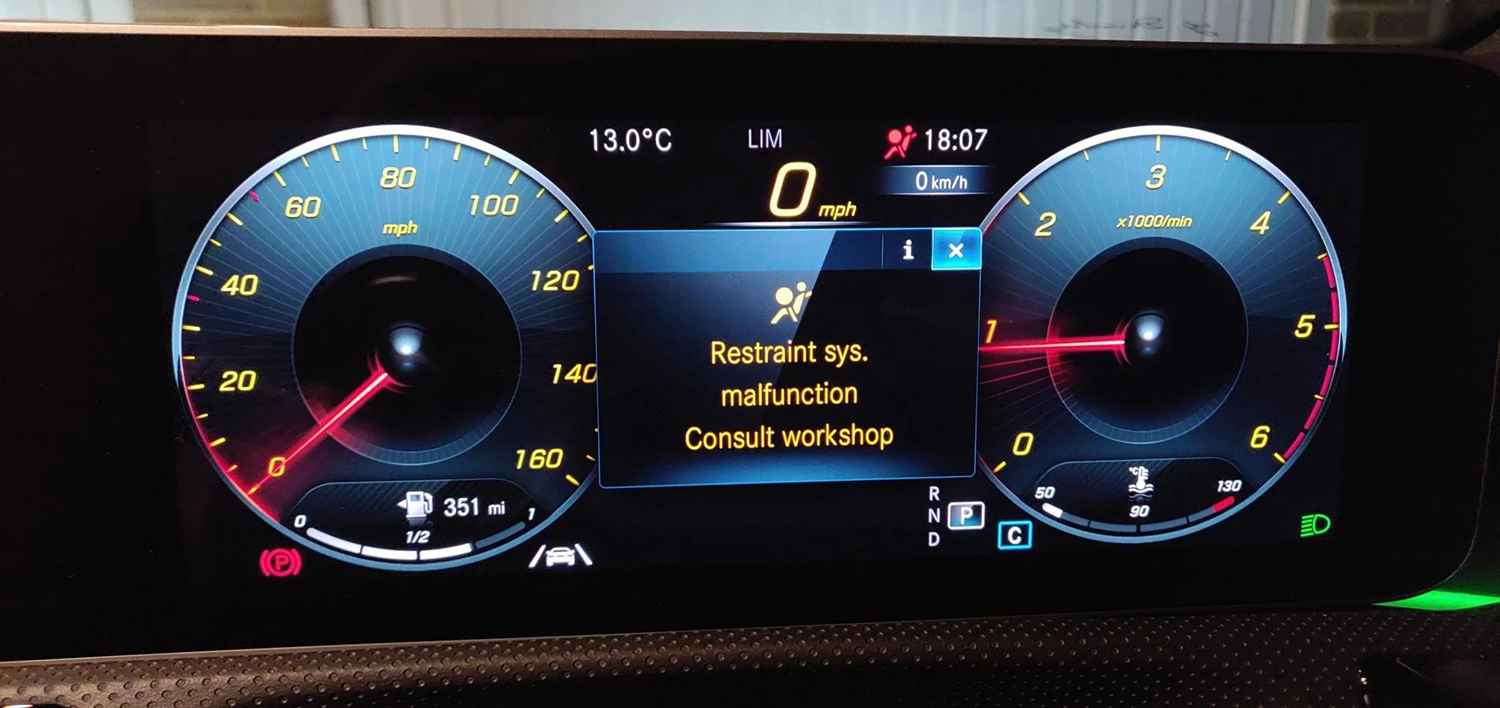
A passenger restraint system or airbag warning can mean that one or more protective functions may not operate as designed. Do not treat it as a cosmetic dashboard message, and do not rely on repeatedly clearing it. If the warning follows a collision or appears with damaged belts, deployed devices, smoke, electrical damage or other serious symptoms, the vehicle should be assessed before deciding whether it should continue to move.
What the restraint warning can involve
The exact equipment varies by model, generation, market and specification. Diagnosis begins by identifying the fitted system rather than applying one universal reset.
Occupant inputs
Seat occupancy, buckle state, seat position and related inputs tell the controller what conditions it is seeing.
Power and wiring
Supply voltage, grounds, connectors, wiring and network communication carry the information through the vehicle.
Control decisions
The restraint controller evaluates fitted sensors, circuit status, stored events and vehicle configuration.
Protective devices
Airbags, belt buckles, pretensioners and force limiters are checked only within the applicable safe procedure.
What to record before booking
The warning history can narrow the first inspection and prevent useful information from being erased.
Warning patterns worth recording
An Audi passenger restraint system malfunction may be constant, intermittent or connected to a recent event. The pattern does not prove the failed part, but it tells the diagnostic process where to begin.
Warning after a collision
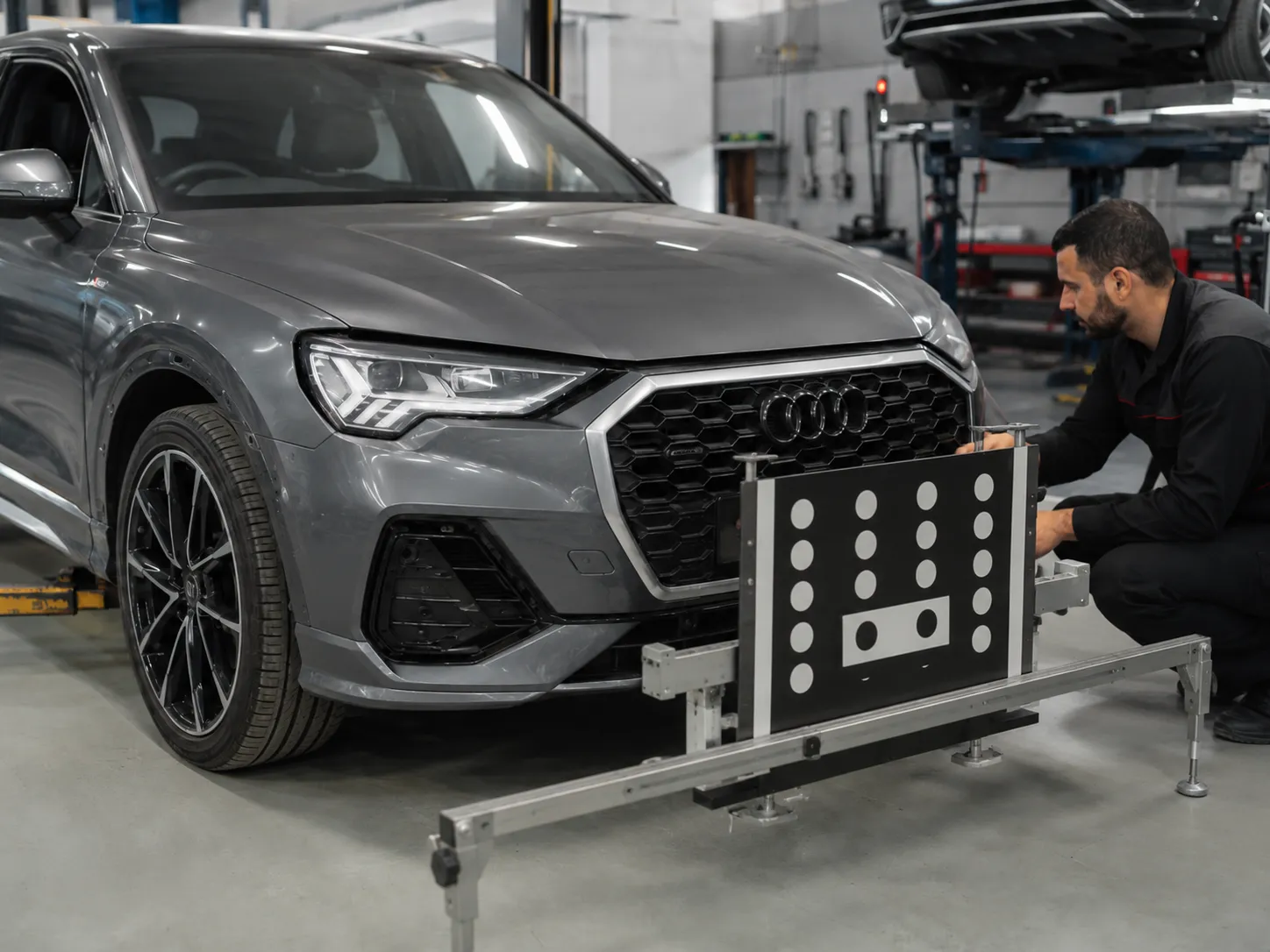
Deployed devices, damaged wiring, affected sensors, belt pretensioners, module data and structural damage may all need separate assessment. A dashboard clear alone is not a repair.
After moving a seat
A warning that follows seat adjustment or removal can point toward an under-seat connector, harness movement, seat component or previous work.
After battery trouble
Low voltage, a weak battery, charging trouble or a jump-start event can be relevant, but the battery should be tested before it is blamed.
Passenger status concern
Unexpected passenger-airbag status or a seat-belt reminder that does not match occupancy may involve the seat input, buckle circuit or configuration.
Steering controls affected
An airbag warning combined with horn or steering-wheel control faults can make the clockspring or related steering-wheel wiring relevant.
Evidence guides the repair scope
The warning message and a generic code description are not enough to condemn an airbag, seat mat or control module. The affected circuit, fault status and vehicle history must agree with the proposed repair.
| Possible area | Evidence checked | Why replacement is not assumed |
|---|---|---|
| 12V supply | Battery condition, charging evidence, stored undervoltage events and relevant voltage loss. | A low-voltage code can be historical, while an active supply problem may affect several controllers. |
| Under-seat wiring | Accessible harness routing, connectors, locking tabs, prior seat work and the exact circuit named by diagnosis. | Movement or a poor connection can imitate a failed seat component. |
| Occupancy input | Fitted seat system, supported live information, circuit status and vehicle configuration. | Not every passenger-seat fault is caused by the occupancy mat itself. |
| Buckle or pretensioner | Buckle status, circuit evidence, physical condition and collision history. | A belt assembly contains different functions that should not be treated as one generic part. |
| Clockspring | Steering-wheel symptoms, related faults, wiring and supported circuit testing. | A warning alone does not separate the clockspring from another driver-airbag circuit concern. |
| Airbag component | Exact location, circuit status, physical history and applicable manufacturer procedure. | Safety devices require component-specific evidence and handling, not trial substitution. |
| Control module | Power, grounds, communication, stored events, configuration and collision history. | A no-communication or module-related fault can originate outside the module. |
| Coding or setup | Part number, vehicle equipment, replacement history, coding and supported setup functions. | A physically compatible-looking part may still be wrong for the vehicle configuration. |
| Water or corrosion | Moisture history, connector condition, carpet or seat-area evidence and affected circuits. | Replacing one component without finding the moisture path can allow the fault to return. |
Context changes the first test
Two cars can display similar restraint warnings for completely different reasons. The most useful first step is to connect the message to the event that came before it.

The warning is only one piece
A scan can identify the controller, affected circuit and fault status, but it must be read beside the vehicle history. Recent battery discharge, seat removal, accident work, water exposure or an unknown replacement part can change the testing order.
That context also protects against an expensive shortcut. A code mentioning resistance, an igniter, a seat input or a controller does not prove which component is responsible until the circuit and installation are checked according to the appropriate procedure.
The VIN, model year, body type and equipment matter because an A4, Q7, TT and e-tron do not necessarily use the same seats, restraint controller, airbag layout or configuration. Imported vehicles and previously replaced interiors can add further differences.
Note whether the message appeared at start-up, after driving, when a passenger sat down, while the seat moved or after the cabin was cleaned. An intermittent event deserves the same careful record as a permanent warning because moving the vehicle or clearing faults can make it harder to reproduce.
A flat battery, jump start, recent battery replacement or charging fault can create useful voltage context. It should lead to supply testing where relevant, not to an automatic assumption that every restraint fault is caused by the battery.
Seat upholstery, interior trim, steering-wheel work, dashboard removal, body repair and airbag replacement can involve nearby wiring or fitted components. Tell the workshop what was changed, which parts were used and whether the warning began immediately or later.
Even a vehicle that looks repaired can have deployed pretensioners, replaced airbags, repaired harnesses, incompatible parts or unresolved structural damage. The restraint diagnosis should not be used to declare the whole accident repair safe without the appropriate wider inspection.
What the estimate should separate
Safety-system work is easier to evaluate when the quotation distinguishes what has been confirmed from what still needs testing. That prevents a large collection of nearby parts from being presented as one unavoidable repair.
Confirmed repair
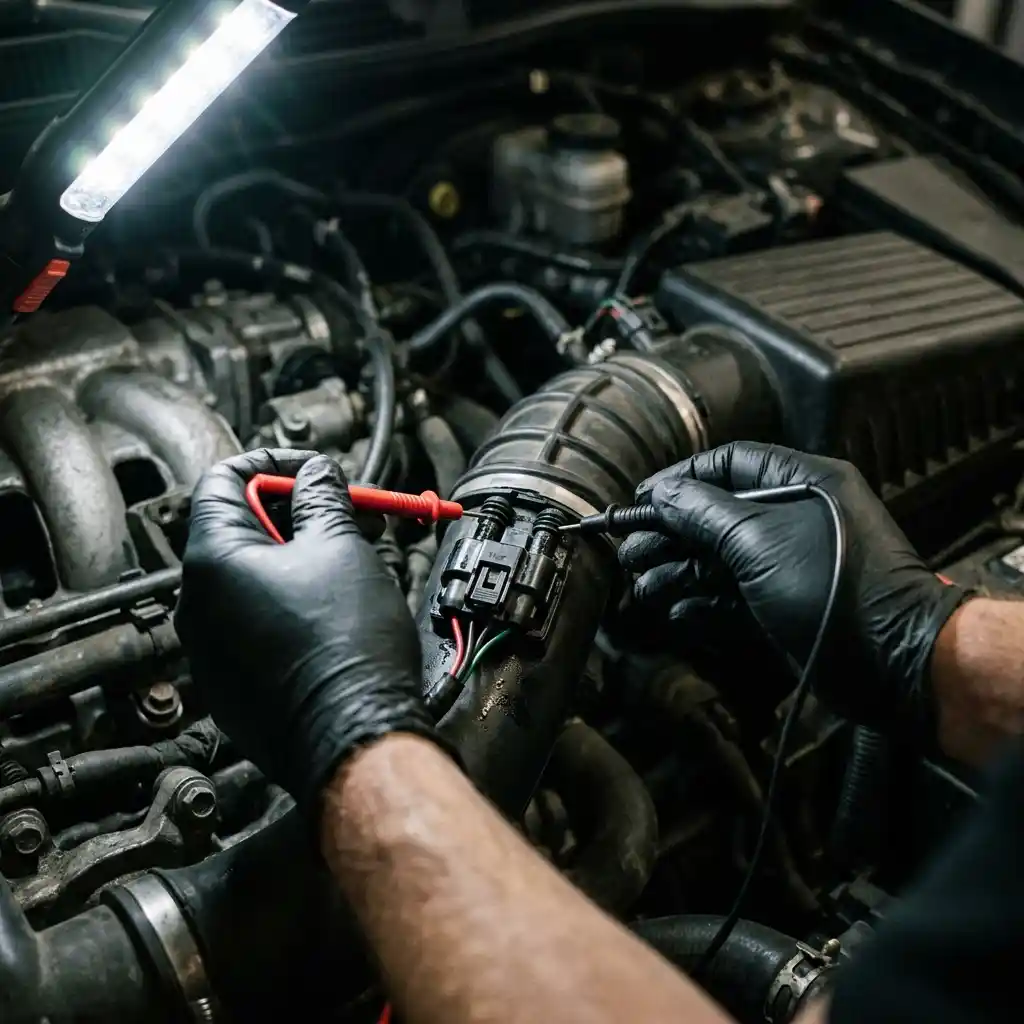
The evidence identifies a supported cause and a defined correction. The quote should name the affected area, proposed part or wiring work, any configuration step and the planned post-repair check. Where part options exist, compatibility and warranty terms should be explained for the supplied part and approved scope.
Further test required
The warning and circuit are known, but the failed point has not yet been separated. The next test should have a clear purpose, such as confirming supply integrity, inspecting a connector, checking a supported input or identifying an installed component.
Related work
A damaged seat, interior panel, steering control or accident repair may be relevant without being the direct cause of the stored restraint fault. Related work should be listed separately so the owner can understand dependencies.
Verification step
The completion plan should state what will be rechecked after repair. This may include fault status, controller communication, applicable setup, warning behaviour and whether the original fault returns under the available test conditions.
Unproven limits
If access is restricted, the fault is intermittent or wider collision damage remains outside the agreed scope, the limitation should be recorded. Honest limits are more useful than a broad promise that cannot be demonstrated in the workshop.
From warning to verified decision
The sequence protects the evidence, narrows the fault and avoids approving safety-system parts from a code description alone.

Record the complaint
Save the exact message, warning behaviour, affected seat and the circumstances in which it appeared.
Identify the vehicle
Confirm VIN, model, year and installed equipment because restraint layouts and procedures differ.
Scan before clearing
Read the restraint controller and relevant related modules so active, stored and intermittent evidence is preserved.
Read the fault context
Review circuit wording, status, event details and connected symptoms instead of treating the code name as a parts order.
Check supply evidence
Test 12V condition and relevant electrical supply when undervoltage or wider electrical symptoms make it necessary.
Inspect the named path
Check accessible wiring, connectors and previous work using safe restraint-system handling procedures.
Confirm the suspected input
Use supported data or testing to separate a seat, buckle, clockspring, module or wiring concern.
Review compatibility
Before replacement, verify part identity, configuration, coding and any applicable setup requirements.
Repair the supported cause
Approve only the wiring correction, component replacement or setup work supported by the collected evidence.
Clear and verify
After the repair, complete the applicable setup, re-scan the vehicle and confirm whether the warning or fault returns.
Three different repair decisions
A restraint warning does not automatically mean an airbag replacement. The approved route follows the proven fault and the exact equipment fitted to the Audi.
Power, wiring or connector
Correct the confirmed supply, ground, harness, terminal or connector issue, then verify circuit status. The cause of heat, movement, moisture or previous damage should be addressed where it is found.
Component replacement
Replace the confirmed buckle, pretensioner, sensor, clockspring, airbag or controller only after identity and failure evidence support it. Deployed or physically damaged safety devices require the appropriate replacement decision.
Coding and verification
Some replacement work can require coding, configuration, calibration or a supported basic setting. A warning that disappears without the required procedure is not sufficient verification.

What the workshop can establish
Workshop diagnosis can connect the dashboard warning to vehicle-side evidence. It can evaluate the supported electrical and diagnostic path, but it is not a controlled crash test and should never be described as one.
- Stored and active fault status
- Relevant supply-voltage evidence
- Accessible wiring and connectors
- Controller communication
- Part and configuration requirements
- Warning status after repair
- Supported setup procedures
- Return or disappearance of faults
A cleared warning is not proof by itself. Hidden collision damage can also require separate body, structural or interior assessment. The verification scope must match the exact fault and completed repair.
Diagnosis for the exact Audi
A3, A4, A5, A6, A7, A8, Q2, Q3, Q4, Q5, Q7, Q8, TT, S, RS and e-tron vehicles can use different seat, airbag and controller arrangements. The VIN and installed equipment define the relevant procedure. Diagnostic scope should also reflect earlier repairs, replacement parts and the exact warning history.
Audi restraint warning FAQs
Can an Audi restraint warning be reset safely?
A fault clear can be part of verification after the cause is repaired, but it is not a universal solution. Save the warning and diagnostic evidence first. If the underlying wiring, voltage, component or configuration fault remains, the warning can return.
Can a weak battery cause the warning?
Low or unstable 12V supply can create faults in electronic controllers, but the battery should be tested. The same warning can also involve a seat input, buckle, wiring, clockspring, airbag or control module.
Can moving a seat disturb a connector?
Seat movement or previous seat removal can be relevant because restraint wiring may pass beneath the seat. That timing should be reported, but the affected circuit still needs to be identified before a connector or component is blamed.
Does the warning mean every airbag is disabled?
Not necessarily. The affected function depends on the vehicle and recorded fault. However, one or more protective functions may not operate as designed, so the warning should be diagnosed promptly.
Can I drive with the warning active?
A universal driving answer cannot be given from the message alone. Consider collision history, damaged belts or seats, other warnings and the vehicle’s physical condition. If the warning follows a collision or accompanies serious damage, arrange an assessment before moving the car.
Does a replacement seat part need coding?
It can. The requirement depends on the part, model, equipment and repair. Compatibility, coding, configuration and supported setup procedures should be checked before the job is approved.
Can crash information simply be erased?
Clearing a record is not a substitute for replacing deployed or damaged devices and repairing the cause. Collision-related decisions must follow the exact vehicle, component condition and applicable repair procedure.
How is the repair scope confirmed?
The scope should connect the exact warning, fault status, circuit evidence, vehicle history, physical checks and configuration. The estimate can then separate confirmed work from any further testing that may still be required.
What should I send before booking?
Send the Audi model, year, exact dashboard wording, affected seat, when the warning began and whether there was recent battery work, seat removal, interior work, water exposure or a collision.
Send the exact restraint warning
Share the Audi model, year, warning photo and what happened before it appeared. This gives the workshop a useful starting point without promising a reset or replacement before diagnosis.