
Audi S7 Repair and Service in Dubai
An S7 diagnosis must cover more than its engine. The long Sportback body adds liftgate, rear wiring, drainage and glass functions to a performance drivetrain that changed between V8 and later market-dependent V6 or diesel applications. Air suspension, rear steering, sport differential, driver assistance and 48-volt equipment also depend on generation and option codes.
Separate the S7 chassis, drivetrain and Sportback equipment
Read the VIN and build data, then confirm the installed engine, transmission, quattro system, suspension and steering options. Review market specification and software history before selecting fluids, parts or adaptations. A C7 V8 procedure cannot be transferred to every C8 car.
Compare the sedan-focused Audi S6 repair page when confirming model scope. Use the Audi problems guide when the first report mixes several systems.
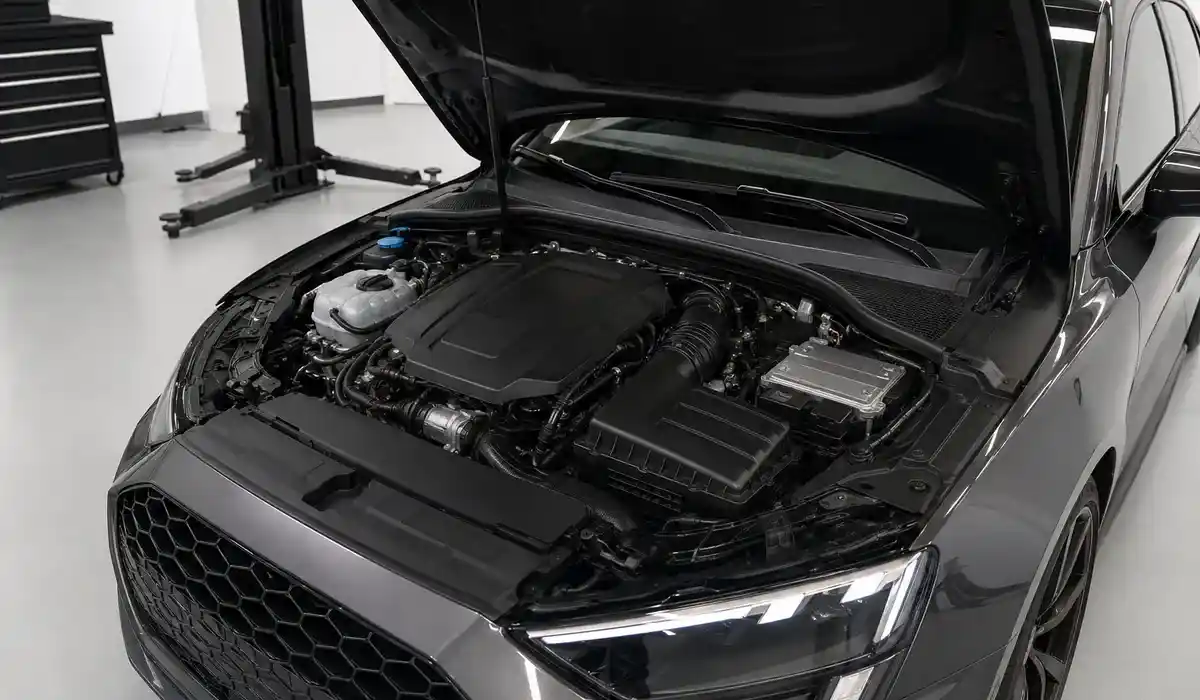
Trace liftgate, water and rear-electrical faults together
Powered liftgate
Check hinges, alignment, latch, drive units, pinch protection, harness movement and control inputs. A weak battery or misaligned body opening can imitate a failed motor.
Water paths
Inspect roof and hatch drainage, seals, rear lamps, washer lines and previous glass or collision work. Find the entry route before replacing a wet control unit.
Camera and assistance systems
Link any bumper, glass, wheel or suspension repair to the sensors and brackets disturbed. Verify alignment or calibration where the fitted system requires it.
Cargo-area electronics
Test lighting, access antennas, audio, 12-volt outlets and modules in the load area while inspecting connectors for moisture or repair disturbance.
Use generation-specific tests for S7 performance loss
On relevant twin-turbo V8 cars, test charge-air leakage, turbo control, crankcase ventilation, fuel delivery, ignition and cooling while reviewing documented lubrication updates for the exact engine. A reduced-power event, noise or P0299 code does not identify one component.
Later cars may add 48-volt energy management and a different V6 or diesel powertrain by market. Save the original controller sequence, supply voltages and temperature data before resets. Do not access high-current equipment without the correct training and isolation procedure.
For a code-led concern, use the Audi fault code guide to preserve status, freeze-frame and event order.
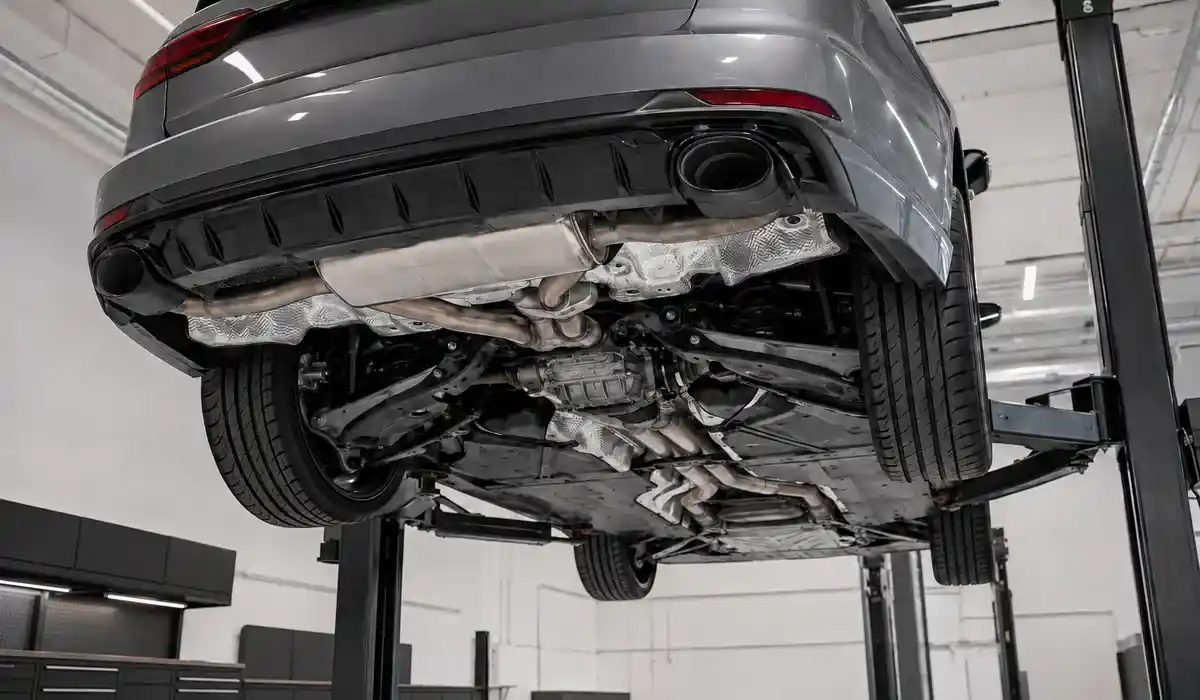
Classify S7 vibration and shift complaints by speed and load
Measure tire size, pressure, circumference, age and wheel condition before driveline disassembly. Inspect mounts, joints, shafts and underbody contact. Record whether the vibration follows engine rpm, road speed, acceleration, coast, braking or steering angle.
Identify the gearbox and optional rear driveline hardware. Compare selection and shifts from cold through full temperature, save wheel-speed and torque-intervention data, and avoid adaptation resets until the original behavior is documented.
Measure air suspension, steering and brakes as one chassis state
Take corner heights on level ground with tire pressures corrected. Scan suspension and steering controllers, test voltage supply, inspect air leakage and sensor linkage, and record compressor duty. If rear steering is installed, include its data and geometry in the plan.
Measure pad thickness, disc condition and runout where appropriate, then check brake-fluid history and electronic parking-brake operation. Do not continue driving with a red brake warning, severe pull, damaged tire or unreliable steering response.
Create an S7 maintenance record that supports later diagnosis
Build service from the VIN, elapsed time, mileage and measured condition. The Audi maintenance schedule guide helps separate due work from repairs. Record approved fluids, filters, plugs where applicable, gearbox or differential scope, brake measurements and final scan results.
For a used car, insist on a cold start, all-module scan, lift inspection and long enough drive to reach operating temperature. Price safety work, catch-up maintenance and diagnosed faults separately from items that only need monitoring.
Inspect an S7 after body, glass or battery work
After a windscreen, hatch, rear-quarter or bumper repair, compare panel gaps, drainage, wiring routes and sensor mounting with the undisturbed side. Operate the liftgate repeatedly from each control, check pinch protection and confirm rear-camera, lighting and access functions. Water-test only with trim arranged so the entry path can be observed safely.
After battery replacement or a low-voltage event, save the network state before clearing faults. Verify the installed battery specification, registration or adaptation where required, charging output and sleep-current behavior. A cluster of communication warnings can reflect supply disruption, but physical faults and damaged wiring still need independent inspection.
At handover, demonstrate the repaired body or electrical function, retain the completion scan and tell the owner which symptom should prompt a return. For a used S7, include these checks with a cold powertrain start, underbody inspection and warm road test before valuing the car.
Audi S7 repair FAQs
Does every S7 use the same V8 engine?
No. Powertrain choices changed by generation and market. Confirm the engine and transmission codes before service.
Can a liftgate problem be electrical and mechanical?
Yes. Alignment, hinges, latch, drive hardware, wiring, control inputs and voltage supply can overlap.
When should an S7 be recovered instead of driven?
Arrange recovery for a red pressure or temperature instruction, smoke, rapid fluid loss, unsafe brakes or steering, tire damage, heavy mechanical noise or unpredictable drive engagement.
Book Audi S7 testing in Dubai
Send the VIN, warning text, first symptom, temperature, speed, recent work and whether the concern affects safe control.