
Systems-interaction diagnosis
Audi RS Q8 Repair and Service in Dubai
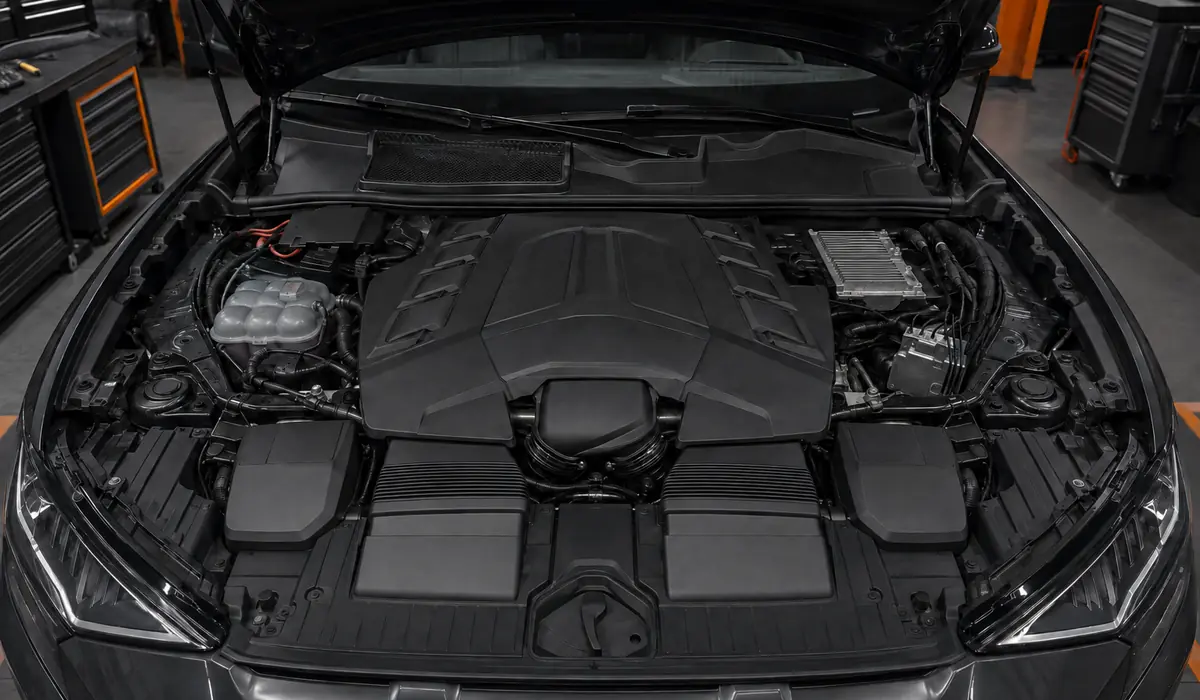
The RS Q8 combines a V8 biturbo powertrain with 48-volt and networked chassis systems. Diagnosis must identify the initiating event before secondary warnings, heat effects and protective responses are priced as separate failures.
Map four interacting layers before replacing parts
Compare the Audi RS7 repair page for the related Sportback and the SQ8 repair page for the lower-output SUV. The S and RS performance hub connects the full range.
Supply
12-volt and 48-volt state, charging behavior, grounds, wake-up events and network health.
Power
Oil and coolant integrity, ignition, fueling, boost control, exhaust and transmission torque delivery.
Chassis
Air suspension, controlled damping, steering, active roll equipment where fitted, brakes, wheels and tires.
Control
Software level, sensor plausibility, calibration, recent work and the order in which warnings appeared.
Audi’s official RS Q8 material describes the current model’s V8 biturbo and advanced suspension components. Equipment varies by year and market, so use the Audi RS Q8 archive for manufacturer context and verify every installed system from the VIN and vehicle.
Capture the first event, not only the current dashboard
Ask what happened first: slow cranking, a chassis message, reduced power, a temperature change, rough running, a shift disturbance or several warnings after startup. Record outside temperature, journey length, selected mode, fuel level, recent parking duration and any work completed immediately beforehand.
Perform a complete scan before clearing faults. Save status, frequency and environmental data where available. Check low-voltage supply and network stability because one supply problem can create messages in several controllers. That does not mean every warning is harmless; it means the test order should establish which faults return with stable voltage.
Repeat the scan after a controlled reproduction and hot restart. A stored code that never returns belongs in the history, while a current fault needs system-specific testing.
Make the driving decision explicit
Arrange recovery for red oil-pressure or coolant-temperature warnings, smoke, fuel odor, rapid leakage, severe misfire, heavy knocking, unsafe braking or steering, major tire damage, a body corner sitting abnormally low, or transmission behavior that makes control unpredictable.
Ask before driving if reduced output is combined with an active-chassis, electrical-supply, gearbox or heat warning. When the workshop authorizes relocation, keep demand gentle, avoid repeated drive-mode changes and stop at any deterioration in ride, control or temperature.
Do not repeatedly restart the vehicle or clear warnings to regain normal performance. Protective behavior can limit damage, and an unseen RS Q8 cannot be declared safe from a written description.

Test V8 heat, boost and lubrication as one operating story
Begin with correct oil-level procedure, leakage inspection and coolant evidence when safe. Record cold-start sound, idle, exhaust appearance and any smell. During controlled testing, compare requested and actual behavior, cylinder operation and temperature development rather than assuming a turbocharger or ignition part from a generic code.
A loss of power after heat soak may involve temperature protection, boost control, fuel or ignition behavior, sensor plausibility, exhaust restriction or another system request. Preserve the condition. Repeated hard acceleration can change temperatures and create a second problem that obscures the first.
For smoke or consumption, identify color, timing, load and fluid trend. Oil residue at one connection does not prove internal engine damage, while a clean exterior does not rule out a pressure or consumption concern. Measurements define the repair boundary.
Stabilize both electrical architectures before module pricing
The RS Q8 can contain 12-volt and 48-volt systems serving starting, control and chassis functions. Record battery history, charging state, jump-start events, long parking and accessories. Do not replace several controllers until supply, grounds and network communication have been checked.
Some RS Q8 equipment includes electromechanical active roll stabilization powered through a 48-volt system. Audi’s manufacturer overview of the updated RS Q8 explains the relationship, but the fitted configuration and fault strategy must be confirmed for the vehicle.
Work on the RS Q8’s 48-volt equipment requires trained personnel, the specified isolation process and appropriate protective measures. Treat its warning path as an energized vehicle system, not as a conventional accessory circuit.
Connect air suspension, steering and geometry evidence
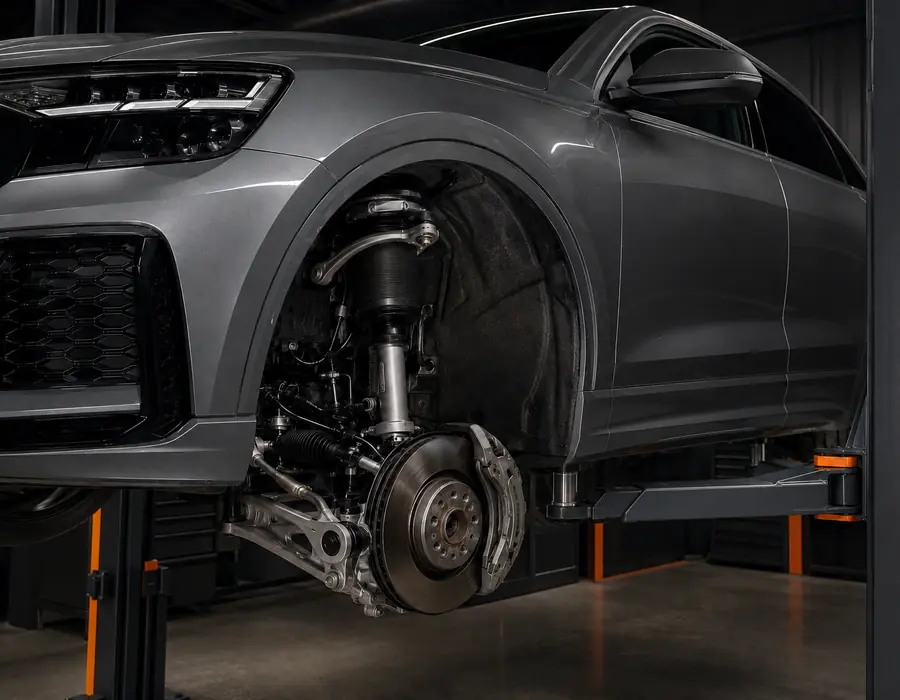
Observe stance before startup, after leveling and after the road test. Command available heights, record compressor behavior and inspect accessible leakage, lines, valve control, sensors, wiring and mounts. A low corner can result from more than a compressor, and replacing one without locating leakage can produce a repeat failure.
All-wheel steering, adaptive damping and active roll functions depend on sensors, calibration, voltage and mechanical geometry. If the vehicle recently received glass, bumper, alignment, wheel or suspension work, verify the relevant mounting and calibration records. Separate a mechanical joint, wheel defect or tire issue from a controller fault.
Support the chassis at approved points before any work underneath; pneumatic ride height is not a safety stand. Recover the vehicle if a low corner causes tire contact or steering response cannot be trusted.
Measure brakes, wheels and tires under the same conditions
Identify steel or ceramic brake equipment before estimating. Record friction-surface condition, pad state, caliper operation, wheel fitment and the applicable measurements. Brake vibration can involve disc or rotor condition, hub error, wheel damage, tire variation or suspension movement. Choose parts only after separating them.
Record tire make, specification, date, pressure, tread and repair history at all four corners. Performance, mass and heat make correct fitment important, but mileage alone cannot prove remaining life. Compare temperatures only after a controlled route and interpret differences with brake and tire condition.
Public-road diagnosis should not recreate circuit loads. If the owner reports track use, record it and inspect heat-affected systems without presenting road service as competition preparation.
Separate maintenance, wear, faults and modifications
| Estimate lane | Evidence | Owner decision |
|---|---|---|
| Scheduled maintenance | VIN, time, mileage, service history and approved specifications. | Approve the exact due items and completion record. |
| Measured wear | Brake, tire, battery or chassis values with limits and trends. | Approve now or document a safe review point. |
| Confirmed fault | Reproduced symptom and failed test. | Compare parts route, access, related work and verification. |
| Modified configuration | Software, exhaust, intake, suspension, wheels and installer history. | Establish compatibility, legal, insurer and warranty questions. |
An RS Q8 maintenance record should name every approved fluid, component, quantity, learned value and closing scan rather than inheriting a generic Q8 checklist. Nonfactory hardware needs a documented reference configuration, but it is only evidence when testing connects it to the complaint.
Inspect a used RS Q8 before it self-corrects
View it cold and, when possible, after overnight parking. Photograph stance, inspect fluids safely, check tire and brake condition, examine underbody and cooling openings, then scan before starting. Verify VIN, GCC or import status, both keys, records, accident repairs and fitted options.
Operate air suspension, steering and cabin features, then use a safe route covering low-speed maneuvers, steady travel, moderate load, braking and hot restart. Re-scan afterward. Do not use launch control or extreme acceleration as a purchase test.
Classify each item as verified, measured wear, confirmed fault or unknown. A price reduction can cover known maintenance, but it cannot define an unresolved engine, 48-volt, structural or chassis risk.
Inspect the body systems behind cosmetic repair
Relate refinished panels, disturbed fasteners and uneven gaps to the nearby sensing, lighting, cooling and duct components. Cosmetic alignment can conceal a shifted radar mount or damaged airflow guide, so obtain geometry and calibration evidence for any repair that touched those references.
Check frameless-door glass movement, seals, drainage, tailgate operation and moisture beneath removable luggage-area trim. Dampness near electronic equipment needs source tracing before it is priced as cleaning or trim replacement.
Control the estimate and vehicle downtime
Begin with a bounded diagnostic authorization and a named output. Once the failure is confirmed, separate parts, access, fluids, one-time hardware, coding, calibration, alignment and final testing. Identify any work that can only be priced after disassembly and require approval before it begins.
Separate stocked components from chassis-ordered items and exchange units. Show workshop hours independently from shipping or specialist subcontract time. A valid major-system quote includes the fluids, coding, geometry and confirmation work required to release the vehicle.
Recreate the same RS Q8 event at handover
The closing file should trace the first message through the confirming measurement to the authorized remedy, installed materials, coding or calibration, and final controller record. Verification must reproduce the relevant start, soak, ride-height, steering or load trigger at a safe level.
If an intermittent concern does not return, preserve monitoring data and define the owner action if it recurs. Do not describe a vehicle as fully repaired because codes were cleared or a different route produced no warning.
Inspect exhaust control and heat shielding after modification
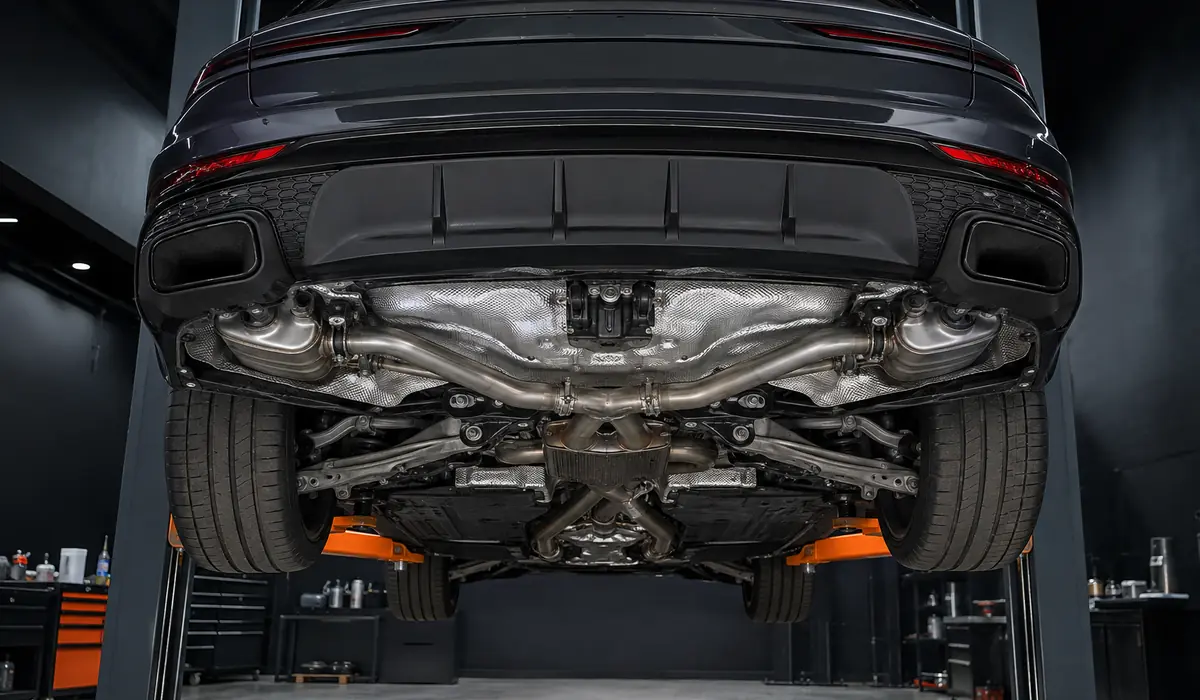
A new buzz, odor or warning can originate at exhaust valves, joints, shields, mounts, sensors or nonstandard hardware. Record whether it follows engine speed, selected mode, temperature or road movement. Inspect the first vibrating or leaking point before pricing an exhaust assembly.
Software and exhaust changes should be listed together because control behavior, heat and emissions monitoring can interact. Confirm installation quality, legal use, insurer and warranty implications with the relevant providers. Modification history informs the test route but does not prove the cause.
RS Q8 repair questions
Can a weak 12-volt battery create several warnings?
It can contribute to communication and startup faults. Stabilize supply and identify which messages return rather than assuming all are battery-related.
Does a low corner prove the compressor has failed?
No. Leakage, valve control, sensors, wiring and mechanical condition also need testing.
Can an RS Q8 be driven with a 48-volt warning?
Ask before driving. Recovery may be required when the warning combines with chassis faults, reduced control, overheating or other serious symptoms.
How should an RS Q8 estimate be compared?
Match diagnosis, parts identity, labor access, fluids, coding or calibration, conditional work and the completion test.