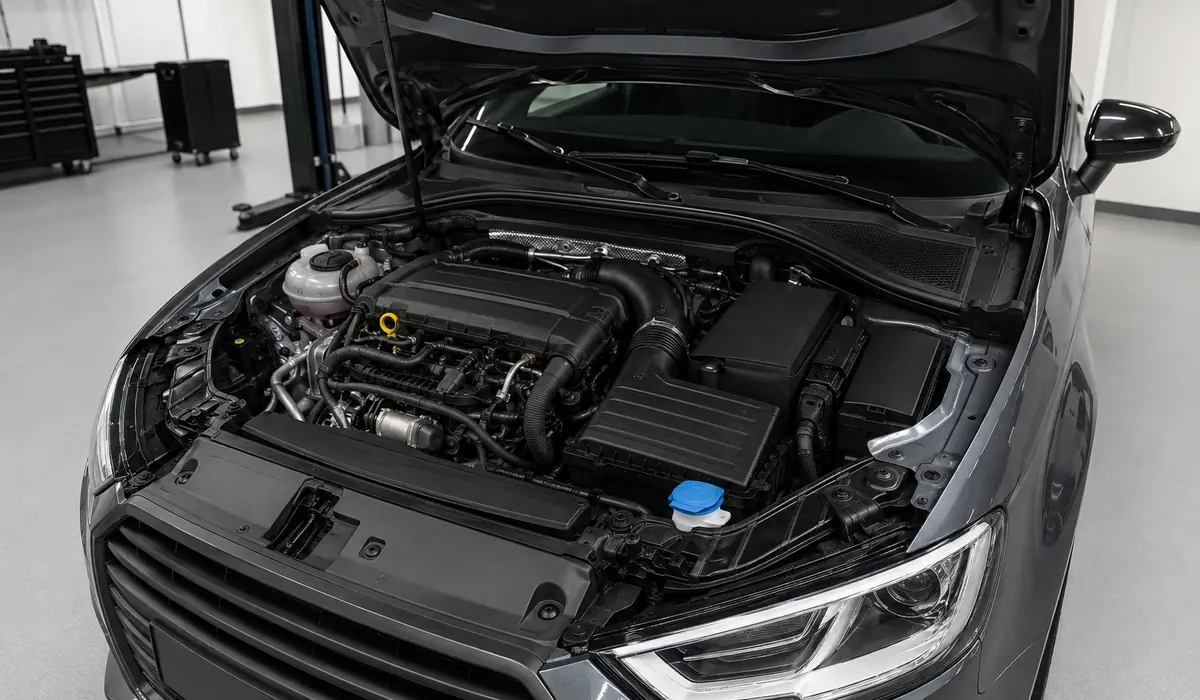
Five-cylinder performance workshop

Audi TT RS Repair and Service in Dubai

The TT RS is not diagnosed by swapping parts from a generic TT checklist. Five-cylinder engine condition, boost and charge cooling, S tronic or manual driveline depending on version, quattro coupling, tires, brakes and adaptive chassis must be tested as a connected performance system. Compare the broader platform on the Audi TT repair page and the four-cylinder performance version on the Audi TTS page. The Audi turbo diagnosis guide explains why boost evidence should precede replacement.

Send TT RS evidence
Vehicle passport

Confirm which TT RS arrived at the workshop

Generation, market and previous calibration change the starting assumptions. Record the VIN, engine and gearbox codes, build date, wheel and brake specification, suspension options, market origin and the current software or hardware configuration.

Identity8J or 8S, market and build
DrivelineGearbox and quattro version
HardwareIntake, exhaust, cooling and wheels
HistoryLaunch use, track use and repairs
Modification disclosure matters. Engine software, fuel changes, intake or exhaust hardware, altered wheel sizes and suspension changes affect expected values and repair boundaries. Save the installed state before returning anything to stock.
Safety gate

Stop the test before a symptom becomes secondary damage

Recover the car

Arrange recovery if the TT RS loses oil pressure, overheats, releases smoke or fuel odor, or drops fluid rapidly. Do the same for violent misfire, new metallic impact noise, missing drive, grinding, unstable steering, altered brake response or tire-to-body contact.

Limit engine and driveline load

With a stable amber message and normal control, keep load low and do not use launch control. Movement should remain minimal and should stop immediately if temperature, leakage, misfire, slip or vehicle control changes.

Preserve event data

Do not clear codes after an intermittent warning. Record fuel level, temperature, gear, speed, drive mode and whether the concern followed a launch, refueling, traffic or a cold start.

Do not repeat damaging tests

A severe rattle, persistent misfire or slipping clutch does not need multiple full-load demonstrations. Reproduce only under controlled workshop conditions with stop limits agreed beforehand.

Performance dependency chain

Work from supply and temperature to torque delivery

The sequence below reduces false conclusions. Each stage depends on the previous one being credible, particularly on a modified vehicle.

01

Voltage and complete scan

Test battery condition, charging, grounds and voltage drop. Save every module fault plus freeze-frame or event data. Several communication faults after low voltage do not prove several modules failed.

02

Oil and cold-start evidence

Confirm level and approval, inspect leakage, record genuine cold-start noise duration and location, and compare pressure or timing data when the symptom justifies it. Do not name a timing component from sound alone.

03

Cooling and charge temperature

Pressure-test the cold circuit, inspect pump and thermostat behavior, check radiator and charge-cooling paths, and log temperatures under a safe repeatable load. Heat management can influence knock control and power delivery.

04

Air, boost and controls

Seal-test the intake and intercooler circuit, then compare boost demand with pressure response and actuator movement. Inspect the compressor, turbine and oil path only after leaks and control faults are separated.

05

Ignition, fueling and combustion

Use cylinder-specific misfire data, plug and coil condition, fuel pressure, injector evidence and fuel quality. Moving coils can support isolation, but it should not replace load-specific data and mechanical checks.

06

Gearbox and launch behavior

Identify manual or S tronic equipment. Review fluid history, clutch and pressure data, adaptation state and cold-to-warm engagement. Repeated launch tests are unnecessary when saved data already shows the failure condition.

07

Quattro and tires

Measure every wheel and tire against the approved TT RS specification, including pressure, wear pattern and rolling radius. Remove bearing noise and brake resistance from the diagnosis before loading the coupling or driveline.

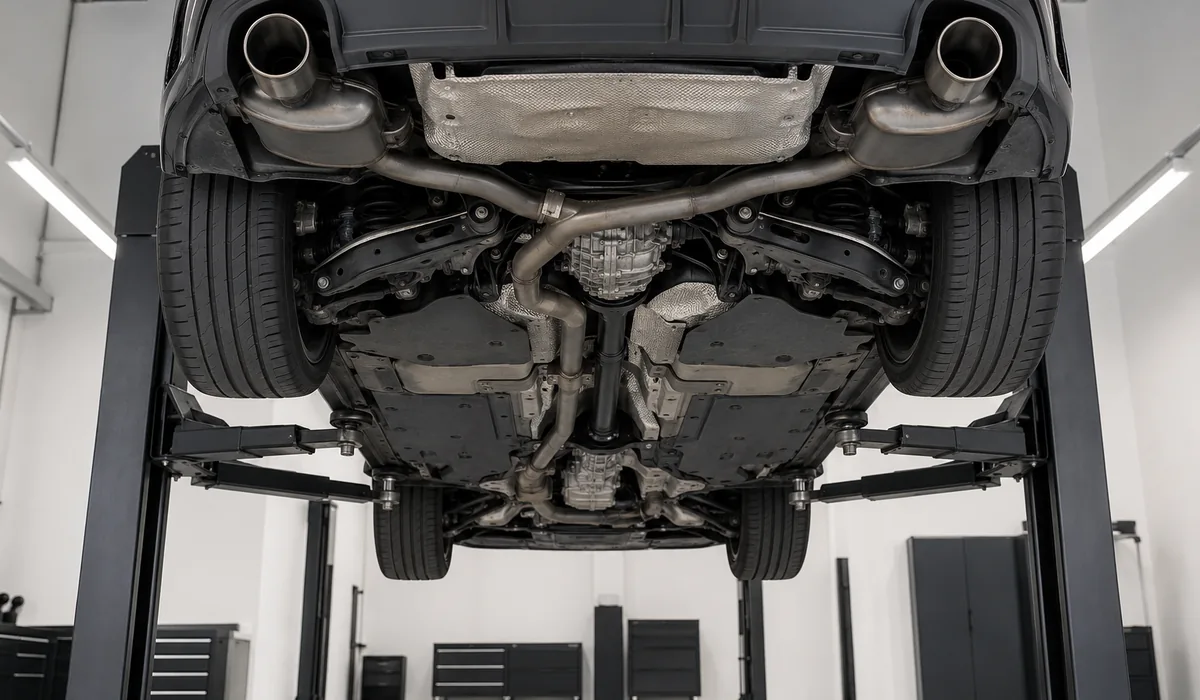
Audi TT RS quattro drivetrain and underbody inspection
08

Brakes, wheels and chassis

Measure pads, discs, runout, tire age, wheels, joints and alignment evidence. If adaptive damping is installed, correct mechanical condition before calibration or control-unit conclusions.

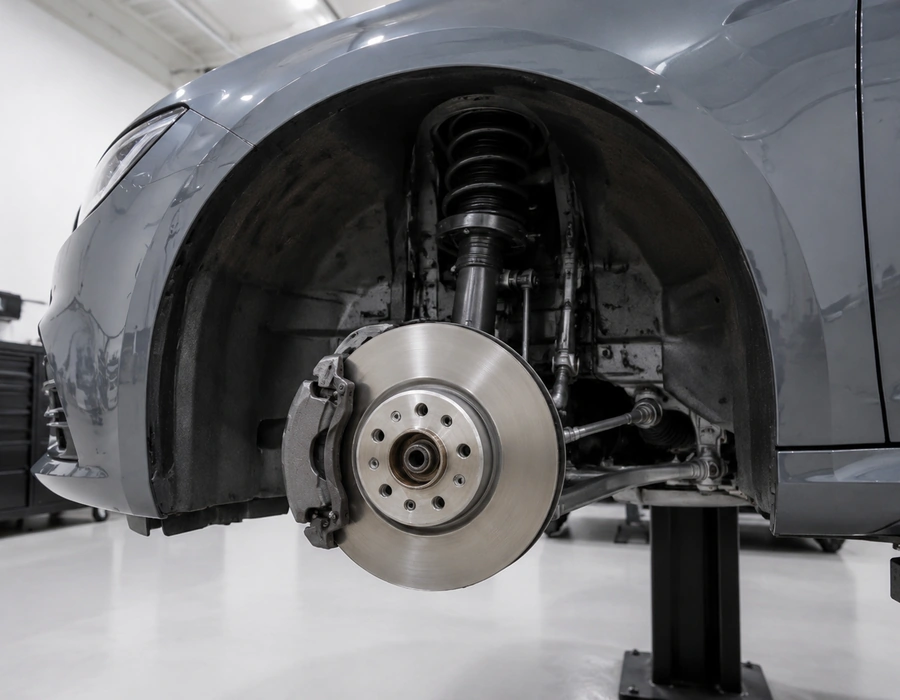
Audi TT RS brake, wheel and hub inspection
Proof plan

Require a before-and-after record

Complaint proof

State the owner’s exact concern and reproduce it at an agreed safe load. Tie scan and live data to time, temperature, speed, gear and drive mode.

Causal proof

Record the pressure, leakage, voltage, mechanical or geometry test that isolates the failed path, including plausible alternatives that passed.

Scope proof

Separate confirmed repair from due maintenance and optional upgrades. Identify genuine, OEM, aftermarket, remanufactured or used parts and explain the warranty boundary.

Completion proof

Repeat the original trigger, complete adaptations or calibration, re-scan all affected systems and retain final measurements, photographs and road-test results.

TT RS maintenance logic

Plan service around the exact performance hardware

Audi TT RS installed performance hardware inspection for service planning

Set the maintenance plan from the VIN, five-cylinder engine code, gearbox version and coupling type. Combine scheduled work with measured oil, ignition, brake and driveline condition instead of applying a generic performance-car interval.

ScheduledTime and mileage requirements
MeasuredBrakes, tires and fluid condition
Fault-ledWarnings, leaks and power loss
Usage-ledTrack, launch and heat exposure

Record part numbers, fluid approvals and quantities, one-time hardware, coding or adaptation work, and the next due logic. If track or launch use has raised temperatures, inspect the relevant fluids, brakes and tires from evidence rather than automatically replacing every component.

Pricing limitation: accurate cost depends on the VIN, confirmed failure, parts route, access, fluids, hardware and commissioning. Early figures should remain non-binding planning estimates until inspection defines the scope.

Used TT RS

Inspect beyond acceleration and exhaust sound

Arrange a genuine cold start, a lift inspection and a complete scan before the road test. Recently cleared readiness or absent history is a reason to gather more evidence, not proof of a fault by itself.

History

Match VIN and market specification, invoices, software changes, launch or track use, collision repair and major powertrain work. Look for part numbers and completion tests.

Mechanical baseline

Check cold-start behavior, cooling pressure and residue, leaks, mounts, underbody, tire matching, wheel damage, brake measurements and suspension condition.

Warm driveline

Test power delivery, shifts or clutch, quattro, braking and vibration only after normal temperature. Avoid repeated launch demonstrations.

Decision buckets

Classify due service, measured wear, diagnosed failure and monitoring items. Keep modification preferences separate from repairs required for safe reliable use.

Audi TT RS controlled warm-up preparation and temperature-history inspection
Heat-cycle control

Use temperature history to protect a high-output TT RS

Many complaints appear only after the engine bay, charge circuit, gearbox, brakes or tires have absorbed heat. Record ambient conditions and the time required for the symptom to emerge. A short cold workshop check can miss a weak pump, pressure loss, control valve, clutch behavior or heat-related electrical connection.

Before loadLevels, pressure and tire state
During loadRequested versus actual values
After loadHeat soak and warning behavior
After repairMatched verification cycle

The test plan should have clear stop limits for temperature, pressure, misfire, noise and braking. Once the failure is captured, further full-load runs add risk without adding useful proof.

Establish a baseline for a modified car

A modified TT RS needs two questions answered separately: what is physically installed, and what behavior is expected from the current calibration. Photograph hardware identifiers and save software information where available. Check fuel requirement, plug specification, intake measurement strategy, boost-control hardware, exhaust restrictions, cooling changes and wheel or tire changes.

If the current configuration cannot be verified, restore a known compatible baseline before comparing live data with a stock expectation. This prevents a healthy component from being blamed for a mismatch created by software, wiring or hardware from another revision. The estimate should also state whether testing covers the modified configuration or only an agreed return-to-stock scope.

Choose a parts route with a defined warranty boundary

Genuine, OEM, quality aftermarket, remanufactured and used components carry different documentation and risk. A performance-critical sensor, pump, actuator or driveline unit should be selected by exact compatibility, not appearance. Used parts may require coding and can carry unknown heat or launch history; remanufactured units need a clear list of renewed internals and test results.

Ask which related seals, fluids and one-time hardware are mandatory and which are preventive. Warranty wording should distinguish the installed component, diagnostic conclusion, labor coverage, modified-vehicle exclusions and conditions outside the workshop’s control.

Set a return-to-service gate

Before the TT RS is released, confirm fluid levels, absence of fresh leakage, stable voltage, required adaptations, fault-free communication in affected systems and a road test that reaches the original trigger safely. Recheck wheel bolts, tire pressures and any disturbed brake or suspension hardware. If a finding is being monitored, record its current measurement, the review mileage and the warning that changes the decision to stop driving.

TT RS questions

Frequently asked repair questions

Does a wastegate rattle always require a turbocharger?

No. Noise source, actuator behavior, boost control, leakage and the installed turbo system must be tested before choosing repair or replacement.

Can coil swapping diagnose every misfire?

No. It can support isolation, but plug condition, fueling, compression, deposits, wiring and load-specific data may also be required.

Should launch adaptation be performed for harsh engagement?

Only after the correct gearbox procedure and mechanical or hydraulic condition are established. Adaptation cannot repair worn or failed parts.

Why do tire measurements matter on a TT RS?

Quattro operation, braking and stability depend on compatible tire size, pressure, condition and rolling circumference.

What should a TT RS repair report contain?

The report should connect the verified vehicle specification with initial fault data, measured cause, approved repair, installed materials, required adaptations and the final reproduction test.

Start with TT RS evidence

Provide the VIN, mileage, configuration, exact warning or symptom, trigger condition and modification history before booking.

Call AMF Auto Services