
Audi RS3 Repair and Service in Dubai
The RS3 needs a service visit built around its five-cylinder engine, transmission, driven-axle configuration, brake package, tire setup and current software or hardware state. The result should be a traceable diagnosis, not a performance-car parts bundle.
Choose the correct RS3 branch from the VIN
Compare the standard performance model on the Audi S3 repair page and the next RS model on the Audi RS4 repair page. For boost-related power loss, use the diverter valve diagnosis guide before approving a turbo component.
RS3 generations differ in electronics, chassis and rear-drive hardware. Later cars introduced the RS torque splitter, which Audi describes as variable torque distribution between the rear wheels. Confirm production data, engine and gearbox codes, fitted brakes, suspension, wheels and factory options before choosing procedures. The official Audi RS3 archive provides manufacturer context, but the vehicle itself defines the repair.
Original configuration
VIN identity, factory equipment, software information, key count and documented service history.
Current configuration
Engine software, intake, exhaust, cooling, suspension, wheel, tire and brake changes with installer evidence.
Current condition
Cold-start behavior, warning sequence, fluids, battery state, complete scan and visible previous work.
Required outcome
Maintenance, symptom diagnosis, pre-purchase evidence or a staged decision on repair scope.
Set the stop-driving threshold first
Recover the RS3 when a red lubrication or heat instruction appears, combustion becomes violently uneven, smoke or fuel vapor is present, fluid escapes quickly, mechanical impact noise is heavy, steering or braking is unstable, a tire is damaged, or the gearbox cannot deliver predictable control. Repeated restarts can destroy the original evidence.
If a minor warning appears without obvious loss of control, obtain workshop advice before driving. Any approved trip should use low load, avoid boost and hard braking, and end immediately if temperature or behavior worsens. Safety cannot be confirmed remotely.
Use a five-stop diagnostic route
Preserve the cold start
Record cranking, idle quality, warning order, sound duration and exhaust appearance. Check oil and coolant only with the correct procedures.
Stabilize supply and scan
Test battery and charging behavior, save all module faults and note which events are current, intermittent or historic.
Reproduce the smallest safe condition
Use rpm, load, temperature and gear data to recreate the symptom without repeated maximum acceleration or launch operation.
Separate connected systems
Compare engine torque, gearbox response, mounts, driven axles, wheels, tires, brakes and chassis movement instead of blaming the component felt through the seat.
Repeat after repair
Use the same start, route, temperature and scan sequence so the original concern is actually verified.
Diagnose five-cylinder power loss by condition
A rough start, cylinder fault or high-load hesitation can arise from ignition, fueling, pressure, boost control, air measurement, wiring or mechanical condition. Compare cylinders and requested versus actual values. A coil-swap result can support one branch, but a complete coil set should not be treated as the default diagnosis.
For a new sound, determine whether it follows engine speed, road speed, load or temperature. Inspect accessories, exhaust shields, mounts and contact points as well as engine evidence. An oil-pressure warning or deep knock requires recovery, while a brief rattle still requires location and a test that changes it before internal work is approved.
Heat-related performance change should include recovery time. Record fan operation, cooling airflow, coolant behavior and intake-temperature trends where available. Do not open a hot cooling system or treat a smell after hard use as normal without inspection.
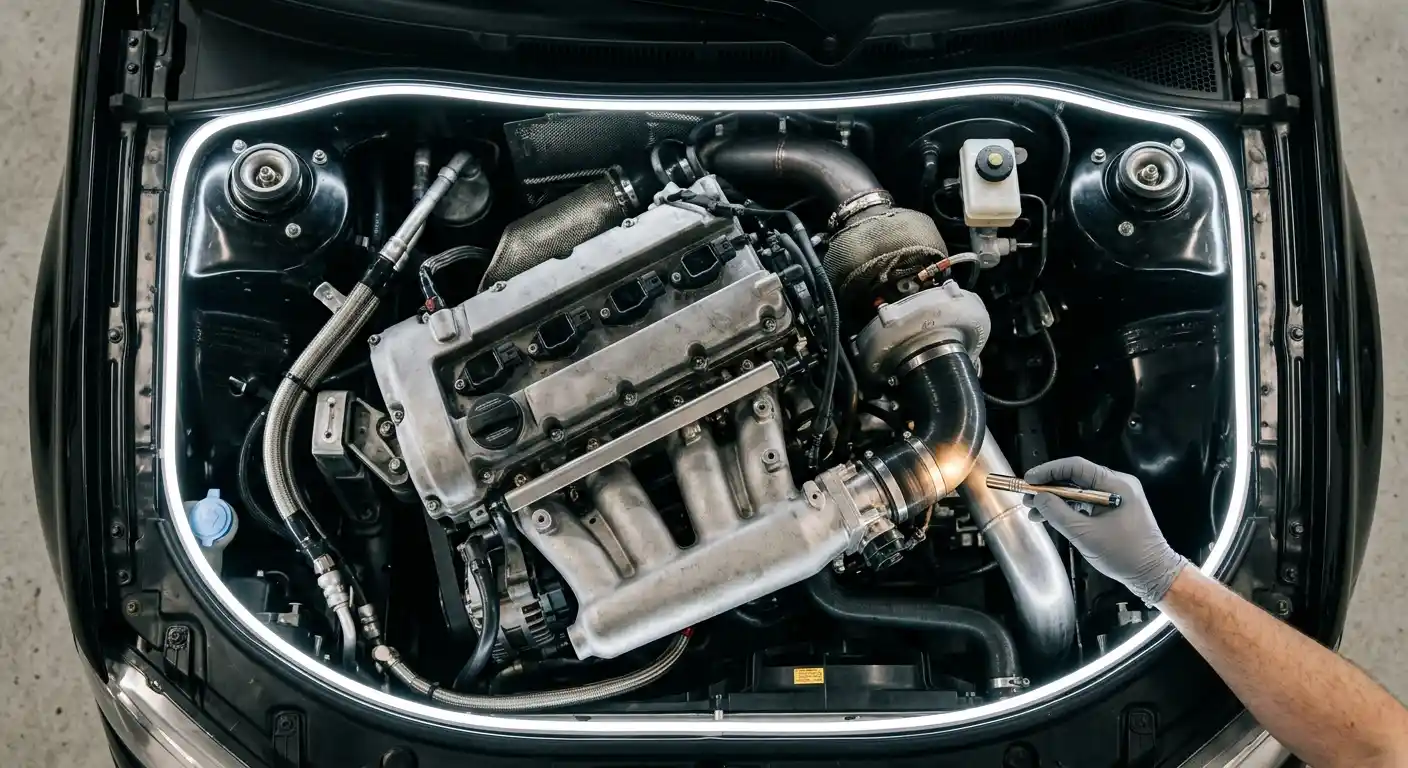
Keep gearbox and rear-drive tests generation-specific
Describe DQ500 behavior at cold selection, parking speed, steady acceleration, full temperature and overrun. Review transmission faults, clutch information, temperature and fluid history with engine torque behavior. A mount, tire or rear-drive issue can alter shift feel.
Earlier quattro layouts and later torque-splitter hardware do not use identical assumptions. Identify the installed unit and its service information before selecting fluids or parts. When a rear-axle or drive-mode warning appears, check voltage, communication, sensors, tires and mechanical condition as part of the route.
Launch-control use adds context but is not proof of clutch damage. Verification after repair should include ordinary low-speed control, not only a high-load shift.
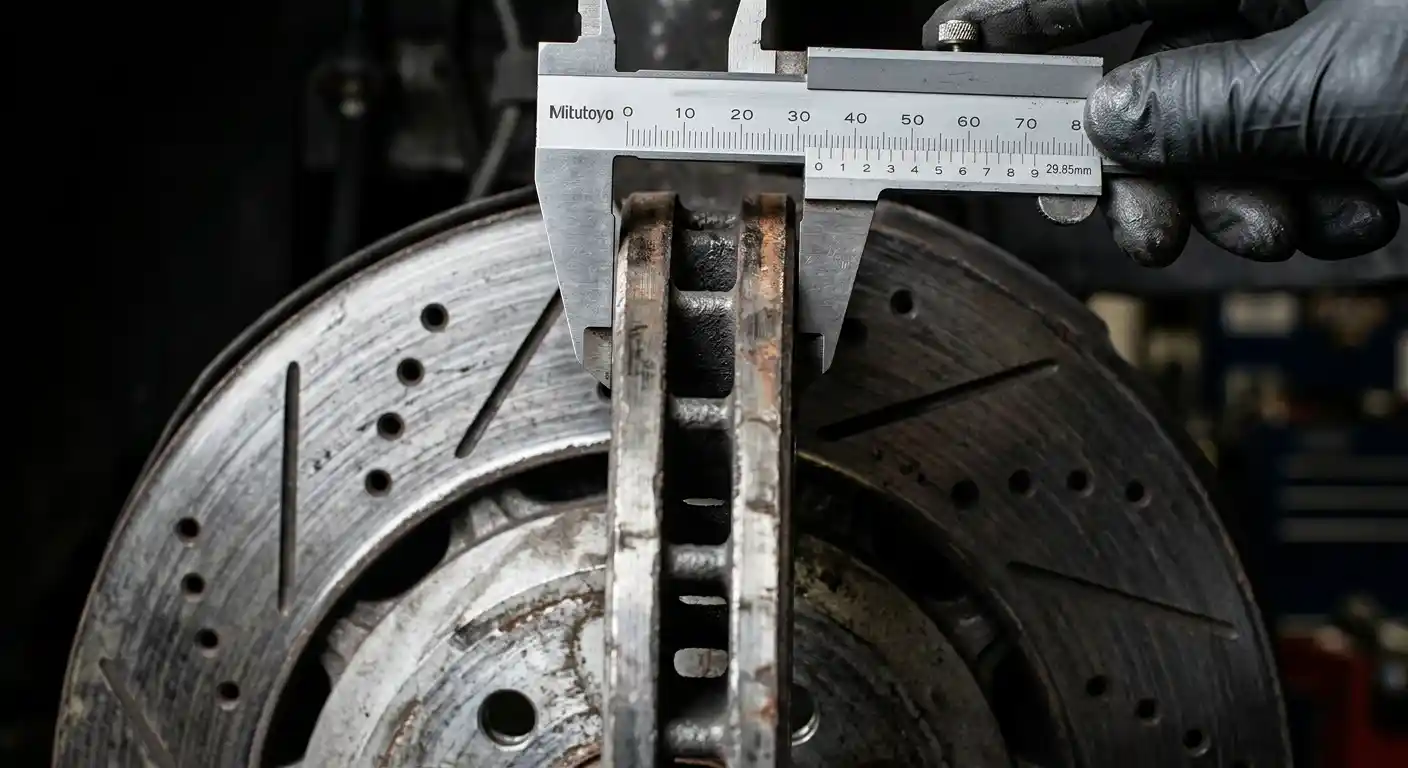
Measure brakes, tires and geometry before estimating
| System | Evidence before parts | Completion proof |
|---|---|---|
| Tires and wheels | Specification, pressure, age, tread, repairs, runout and damage. | Correct fitment, torque, pressures and vibration check. |
| Brakes | Installed package, pad and disc condition, hubs, calipers and fluid history. | Measurements, bedding guidance where applicable and controlled road test. |
| Suspension | Leaks, joints, mounts, ride height, alignment and sensor state. | Mechanical correction, geometry record and calibration if required. |
Separate road-speed vibration from engine-speed, brake and steering inputs. One uneven tire-temperature reading cannot select a suspension part without pressure, geometry and use context.
Create a maintenance invoice that can be audited
Choose engine oil, filters, spark plugs, brake fluid and transmission or driveline work from VIN, time, mileage, history and use. Record the approved specifications, quantities, parts identity and completion checks. Resetting a reminder is not evidence that every due item was completed.
Keep scheduled maintenance separate from measured wear and active faults. If a tuned car, track event or repeated launch use changes inspection priorities, document the actual history and resulting measurements rather than inventing one interval for every RS3.
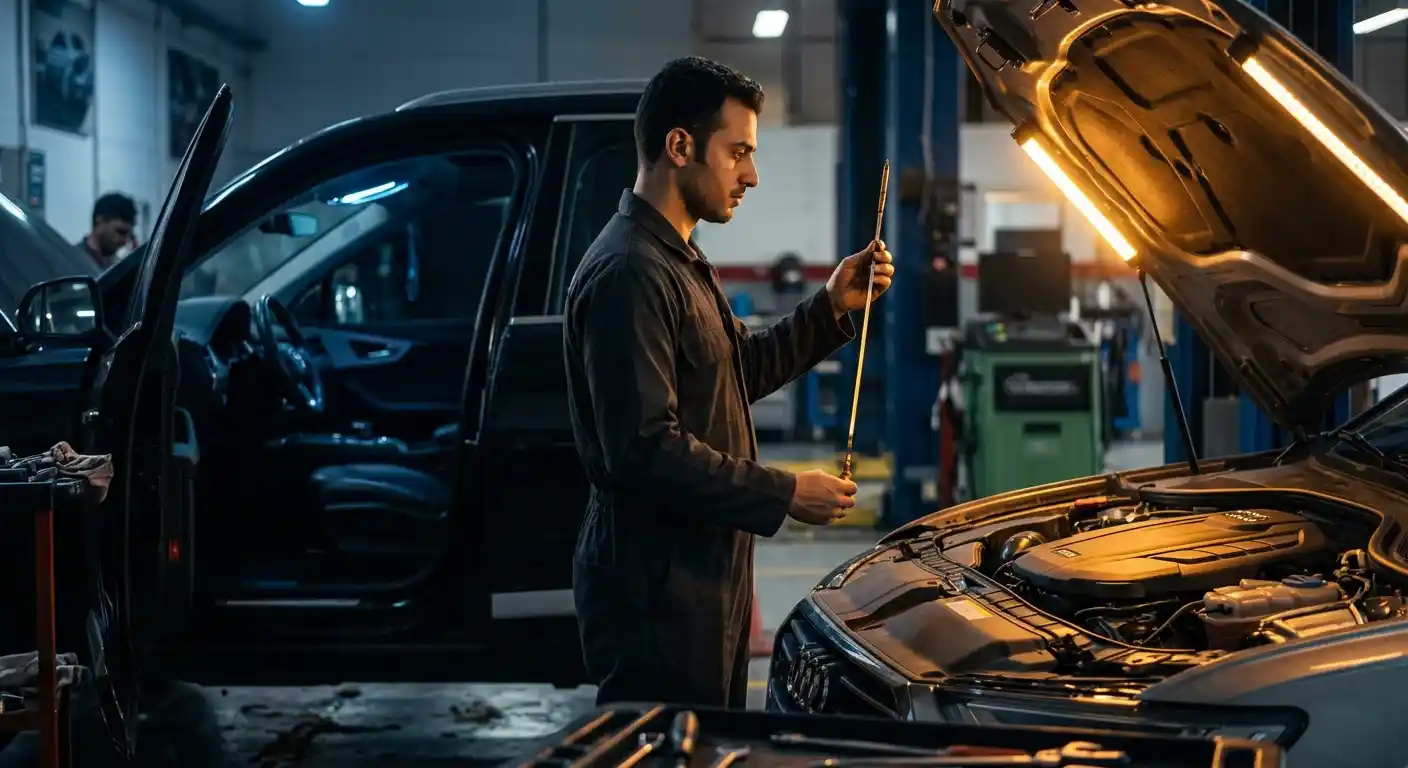
Inspect a used RS3 without a launch demonstration
Verify VIN, records, accident work, modifications, both keys and GCC or import status. View the car cold, inspect fluids safely, measure tires and brakes, check underbody and cooling openings, and scan every controller before the drive.
A purchase drive should progress from parking-speed turns to constant-speed running, restrained load, normal brake application and one warm restart. Save another scan afterward. Launch control adds stress and tells little about clutch wear, rear-drive function or long-term engine condition.
Price known maintenance from measured findings. For an intermittent gearbox, modified-software or structural concern without evidence, request further testing or leave the purchase.
Stabilize voltage before software and module decisions
Build a voltage history from the battery date, open-circuit reading, load response, charging output, storage periods, jump starts and added electrical equipment. Stabilize supply and repeat the network check before deciding that several controllers failed together.
Preserve software versions and fault timestamps before updates or resets. An update needs a stated reason and a post-update reproduction test. It should not substitute for mechanical, wiring or pressure evidence.
Inspect cooling airflow and cabin demand together
Dubai traffic combines high ambient temperature, low road speed and strong air-conditioning demand. Check radiator and condenser cleanliness, fan stages, coolant behavior, pressure evidence and leakage. Measure cabin vent performance separately so a weak AC system is not mistaken for an engine cooling failure.
If performance fades after heat soak, note recovery time and the smallest load that recreates it. Uncontrolled temperature, steam or coolant loss requires shutdown and recovery.
Connect body work to assistance and lighting faults
Inspect mounting and wiring around replaced windscreen, bumper, lamps, wheels or suspension. Cameras and radar can depend on bracket position and geometry. Verify relevant calibration records and current function rather than accepting a clean cluster as proof.
Test cameras, parking sensors, exterior lighting, keyless entry, climate functions and both keys. Moisture or nonstandard accessory wiring can create intermittent faults that need source tracing.

Separate confirmed work from conditional exposure
A credible estimate names the failed test, parts route, labor access, fluids, seals and fasteners, plus adaptation, coding or alignment where required. If further damage can only be seen after access, describe the inspection point and obtain approval before expanding the job.
At handover, save the final scan and repeat the original event. For a cold or intermittent concern, document when same-day verification is limited and arrange a return condition.
Keep an RS3 evidence file between services
Store invoices with oil approval and quantity, transmission work, brake and tire values, battery results, calibration records and modification changes. Photograph warnings before clearing and record the temperature, gear and load that produced them.
This history lets the next visit begin from a proven baseline. It also prevents an old estimate from being treated as a confirmed current failure when the underlying measurement was never repeated.
Prepare evidence before the RS3 arrives
Photograph the exact dashboard message and note engine temperature, fuel level, selected mode, gear, speed and load. If a noise is involved, make a safe recording with the phone away from belts, fans, exhaust and moving wheels. Do not intentionally provoke a severe symptom.
Send service invoices, modification details, both-key status and the work completed immediately before the problem. This lets the workshop preserve a cold start, arrange battery support or choose a safe road-test plan before the vehicle is moved.
Close every maintenance line with a measured result
An oil-service record should include approval, quantity, filter and level procedure. A transmission line should identify the unit, fluid and filter scope, and adaptations where required. Brake and tire work should record before-and-after values, pressures and wheel torque.
For cooling or battery work, include the relevant pressure, temperature, capacity or voltage evidence. These details make the next fault easier to interpret and protect the owner from paying twice for an undocumented baseline.
RS3 repair questions
Does a cylinder fault always mean a coil?
No. Ignition, fuel, air, pressure, wiring and mechanical condition can overlap. Compare cylinders and test the affected system.
Does every RS3 have a torque splitter?
No. Confirm generation and fitted rear-drive hardware before choosing a diagnostic or service route.
Can a tuned RS3 be diagnosed?
Yes, but the current hardware and software baseline must be documented, and some tests may require a known reference configuration.
What should the final report show?
The final file should connect the first symptom to the confirming measurement, authorized remedy, installed components and fluids, any learned values or calibration, and a successful repeat of the triggering condition.