Audi boost-system diagnosis in Dubai

Audi Diverter Valve Failure and Power Loss

Audi diverter valve failure can cause weak acceleration, inconsistent boost, a new whooshing or fluttering sound, an EPC or check-engine warning, and reduced-power mode. However, these symptoms do not prove that the valve needs replacement. A leaking charge pipe, damaged intercooler seal, wastegate problem, inaccurate pressure sensor, crankcase ventilation fault, restricted intake, tuning issue, or worn turbocharger can create a similar loss of power.

The correct diagnosis compares requested boost with actual boost, checks the complete pressurized air path, tests valve operation, and verifies the exact engine and valve design. Replacing the diverter valve from a P0299 code alone can leave the original fault untouched.

Diagnostic principleRequested boost must match actual boost
Test first
1Confirm engine and valve designVIN and engine code
2Record faults and live valuesP0299 and P2261
3Find where pressure or control is lostValve, pipe, sensor, wastegate, or turbo
4Repair the confirmed causeRepeat the load test
Understand the pressure path

What the diverter valve does during acceleration and throttle lift

01 CompressorBuilds charge pressure under load
02 Diverter valveSeals for boost and opens on throttle lift
03 ThrottleReceives controlled pressurized airflow

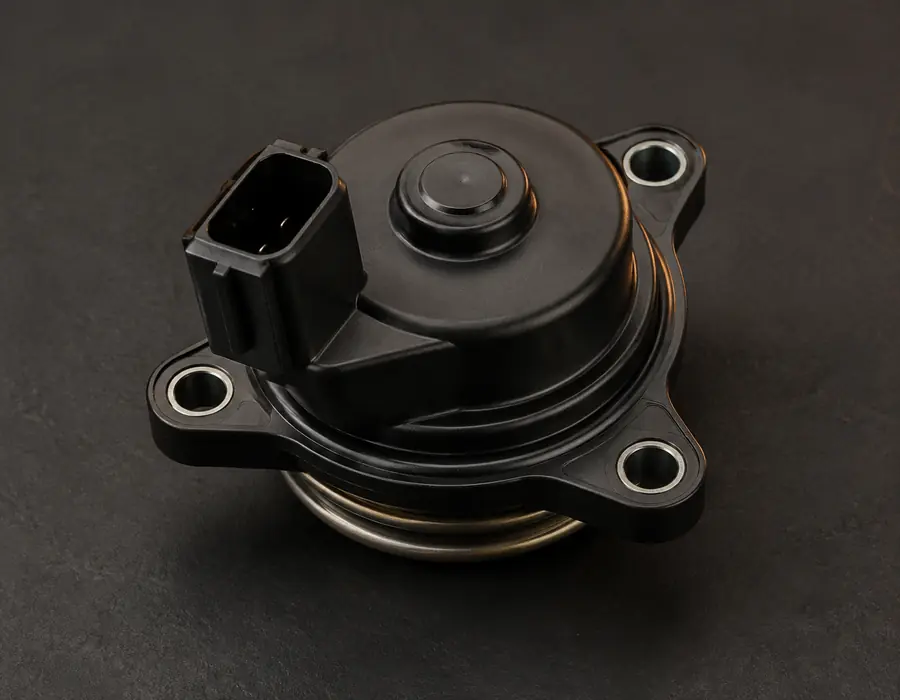
The diverter valve is also called a turbocharger recirculation valve, compressor bypass valve, or, on some Audi technical documents, N249. Its design and control method vary by engine generation.

When the turbocharger compresses air and the throttle closes during a gear change or sudden lift, pressure remains between the compressor and throttle. The diverter valve opens when commanded and routes that pressurized air back toward the compressor inlet. This reduces the pressure wave acting against the compressor wheel and helps the turbo respond smoothly when the driver accelerates again.

The valve must also close and seal when boost is required. A valve that leaks or remains partly open can recirculate air at the wrong time. The turbo may still spin, but some of the compressed air does not reach the engine. The driver experiences this as flat acceleration, delayed boost, or power that fades as load rises.

A valve that does not open correctly can produce a different pattern. Pressure may reverse across the compressor when the throttle closes, creating repeated flutter or compressor surge. Not every brief airflow sound indicates a fault, particularly on a modified intake, but a new sound combined with warning lights, unstable boost, or poor response needs diagnosis.

Start with what the driver notices

Audi diverter valve symptoms change with the failure mode

Start with the broader Audi problems guide if power loss is accompanied by several warnings, and use the Audi fault code guide to treat stored codes as evidence rather than a parts order.

A failed valve does not produce one universal symptom. The result depends on whether the valve leaks, sticks, responds slowly, loses electrical control, or has been replaced with an incompatible component.

Weak acceleration when the engine should build boost

A leaking diaphragm, damaged seal, cracked housing, or valve that does not fully close can release boost back into the intake. The Audi may feel normal at light throttle but become noticeably flat during overtaking, uphill driving, or stronger acceleration.

The loss can be consistent or appear only when requested pressure rises. Some drivers describe it as unusually long turbo lag. True lag is the short delay while exhaust flow builds. A new and repeatable inability to reach expected boost is a fault, not normal turbo behavior.

Check-engine or EPC warning with reduced power

The engine control unit may limit torque when measured boost does not follow the requested value or when the valve circuit or mechanical response appears incorrect. The car can enter a reduced-power strategy, often called limp mode, to control the condition.

The warning may disappear after a restart and return under load. That pattern is useful evidence, but it still does not identify the failed part. Save the codes and freeze-frame data before clearing anything.

A new whoosh, hiss, chirp, or flutter

A boost leak can create a hiss or rushing-air sound under acceleration. A leaking diverter valve may make the sound more noticeable near the turbocharger. Repeated flutter after the driver lifts the accelerator can indicate that pressure is not being relieved as intended, although intake modifications can also make normal pressure events louder.

Sound must be matched to timing. A noise heard while building boost suggests a different path from a noise that occurs only as the throttle closes. A siren, grinding sound, or wheel-contact noise points away from a simple valve fault and requires urgent turbo inspection.

Boost that arrives and disappears

Intermittent valve movement, damaged wiring, a loose connector, temperature-related electrical behavior, or an incorrect software calibration can make boost response inconsistent. The car may pull normally on one run and feel restricted on the next.

This pattern also occurs with wastegate actuators, loose charge-air connections, sensors, ignition faults, and fuel-delivery problems. The technician must reproduce the complaint and compare control commands with actual system behavior.

Poor response after a valve modification

Aftermarket spacers, conversion valves, springs, and software changes can alter sound or response. A modification that fits physically may still be wrong for the control strategy, valve travel, sealing requirement, or software calibration of the installed engine.

If the problem began after modification, preserve the original parts and software information. Returning the system to a verified standard configuration may be an important diagnostic step. Do not assume that a louder release sound proves the valve is operating correctly.

Read the code in context

P0299 and P2261 are evidence, not replacement instructions

P0299Underboost evidence. It does not identify the failed part.
P2261Bypass-valve performance evidence. Engine-specific testing is still required.

Two fault-code families are commonly discussed with Audi diverter valve problems, but neither confirms Audi diverter valve failure or should be treated as an automatic parts order.

P0299 indicates an underboost condition. It means the measured boost was lower than the control system expected under the recorded conditions. A leaking diverter valve is one possible cause. Charge-pipe leaks, intercooler leaks, wastegate or actuator faults, exhaust leakage before the turbine, sensor errors, intake restriction, engine-performance problems, and turbo wear can produce the same code.

P2261 generally relates to turbocharger or supercharger bypass-valve mechanical performance. On an applicable Audi engine, it can direct attention toward the diverter valve, its control circuit, or its response. The code still needs to be interpreted using engine-specific information because component names, valve arrangements, and monitoring strategies differ.

Other boost-control, sensor, mixture, or misfire codes may change the diagnostic direction. A P0299 stored with a pressure-sensor fault is not the same case as P0299 stored after a high-load event with a confirmed torn diaphragm.

Before clearing a code, record:

  1. whether it is stored, pending, intermittent, or currently active;
  2. the engine speed, load, temperature, requested boost, and measured boost in the freeze frame;
  3. other engine, throttle, mixture, misfire, actuator, or sensor codes;
  4. whether the warning appeared during steady cruising, acceleration, or throttle lift; and
  5. recent repairs, battery disconnection, software changes, or intake modifications.
The page's diagnostic signature

Read the evidence pattern before choosing a repair

The same complaint can come from several parts of the boost system. This comparison helps organize the next test without pretending that a symptom confirms a component.

Evidence patternDiverter valve possibilityImportant alternativesBest confirming step
Power drops as boost demand risesValve leaking or not fully closingCharge-air leak, wastegate fault, restricted intake, weak turboCompare requested and actual boost, then pressure-test the charge path
P2261 returns after a controlled testValve response or control problemConnector, wiring, incompatible valve, engine-specific monitoring issueRun supported output tests and check electrical supply and valve movement
Loud hiss during accelerationValve or housing leakSplit hose, intercooler seal, loose clamp, cracked pipePressure or smoke test at the correct controlled pressure
Repeated flutter after throttle liftValve slow, stuck, or not commandedModified intake sound, software issue, incorrect aftermarket hardwareCompare command behavior, fitted parts, and sound timing
P0299 with no unusual valve soundValve remains possibleWastegate, actuator, boost leak, sensor, exhaust, turbo wearTest the whole boost-control system before removing parts
Blue smoke, oil loss, or siren noiseNot explained by a simple valve leak aloneTurbo bearing damage, PCV fault, oil-drain restriction, internal engine problemStop hard use and inspect lubrication, crankcase pressure, and turbo condition

This is why an Audi power-loss diagnosis should not begin with a replacement list. The goal is to locate where pressure or control is being lost and prove that the finding explains the recorded driving complaint.

A complete evidence chain

How a workshop confirms Audi diverter valve failure

A reliable inspection follows an evidence chain. Skipping the early checks can make a new valve appear to solve a problem temporarily while a boost leak, actuator fault, or software issue remains.

01

Confirm the exact Audi powertrain

The model badge is not enough. Record the VIN, engine code, production date, market specification, turbocharger configuration, software status, and any previous engine or turbo replacement. Audi used different valve designs, revisions, mounting positions, and control strategies across TFSI engines.

This prevents a part-number or diagnostic procedure from one Audi generation being applied to another.

02

Reproduce and record the complaint

The technician should know whether power loss occurs from cold or hot, at low or high engine speed, during part-throttle or full-load acceleration, after a gear change, or only after extended driving. Warning status, unusual sounds, oil use, smoke, and recent work should be recorded before testing.

A controlled road test may be appropriate when the car has no severe noise, smoke, oil-pressure warning, overheating, or other immediate risk. Unsafe symptoms require static inspection or recovery instead.

03

Scan before clearing or disconnecting

Read all relevant control units and save fault status, freeze-frame data, readiness information, and useful live values. Clearing codes too early removes the operating conditions that help separate a valve problem from another underboost cause.

04

Compare requested boost with actual boost

Live data should be captured under an appropriate, controlled load. The pattern matters more than one peak number. The technician looks at when pressure starts to diverge, how large the difference becomes, how the control system responds, and whether the deviation follows temperature, engine speed, gear, or throttle movement.

Generic boost targets copied from another engine are not reliable. Use the correct measuring values and specifications for the installed control system.

05

Check the complete charge-air path

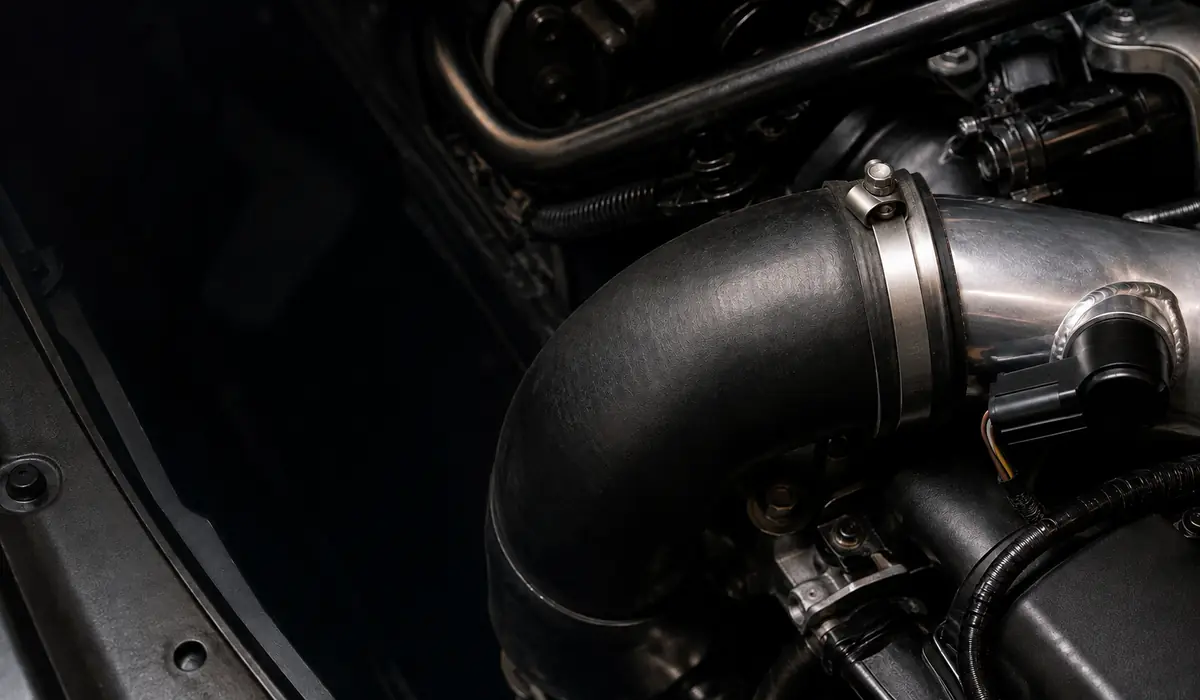
Inspect the intake, turbo inlet, compressor outlet, charge pipes, clamps, seals, intercooler, pressure sensors, throttle connection, and any recent repair area. A pressure or smoke test can reveal leaks that are invisible when the engine is off.

The test pressure and equipment must suit the engine and procedure. Excessive uncontrolled pressure can damage seals or create misleading results.

Audi charge-air path inspection during diverter valve diagnosis
06

Test the valve command and electrical circuit

Where the diagnostic system supports it, an output or actuator test can assess whether the valve responds to a command. The connector, terminals, wiring, power supply, ground, control signal, and signs of heat or oil contamination should be inspected.

An electrically active valve can still leak mechanically. A valve that seals on a bench can still fail to respond correctly when hot or under operating pressure. Electrical and mechanical evidence must agree.

07
Physical workshop inspection of an Audi diverter valve

Inspect the removed valve when justified

On a serviceable design, inspection may reveal a torn diaphragm, damaged sealing surface, cracked housing, sticking piston, contamination, or incorrect installed part. Audi issued a technical bulletin for certain 2005 to 2007 A3, A4, and A4 Cabriolet 2.0 TFSI vehicles in which P0299 could result from an abnormal N249 recirculation valve. The bulletin directed inspection of the rubber membrane and replacement when torn. That bulletin is useful evidence for those listed vehicles, not a diagnosis for every Audi. See the Audi technical bulletin for the specified 2.0 TFSI applications.

Audi technical training for later third-generation EA888 engines also identifies an electrical diverter valve as part of the turbocharger assembly, while showing packaging differences between transverse, longitudinal, and S3 configurations. This supports the need to verify the exact engine rather than relying on a universal model list. See the Audi EA888 third-generation self-study material.

08

Rule out the faults that imitate a leaking valve

The wastegate and actuator must move and seal correctly. Pressure sensors need plausible readings. The PCV system must control crankcase pressure. The engine needs adequate ignition, fuel delivery, compression, and exhaust flow. A restricted catalyst or engine misfire can reduce the exhaust energy available to drive the turbo.

Turbocharger manufacturers likewise advise checking filters, hoses, pipes, fuel injection, exhaust restriction, intercooler leakage, lubrication, and crankcase ventilation before condemning a turbo. The Garrett diagnostic guidance is consistent with this whole-system approach.

09

Verify the result after repair

After the confirmed repair, clear faults only when appropriate, repeat the same controlled test, and compare requested and actual boost again. Confirm that the warning does not return, acceleration is consistent, no leak remains, and throttle-lift behavior is normal.

A successful repair is not simply a warning light that stayed off during idling. The original load condition must be checked safely.

Make the repair decision

When the valve should be replaced and when it should not

Replace only when confirmedThe valve cannot seal or respond as required
Do not replace from a code aloneTest charge-air, wastegate, sensors, PCV, software, and turbo condition
Audi diverter valve component assessment before replacement

Repair confirmed Audi diverter valve failure when physical inspection, supported functional testing, fault behavior, or electrical diagnosis shows that the valve cannot seal or respond as required. Use the VIN and engine code to identify the correct current part and any required seals, fasteners, installation procedure, or software steps.

Do not replace it merely because:

  • the car stores P0299;
  • the turbo sounds louder than another Audi;
  • a generic scanner labels a boost fault;
  • an online model list calls the valve a common problem;
  • a tuned car does not achieve an advertised boost figure; or
  • another owner improved a different engine by fitting a revised valve.

If testing finds a damaged connector, wiring fault, leaking intercooler connection, split hose, sticking wastegate, sensor error, PCV problem, or software mismatch, correct that cause and leave a serviceable valve in place. If internal turbo damage is confirmed, the valve may be only one part of a larger repair.

For the broader distinction between boost leaks, actuator problems, oil-supply faults, and internal turbo damage, use our Audi turbo failure symptoms and diagnosis guide. If testing confirms that the turbocharger itself cannot be repaired reliably, review the scope of the Audi turbo replacement service before approving a complete unit.

Safety and driveability

Can you continue driving with power loss

A mild change in acceleration without abnormal noise, smoke, overheating, or an oil warning still deserves prompt inspection. Avoid strong acceleration and do not rely on the car for overtaking until the cause is known. No remote description can confirm that the vehicle is safe to drive.

Stop using the vehicle and arrange inspection or recovery when:

  • Power drops suddenly enough to make merging or crossing traffic unsafe;
  • The engine produces heavy blue or gray smoke;
  • The oil level falls quickly or a red oil-pressure warning appears;
  • There is a grinding, scraping, severe siren, or metallic turbo noise;
  • The engine revs rise without normal accelerator input;
  • The vehicle overheats;
  • The check-engine light flashes with severe shaking or misfire; or
  • A charge pipe disconnects and the engine runs very poorly.

These signs may involve turbo bearing damage, oil entering the intake, major pressure loss, severe misfire, or another engine fault. A diverter valve replacement should not be attempted as a shortcut around those risks.

Preserve useful evidence

What an Audi owner can check without dismantling the turbo

You can preserve useful evidence without performing hazardous work:

  • photograph the warning messages before switching off;
  • record whether the problem occurred cold, hot, during acceleration, or after lifting the throttle;
  • note whether restarting temporarily restored power;
  • keep an unedited list of stored and pending codes;
  • check the engine-oil level using the correct vehicle procedure;
  • look for an obviously disconnected intake or charge pipe when the engine is off and cool; and
  • list recent intake, turbo, battery, sensor, software, or exhaust work.

Do not place hands near a running engine, hot turbocharger, cooling fan, belt, or pressurized hose. Do not disconnect the valve to create turbo flutter, apply unregulated pressure to the intake, or order a part from the model name alone.

Book the right first appointment

The practical next step for Dubai Audi drivers

The most useful first appointment is a boost-system diagnosis, not an automatic diverter valve or turbo replacement. Send the Audi model, model year, engine details if known, warning codes, when the power loss occurs, and whether the intake or software has been modified. Those details help the workshop plan the correct scan, pressure test, electrical check, and controlled verification.

If your Audi loses boost, enters reduced-power mode, or develops a new valve or turbo sound, send the symptoms by WhatsApp and arrange an inspection at the Al Quoz 4 workshop. Avoid hard acceleration until the fault is identified.

Answers before booking

Audi diverter valve questions

Can a bad Audi diverter valve cause power loss

Yes. If the valve leaks or remains partly open while boost is required, compressed air can recirculate instead of reaching the engine. The result may be weak acceleration, low measured boost, or reduced-power mode. Testing is needed because charge-air leaks and wastegate faults can feel the same.

Does P0299 confirm a failed diverter valve

No. P0299 confirms that actual boost was lower than expected under the recorded conditions. It can result from a leaking valve, split hose, intercooler leak, wastegate or actuator problem, sensor fault, intake or exhaust restriction, engine-performance fault, or worn turbocharger.

Is P2261 more specific than P0299

P2261 points more directly toward bypass-valve mechanical performance, but the exact interpretation depends on the engine and control system. Confirm the fitted valve, wiring, command response, and engine-specific diagnostic information before replacement.

Does turbo flutter always mean the diverter valve is bad

No. A modified intake can make normal pressure behavior more audible, while software and aftermarket valve hardware can also change the sound. New repeated flutter with poor response, warning lights, or unstable boost needs inspection.

Can Dubai heat cause Audi diverter valve failure

Heat can expose an intermittent electrical, sealing, or material problem, and high intake temperatures can affect engine output. It does not prove the valve failed. Diagnosis must separate normal temperature-related power management from a valve leak, sensor problem, cooling issue, or other boost-system fault.

Should I install an upgraded diverter valve

Not automatically. The correct choice depends on the engine, software, turbocharger, valve design, and reason for failure. A genuine current-revision or verified OEM-specification component is often more appropriate than an unverified conversion. Confirm compatibility before purchase.