
Audi S8 Repair and Service in Dubai
An S8 combines the equipment of its A8 generation with a higher-output engine, stronger brakes and generation-specific chassis hardware. A D2, D3 V10, D4 V8T and D5 V8T do not share the same diagnostic starting point. The VIN, powertrain codes, suspension configuration and warning conditions must be identified before the workshop selects tests or parts.
Map the S8 generation before choosing tests
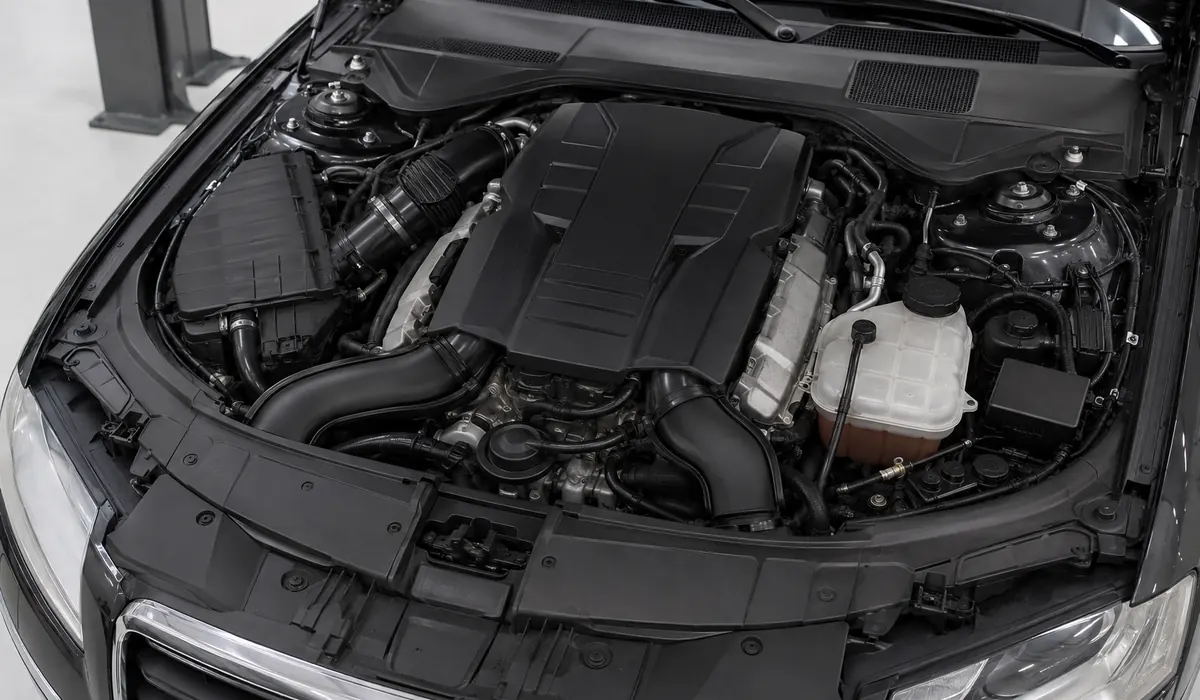
S8 generations range from the early D2 layout through the D3 V10 and later twin-turbo V8 platforms. Engine architecture, transmission controls, air suspension, steering assistance, braking hardware, 48-volt equipment and repair access change across those eras. Import specification and modifications must be documented because they can alter parts and expected data.
| S8 era | System priority | Identification record |
|---|---|---|
| D2 early S8 | For a D2 S8, begin with the installed engine and automatic transmission, cooling condition, conventional suspension, steering, brakes and age-related electrical supply. Record the exact symptom and the measurement that confirms or excludes each suspected system. | Keep the VIN, build market, engine and transmission identifiers, brake and suspension equipment and available repair history together. |
| D3 S8 with V10 | The D3 V10 requires attention to cold-start behavior, intake and ignition evidence, cooling integrity, automatic transmission operation and the air-suspension system fitted to the vehicle. Compare scan data with physical tests and reproduce the original condition after repair. | Record production date, V10 and gearbox codes, market specification, suspension options, control-unit software and relevant earlier work. |
| D4 S8 with twin-turbo V8 | On a D4 V8T, separate turbo oil or coolant concerns from crankcase ventilation, ignition, fueling and cooling faults. Test the symptom cold and hot, then document the first abnormal value rather than applying a V10 procedure to this generation. | Save the chassis number, production month, V8T and transmission codes, suspension specification, service evidence and every hardware or software modification. |
| D5 S8 with later twin-turbo V8 and chassis electronics | A D5 S8 adds later 48-volt, network and active-chassis dependencies to V8T diagnosis. Stabilize the electrical supply, scan all modules and identify the installed steering and suspension systems before calibrating or replacing anything. Preserve the evidence that distinguishes a supply event from a component fault. | Document the D5 identity, market, engine and gearbox codes, active-chassis options, software status and relevant repair or calibration history. |
Audi S8 diagnostic priorities
Use the Audi problems guide for symptom triage, compare the smaller Audi S7 repair page, and review the related high-output estate on the Audi RS6 repair page.
Use the following routes only after the vehicle and warning condition are identified. They organize S8 diagnosis by system and do not turn a common symptom into an automatic parts decision.
Air suspension and all-wheel steering where fitted
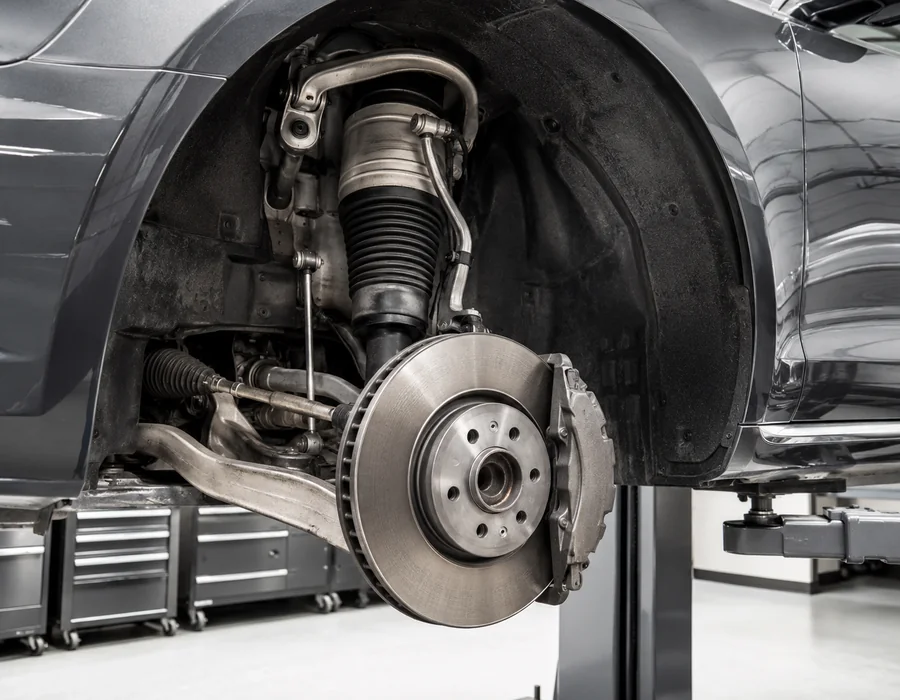
For a ride-height or handling complaint, identify the installed suspension and steering equipment before measuring the car on level ground. Record wheel and tire fitment, cold pressures, runout and axle matching, then inspect arms, joints, dampers and air lines or valves where fitted. Correct mechanical or leakage faults before level-sensor calibration. Verification must include final corner heights, geometry where required and the road condition that originally exposed the concern.
Turbo oil and cooling on V8T cars
V8T complaints need separate evidence for lubrication, cooling and charge-air control. Inspect the highest fresh oil or coolant trace, pressure-test the cooling system and compare temperature behavior before dismantling. For power loss, test the intake and charge path, requested and actual boost, control valves and wastegate response while also checking ignition and fuel supply. A D3 V10 follows an intake, ignition and mechanical path instead of a turbo test. The estimate should identify the failed boundary and the repeat test used after repair.
V10 intake and access-related work
On the S8, the first step is to identify the exact system and capture the fault in the conditions described by the driver. Measure vent output and pressures, locate refrigerant leaks, verify compressor command, blower, flap and sensor data, and use the exact refrigerant and oil procedure. Before approval, the report must connect the S8 symptom to measured evidence and define the final verification.
Battery voltage and network warnings
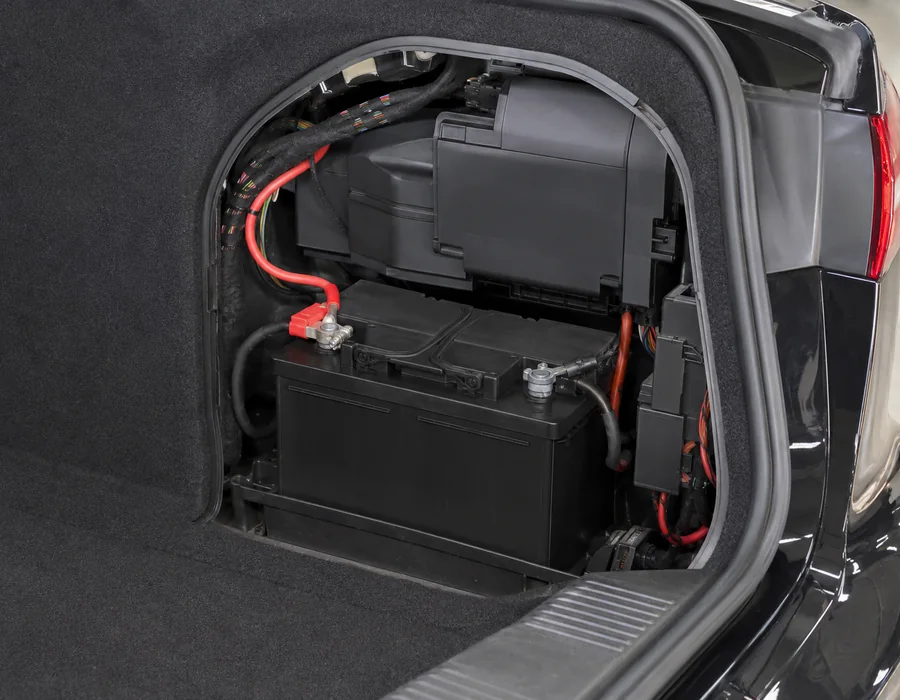
On the S8, the first step is to identify the exact system and capture the fault in the conditions described by the driver. Test the 12-volt supply, grounds, charging and sleep current, then separate primary faults from network consequences across installed modules. Before approval, the report must connect the S8 symptom to measured evidence and define the final verification.
Large brake and tire condition
Large S8 brakes and wheels require measured runout, thickness, pad condition, caliper movement, fluid history and heat evidence. Compare those findings with wheel damage, tire condition and suspension play before calling vibration a brake fault. Record the measuring points and repeat the same braking condition after correction.
Inspect the exact S8 before pricing its first year
A used S8 inspection should begin before the engine or suspension is warmed. Confirm the generation and installed chassis equipment, save the first-start warnings and complete scan, then check engine-specific leaks, air-suspension behavior, steering, brakes, tires and electrical supply. Recently cleared warnings do not replace freeze-frame data or a controlled road test.
First start evidence
Capture corner heights, startup warnings, cranking behavior, idle quality, smoke, fluid traces and the first selection of drive or reverse while the S8 is still cold.
Physical inspection with measurement proof
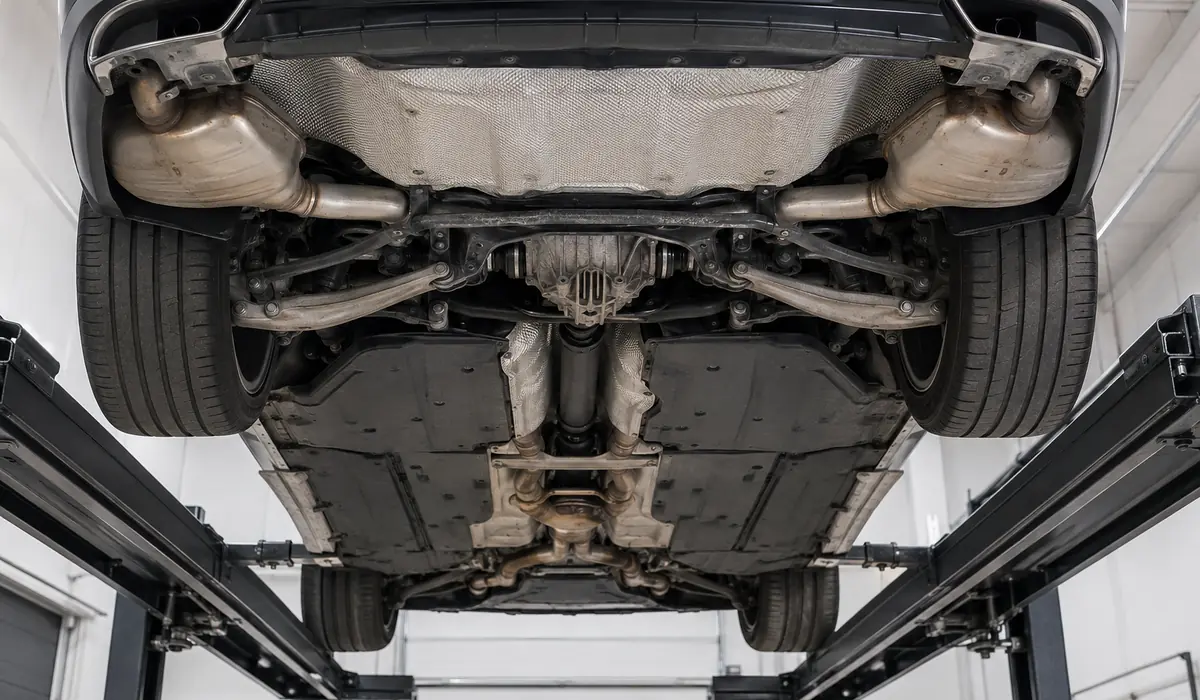
Inspect the correct V10 or V8T service areas, underbody shields, cooling residue, air-suspension hardware, steering links, brakes, tires and collision-repair evidence. Photograph both the defect and the tool or reference point used to measure it.
Controlled road test
Once fully warm, test power delivery, transmission engagement and shifts, low-speed steering, suspension response, braking, vibration, climate control and cabin electronics. Tie every abnormal behavior to speed, load, temperature and warning state.
Do not let a clean dashboard settle a S8 purchase. Value the car only after cold-start evidence, a complete scan, underbody measurements and a road test have separated maintenance from faults.
Plan Audi S8 service without generic packages
Build S8 maintenance from the VIN-specific schedule and the actual V8, V10 or V8T drivetrain. List scheduled work separately from measured chassis or brake wear and diagnosed faults. Record exact fluid approvals, quantities, filters, plugs and completion procedures for the fitted systems.
Air suspension and all-wheel steering where fitted: handover record
The S8 combines high mass with performance brakes and large wheels, so measure disc condition, pad depth, tire load rating, runout and geometry. Costly components still require a documented defect or limit before replacement.
Turbo oil and cooling on V8T cars: handover record
S8 servicing must be planned from the chassis code. Earlier V8 and V10 cars, D4 twin-turbo models and D5 48-volt cars have different oil, cooling, ignition and electrical requirements.
V10 intake and access-related work: handover record
On an S8, scheduled inspection should include the fitted driver-assistance, comfort and chassis controllers, with scan evidence and functional checks. Repair follows a confirmed fault or applicable schedule, not equipment complexity alone.
Evidence required before an S8 repair is closed
Before approval
- Verified S8 generation, market and installed powertrain and chassis equipment
- Exact warning, noise or behavior with its speed, load and temperature
- Uncleared whole-vehicle scan with available freeze-frame and event information
- Measurements selected for the affected powertrain, suspension, steering, brake or electrical system
- Estimate divided into confirmed repair, related access work and nonurgent observations
Before handover
- S8 part identifiers, fluid approvals and quantities entered on the job record
- Saved coding, basic-setting and calibration outcomes for every affected control system
- Post-repair test that recreates the original temperature, load, maneuver or warning trigger
- Final scan with the applicable pressure, leak, ride-height, geometry or driving result
- Handover record showing completed work, planned maintenance and measured items under observation
For an S8 assessment at our Al Quoz 4 workshop in Dubai, share the build details and the exact conditions that trigger the concern so the first inspection is correctly scoped.
Select the least extensive repair supported by S8 evidence
| Option | Evidence threshold | Close-out requirement |
|---|---|---|
| Targeted repair | Choose a localized repair when the failed seal, line, sensor, valve, mount, connector or wiring section is isolated and the parent assembly still meets specification. | Keep the original failed reading, neighboring checks and the corresponding pass result after the component repair. |
| Rebuild | A rebuild is considered only when internal inspection defines recoverable wear and the required specifications, parts and cleanliness controls are available. | Log dismantling findings, dimensional checks, renewed internals, contamination controls and the approved warranty scope. |
| Replacement | Use replacement when damage, safety exposure, unavailable service parts, contamination or total repair labor prevents a dependable restoration. | Name the source and condition of the replacement, verify every compatibility code and list the installation, programming, calibration and commissioning work. |
| Measured follow-up | Monitoring is limited to a quantified, stable condition that is not safety related and remains below an agreed intervention limit. | Write the baseline value, next inspection date or mileage and the exact change that requires earlier action. |
Map the S8 by engine, chassis and electrical era
The S8 name spans naturally aspirated and turbocharged engines, different transmissions, air or adaptive chassis hardware, brake packages and network architectures. Verify the VIN, engine and gearbox codes, installed suspension, steering, brakes and software before choosing fluids or tests.
Later cars can add 48-volt and active chassis functions. Older cars may need age and parts-availability decisions. Neither route should borrow procedures from another generation.
Recover the S8 when lubrication, ride or control is uncertain
Recover the S8 for a red lubrication or temperature alert, smoke, fuel smell, fast fluid loss, heavy misfire or knocking, unsafe braking or steering, damaged tires, a collapsed suspension corner or unreliable gear selection.
Do not move an S8 with reduced power combined with a chassis, transmission or electrical warning until the message and available vehicle functions are reviewed. If a short relocation is authorized, stop at any change in temperature, braking, steering, ride height or gear engagement.
Stabilize supply before pricing luxury electronics
Record battery condition, charging behavior, parking duration, jump-start history and accessories. Save the network scan before clearing. On applicable systems, separate 12-volt and higher-voltage evidence and use qualified procedures.
Test climate zones, seats, lighting, cameras, parking aids, infotainment, keyless access and both keys individually. Connect glass and body work to sensor mounting and calibration, and trace moisture before module replacement.
Audi S8 repair FAQs
Does the diagnostic route change between D2, D3, D4 and D5 S8 models?
Yes. This guide spans D2, D3 V10, D4 V8T and D5 V8T platforms, but the VIN, build month, powertrain codes, market and installed chassis systems determine the applicable procedure.
What evidence should be collected first on an S8?
Preserve startup behavior and scan data, identify the generation, stabilize battery voltage and then follow the affected engine, transmission, air-suspension, steering, brake or tire system. A priority list is not proof of failure.
Which S8 warnings require recovery?
Stop the S8 if temperature or oil pressure is unsafe, smoke or heavy leakage appears, braking or steering deteriorates, or a loud mechanical fault begins. A scan code alone cannot decide whether continued driving is safe.
How is an S8 service plan built across generations?
Use the schedule for the exact S8 powertrain and installed chassis equipment. Add measured wear and diagnosed defects as separate work instead of transferring one oil, transmission, brake or quattro interval across every era.
What changes Audi S8 repair cost?
Repair cost for the S8 follows the evidence: failed component, labor access, new or remanufactured parts route, required fluids, software work and final verification.
What information helps prepare an S8 diagnostic visit?
Before booking the S8, provide its chassis number, odometer reading, exact warning, cold or warm behavior, service evidence and any recent repair or modification.
Share the S8 identity and fault trigger
The vehicle identity and operating conditions determine whether the first visit needs cold-start capture, voltage stabilization, chassis measurement or a loaded powertrain test.