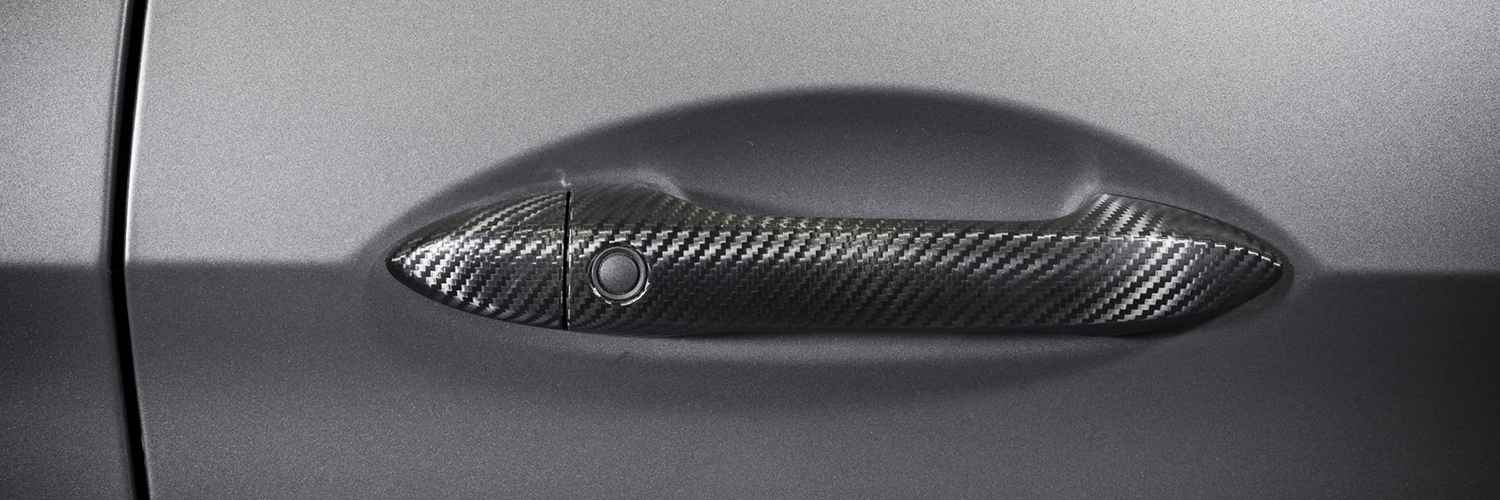
Audi door repair and replacement in Dubai
A door that drops, rattles, leaks, refuses to latch or stops responding can have a mechanical, electrical, sealing or impact-related cause. We inspect the complete door system before deciding whether it needs adjustment, component repair, panel work or replacement.
Send the Audi model, year, affected door, photos and a short description of what happens when you open, close or lock it.
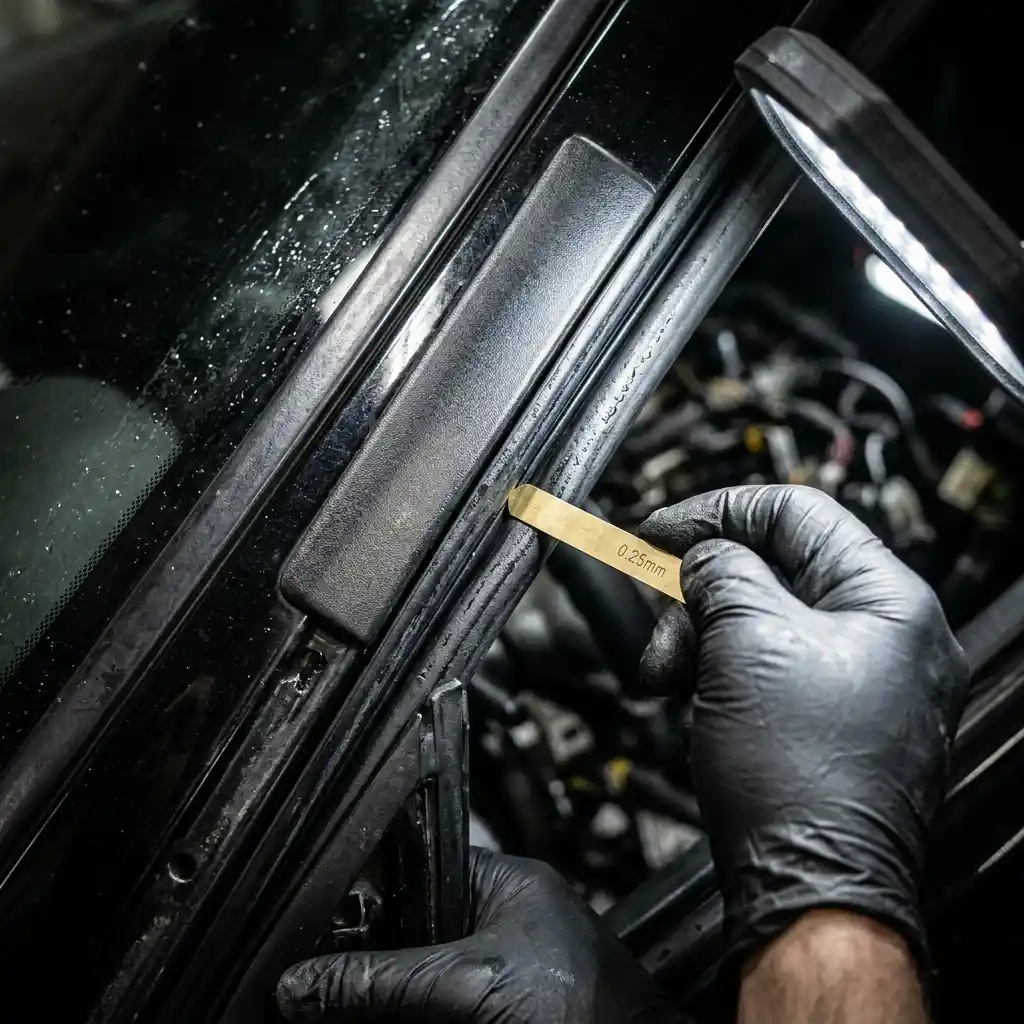
Check whether the door is secure
A cosmetic mark and a door that may open, detach or admit heavy water are not the same level of concern. Look at how the door holds, not only how the outer skin appears.
Do not keep slamming a door that will not latch. Repeated force can damage the striker, latch, handle linkage, glass or surrounding paint without correcting the original alignment. If the door can open unexpectedly, sits heavily against the sill, has a loose hinge, exposes sharp metal or cannot retain the occupant securely, stop using that seating position and ask whether recovery is appropriate.
Preserve the useful evidence
Before moving trim or applying tape, photograph the complete side of the car, the front and rear gaps around the affected door, the hinge edge, latch edge and visible impact point. Record whether the warning display shows the door as open, whether central locking responds and whether the symptom changes on a slope. These details help separate alignment from a latch-state or electrical fault.
Protect the interior
For water entry, note where moisture first appears instead of assuming the nearest seal has failed. Avoid blocking drain openings or sealing the door with household adhesive. If broken glass or an open door leaves the cabin exposed, protect it from rain and dust without forcing damaged hardware. A controlled workshop leak check is more useful when the original water path has not been hidden.
Find the affected door system
The visible panel is only one part of the job. A useful inspection separates the door structure, operating hardware, electrical equipment and sealing or finish layer before a quotation is prepared.
Structure and alignment
Door shell, hinges, hinge mounting, check strap, striker, panel gaps and contact with the sill or surrounding body are checked. A dropped door can come from hinge wear, loosened mounting, impact distortion or an incorrectly positioned striker.
Latch and handles
The outer handle, inner release, cables or linkages, latch, striker and lock actuator have different jobs. A door that opens from one side only needs a different test from a door that will not stay latched.
Glass and electronics
Wiring passes through the door into switches, window equipment, speakers, lighting, mirror functions and the door control module. A shared power, ground, connector or communication problem can affect more than one feature.
Seals and finish
Weatherstrip compression, water barrier, drain paths, trim, paint and outer-panel condition determine whether the repair also needs sealing, refinishing or bodywork. Replacing a seal cannot correct a badly aligned door.
Match the method to the damage
Door replacement is not the automatic answer to every dent, lock fault or sealing complaint. The decision depends on the damaged layer, the material, access, mounting condition and whether a dependable repair can restore fit and operation.
Adjustment may be enough
A sound door with uneven gaps, light striker contact or wind noise may need measured hinge or striker adjustment and a sealing check. The cause is confirmed before moving components because adjustment cannot straighten damaged mounting points.
Component repair fits isolated faults
A latch, handle, cable, check strap, seal, connector or actuator can sometimes be repaired or replaced without changing the door shell. The adjacent hardware is checked so a worn hinge or water leak does not damage the new component.
Panel work preserves a repairable door
Accessible dents, creases and local surface damage may suit paintless dent assessment or conventional body repair according to paint condition and metal stretch. Broken paint, sharp folds and previous filler change the method.
Replacement suits extensive damage
A torn, severely folded or badly distorted shell may be more dependable to replace. The replacement still needs exact specification, transfer of compatible equipment, alignment, corrosion protection, refinishing and complete function checks.
Read symptoms with supporting evidence
The same visible complaint can begin in different parts of the assembly. This matrix shows the sensible starting route and what still needs confirmation.
Separate hardware from control faults
A mechanical door problem and an electrical convenience fault can feel similar from the driver’s seat. Testing the response of each part prevents a complete assembly from being blamed for an isolated cause.
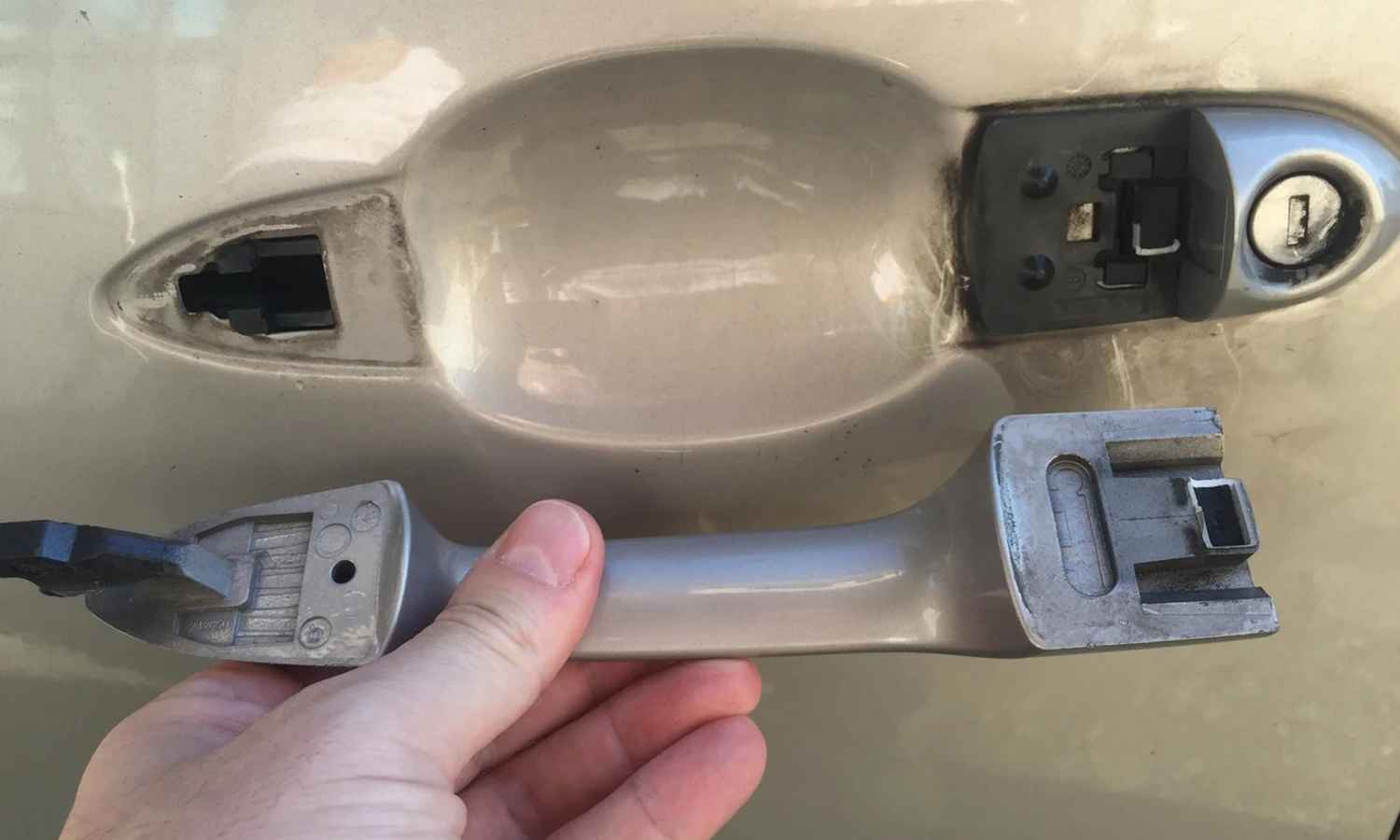
Handle and latch
A latch must release, rotate, hold and report its position correctly. We check handle action, linkage, latch condition, striker contact and alignment. A slamming door is not automatically a failed latch; a low door or displaced striker can create the same complaint.

Lock and actuator
If central locking fails on one door, the actuator is one possibility. Switch input, wiring through the hinge area, connectors, power, ground, module communication and mechanical resistance can also affect operation. Scan evidence supports the physical checks.
From symptom to closing check
Record the concern
We identify the affected door, impact or water history, intermittent behavior, locking response and conditions that make the symptom appear.
Inspect fit and movement
Panel gaps, hinge play, striker contact, closing effort, check strap, handle return, seals and visible damage are assessed before adjustment.
Test the affected system
Trim removal, circuit checks, module scanning, controlled water testing or body inspection is used only where the symptom requires it.
Agree on the scope
The finding, parts route, paint or bodywork, related damage and completion checks are explained before additional work proceeds.
Verify the repair
Closing effort, alignment, locking, warning status, window operation, sealing, trim fit and surface finish are rechecked as applicable.
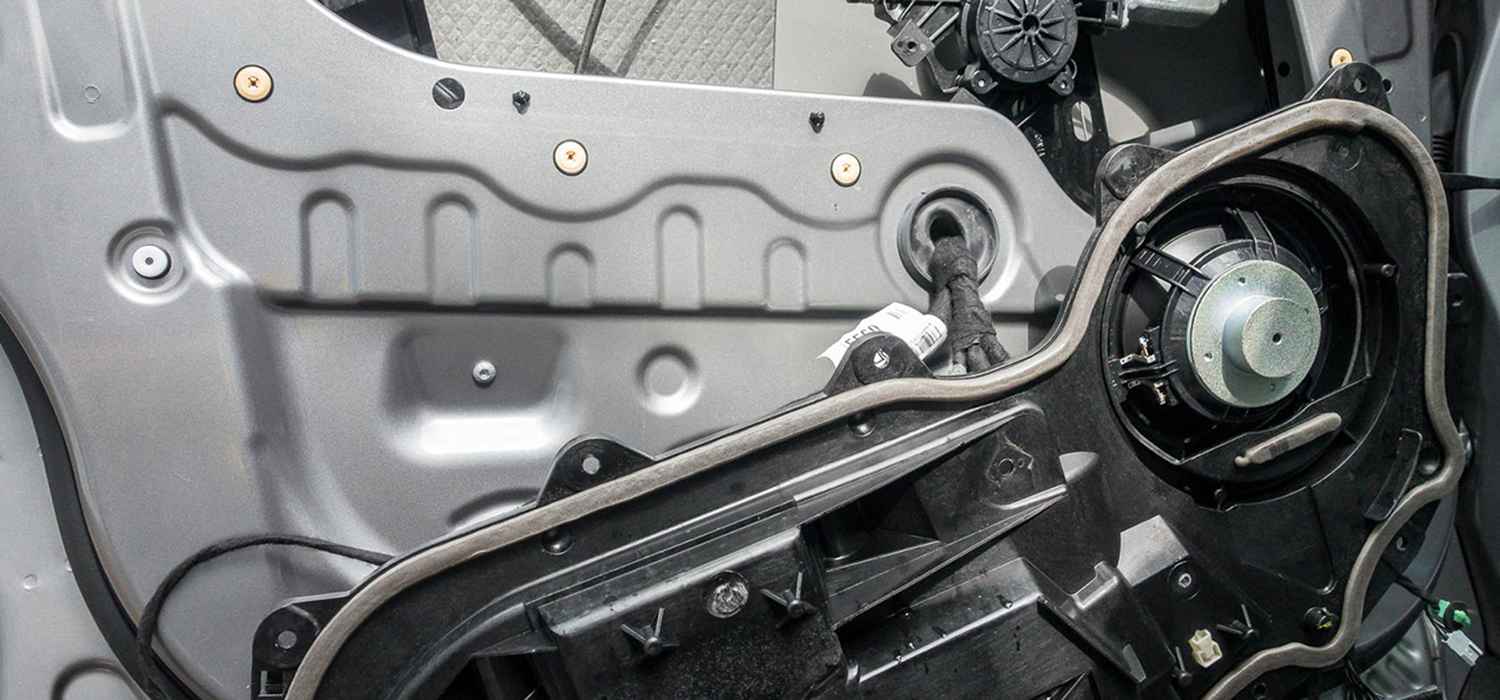
What changes door repair cost
An accurate Audi door repair price cannot come from the model name or one photograph alone. Access, material, installed equipment, paintwork and hidden impact damage can change both parts and labour.
For a useful first estimate
Send the VIN when available, model year, affected side, wide and close photos, and a video showing the opening, closing or locking symptom.
Match the exact door equipment
Audi A, Q, S, RS, TT and e-tron families can use different shells, trim, glass, wiring and control equipment across generations. The badge alone does not identify a replacement door.
We use the VIN, model year, body style, production information, affected side and installed features to check compatibility. A used door that looks identical can arrive with different wiring, glass, trim, handle equipment or control modules. Those differences must be understood before purchase or installation.
For vehicle-wide service information, use the Audi model repair hub. Send the VIN when you need a model-specific part match.
A replacement door still needs careful setup
Installing another door shell is only the beginning. The finished assembly must match the car, sit correctly in the opening and retain the equipment that belongs to that Audi.
A replacement can arrive as a bare shell, a partly assembled door or a used complete unit. Each route changes what must be transferred, inspected, refinished and tested. That is why two quotations for “door replacement” may describe very different amounts of work.
Compare before installation
The replacement is checked against the VIN, production period, body style, side, hinge and latch positions, window frame, trim mountings and installed electrical equipment. Visible similarity is not enough when connectors, control modules or reinforcement differ.
Transfer compatible equipment
Glass, regulator, lock, handles, wiring, speaker, seals, trim and mirror-related connections may need to move from the original assembly. Clips, moisture barriers and damaged fasteners are assessed during transfer so the finished door does not gain a rattle or leak.
Align before finishing
Hinge position, gaps, flushness and striker contact are set against the surrounding body. Paint preparation and blending decisions follow the actual fitted condition because edge position and adjacent-panel finish affect the final appearance.
Test the complete assembly
The final check covers opening effort, latch engagement, central locking, door-open recognition, window travel, mirror functions, lighting, speakers, sealing, trim fit and warning status where those features are installed.
Check the cause, not only the symptom
A door can look improved while the original alignment, sealing or electrical cause remains. The handover check should prove that the repaired layers work together.
Closing and alignment
Consistent gaps, controlled hinge movement and clean striker engagement matter more than making the door close through extra force. Contact marks around the sill, pillar and seals are checked after adjustment.
Water and wind control
Weatherstrip compression, glass position, internal water barrier and drain routes must support one another. A seal can be new and still leak or create wind noise if the door or glass remains out of position.
Electrical function
Lock status, warning display, window movement, mirror functions, lighting and speakers are checked as fitted. Intermittent faults may require harness movement and connector checks rather than a single stationary test.
Use the page closest to the fault
This page covers the door assembly, alignment, sealing and the repair-or-replacement decision. These published services explain narrower systems in greater depth.
Paintless dent repairAssessment for suitable shallow dents with intact paint.
Interior door handlesBroken, loose or unresponsive inner releases and pull handles.
Power window repairSwitches, regulators, motors, wiring and glass travel.
Side mirror repairGlass, housings, folding, heating and mirror electronics.
Audi inspection serviceBroader condition inspection when damage extends beyond one door.
Audi door repair FAQs
The correct repair still depends on inspection, but these answers clarify the main decisions before booking.
Can a damaged Audi door be repaired instead of replaced?
Often, yes. Adjustment, isolated component replacement, paintless dent work or conventional panel repair may preserve the existing door when its shell and mounting remain dependable. Replacement becomes more likely when the shell is torn, severely folded, extensively stretched or damaged around critical mounting areas. We inspect the actual damage before recommending either route.
What causes an Audi door to drop or become misaligned?
Possible causes include hinge wear, loose or displaced mounting, a worn check strap, impact damage, previous body repair or striker adjustment that masks a larger alignment issue. The amount and direction of movement, hinge play, panel gaps and contact marks help separate these possibilities.
Why does my Audi door close but not lock?
A lock actuator is one possible cause, but a handle or linkage that does not return, latch-state problem, wiring fault, connector damage, door-module issue or low system voltage can also interfere with locking. We compare mechanical operation with electrical commands and scan information where appropriate.
Can a leaking seal cause water inside the cabin?
Yes, but the outer weatherstrip is not the only possible route. Water may enter through a poorly aligned door, glass seal, internal water barrier, speaker seal, damaged trim fastener area or blocked drain path. A controlled leak check helps identify the route before a seal is ordered.
Can you match the paint after door repair?
Paint matching considers the vehicle’s paint code, current finish, previous repairs, panel position and how metallic or pearl particles appear under different light. The refinishing and blending scope is chosen after the repair area and surrounding finish are inspected rather than promised from a photograph alone.
What should I send before requesting an estimate?
Send the Audi model, model year, VIN when available, front or rear door, left or right side, several clear photographs and a short video of the opening, closing, locking or noise concern. Mention any accident, water entry, previous repair and whether the window, mirror or central locking is also affected.
Show us how the door behaves
Send the model, year, affected door, photos and a short video. The first review can identify the right inspection route, while the final repair scope follows hands-on checks of alignment, hardware, wiring, seals and damage.
AMF Auto Services, Warehouse 39, Al Quoz 4, Dubai. Monday to Saturday, 9 AM to 7 PM.