
Audi Paintless Dent Repair in Dubai
Paintless dent repair, also called PDR, can reshape selected dents without filler or repainting when the factory paint is intact and technicians can safely access the panel. Suitability depends on dent depth, sharpness, location, metal stretch, panel material and previous repair history, so the first step is a physical inspection rather than a promise from a photo alone.
When PDR is a sensible Audi dent repair option
PDR is commonly considered for shallow parking dents, door dings and some broad impact marks where the paint has not cracked and the panel has not been sharply creased. It can preserve the original paint finish and reduce the amount of material introduced during repair.
A technician should inspect reflections across the panel, paint condition, edge distortion and access behind the dent. Aluminum and high-strength steel panels behave differently, and trim, reinforcement, wiring or sound insulation can restrict tool access. If paint is split, the metal is badly stretched, an edge is crushed or a previous filler repair is present, conventional body repair may be the safer route.
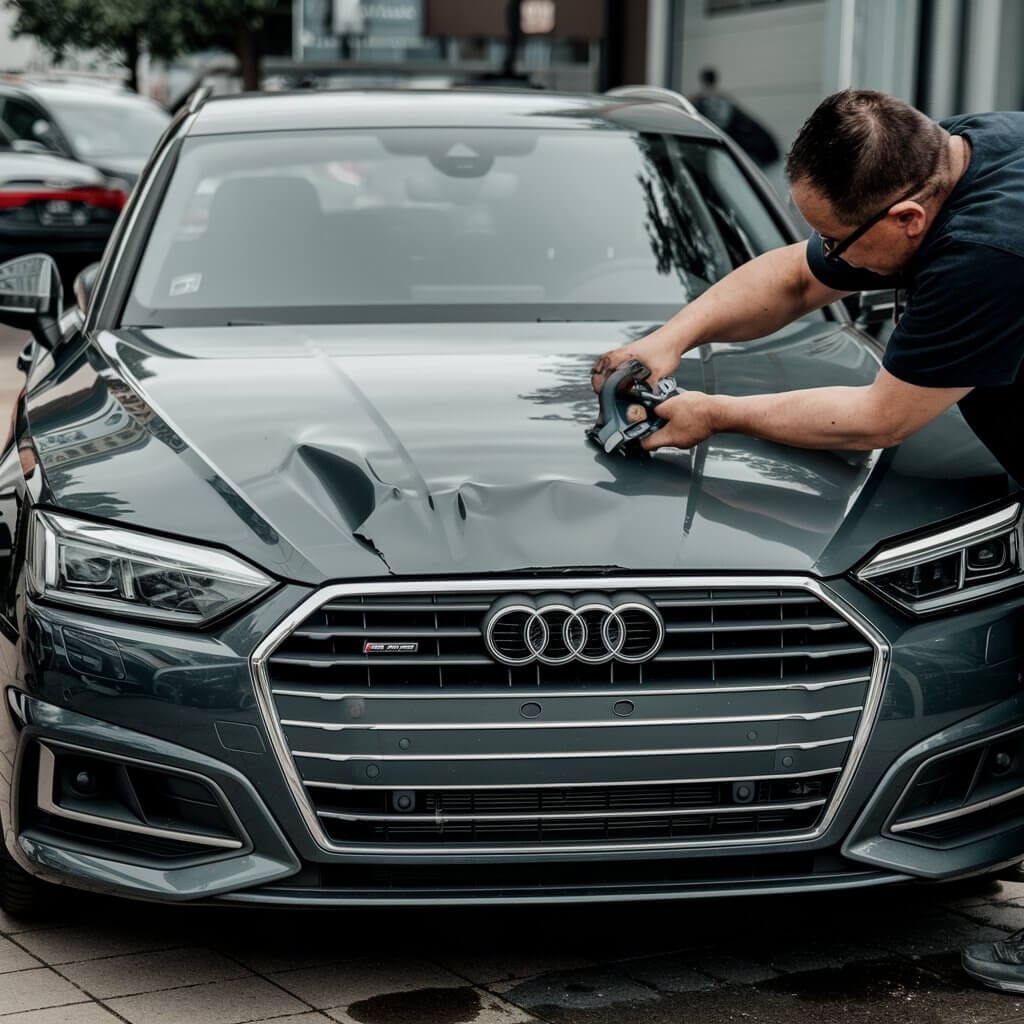
Six checks before approving paintless dent removal
Paint surface
Look for cracks, chips, lifting clear coat, previous blending and signs of filler. PDR cannot restore damaged paint.
Dent geometry
Measure depth, diameter, sharpness, crown pressure and stretched metal. A small but sharp dent can be harder than a broad shallow one.
Panel position
Edges, body lines, double skins and reinforced zones may limit movement or access and change the repair approach.
Panel material
Confirm whether the panel is steel, aluminum or a non-metallic part. Heat and tool technique must suit the material and finish.
Behind-panel access
Check trim, glass, airbags, wiring, braces and adhesive pads before removal. Disassembly should be planned, not improvised.
Related damage
Inspect gaps, hinges, lamps, sensors and adjacent panels. A dent can be only one visible part of impact damage.
How an Audi PDR job should be handled
1. Document the starting condition
Photograph the dent in controlled line lighting, record existing scratches and confirm the agreed panel. This gives the owner and technician the same repair target.
2. Protect adjacent systems
Identify cameras, radar units, antennas, airbag components, harnesses and fragile trim before gaining access. Disconnect or remove parts only where the approved procedure requires it.
3. Reshape in controlled stages
Use behind-panel tools or glue-pull methods as appropriate, releasing crowns and moving the low area gradually. Excess force or heat can damage paint or distort the panel.
4. Inspect from several angles
Review the reflection under multiple light positions, compare panel contour and confirm that no new high spots, paint damage or trim problems were introduced.
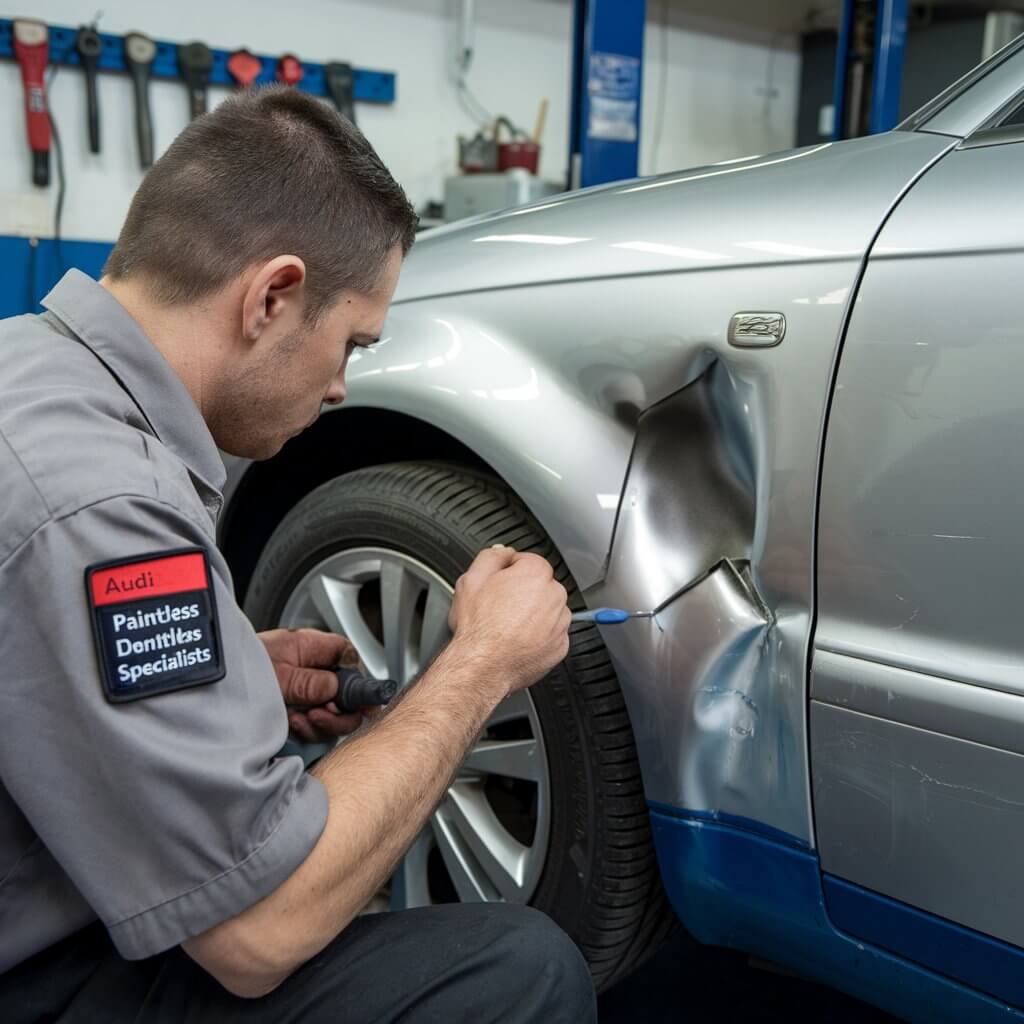
Choose the method that fits the damage
PDR is attractive when it can return the contour without compromising the finish. Conventional repair is more appropriate when paint has failed, corrosion is present, metal is torn or severely stretched, a structural area is involved, or the final appearance cannot be achieved through controlled reshaping.
For collision damage, begin with the Audi body shop page. Surface marks may need Audi scratch repair, while cracked or displaced bumper damage belongs on the Audi bumper repair page. These routes can be combined when the damage spans more than one repair method.
Any estimate should state the panel, access work, expected finish, exclusions and whether parts removal or calibration is included. Photo review can help schedule an inspection, but the final scope should follow hands-on assessment.
When a dent needs more than cosmetic attention
Do not treat damage as cosmetic if a door, hood or tailgate does not latch correctly, a lamp is loose, glass is stressed, sharp metal is exposed, tire clearance has changed, or a warning appeared after impact. Limit driving and arrange inspection where the panel could affect visibility, occupant protection or road safety.
For insured repairs, confirm authorization, excess, approved repair route and documentation with the insurer before work begins. Coverage varies by policy and incident. The workshop can document the damage and proposed method, but the insurer decides coverage.
Audi paintless dent repair FAQs
Can every Audi dent be repaired with PDR?
No. Paint condition, dent shape, panel material, access and previous repair history determine suitability.
Does PDR preserve factory paint?
That is the aim when the original coating is intact. If the paint is already cracked or lifting, refinishing may still be necessary.
Can PDR be used on aluminum Audi panels?
Sometimes. Aluminum requires suitable tools, controlled technique and an experienced assessment because it responds differently from steel.
Can you quote from photos?
Photos can support an initial range and booking plan, but the final method and price depend on physical access, paint condition and dent geometry.
Will removing trim require calibration?
Not always. It depends on which parts and sensors are disturbed. Any applicable inspection or calibration requirement should be confirmed before handover.
Arrange an Audi dent assessment in Dubai
Send the model, year, affected panel, cause of damage and photos taken straight on and from both sides under reflected light. Mention cracked paint, warning messages or parts that no longer align.