
Audi power window repair in Dubai
A window that stops, drops, moves slowly or reverses does not automatically need a motor. We trace the command from the switch through the door electronics and wiring, then inspect the lifting mechanism, channels and glass position before deciding what should be repaired or replaced.
Direct answer If the motor can be heard but the glass does not travel correctly, the regulator, cable, carrier or glass attachment may be damaged. If there is no motor response, testing must begin with the switches, power supply, wiring and door electronics before the motor is condemned.
One stopped window can follow seven routes
The first symptom narrows the inspection but does not prove the failed part. Slide the route on smaller screens to compare the most useful first checks.
One switch is dead
Compare the local door switch with the driver master switch. One working command can separate the switch route from the motor and regulator route.
No response anywhere
Check relevant supply, ground, wiring and control communication. A silent motor is not proof that the motor itself has failed.
Motor runs
Noise without glass travel can point toward a cable, gear, carrier or regulator problem. Stop repeated operation if grinding continues.
Glass moves slowly
Channel resistance, alignment, contamination, a weak drive or mechanical wear can increase effort. Compare upward and downward movement.
Glass drops
A failed carrier, cable or regulator connection can let the glass fall inside the door. Keep the opening protected and avoid slamming the door.
Window reverses
Anti-pinch intervention may follow excessive resistance, incorrect position learning or poor glass alignment near the upper seal.
Several windows fail
A shared supply, driver control, network or vehicle-state issue deserves attention before several independent motors are quoted.
Separate the command from the lift
A power window combines electrical control with a mechanical lifting system. Diagnosis becomes clearer when those two paths are tested separately and then verified together.
Switch and electrical evidence
We confirm whether the local and master switches produce a command, whether the relevant door module responds, and whether usable power and ground reach the drive under load. Wiring through a moving door area, connectors, moisture and prior trim work can all change the route.
- Local switch and driver master-switch comparison
- Power, ground and connector condition
- Door wiring and module communication
- Fault memory interpreted with the actual symptom
For worn, sticky or unresponsive interior controls, see Audi button and control repair.
Motor and regulator evidence
Motor sound, current demand, cable condition, regulator travel and the way the glass sits in its carriers help establish the mechanical scope. Channels, seals and alignment also matter because resistance can slow the glass or trigger anti-pinch reversal.
- Motor operation and drive response
- Regulator, cable, gear and carrier condition
- Glass attachment, angle and channel resistance
- Upper seal contact and complete travel
Noise alone cannot reliably distinguish a motor from the regulator mechanism. Door-panel access may be needed to confirm the finding.

The failed layer sets the correct repair
Replacing the largest assembly is not automatically the most complete repair. The correct scope resolves the proven fault, connected damage and any setup needed for normal window travel.
A damaged switch or connector can sometimes be corrected without opening the lifting mechanism. A failed regulator may be supplied separately from the motor on one application and combined with it on another. A glass carrier, guide or seal problem can require a mechanical correction even when the electrical drive works.
Before parts are approved, we identify the Audi model, model year, door position and installed system. Part number, connector arrangement and physical fit must match. If earlier work has changed a door, regulator or module, the installed condition is compared with the vehicle specification rather than assumed from the model name.
- Repair wiring or a connector when the defect is confirmed there
- Replace a faulty switch when command comparison supports it
- Replace the motor when its supply is correct but drive operation fails
- Replace the regulator when cables, carriers or travel hardware are damaged
- Correct glass position or channel resistance when movement is obstructed
- Initialize and verify the window when the application requires learned positions
Audi power window repair follows the evidence
The exact test route changes with the complaint, but the handover should connect the original symptom to a confirmed result.
Confirm
Identify the affected door, switch positions, direction of travel, sounds, weather conditions and any recent battery or door work.
Compare
Test local and master commands, compare with another door where useful, and note whether the motor responds in either direction.
Measure
Check the relevant electrical supply and mechanical movement. Inspect wiring, connectors, regulator travel and glass position as access allows.
Approve
Explain the confirmed failure, included parts, connected work, calibration or initialization needs and any remaining uncertainty.
Repair
Correct the proven electrical or mechanical fault without disturbing more of the door than the approved access requires.
Verify
Test full up and down travel from the required controls, one-touch operation, sealing, alignment and anti-pinch behavior where fitted.
A diagnosis defines the quotation
A useful quotation cannot be based only on “window not working.” The affected door, installed mechanism and proven fault determine whether the job involves control diagnosis, regulator work, a motor, glass alignment or several connected items.
Why the previous fixed ranges were removed They were not tied to a confirmed vehicle, door, part configuration or diagnosis. Ask for the finding, included parts, labour boundary and post-repair checks before comparing quotations. The Audi parts guide explains how genuine, OEM-supplier, aftermarket and used-part descriptions should be assessed.
Protect the opening and the evidence
A window stuck open is a security and weather-exposure problem. A dropped or tilted pane can also break if the door is slammed or the switch is repeatedly operated.
Photograph the glass position and record what happened immediately before the failure. Note whether the motor can be heard, whether another switch operates the window and whether the glass changed angle. Do not force the pane upward, pull on exposed cable, insert tools beside the glass or continue cycling a grinding mechanism.
If the opening cannot be secured, keep the car sheltered and call for guidance. Temporary covering should stay outside the glass path and should not place adhesive on delicate trim or painted surfaces. Tell the workshop immediately if the glass is loose inside the door, sharp edges are present or water has entered electrical controls.
Stop repeated operation
Grinding, clicking or a visibly tilted pane can worsen cable, carrier and glass damage with every switch command.
Keep the door gentle
Avoid slamming a door when the glass has dropped or separated from its carrier.
Preserve the symptom
Record which switch works, the direction that fails and any sound before the battery or door trim is disturbed.
Protect from water
Shelter an open window where possible and report water entry around switches or the door module area.
Separate window faults from door faults
Audi power window repair should stay focused on glass movement, switch commands, electrical supply, the motor, regulator, carriers and the way the pane travels through its channels. Damage elsewhere in the door can produce a similar complaint, but it needs a different repair route.
If the complete door has dropped, the panel gap has changed, the latch no longer meets the striker, or wind and water enter around a distorted frame, the starting point is an Audi door repair inspection. Correcting the regulator alone will not resolve a hinge, shell, latch or impact-related alignment fault. The glass position must be judged against a structurally correct door.
When several windows, mirrors, locks or door controls fail together, the useful question is whether they share a supply, ground, connector, wiring path or control module. An Audi inspection and diagnostic check can define that shared boundary before separate components are ordered. Recent battery disconnection, water entry or earlier door work should be reported because it can change the first test.
Parts also change across model years, body styles and installed equipment. Use the Audi model repair guide to identify the correct vehicle family, then confirm the VIN, affected door and installed mechanism. A visual match is not enough when connectors, carriers, control logic or learned positions differ.
- Window moves badly while the door opens and latches normally: test the window system first
- Glass angle changes with a dropped or damaged door: inspect structure and alignment together
- Several door functions fail at once: trace the shared electrical path before replacing parts
- One-touch operation is lost after battery or component work: check setup only after movement is mechanically free
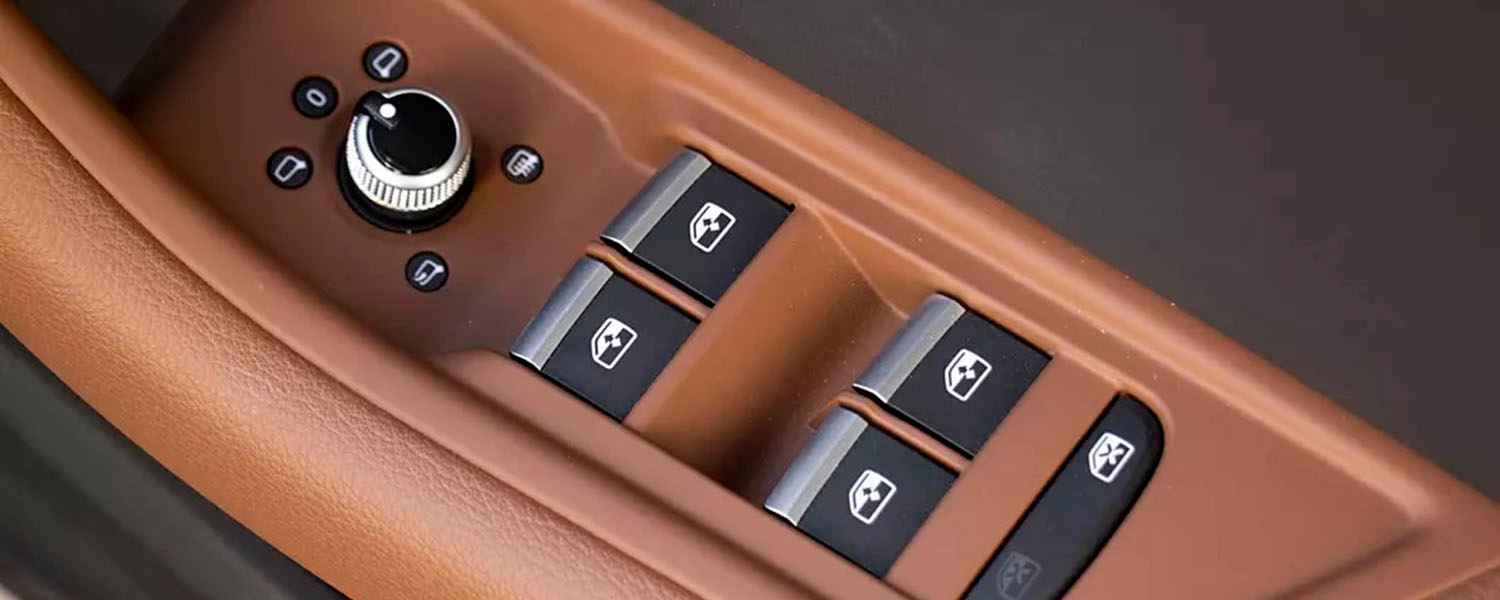
Door design changes the repair route
Audi A, Q, TT and e-tron vehicles do not all use one regulator, motor or glass setup. The model name begins identification; the VIN, body style, model year and affected door complete it.
Framed and frameless windows can have different alignment and learned-position needs. A coupe door may use longer glass and a different movement path from a rear door on a saloon or SUV. Equipment and production changes can also alter connectors, control logic and whether service components are supplied separately. We therefore match the installed mechanism before ordering and verify the window as a complete system after the repair.
A model windows
Door length, framed or frameless glass and body style can change the regulator, carrier and learned-position requirements.
Q model windows
Larger doors, different glass travel and production changes make the affected side, year and exact installed mechanism important.
TT and e-tron
Frameless coupe glass and electric-model door electronics need vehicle-specific identification, setup and full-travel verification.
Audi power window repair questions
Why did my Audi window suddenly stop working?
The cause can be electrical or mechanical. A switch, fuse or supply problem, wiring fault, door-control issue, motor failure, regulator damage or displaced glass can stop movement. Comparing switches and checking whether the motor responds helps choose the next test.
How can I tell whether the motor or regulator has failed?
A motor sound without normal glass travel can suggest a regulator, cable, carrier or attachment problem, while silence can lead toward the command and electrical route. Neither clue is conclusive on its own, so supply and mechanical operation should be tested before parts are approved.
Why does the motor run while the glass does not move?
The drive may no longer be transferring movement to the glass. Possible causes include a damaged cable, gear, carrier, regulator or glass connection. Repeated operation can worsen the damage, particularly if the pane has tilted or dropped.
Why does the window reverse near the top?
The anti-pinch system may detect excessive resistance. Glass alignment, dirty or resistant channels, seal contact, an incorrect learned position or a mechanical problem can contribute. The movement path and initialization state should be checked.
Can a power window fault come from the switch or wiring?
Yes. The local switch, driver master switch, connectors, wiring through the door area, power supply, ground or door electronics can interrupt the command. This is why motor replacement should not be based only on a non-moving window.
Does the window need initialization after repair?
Some applications require learned end positions or initialization after battery disconnection, component work or a lost one-touch function. The need follows the exact vehicle and repair. Full travel and anti-pinch behavior are checked after the procedure.
Can I drive with the window stuck open?
Consider security, weather, loose glass and distraction. If the glass has dropped, tilted, become unstable or has sharp edges, avoid slamming the door or operating the switch. Call for guidance if the opening cannot be safely protected.
How is the repair cost confirmed?
The quotation follows identification of the Audi, affected door and proven fault. It should state the part configuration, labour boundary, connected damage, alignment or setup work, and the checks included after repair.
Send the door and movement details
Include the Audi model, year, affected door, which switches respond, whether the motor can be heard, and whether the glass is slow, tilted, dropped or reversing. A short video can help preserve an intermittent symptom before workshop testing.