
Bearing and tire noise usually follow road speed, not engine rpm.
Road-speed noise diagnosis in Dubai
Audi Wheel Bearing Replacement Dubai
A humming or droning noise does not automatically mean the wheel bearing has failed. Tire pattern, brake contact, a damaged wheel, CV joint, differential or hub movement can sound similar. We identify the affected corner and the installed hub design before approving parts.
Road-speed evidence firstHub and ABS checkedTorque and road-test record
Start with the eventVehicle speed Cornering load Road surface Brake input
Use the sound pattern before lifting the Audi
The most useful description is not simply “bearing noise.” Record the speed range, road surface, steering input, braking input and whether the sound changes after the vehicle warms up.
A gentle load change can alter the noise, but it cannot identify the side by itself.
Tire noise often changes sharply between smooth and coarse asphalt.
A change under braking redirects the inspection toward brakes, hub play or runout.
Noise localization
Separate bearing noise from tire and driveline noise
We compare the complaint on smooth and textured roads, through gentle left and right loading, and at the same road speed in different gears where safe. A wheel bearing usually produces a steady rotational hum or growl, but acoustic character alone is not proof.
Tire cupping, mismatched tread, wheel damage, brake shield contact, CV joints and quattro driveline components can all create speed-related sound. The inspection follows the first component that changes with a controlled input rather than the loudest guess.
If the symptom is still unclear, the broader Audi noise diagnosis guide explains how engine-speed, road-speed and body noises are separated.

Evidence at the cornerLoaded rotation Physical condition Electronic evidence
Tests used to confirm the affected hub
Listen under comparable load
Rotate and listen at the hub while comparing left and right. A chassis stethoscope can help, but sound can travel through knuckles, subframes and driveshafts.
Check play, heat and roughness
Inspect for movement, rough rotation, temperature difference and seal damage. Some noisy bearings show little free play, while movement can also come from other joints.
Inspect ABS signal integrity
Where the encoder is integrated with the bearing or hub, check wheel-speed data, sensor seating, wiring and fault status before selecting a part.
Safety threshold: avoid driving if the wheel has significant looseness, grinding, heat, ABS instability or a change in steering control. Arrange recovery if safe movement is uncertain.
Part decision
Bearing, complete hub or another repair
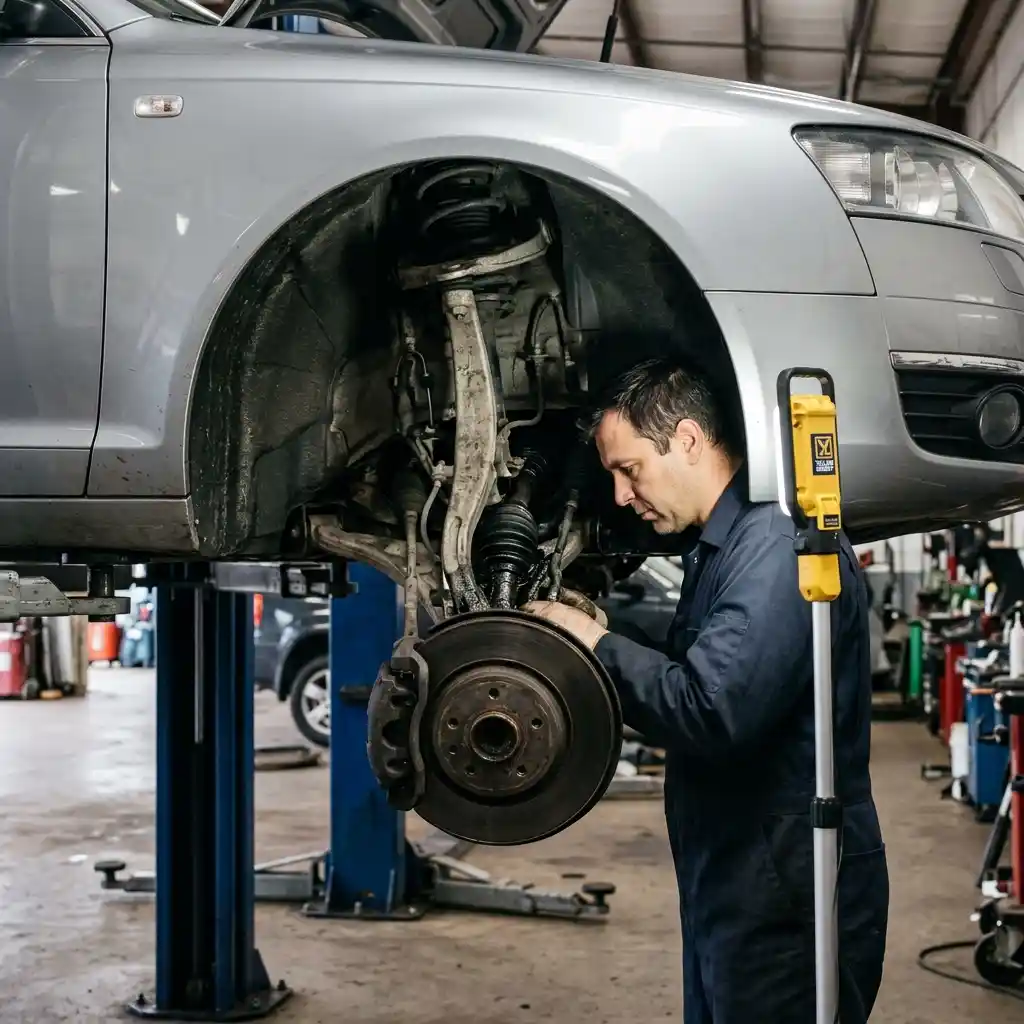
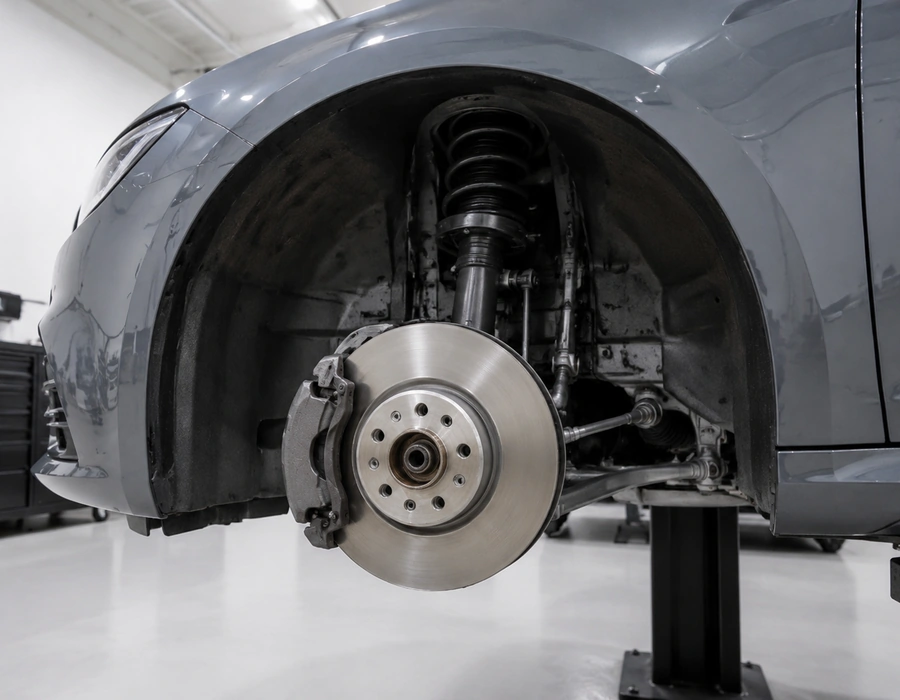
Audi applications use different front and rear arrangements. Some bearings are pressed into the knuckle, while others are supplied as a hub-and-bearing unit. The VIN, axle position, production date, brake package and part-number supersession decide the correct assembly.
We also inspect the hub face, knuckle bore, fasteners, wheel-speed hardware, brake shield and mating surfaces. Installing a new bearing onto a damaged hub or contaminated seat can recreate noise, runout or sensor problems.
Parts are compared by verified fit, sensor compatibility and installed risk. The Audi parts guide explains Genuine, OEM-supplier and aftermarket choices without assuming the cheapest item has the lowest total cost.
Approve the right scopeOne corner Axle decision No bearing fault
One side, both sides or a different component
Evidence isolates one bearing
Replacement can be limited to the confirmed corner when the opposite side is quiet, smooth and within condition limits.
Both sides have related wear
Paired replacement may be discussed when both sides show evidence, access overlaps or the vehicle history supports an axle-level decision. It is not automatic.
Tire, brake or driveline cause
If the evidence points elsewhere, the estimate follows that component instead of fitting a bearing to test a theory.
Controlled installation
Protect the new bearing during replacement
Removal and installation force must be applied through the correct race. The mounting bore and hub surface are cleaned and inspected, the encoder orientation is confirmed, and specified fasteners are renewed where required.
Axle and hub fasteners are tightened using the correct sequence and vehicle-specific torque procedure. An impact setting is not a substitute for controlled tightening. Brake components, wheel-speed wiring and the wheel are reassembled without loading or pinching the sensor harness.
Wheel alignment is not automatically sold with every bearing. It is recommended when suspension geometry has been disturbed, tire evidence demands it or measurements show a need. See the dedicated Audi wheel alignment page for that separate intent.
Repair record
Replacement and verification sequence
01
Identify the exact corner and part design
Record the symptom, VIN, axle position, installed brake and sensor arrangement, and decisive test result.
02
Inspect the surrounding hardware
Check the hub, knuckle, brakes, wheel, tire, axle, shield, wiring and mounting surfaces before new parts are approved.
03
Install without transferring damage
Use the correct support, pressing path, fasteners, encoder orientation and tightening method for the specific Audi.
04
Repeat the original test
Confirm the sound is gone, wheel-speed data is stable, braking is normal and no new vibration or warning appears.
Estimate logic
What changes wheel-bearing replacement cost
| Cost factor | Why it matters | What should be confirmed first |
|---|---|---|
| Press-in bearing or hub unit | Changes the part package, equipment and labour route. | VIN, axle and installed design. |
| Hub or knuckle damage | Corrosion, wear or an impact can expand the required scope. | Mating surfaces after controlled disassembly. |
| ABS encoder and sensor | Integrated magnetic encoders need correct part orientation and a clean signal path. | Live wheel-speed data and fault status. |
| Seized fasteners or axle hardware | Extra access and renewed hardware can alter time and parts. | Physical condition before approval. |
| Additional tire or brake fault | The original noise may have more than one contributor. | Road test and corner inspection. |
For wider budgeting context, use the Audi repair cost guide. A vehicle-specific quotation still requires inspection because the axle design and surrounding damage cannot be confirmed from the model name alone.
Direct answers
Audi wheel-bearing questions
What does a failing Audi wheel bearing sound like?
Common reports include a hum, drone or growl that rises with road speed and may change under cornering load. Tire pattern, brakes and driveline components can create a similar sound, so the noise must be localized before replacement.
Can I drive with wheel-bearing noise?
A mild stable hum still needs prompt inspection. Do not continue driving if there is wheel looseness, grinding, heat, ABS instability or a change in steering control.
Does a wheel bearing always have play when it fails?
No. A bearing can become noisy before measurable looseness appears. The decision should combine the road event, loaded listening, rotation, temperature, sensor data and physical inspection.
Should Audi wheel bearings be replaced in pairs?
Not automatically. Replace the confirmed side unless the other side also shows evidence or an axle-level decision is justified by condition and access.
Is alignment needed after wheel-bearing replacement?
It depends on the repair route and measurements. Alignment is appropriate when suspension geometry was disturbed, tire wear is abnormal or readings are outside specification.
Send the speed, surface and turn conditions
Include the Audi model, year, mileage, noise speed range, whether it changes left or right, the road surface and any ABS warning or recent tire, brake or suspension work.
Independent Audi workshop. Diagnosis and parts selection are based on the exact vehicle and measured condition.