Engine speed or road speed?
If frequency follows rpm while stationary, we examine engine, accessory, exhaust and mount routes. If it follows road speed, wheels, tyres, bearings, brakes and driveline become more relevant.

Rattle, whine, hum, click, knock or grinding sound? We classify when the noise occurs, isolate the vehicle zone and test the system that matches the evidence—so an unfamiliar sound becomes a clear diagnostic route.
A recording helps us understand the complaint; it does not replace a safe inspection.
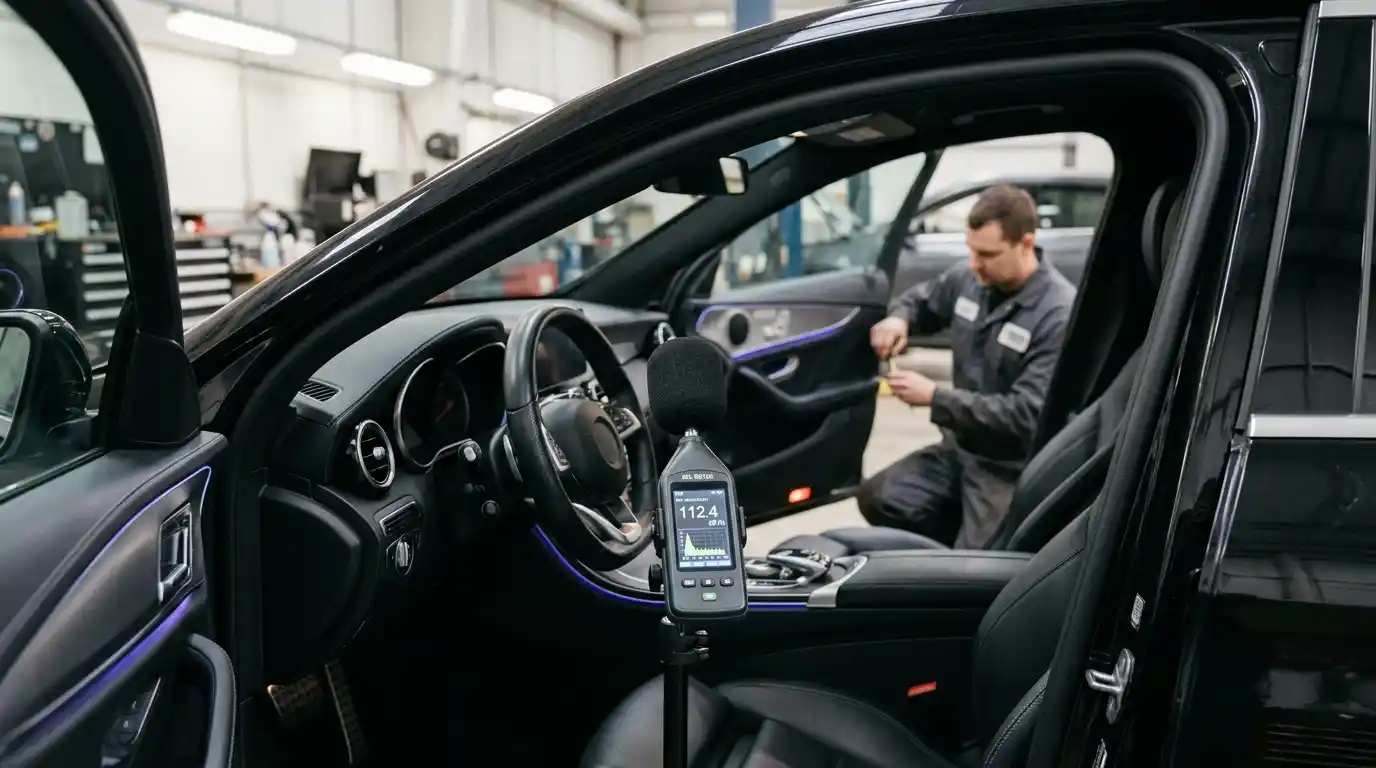
“It makes a noise” can describe dozens of unrelated faults. The important details are when it begins, what changes it, which direction it seems to come from, and whether it follows engine speed or vehicle speed. A tick that accelerates while the car is stationary belongs to a different test path from a hum that rises with road speed. A knock over a speed bump is not investigated like a click on full steering lock.
Our Audi noise diagnosis in Dubai turns the driver’s description into repeatable conditions. We compare cold and warm operation, idle and load, smooth and rough roads, acceleration and coast, straight driving and gentle cornering. We also check whether air conditioning, steering, braking or a selected gear changes the sound.
Modern Audi cabins can transmit sound through trim, subframes and body structure. A noise heard near the dashboard may originate in the engine bay, while a rear hum can travel through the floor. That is why we confirm the zone physically instead of ordering the part closest to the driver’s ear.

If frequency follows rpm while stationary, we examine engine, accessory, exhaust and mount routes. If it follows road speed, wheels, tyres, bearings, brakes and driveline become more relevant.
Load-sensitive sounds may direct testing toward intake/boost, engine mounts, gearbox, CV joints, shafts or differentials. Coast-only and overrun sounds provide different evidence.
A hum that changes in a gentle turn may indicate load sensitivity. Clicks on lock suggest another route. Braking-only grinding or scraping needs prompt brake inspection.
Temperature and surface conditions help separate tyre roar, heat shields, trim contact, suspension joints, belt-driven parts and thermal expansion noises.
Cold-start ticking, belt or pulley noise, intake leaks, boost whistle, exhaust leaks, heat shields, pumps and internal mechanical sounds. Scan data and physical inspection are used together; a fault-code scan alone cannot locate every noise.
Confirmed internal or running faults may route to Audi engine repair.
Tyre pattern noise, wheel-bearing hum, brake shield contact, worn pads, stone intrusion and CV-joint clicking can overlap. We compare road surface, steering load, brake input and wheel rotation before recommending work.
See Audi wheel bearing replacement when bearing testing confirms the source.
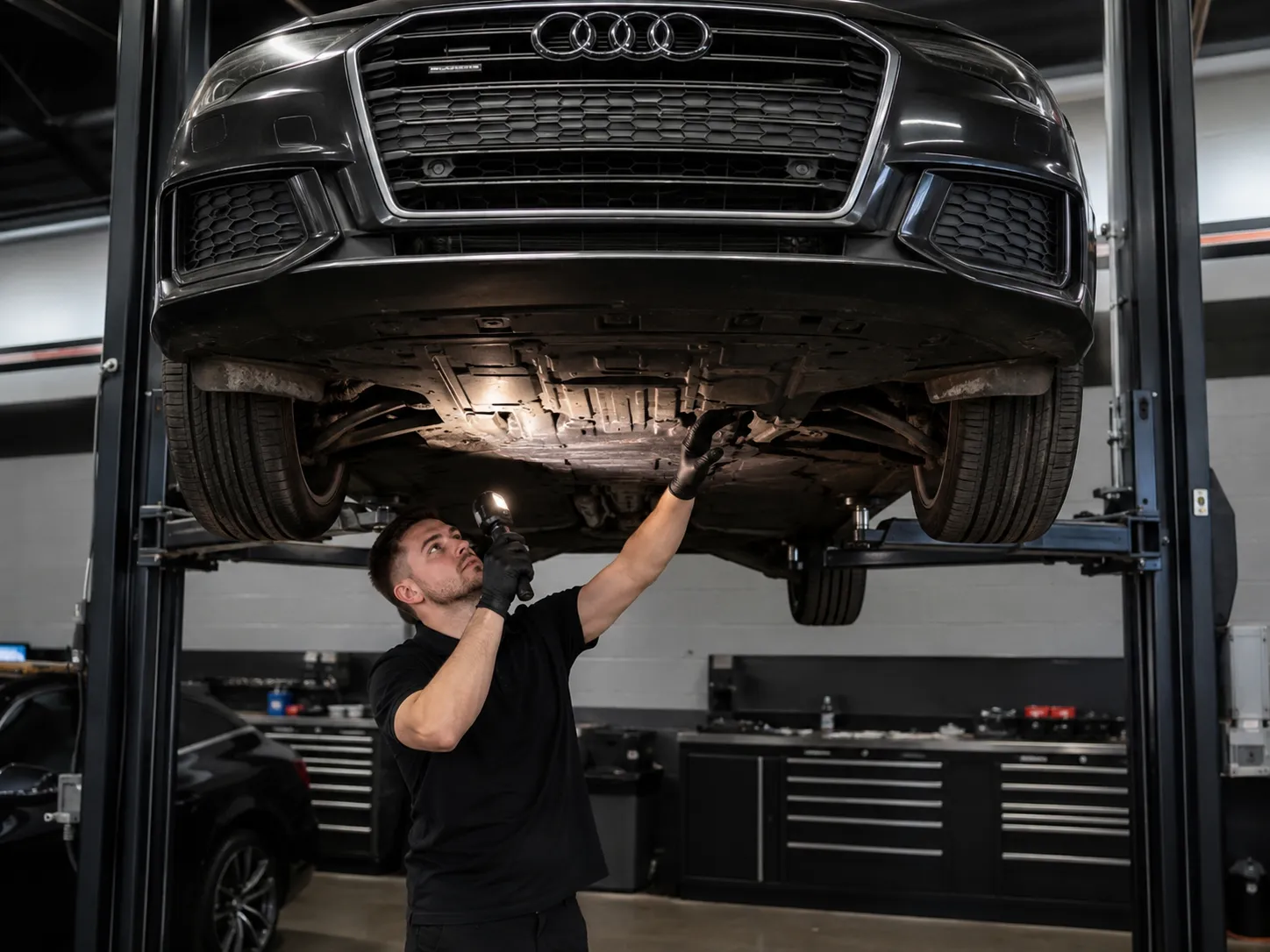
Exhaust brackets, heat shields, covers, mounts, propshaft supports and driveline components may rattle or resonate only at a certain rpm or torque. Lift inspection is combined with the conditions recorded on the road.
Knocks or creaks over bumps may involve bushes, links, ball joints, dampers, top mounts or fasteners. Play, loading and visible damage must be assessed; replacing the loudest-looking rubber part is not a diagnostic method.
Related work: Audi suspension repair.
Whine, clunk or rumble that reacts to gear, torque or coast conditions requires model-specific gearbox and driveline checks. Fluid condition, mounts, shafts and differential behaviour are considered in the correct sequence.
Dedicated routes include Audi gearbox repair and Audi differential repair.
Door seals, headliner, seat fittings, trim clips, sunroof components and loose items can generate rattles or wind noise. We first empty obvious loose items and reproduce the sound before removing trim, reducing unnecessary disassembly.
A sound label helps communicate, but it does not prove a component. We use it with timing, location and operating state.
May relate to normal injector operation, exhaust leakage, valvetrain, a rotating contact or an electrical actuator. Cold-versus-hot duration is important.
May involve shields, brackets, trim, timing-related parts or worn joints. Rpm, road surface and load separate the routes.
Can track an accessory, fluid pressure, turbo/intake flow, gearbox or differential speed. Pitch change provides evidence.
Can indicate active contact or severe wear. If it occurs with braking, steering difficulty or a warning, stop and seek advice.
Grinding with poor braking, sudden loud knocking, steering change, wheel-area scraping, oil-pressure or temperature warning, smoke, burning smell, fluid loss, or a sound after a heavy impact. Continuing can increase risk or damage.
A growing wheel hum, repeated suspension knock, new driveline clunk, persistent belt-area squeal, cold-start rattle or noise that appears under acceleration. Avoid assuming it is “normal for the mileage.”
A stable trim rattle or mild wind noise with no control, braking or warning symptoms can usually be documented first. Record the location, temperature, road and speed that reproduce it.
This ladder is general guidance, not a remote safety inspection. If the vehicle feels different as well as sounding different, choose the cautious route.

Ask a passenger to record. Do not hold a phone or try to film a wheel area while driving. Park safely for stationary sounds.
State cold or warm, speed, rpm, selected gear, road surface and whether braking or steering changes the sound.
A cabin clip plus a safe stationary clip near the suspected zone can be useful. Avoid placing a device near moving or hot parts.
We capture the sound, timing, location, history and recent repairs.
Fluids, warnings, tyres, loose items and visible safety concerns are checked.
The same temperature, speed, load or road input is repeated safely.
Relevant zones are inspected and compared using physical and electronic evidence.
After approved repair, the original condition is repeated to confirm the change.
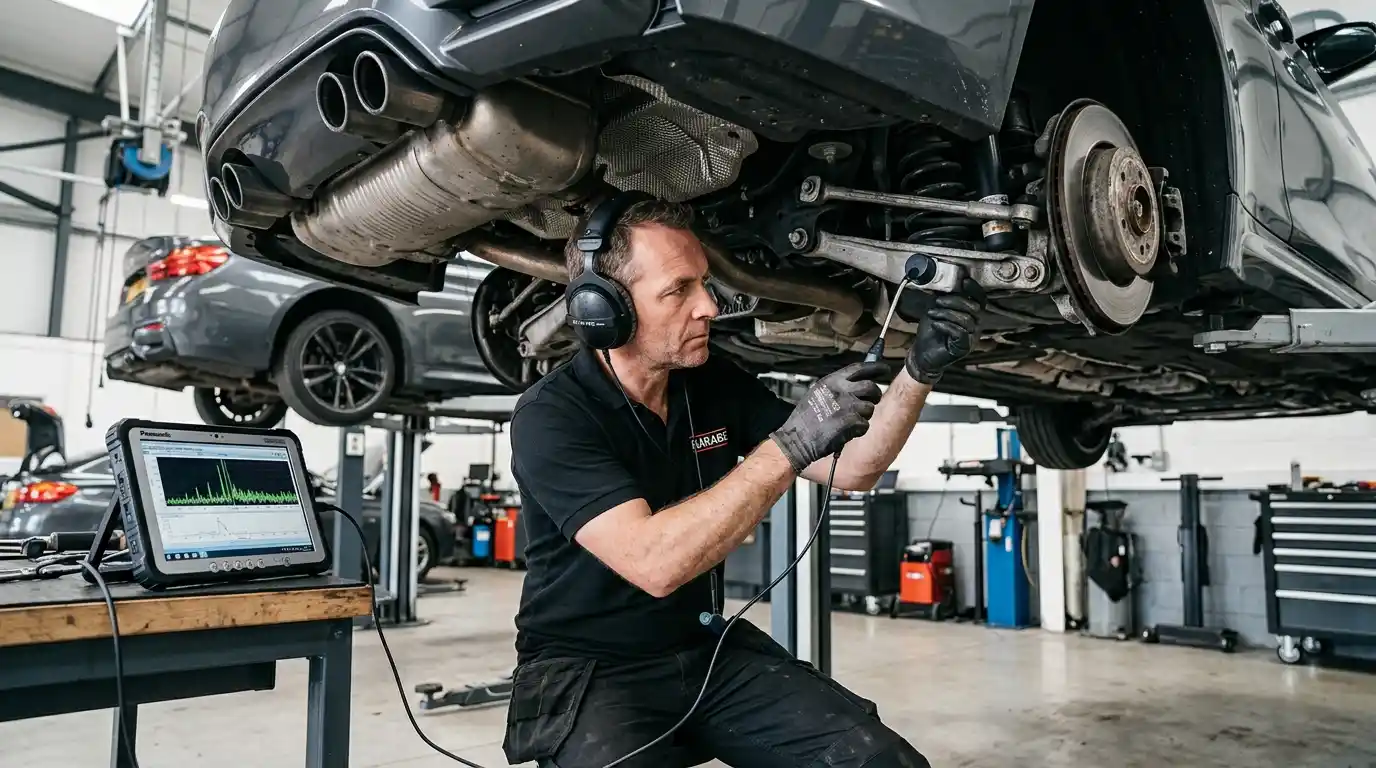
Some noises can be isolated during an initial inspection; intermittent rattles may require more reproduction time. We separate diagnostic time from the repair estimate and explain the finding that supports the recommendation. When more than one sound is present, each is listed separately so solving one does not create the impression that every cabin noise has been repaired.
The final estimate depends on the Audi model, access, part choice, related fasteners or fluids, and whether calibration or alignment follows the mechanical work. Advisory wear that is not causing the current sound should remain separate from the confirmed repair.
For a broader explanation of pricing variables, visit the Audi repair cost guide. For symptoms beyond noise, use our Audi problems hub.
Squeal, scrape or grind during braking is inspected through the Audi brake repair route, including pads, discs, calipers, shields and hub condition.
Groan, knock or assistance-related sound is routed to Audi steering repair after fluid, joints and system behaviour are checked.
Load- or gear-related whine and clunk may require gearbox, axle, shaft or differential testing rather than a general engine repair.
A recording helps describe pitch and timing, but phone microphones alter sound and do not show play, heat, pressure or load. We use it to plan the inspection, not as final proof.
Temperature changes clearances, fluid flow, exhaust sealing and accessory behaviour. The duration and exact rpm relationship help choose checks. A repeatable cold-start visit may be needed.
Possibly, but tyre wear and road surface can sound similar. We compare surface response and gentle load changes, then inspect the wheel and bearing before recommending replacement.
CV joints are one route, but tyre contact, brake shields and other rotating parts may click. Steering angle, acceleration and which side is loaded provide useful clues.
Not every squeal indicates immediate failure, but grinding, reduced braking, pulling or a warning requires urgent assessment. Inspection determines pad, disc, caliper and shield condition.
Yes. A shield or bracket may resonate in a narrow frequency range. We reproduce the rpm, inspect clearances and attachment points, and confirm the sound rather than bending parts at random.
Body movement can make trim, seats, door hardware, sunroof components or stored items contact. We remove simple variables and reproduce the same road input before disassembly.
Pitch often changes with speed, selected gear or torque, but tyre, bearing and differential sounds can overlap. Operating-condition testing is more reliable than sound description alone.
Do not assume it is safe. Stop where practical and call for advice, especially if braking, steering, temperature, oil pressure or wheel behaviour has changed.
A repeatable sound may be isolated quickly. Intermittent sounds, cold-start conditions or multiple noises can require more time. We explain the diagnostic scope before further dismantling.
Where safe and relevant, yes. The original speed, load, road input or temperature condition should be repeated to confirm that the targeted sound has changed.
Yes, but describe each sound separately with its conditions. This lets the technician confirm and quote them individually rather than treating several complaints as one fault.
Tell us whether it follows rpm or road speed, where it is strongest, and what makes it appear. We will arrange the correct diagnostic starting point in Dubai.