
Audi Q6 e-tron Repair and Service in Dubai
The Audi Q6 e-tron introduced the Premium Platform Electric architecture to Audi production SUVs. Its 800-volt battery, bank-charging capability at suitable 400-volt stations, predictive thermal management and new electronics architecture create a different diagnostic landscape from Q4 and Q8 e-tron models. Good service begins with the exact build, software level, charging conditions and a complete event record. Owners comparing platforms can review the MEB-based Q4 e-tron and the PPE-based A6 e-tron. Service decisions should still follow the VIN-led Audi maintenance schedule.
Choose recovery before any high-voltage or driving test
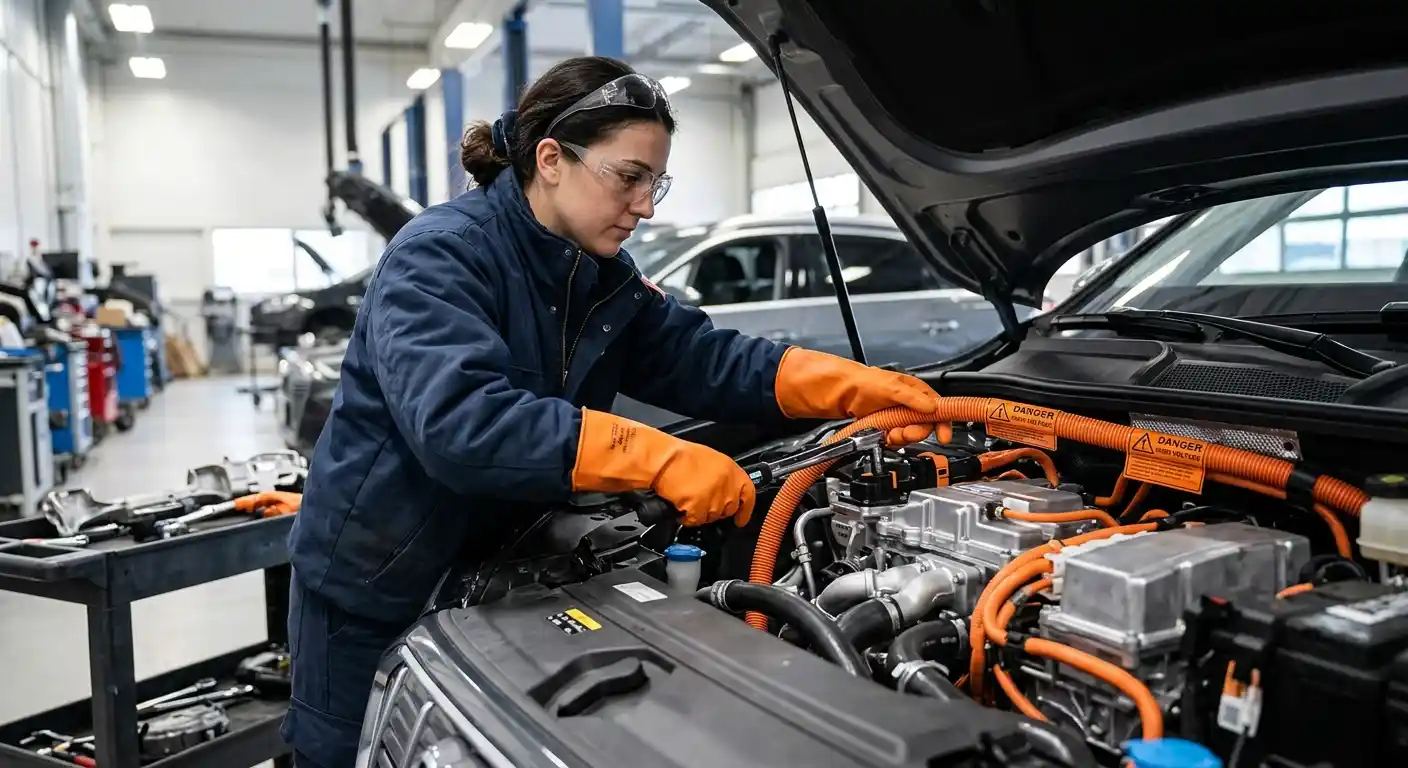
Stop, keep people clear and arrange an appropriate recovery response after battery-area impact, visible orange-cable damage, smoke, unusual heat, flooding, a serious isolation warning, or unsafe braking, steering, tire or suspension behavior. Do not touch damaged high-voltage parts or the battery enclosure.
Ask before driving when a warning returns with reduced propulsion, repeated shutdown, unreliable gear selection, thermal limitation or severe charging-connector heat. A failed charging session with otherwise stable vehicle behavior still needs diagnosis, but it does not justify opening high-voltage hardware or declaring the Q6 safe without inspection.
Understand the Q6 electrical and thermal architecture first
The Q6 e-tron battery uses a newly developed PPE layout with 12 modules and 180 prismatic cells in applicable 100 kWh versions. Technical decisions must still follow the VIN because derivative, usable capacity, motor layout and charging capability can vary.
800-volt operating system
Higher system voltage supports high charging power with lower current for a given output. Testing requires appropriately rated equipment, vehicle-specific procedures and careful isolation control.
Battery bank charging
At compatible 400-volt charging points, the battery can be electrically divided into two equal-voltage banks and charged in parallel. A problem in this process is not diagnosed like a simple inlet failure.
Predictive conditioning
Thermal management can use departure timing, route guidance and planned charging stops. Review navigation use, battery temperature and control requests when fast-charging performance is inconsistent.
Rear or quattro drive
PPE supports rear-wheel-drive and dual-motor quattro derivatives. Axle torque, inverter temperatures and traction data must be interpreted for the installed version.
Trace a Q6 charging complaint from request to energy flow
Capture the session context
Record AC or DC, charger type, station voltage where known, state of charge, battery temperature, route preconditioning, time connected and all vehicle or station messages.
Confirm low-voltage readiness
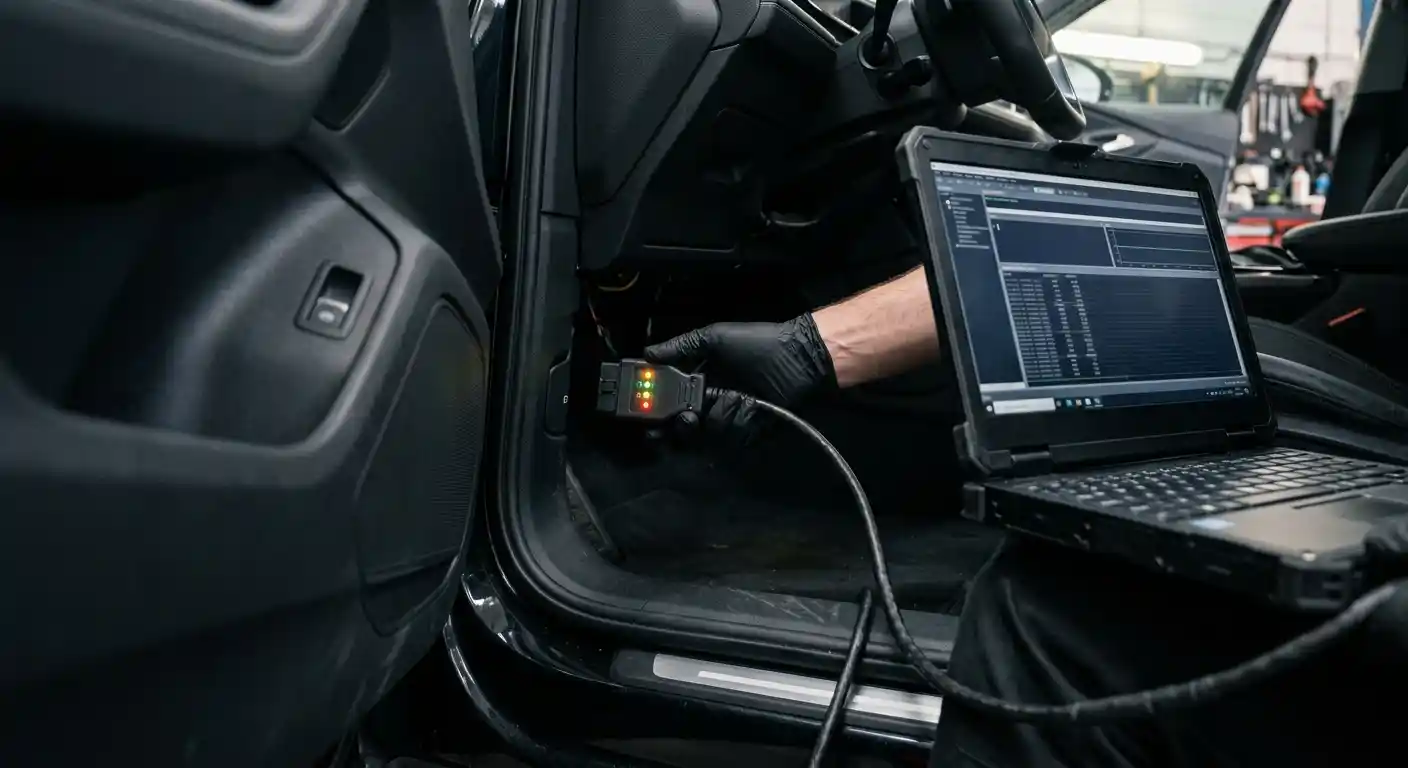
The control network must wake and communicate correctly before high-voltage contactors and charging functions can proceed. Load-test the 12-volt system and retain communication events.
Evaluate authorization and locking
Check inlet condition, plug detection, locking behavior, pilot communication, user settings and charging certificates where relevant. A billing or station authorization problem can resemble a vehicle refusal.
Compare requested and delivered power
Read battery limits, thermal restrictions, charger limits and current flow across the session. Do not judge an 800-volt vehicle from one advertised charger number.
Verify after the correction
Repeat the appropriate AC, 800-volt DC or bank-charging scenario at a meaningful state of charge. Save the final event record and temperature data.
Protect charging performance through temperature control
The Q6 depends on a close relationship between battery temperature, coolant flow, route planning and available charging output. In Dubai heat, inspect heat exchangers, coolant paths, valves, pumps and sensor plausibility when the vehicle repeatedly limits charge power or propulsion.
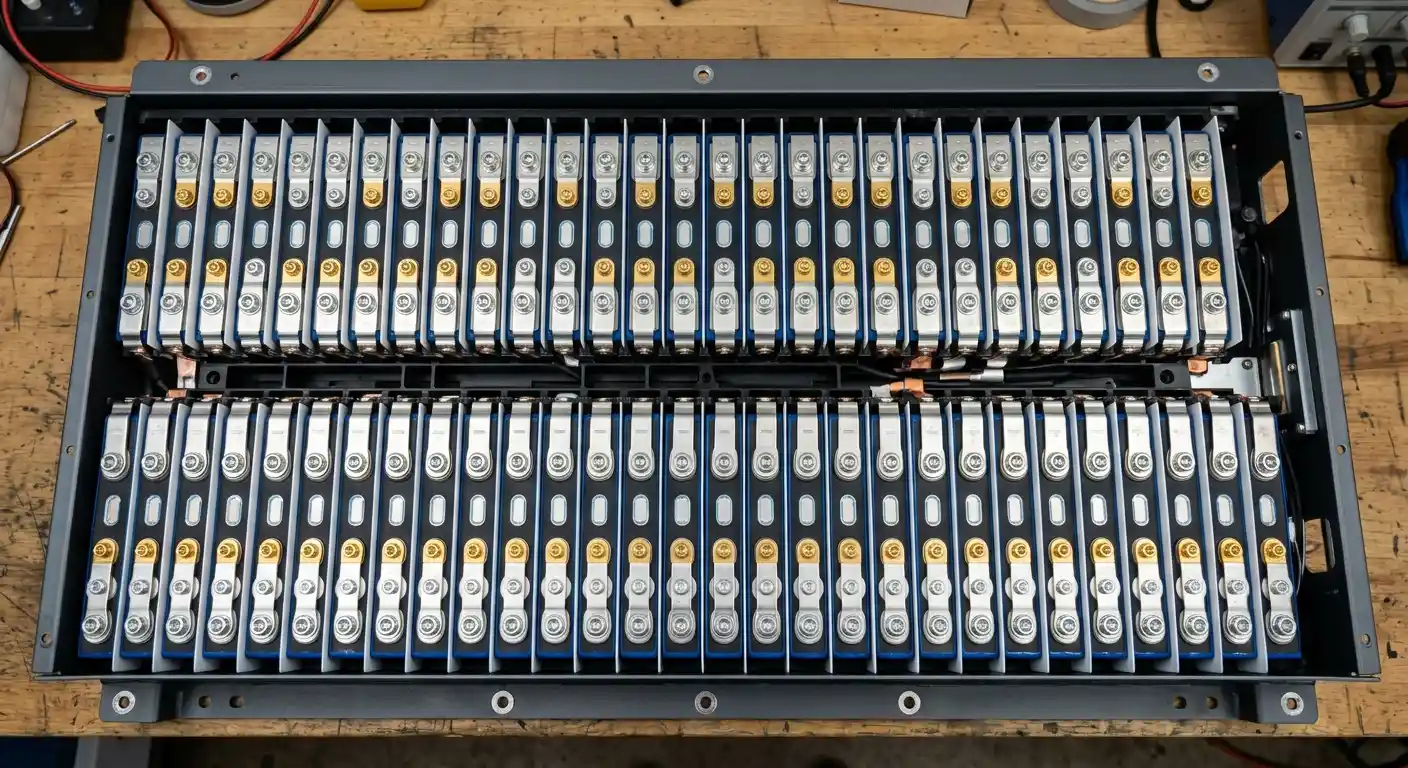
Do not describe a pack as degraded because the predicted range changes after fast driving, heavy climate use or a different route. Compare energy consumption, state-of-charge behavior, cell and module information, battery temperature and repeatable charging data. The estimate must distinguish an external thermal fault from an internal battery concern.
Match each warning family to a different evidence set
| Reported issue | Data that matters | Common diagnostic mistake to avoid |
|---|---|---|
| Electrical system malfunction | 12-volt load response, network events, isolation values, battery contactor state and recent work | Replacing the low-voltage battery without checking why controllers failed to wake correctly. |
| Charging time increases | Complete power curve, starting SOC, battery temperature, charger voltage, station sharing and preconditioning | Comparing two sessions that began with different battery conditions. |
| Propulsion power limited | Motor and inverter temperatures, battery output limit, torque requests, cooling flow and traction events | Assuming a motor failure before testing thermal or battery-imposed limits. |
| Climate output weak | Vent temperature, refrigerant pressures, compressor command, coolant valves and battery conditioning demand | Treating cabin cooling as an isolated comfort system. |
| Multiple driver-assistance messages | Supply voltage, camera or radar visibility, network status, alignment and calibration history | Calibrating sensors before mechanical geometry and voltage are correct. |
Inspect the Q6 beneath the software layer
Match the approved specification
Record sizes, load ratings, pressures, age, repairs and axle wear. Quattro control and efficiency depend on accurate wheel-speed and circumference information.
Measure friction hardware
Recuperation can leave discs underused in some driving. Check corrosion, thickness, caliper movement, fluid condition and the transition to hydraulic braking.
Confirm fitted equipment
Inspect joints, dampers and ride height, including air suspension where installed. Calibration follows mechanical correction, not the other way around.
Look for impact and airflow loss
Underbody panels, front heat exchangers and ducts influence thermal performance. Photograph damage before deciding whether a high-voltage component is involved.
Separate geometry from electronics
Verify wheel alignment, tire condition and mechanical free play before interpreting steering or assistance messages.
Retain configuration evidence
After module, glass, suspension or collision work, confirm coding and calibration for the exact installed driver-assistance hardware.
A Q6 e-tron handover should reproduce the repaired event
Before approval, the report should identify the VIN, software level, charger conditions, warning text, scan results and measurements that defined the repair boundary. Parts compatibility, coolant or refrigerant specification, required isolation work and programming should be clear.
After work, restore the vehicle through the approved process, confirm communication across affected controllers and repeat the triggering condition. For charging work, this may mean a controlled session with battery temperature and requested power recorded. For chassis work, it may require alignment, calibration and a road test.
Keep unrelated observations separate. A worn tire, due brake fluid and an intermittent charging event do not become one repair simply because they appeared during the same visit.
Q6 e-tron faults can cross charging, displays and assistance systems
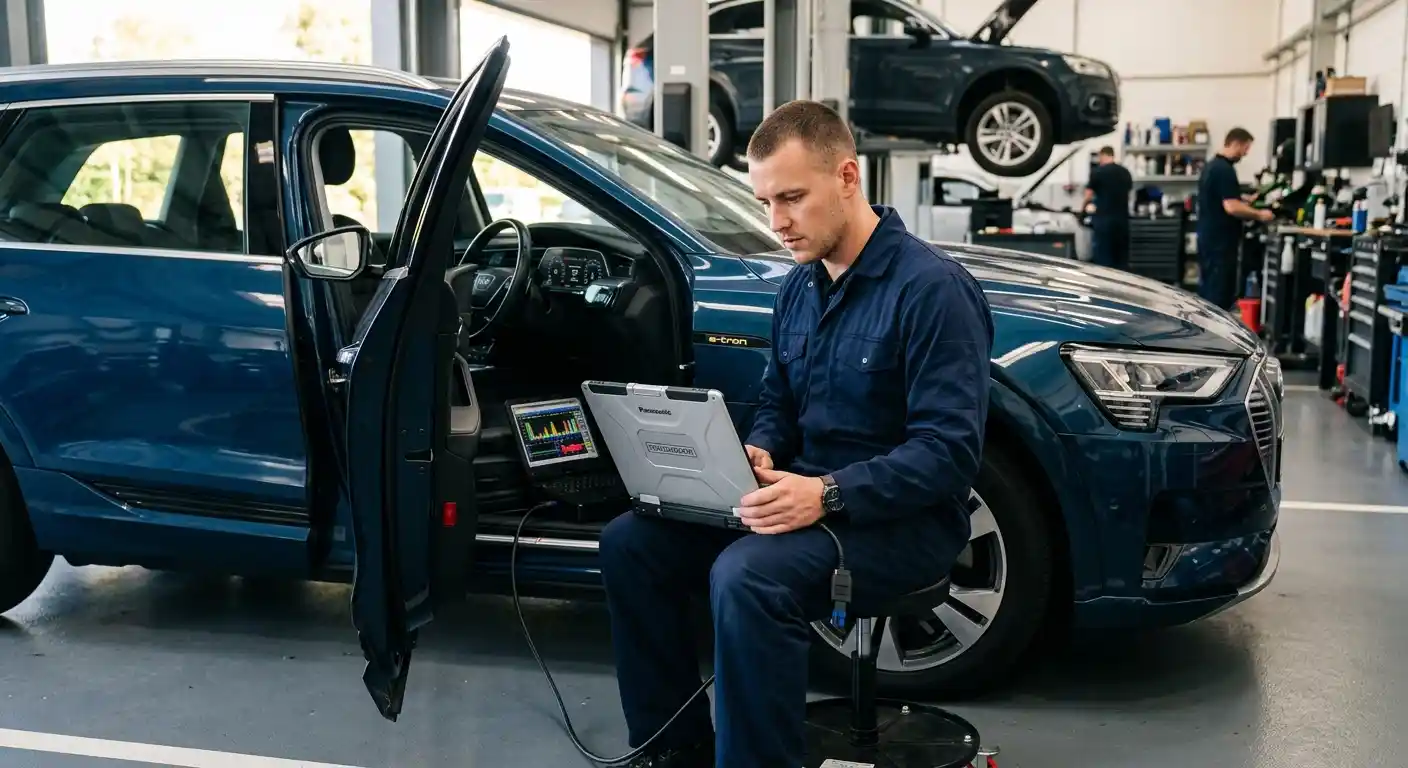
The Q6 introduced Audi’s newer E3 electronics architecture with several high-performance computers coordinating vehicle functions. That does not make every multi-system warning a failed central computer. Stable supply voltage, network communication, software level, coding and physical sensor condition must be checked in a controlled order.
When charging and infotainment symptoms appear together, preserve their timing. A station authorization issue, user profile, certificate, connectivity problem or software event can exist beside a healthy energy path. Conversely, a low-voltage wake-up problem can create messages in several domains before high-voltage charging is even permitted.
After glass, bumper, wheel, steering or suspension work, confirm which cameras, radar units and chassis sensors are installed. Mechanical ride height, tire pressure and alignment should be correct before calibration. A successful calibration report does not repair a bent suspension arm or incorrect wheel setup.
Software work should have a reason and a completion record. Note the original version, campaign or technical basis, power-supply support, update outcome, configuration checks and the exact feature retested. Avoid broad resets when the event data is still needed to understand an intermittent concern.
Inspect a Q6 impact from structure toward voltage
Secure the vehicle condition
After severe impact, flooding, smoke, unusual heat or visible orange-cable damage, keep people away and use an appropriate recovery plan. Tell the receiving workshop about deployment, water exposure and warning behavior.
Map the physical contact
Photograph wheels, suspension, undertrays, battery enclosure, cooling paths and body deformation before removing evidence. Confirm the approved lifting points for this PPE vehicle.
Assess electrical isolation
Qualified personnel should follow the Q6 high-voltage procedure, review isolation information and confirm a safe state before intrusive work. Do not infer safety from the absence of smoke.
Check cooling and geometry
Impact can damage heat exchangers, lines, ducts, alignment and assistance-sensor positions without breaching the battery. Measure those systems separately.
Commission the repaired build
Complete required coding, calibration, sealing checks, final scan, controlled charging and road testing. Preserve the results for later battery or resale review.
Audi Q6 e-tron repair FAQs
What makes Q6 e-tron diagnosis different from Q4 e-tron?
The Q6 uses the PPE platform and an 800-volt architecture. Its battery, charging, thermal and electronics systems require Q6-specific information rather than MEB assumptions.
How can a Q6 e-tron use some 400-volt fast chargers?
PPE bank charging can divide the 800-volt battery into two 400-volt banks that charge in parallel when the station and vehicle conditions support it.
Does a brief charging peak prove the system is healthy?
No. Review the full session, state of charge, battery temperature, charger limits and requested versus delivered power. A peak number alone gives limited diagnostic value.
Can software affect Q6 charging or thermal behavior?
Yes. Configuration and software participate in charging communication and predictive thermal control. Record the installed level and changes before replacing hardware.
What requires immediate recovery?
Visible battery or orange-cable damage, smoke, unusual heat, flooding, severe isolation warnings or unsafe braking and steering should be treated as recovery conditions.
What should a completed Q6 repair report include?
It should identify the build, original event, measurements, repaired item, software or calibration work and a repeat test under comparable charging or driving conditions.
Arrange Q6 e-tron testing with the right evidence
Send the warning text, VIN, charger voltage and type, starting state of charge, ambient conditions and any software or collision history before the appointment.