
Audi Q4 e-tron Repair and Service in Dubai
The Audi Q4 e-tron is a compact electric SUV built on the MEB platform, offered in SUV and Sportback forms with rear-wheel-drive and quattro configurations depending version. Its service needs center on charging communication, battery conditioning, drive-unit data, 12-volt stability, climate performance, brakes, tires and software. A Q4 appointment should not inherit procedures written for the larger original e-tron or newer PPE models. Compare its MEB systems with the newer Q6 e-tron repair route and the larger Q8 e-tron page. Preserve the exact message using the Audi warning-light guide.
Confirm the Q4 version before selecting a test
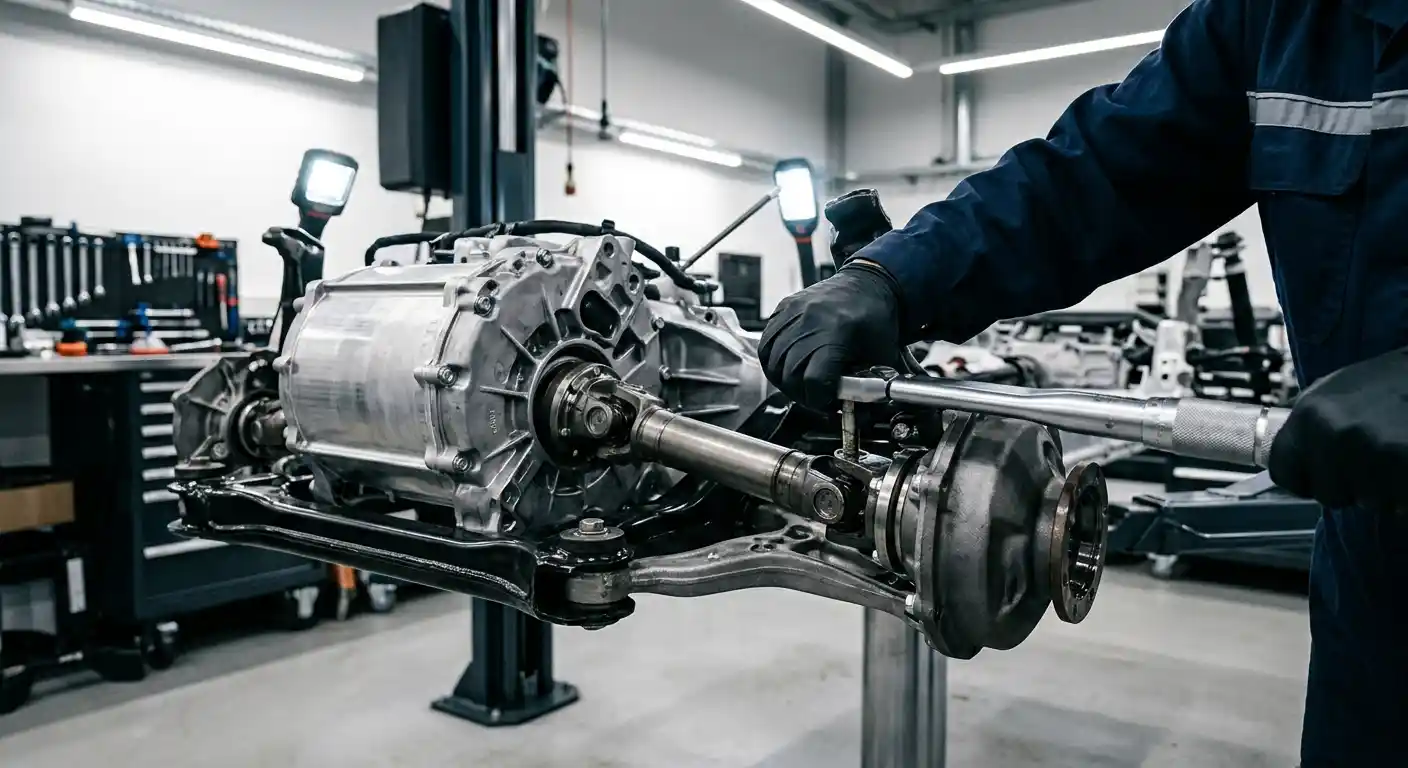
Start with the VIN, production date and installed equipment. Q4 e-tron variants can differ in body style, motor layout, battery and charging specification, and thermal-management hardware, so the correct test plan depends on the exact vehicle rather than the badge alone.
SUV or Sportback body
Body form changes rear packaging, glass and trim work but does not identify battery or motor specification. Use VIN and production data for compatible parts and service information.
Rear drive or electric quattro
A rear-driven model and a dual-motor quattro model produce different live data and traction behavior. Note the exact version before interpreting torque requests or axle faults.
Battery and charging revision
Q4 battery capacity and charging performance vary by model year and derivative. The charger rating alone does not guarantee the same peak or curve on every vehicle.
Installed heat-pump equipment
Climate and battery-conditioning behavior depends on fitted equipment and software. Confirm the build before turning an energy-use complaint into a component estimate.
Separate the charger, cable, inlet and vehicle permission
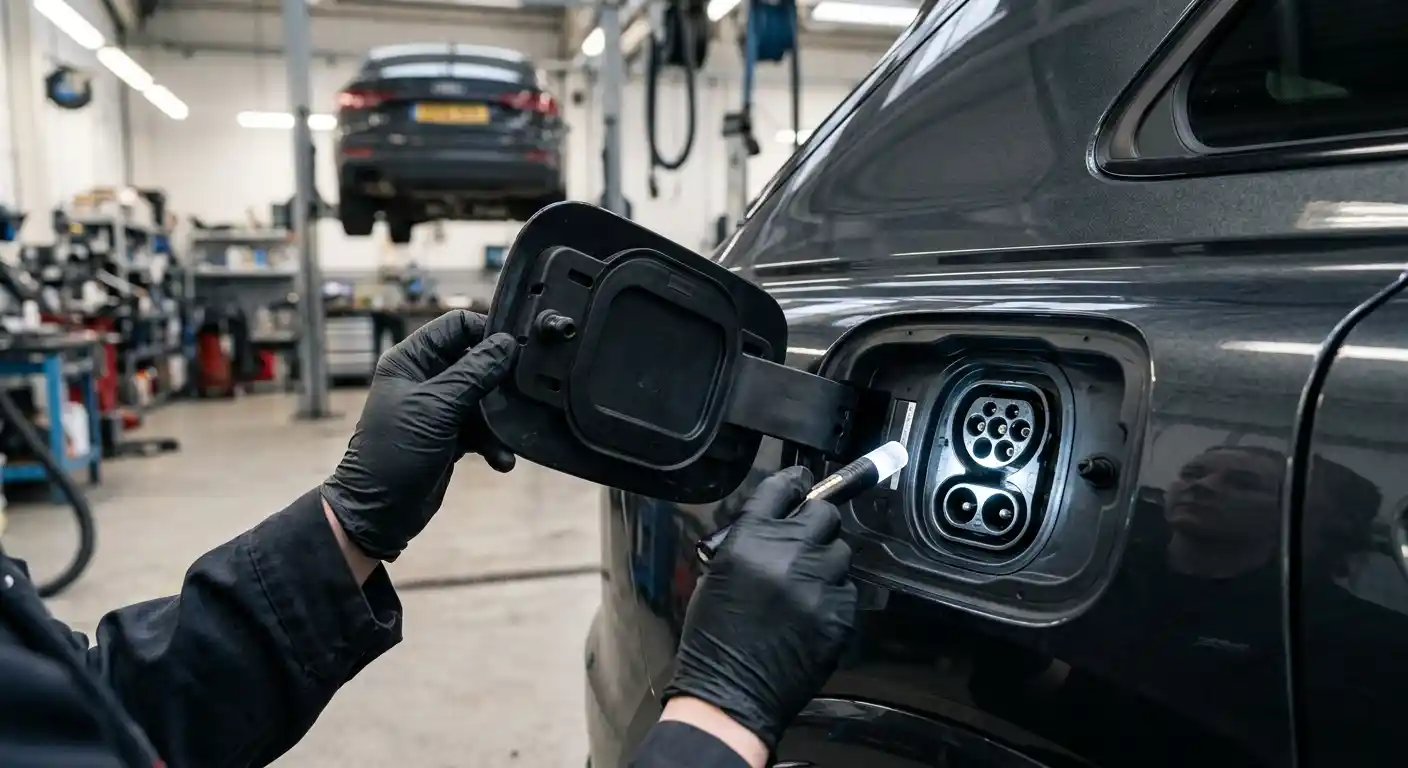
A Q4 that refuses one charging point but accepts another is already giving useful diagnostic information. Record whether the attempt used AC or DC, the battery state of charge, ambient temperature, dashboard text, charge indicator behavior and the station’s own message.
Compare a known working source
Test with compatible equipment and preserve the result. Avoid repeated plug cycles that erase the timing of the first event or overheat a damaged connection.
Inspect without opening HV hardware
Check the accessible inlet and cable interface for contamination, impact, heat evidence or a latch concern. Orange wiring and sealed power electronics remain outside owner checks.
Read communication and temperature data
The vehicle and station must agree before energy transfer. Review charging-controller events, battery temperature, requested power, cable information and onboard-charger permissions.
Repeat under the original conditions
After approved repair or software work, use the same charging type and a comparable state of charge. A cleared code without a completed session is not a sufficient handover test.
Drive and cabin complaints need separate measurements
Reduced output or uneven response
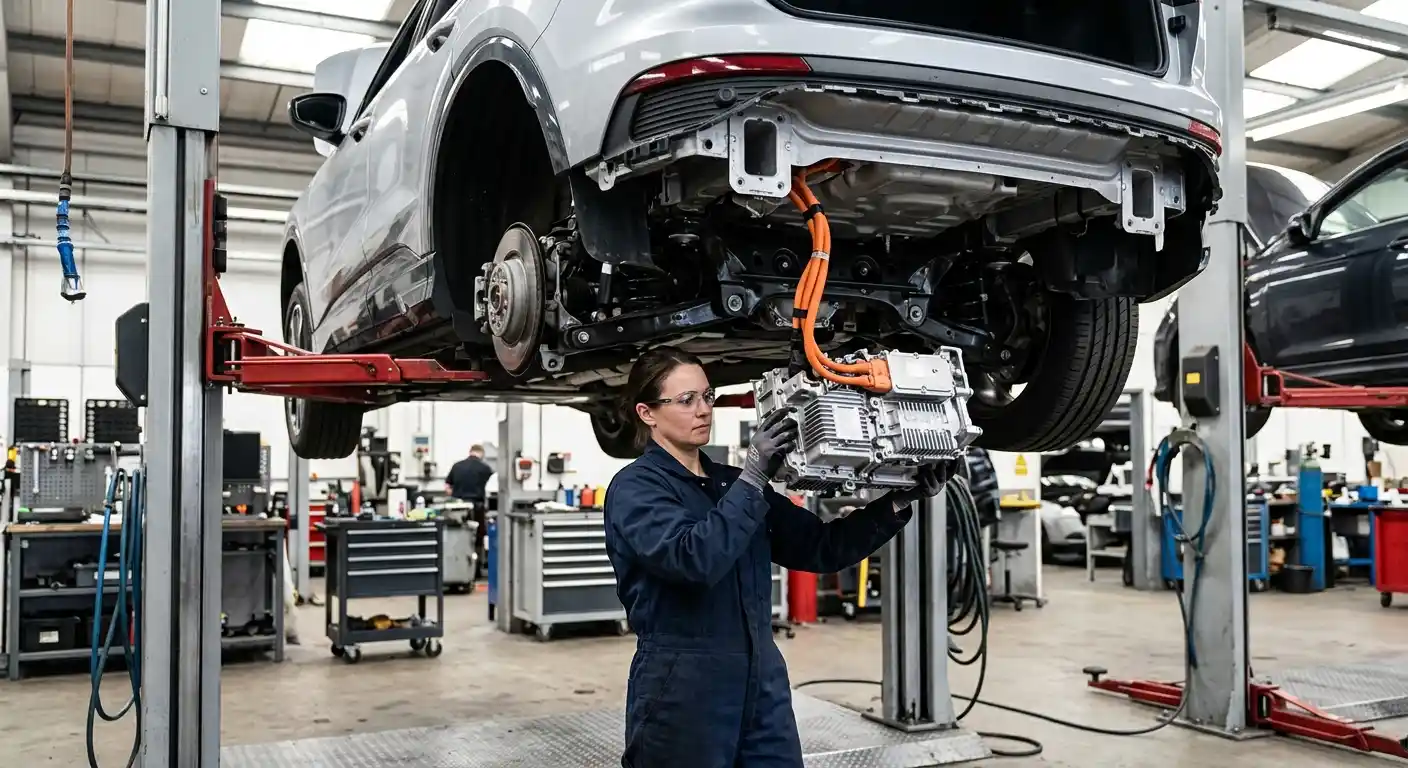
Compare driver request, motor torque, battery power limits, inverter temperature, wheel-speed data and traction intervention. A tire mismatch can alter the evidence before a drive unit fails.
Unexpected drag or energy use
Check tire pressure, alignment, brake temperature, bearing noise, climate load and recent consumption. The displayed range is an estimate, not a standalone battery test.
Warnings after the car sits
Test low-voltage reserve and wake-up behavior, then inspect network events and charging history. A weak 12-volt supply can create several messages at once.
Cooling changes at low speed
Measure vent output and refrigerant behavior while reading compressor command and battery thermal demand. Stationary cooling may expose a different limit than highway driving.
Noise, corrosion or rough transition
Inspect friction surfaces, caliper movement and fluid condition. Road-test the transition between recuperation and hydraulic braking under safe controlled conditions.
Functions change after an update
Record the software and event history, check configuration and retest the exact feature. Do not use a broad reset as a substitute for identifying what changed.
Maintain the systems an electric compact SUV actually uses
| Area | Useful service evidence | What should not be assumed |
|---|---|---|
| Brake system | Fluid status, pad and disc measurements, caliper operation, corrosion and final brake test | Low friction-brake use does not mean the hardware can be ignored. |
| Tires and wheels | Approved dimensions, pressure, load rating, axle matching, age, repairs, runout and geometry | EV labeling alone does not confirm the tire is correct for this Q4. |
| Cooling and climate | Leak inspection, refrigerant performance, temperature data, pump and valve operation | Weak cabin cooling does not automatically identify the compressor. |
| Low-voltage supply | Battery condition under load, DC to DC support, sleep current and wake-up event history | A resting-voltage reading cannot explain every intermittent startup warning. |
| High-voltage system | Qualified scan, isolation information, battery temperatures, charging behavior and supported procedures | Displayed range does not prove cell condition or justify opening the pack. |
Decide whether the Q4 can drive, needs inspection or needs recovery
Heat, smoke or damaged HV area
Keep away from visible battery damage, orange-cable damage, smoke, unusual heat, flooding or a serious isolation warning. Arrange a condition-appropriate recovery response.
Charging, climate or repeated warnings
Book diagnosis when charging failures repeat, cooling performance changes, a warning returns or energy use rises without a clear driving explanation.
Stable behavior with no active risk
Record the conditions, warning photo and charging session. Monitoring is appropriate only when the present condition is safe and the review point is written.
Inspect software, charging and wear before paying a deposit
Start with the VIN, market specification, service record, campaign evidence, keys and charging cable. Compare the seller’s claimed model with the installed drive configuration and battery information. Imported vehicles may have charging-equipment or warranty details that need separate confirmation.
Observe an AC charging session and, where practical, a DC session at a suitable state of charge. Scan the car before and after the road test. Inspect the underbody, battery protection points, coolant residue, wheel damage, tire matching, brake condition and previous collision work.
During driving, assess motor response, recuperation, brake transition, steering, noise, climate output and driver-assistance warnings. Price overdue service, tires, brakes, charging equipment and confirmed faults independently. A clean instrument display after code clearing is not a condition report.
A Q4 e-tron inspection should narrow the system before dismantling
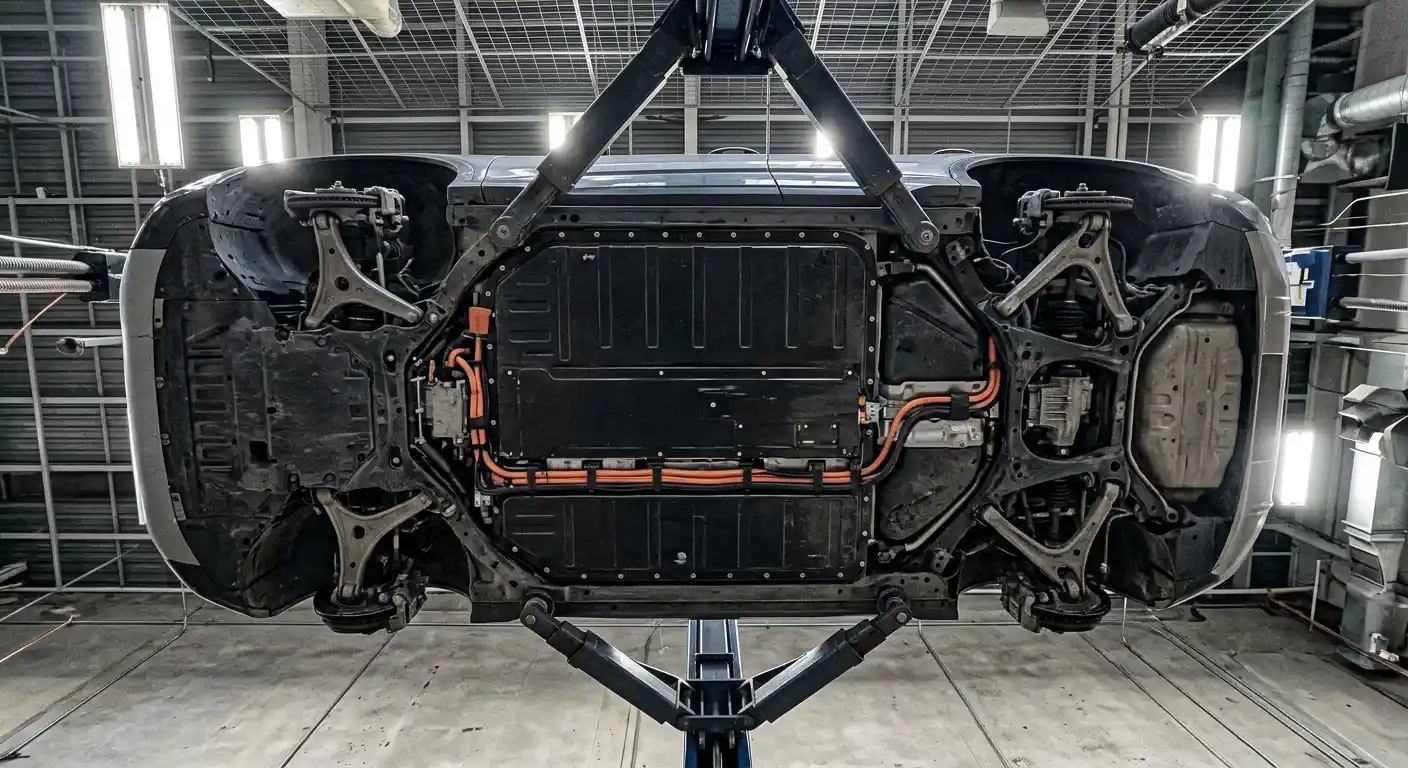
Begin with a short interview that captures the exact sequence. Did the warning appear while plugging in, after the car sat overnight, during rapid acceleration, while using cabin cooling or after software, tire or collision work? Record the first symptom rather than the longest list of later messages.
Next, identify the Q4 build and preserve a full scan. Check low-voltage condition before interpreting communication faults. Inspect the charging inlet and accessible cable interface without opening high-voltage connections. If the complaint is driving-related, measure tires, wheel condition, brakes and suspension before the road test because mechanical drag or incorrect circumference can change energy use and control data.
The road or charging test should answer one question at a time. For a slow DC session, the question may be whether the vehicle is requesting less power because of temperature or state of charge. For a startup concern, it may be whether voltage drops during controller wake-up. For weak AC, it may be whether battery conditioning is consuming capacity or the electric compressor is underperforming.
At the end of this stage, the owner should receive a defined next step. That can be a targeted circuit test, an approved repair, a software or configuration check, a measured maintenance item or monitoring with a return condition. It should not be a shopping list of unrelated EV parts.
Short trips and parked cooling change Q4 evidence
Frequent wake and sleep cycles
Repeated short journeys can expose a marginal 12-volt battery or abnormal sleep current. Review parking duration, app activity, accessories and event timing instead of relying on one resting reading.
Stationary cabin cooling
Cooling demand while parked can be high in summer. Compare vent output, compressor command, refrigerant performance and battery temperature rather than calling every range reduction abnormal.
Speed-bump and curb contact
Inspect underbody protection, wheel alignment, tires and nearby cooling panels after impact. Visible battery-enclosure damage or an isolation warning requires a controlled safety response.
Repeated public charging
Keep charger names, session times and failure messages. A pattern across several compatible stations is more useful than one unsuccessful attempt.
For handover, repeat the symptom under comparable conditions and retain the final scan. If the issue cannot be reproduced, document the current measurements and a precise return trigger rather than declaring the Q4 repaired.
Q4 e-tron service questions
Is the Q4 e-tron the same platform as the Q8 e-tron?
No. The Q4 e-tron uses the compact MEB electric platform. Q8 e-tron battery, drive and thermal information should not be applied to it.
Why is DC charging slower on some Q4 sessions?
Charger output, battery temperature, state of charge, route preparation, station sharing and vehicle limits all matter. Compare session data before diagnosing a defect.
What can cause Q4 e-tron startup warnings?
Begin with 12-volt battery condition, network wake-up, stored events and charging history. High-voltage parts should not be condemned from the dashboard message alone.
Do Q4 e-tron brakes still need inspection?
Yes. Recuperation changes how often friction brakes work, but corrosion, binding, wear and fluid condition still require physical checks and measurements.
Can wheel or tire changes affect range and warnings?
Incorrect size, load rating, pressure, axle mismatch or damaged sensors can affect efficiency and vehicle-system data. Verify the installed specification and geometry.
What should I send before a Q4 e-tron service visit?
Send VIN, year, mileage, exact warning, charger type and location, recent software or repair work, tire details and whether the vehicle is safe to move.
Send the Q4 e-tron warning and charging details
Include the VIN, exact motor layout, charger type, battery state of charge and whether the concern appears while parked, moving or cooling the cabin.