
Audi A6 e-tron Repair and Service in Dubai
The Audi A6 e-tron is a fully electric Sportback or Avant built on the PPE platform, not simply an electric version of the combustion A6. Its 800-volt battery, rear-drive or quattro motor layout, bank charging, predictive thermal management and newer electronics change how problems need to be diagnosed. Charging speed, battery temperature, drive-unit behavior, chassis condition and software should all be checked against the exact car rather than assumed from the A6 badge alone. For related PPE-system guidance, see the Q6 e-tron repair page. For higher-performance EV differences, see the e-tron GT page, and for measured brake wear and condition, use the Audi brake inspection guide.
The A6 e-tron needs an EV-only repair scope
The familiar A6 name can cause the wrong maintenance expectations. The electric model has no engine oil, exhaust, spark plugs or conventional transmission service. Its workshop priorities are high-voltage safety, charging, battery temperature, drive units, low-voltage stability, climate control, brakes, tires, suspension and software.
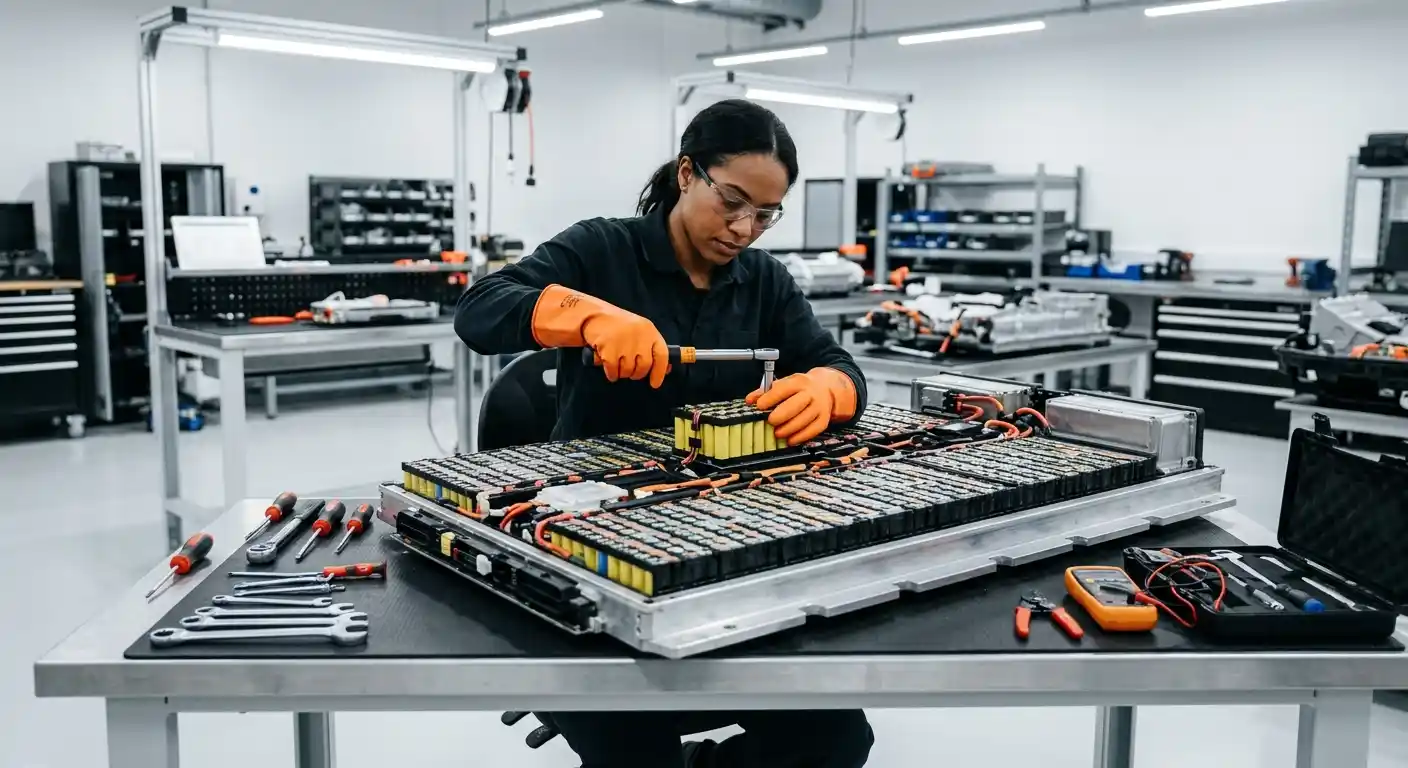
PPE battery architecture
Confirm usable capacity, module arrangement and charging limits from the derivative and VIN. Do not copy Q4 e-tron or original e-tron values.
Sportback or Avant equipment
Rear body, hatch, glass and cargo-area wiring differ. Water entry, sensor or trim concerns require the correct body route.
Rear drive or quattro
A single rear motor and a dual-motor car generate different torque and temperature data. The test plan must reflect the fitted axle equipment.
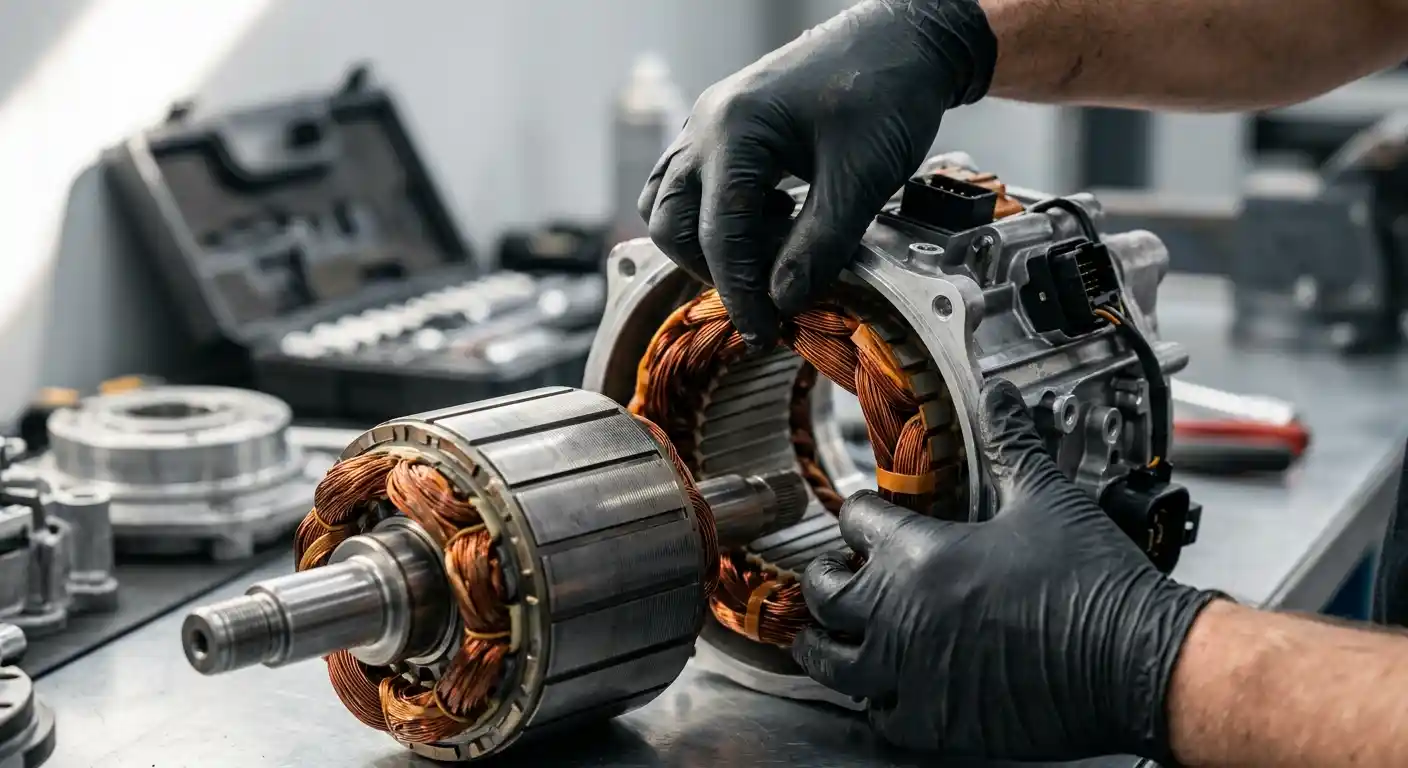
Five A6 e-tron situations that reveal different systems
Connection succeeds but power stays low
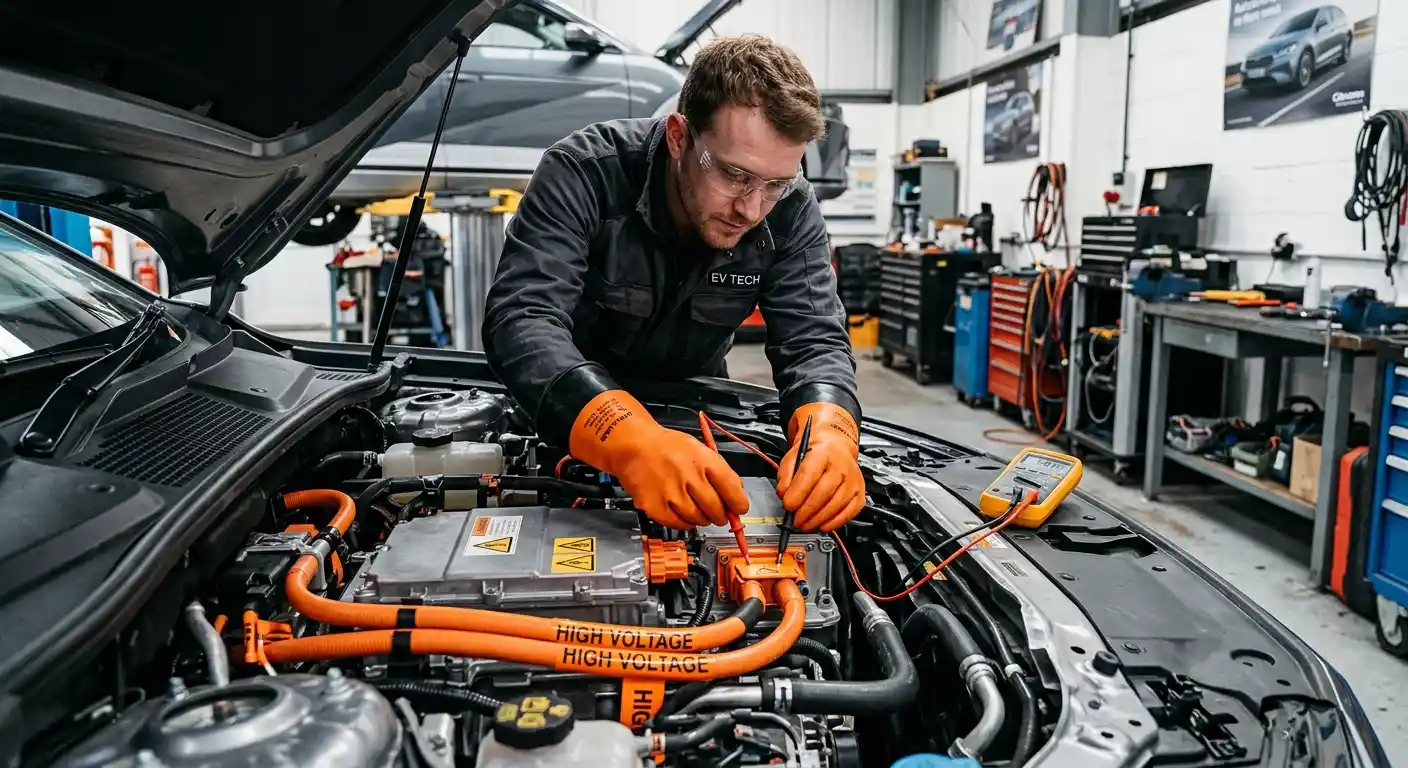
Record charger voltage, state of charge, battery temperature, route preparation and the complete power curve. Compare vehicle request with station delivery before faulting battery hardware.
Several messages appear at wake-up
Load-test the low-voltage battery, observe controller wake sequence and review network events. Preserve the first startup because later restarts may hide the initiating condition.
Power becomes limited in sustained heat
Compare battery, inverter and motor temperatures with coolant control and requested torque. A thermal restriction can protect healthy drive hardware.
Cabin cooling or efficiency changes
Measure vent temperature, compressor demand, refrigerant behavior and battery conditioning. Heavy AC use is a real energy load but can also expose a cooling-system fault.
Deceleration feels rough or inconsistent
Inspect friction components, wheel speeds and tire condition, then evaluate regenerative blending. Do not interpret pedal feel without physical brake measurements.
Use the entire charging session as diagnostic evidence
A6 e-tron charging depends on communication, battery state, temperature and the capabilities of the station. At compatible 400-volt infrastructure, bank charging allows the two halves of the battery to charge in parallel. At suitable high-power equipment, the 800-volt architecture supports a different route.
| Check | What to capture | Why it changes the conclusion |
|---|---|---|
| Starting condition | State of charge, battery temperature, recent route and planned charging stop | A warm prepared battery and a hot unprepared battery will not request the same power. |
| Station capability | AC or DC, available voltage, shared output, cable rating and station message | The charger may be the limiting part of the session. |
| Vehicle communication | Locking, authorization, pilot data, charging-controller events and requested current | A negotiation fault can stop energy flow before the battery becomes relevant. |
| Thermal response | Pump, valve and temperature behavior as current increases | Cooling limitations may reduce charging to protect components. |
| Completion proof | Stable session, final scan and no abnormal inlet heating | A code clear alone does not show the charging concern is resolved. |
Document condition without inventing EV service items
VIN and software baseline
Confirm model, body, battery and motor configuration, service history and current software. Check manufacturer actions by VIN through the appropriate channel.
Cooling and climate inspection
Look for leakage or impact, read temperatures, test pump and valve response and verify cabin output. Use only specifications assigned to the fitted circuits.
Brake and tire measurements
Record friction surfaces, caliper operation, fluid condition, tire load rating, pressure, matching, age, damage, runout and alignment evidence.
Low-voltage electrical health
Test low-voltage reserve during wake-up, then compare converter support, parked-current behavior and the event log behind intermittent messages.
Final condition-specific test
Repeat the original charge, road, climate or parking scenario and save the measurements that demonstrate the repair outcome.
Sportback and Avant inspection points are not identical
Sportback rear area
Inspect hatch alignment, seals, drains, rear glass, camera and cargo-area electronics after water entry or collision work. A rear electrical symptom may originate outside the high-voltage system.
Large wheel packages require careful tire matching and geometry. Record vibration by speed and load before treating it as a drive-unit concern.
Avant load and access areas
Check tailgate operation, load-area trim, wiring and water paths around the longer roof and rear body. Confirm that cargo or previous repairs have not damaged covers or ventilation paths.
Where adaptive suspension or assistance equipment is installed, establish mechanical ride height and alignment before any electronic calibration.

Prove whether the concern is external, internal or only estimated
Range estimation, charging speed and propulsion limits can change without internal cell damage. Review consumption, tire and brake condition, thermal behavior, software, cell information and isolation data. The diagnostic report should show why the suspected area is inside or outside the pack.
High-voltage opening and internal battery work require controlled isolation, protected facilities, compatible parts and a supported procedure. After any approved repair, complete sealing, reactivation, programming and charging verification for the exact A6 e-tron.
Record A6 e-tron condition before future comparisons are needed
Newer vehicles often arrive without a long service history, which makes a good baseline valuable. Save the VIN decode, software level, tire specification, alignment, battery and charging information, low-voltage test and any factory or dealer actions supplied with the car. Later concerns can then be compared with real earlier data.
For public charging, keep a few complete sessions rather than isolated peak numbers. Note charger, voltage where known, starting and ending state of charge, battery temperature, route preparation, ambient conditions and time. This shows whether reduced power is repeatable and whether it belongs to the car, the station or the session conditions.
For efficiency, compare similar routes. Vehicle speed, cabin temperature, payload, tire pressure, wind and elevation can change consumption. If energy use remains high, inspect geometry, brake drag, tire fitment, thermal operation and stored powertrain limits before making a battery claim.
For the Sportback or Avant body, photograph water or wind-noise concerns and record the speed, rain, wash or tailgate condition that reveals them. Body sealing, trim, glass and rear electrical faults should not be mixed into a high-voltage estimate without evidence.
Mechanical correction comes before A6 e-tron calibration
Tires establish the rolling reference
Verify the tire approval for each axle, cold pressure, load index, circumference compatibility, age and wheel runout. Rolling errors can distort efficiency data and driver-assistance inputs.
Ride height and alignment establish geometry
Inspect joints and dampers, measure ride height and complete alignment after repairs. Adaptive suspension equipment must be identified from the actual build.
Sensors need a correct physical target
Camera, radar and steering calibration relies on stable geometry and specified setup conditions. Keep the calibration report with the mechanical measurements.
Road testing confirms interaction
Verify steering center, braking, lane and distance functions where safely testable, then rescan the relevant controllers for a clean handover record.
Keep the next technician from starting without context
Retain charging-session records, software invoices, alignment and calibration reports, tire specifications, battery or cooling measurements and any collision photos. A newer platform can change through software and production revisions, so the date and reason for each action matter.
If a fault is intermittent, write down the exact sequence that produced it and avoid clearing warnings before inspection. Note whether the car was plugged in, preconditioning, parked for several days, carrying a heavy load or using maximum cabin cooling. Those details can direct testing toward charging communication, low-voltage wake-up, thermal management or chassis systems.
A completed estimate should separate the confirmed repair from due maintenance and observations. It should identify compatible parts, high-voltage safety steps, coding or calibration and the condition used for verification. That structure protects a new A6 e-tron from unnecessary component replacement.
Audi A6 e-tron repair FAQs
Is the A6 e-tron repaired like a petrol or diesel A6?
No. It is a PPE electric model with high-voltage charging, battery thermal management and electric drive systems. Petrol-engine service sections do not belong on its repair plan.
What is A6 e-tron bank charging?
At suitable 400-volt charging stations, its 800-volt battery can be divided into two banks that charge in parallel. Session data helps diagnose this process.
Can the A6 e-tron be rear-wheel drive or quattro?
Yes, depending derivative. The motor layout changes live data, traction behavior and parts identification, so confirm the VIN before testing.
Does displayed range show battery health?
It is influenced by recent consumption, temperature, climate use, speed, tires and route. Use battery and charging data for a health assessment.
What should be checked after wheel or suspension work?
Verify tire specification, geometry, steering position and any required driver-assistance calibration after mechanical condition is correct.
When should an A6 e-tron be recovered?
Arrange recovery for visible high-voltage or battery damage, flooding, smoke, unusual heat, a severe isolation warning or unsafe braking and steering.
Prepare an A6 e-tron service visit
Provide the VIN, Sportback or Avant body, rear-drive or quattro specification, warning photos, charging session details and the operating conditions that reveal the problem.