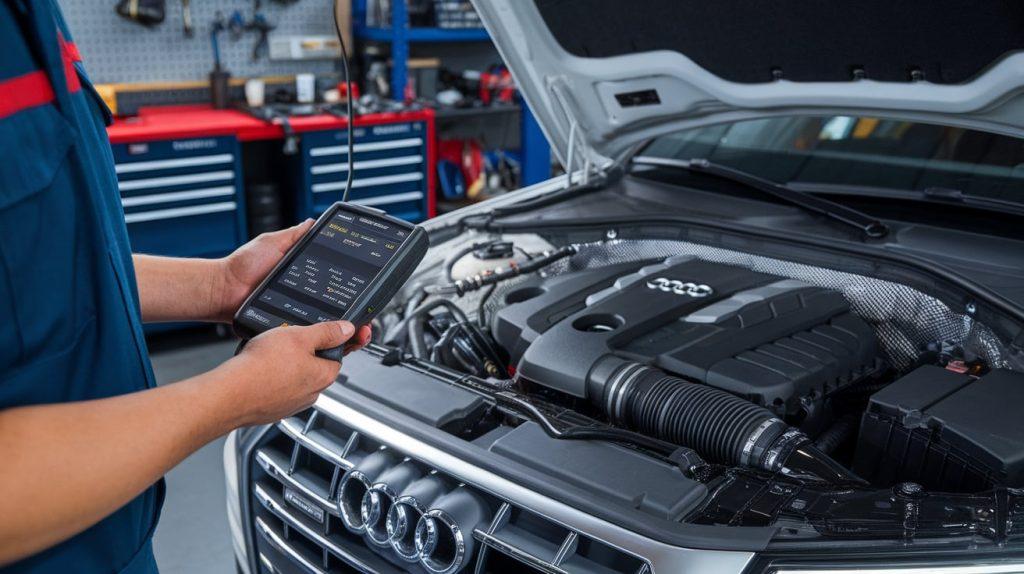
Audi engine problems should be diagnosed from the symptom, operating conditions and test results before any major part is replaced. A check-engine light, oil consumption, coolant loss, misfire, smoke, noise or reduced-power message can come from several systems. The same symptom may have a simple electrical cause or a serious mechanical cause.
Audi Engine Problems: Symptom and Urgency Guide
| Symptom | Common possibilities | Urgency | First checks |
|---|---|---|---|
| Flashing check-engine light | Active misfire that may damage the catalytic converter | Stop driving safely | Scan misfire data, inspect ignition, fuel and compression |
| Red oil-pressure warning | Low pressure, low level, pickup restriction, pump or sensor fault | Switch off the engine | Verify level and mechanical oil pressure before restarting |
| High coolant temperature | Coolant loss, thermostat, pump, fan, radiator or internal leak | Stop and allow cooling | Pressure test and inspect cooling-system operation |
| Rough idle or shaking | Ignition coil, plug, injector, vacuum leak, PCV, deposits or compression | Prompt diagnosis | Misfire counters, smoke test, fuel trims and cylinder tests |
| Blue exhaust smoke | Oil entering combustion through turbo, PCV, rings or valve seals | Urgent if heavy | Oil level trend, intake inspection, crankcase pressure and compression |
| White steam after warm-up | Coolant entering combustion or exhaust, depending on conditions | Urgent | Cooling-system pressure, gas test and cylinder inspection |
| Reduced-power or EPC message | Throttle, boost, sensor, fuel, ignition, cooling or electrical fault | Depends on symptoms | Full scan and live-data comparison |
1. Misfires, Rough Idle and Shaking
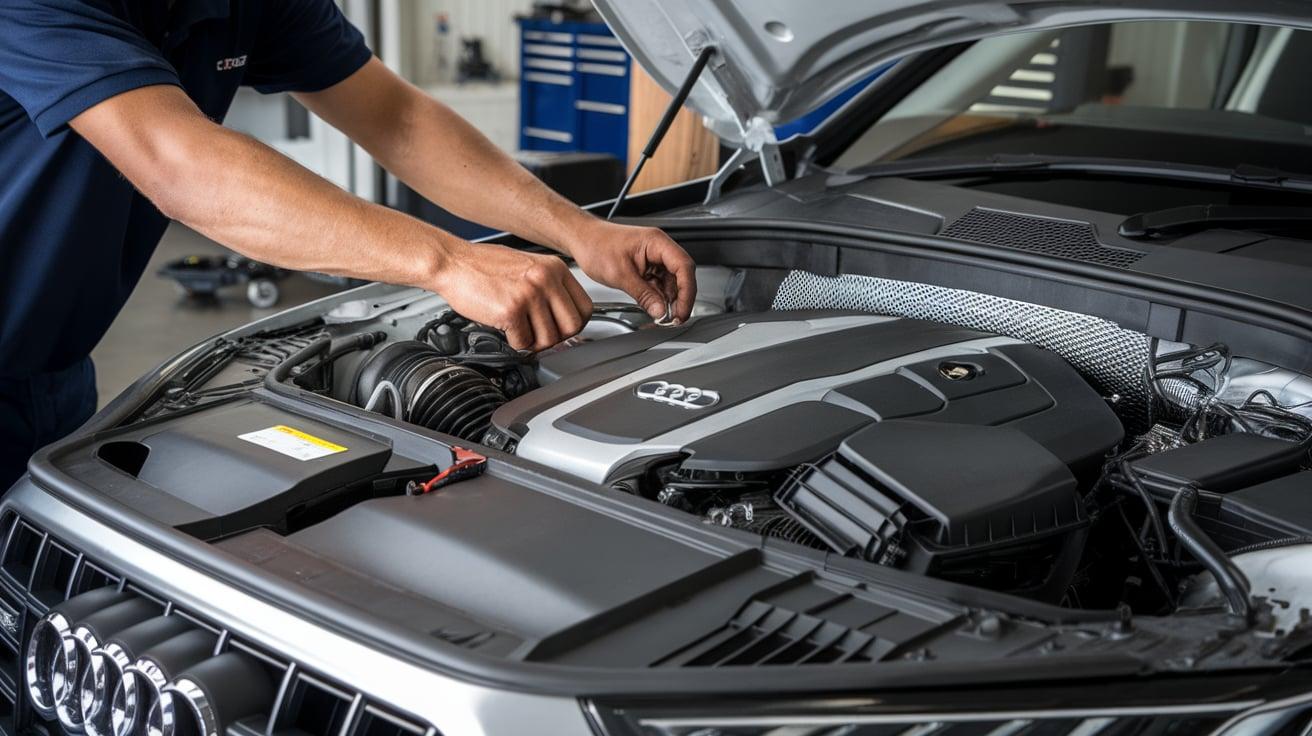
A misfire means one or more cylinders are not producing power normally. Common causes include a worn spark plug, weak ignition coil, injector fault, intake leak, PCV failure, fuel-pressure problem, carbon deposits or reduced compression. Replacing coils without identifying the affected cylinder and test result can waste money.
What the Technician Should Compare
- Stored and pending faults, freeze-frame conditions and misfire counters.
- Whether the fault follows a coil or plug when components are moved.
- Fuel trims, injector operation and rail pressure.
- Intake-system leakage and crankcase ventilation.
- Compression, leak-down or cylinder-pressure data when mechanical damage is suspected.
2. Oil Consumption, Oil Leaks and Low Oil Pressure
These are three different problems. Oil consumption means the engine is using oil internally. An external leak leaves oil outside the engine. Low oil pressure means the lubrication system may not be supplying adequate pressure, even when the oil level appears acceptable.
| Finding | Possible causes | Correct direction |
|---|---|---|
| Oil level drops with no obvious external leak | PCV fault, turbo seal issue, valve seals, piston rings or measurement error | Document consumption, inspect intake and exhaust, test crankcase pressure |
| Oil around upper engine | Cam cover, vacuum pump, filter housing or other sealing point | Clean, trace the highest wet point and confirm under operating conditions |
| Red oil-pressure warning | Low level, pressure loss, pickup restriction, pump, bearing clearance or sensor circuit | Shut down and verify pressure mechanically |
Using a thicker oil to hide consumption or noise is not a diagnosis. Oil must match the approval and viscosity specified for the exact engine. The oil interval and specification should be confirmed from the vehicle’s VIN and maintenance information.
3. Coolant Loss and Engine Overheating
Coolant loss may come from the water pump, thermostat housing, expansion tank, radiator, hoses, heater circuit, turbo cooling lines or an internal engine leak. Overheating can also occur when the coolant level is correct but circulation, fan control or heat transfer is poor.
Diagnosis Should Include
- Cold visual inspection and cooling-system pressure test.
- Thermostat operation and temperature-sensor plausibility.
- Electric fan activation and commanded fan speed.
- Water-pump flow and evidence of leakage.
- Combustion-gas or cylinder testing when an internal leak is suspected.
Never open a hot pressurised cooling system. If the temperature warning appears or steam is visible, stop safely and let the vehicle cool. See the detailed Audi overheating causes and diagnosis guide.
4. EPC, Check-Engine and Reduced-Power Messages
The EPC or reduced-power message is a protective response, not a diagnosis. It may be triggered by throttle control, boost regulation, ignition, fuel pressure, cooling, sensors, wiring or voltage supply. The engine control unit may limit torque to protect the engine, transmission or emissions system.
A complete scan should include all related modules, not only the engine module. Low battery voltage, communication faults or a drivetrain problem can alter engine behaviour and create secondary codes.
5. Turbocharger and Boost Problems
Low power, an underboost code, whistle, smoke or oil in charge pipes does not automatically prove turbo failure. Split hoses, intercooler leakage, wastegate or actuator faults, sensors, exhaust restrictions, PCV faults and lubrication problems can create similar symptoms.
Useful Tests
- Compare requested and actual boost under controlled load.
- Pressure or smoke test the complete intake and charge-air path.
- Test actuator movement and position feedback.
- Inspect oil feed, return and crankcase pressure.
- Check compressor and turbine condition only when access and evidence justify it.
6. Timing Chain, Timing Belt and Camshaft Correlation Faults
Audi engines use different timing systems. Some use chains, some use belts, and the service or inspection requirements vary by engine code. Rattle, difficult starting, camshaft-correlation codes or poor running may involve timing wear, tensioner operation, oil pressure, cam adjusters, wiring or sensors.
Do not replace a timing chain solely because of mileage. Confirm the engine code, repair history, measured timing values, mechanical condition and applicable service information. Likewise, a belt-driven engine must follow the schedule and inspection criteria for that exact engine.
7. Carbon Deposits and Intake-Air Problems
Some direct-injection engines can develop deposits on intake valves because fuel is delivered directly into the cylinder rather than washing the back of the valve. Symptoms can include cold-start misfires, rough running or reduced airflow, but those symptoms can also come from ignition, injectors, vacuum leaks or compression.
Fuel additives placed in the tank do not directly clean the back of intake valves on a direct-injection-only system. Cleaning should be recommended only after diagnosis confirms deposits are affecting operation.
8. Fuel Pressure, Injectors and Fuel-Pump Faults
Hard starting, hesitation, lean faults, misfires and power loss may involve the low-pressure supply, high-pressure pump, pressure sensor, injector, wiring or fuel quality. A code for fuel pressure does not prove the pump is faulty.
The diagnosis should compare commanded and actual pressure during start-up, idle and load, then test delivery, pressure retention and injector behaviour. Replacing the high-pressure pump before checking the supply side and control signal can leave the original problem unresolved.
9. PCV and Vacuum Leaks
A failed crankcase ventilation system can cause whistling, unstable idle, lean faults, oil leakage, high crankcase vacuum or oil consumption. Other intake leaks can create similar fuel-trim and idle problems.
A smoke test, crankcase-pressure measurement and live fuel-trim analysis are more useful than guessing from sound alone.
10. Engine Mounts Versus an Engine Misfire
Excessive vibration does not always mean the engine is misfiring. Weak hydraulic or active engine mounts can transmit normal engine vibration into the cabin. A mount issue is more likely when engine speed remains stable, no misfire is recorded and vibration changes between Drive, Reverse and Neutral. Mount-control faults on equipped models must also be checked.
11. Battery Voltage and Electrical Faults That Mimic Engine Failure
Modern Audi powertrains depend on stable voltage and module communication. A weak battery, charging fault, poor ground or water-damaged connector can cause difficult starting, multiple warnings, throttle faults or implausible sensor readings. Voltage and network faults should be corrected before expensive mechanical parts are condemned.
Safe to Drive or Stop the Engine?
| Condition | Decision |
|---|---|
| Steady check-engine light with normal operation | Arrange diagnosis soon and avoid hard driving |
| Flashing check-engine light or severe shaking | Stop driving |
| Red oil-pressure warning | Switch off immediately and do not restart until checked |
| Overheating warning, steam or rapid coolant loss | Stop safely and arrange recovery |
| Heavy smoke, knocking or sudden power loss | Stop and arrange professional inspection |
| EPC message with mild but stable reduced power | Drive only as necessary to a safe inspection if the manual permits and no red warning is present |
How an Audi Engine Problem Should Be Diagnosed
- Record the exact warning, symptom, temperature, speed and recent repair history.
- Check oil and coolant safely before running the engine.
- Perform a complete vehicle scan and save freeze-frame data.
- Check battery condition, charging voltage, grounds and network faults.
- Inspect for leaks, damaged wiring, disconnected hoses and intake restrictions.
- Review live data against the operating condition in which the fault occurs.
- Test the relevant system: smoke, pressure, fuel, ignition, cooling or boost.
- Use compression, leak-down, borescope or mechanical-pressure tests when needed.
- Confirm the failed component before authorising repair.
- Clear faults only after recording them, then road-test and verify the repair.
If testing confirms internal mechanical damage, compare the workshop options on our Audi engine repair, rebuild and replacement page.
Repair, Rebuild or Replace the Engine?
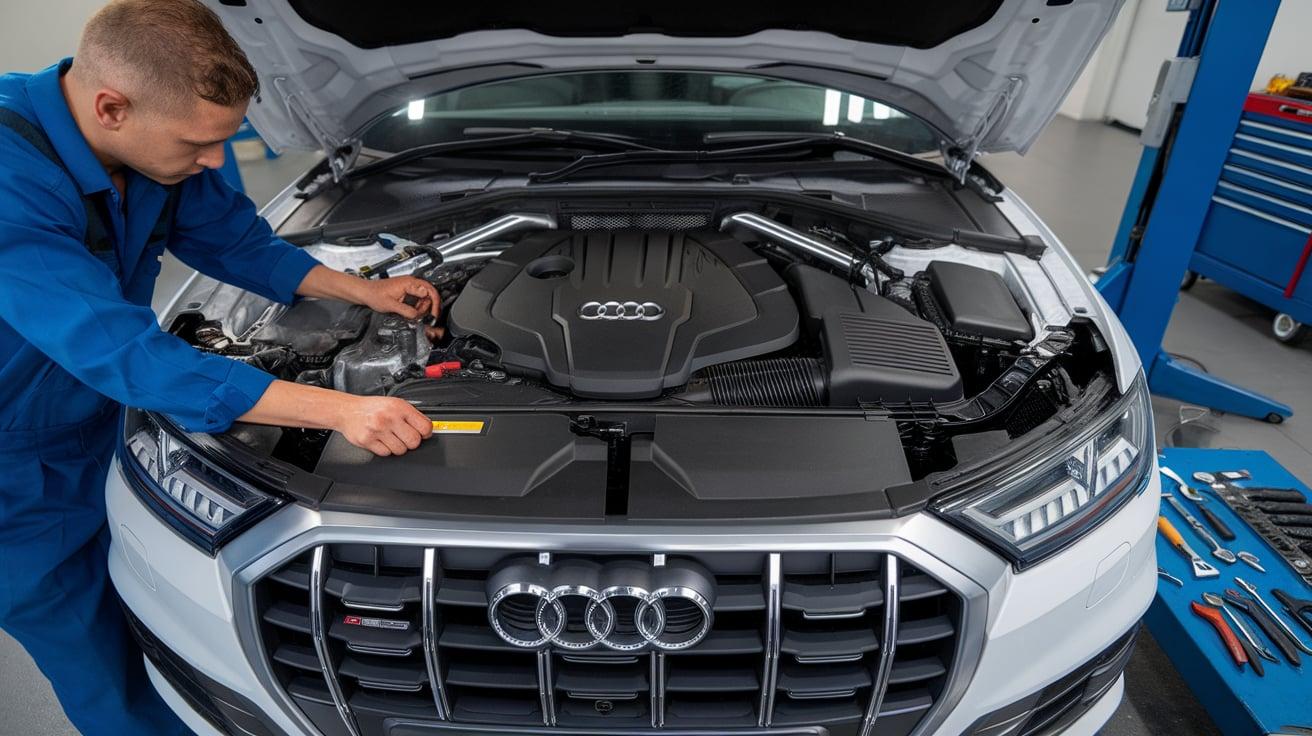
| Option | When it may be appropriate | Evidence required |
|---|---|---|
| Targeted repair | External leak, sensor, ignition, cooling, PCV, fuel or turbo-related fault | System testing identifies a repairable cause and base engine condition is good |
| Cylinder-head repair | Valve, head-gasket, local overheating or sealing problem | Pressure, leak-down, flatness and crack checks support the repair |
| Engine rebuild | Internal wear or damage is extensive but block and major castings are serviceable | Measured clearances, damage report and complete rebuild scope |
| Engine replacement | Severe damage, uneconomical repair or unsuitable core | Confirmed engine condition, compatible replacement details and total installed cost |
For warning messages, reduced power and structured diagnosis, see our Audi engine malfunction diagnosis service.
Frequently Asked Questions
Can a fault code tell me which Audi engine part to replace?
Usually not by itself. It tells the technician what condition or circuit the control unit detected. Testing is still needed.
Is it safe to drive with an EPC light?
It depends on the accompanying symptoms and warnings. Stop if there is severe shaking, overheating, oil-pressure warning, smoke, knocking or major power loss.
Why does my Audi misfire only when cold?
Possible causes include ignition, injector leakage, intake deposits, vacuum leakage or reduced cylinder sealing. Cold-start data and cylinder-specific testing help separate them.
Does blue smoke always mean worn piston rings?
No. Turbocharger leakage, PCV faults and valve-stem seals can also allow oil into the intake or combustion chamber.
Can an Audi engine overheat with a full coolant tank?
Yes. Thermostat, pump, fan, circulation, sensor and internal engine faults can cause overheating even when the reservoir appears full.
Should a timing chain be replaced at a fixed mileage?
Not universally. Requirements vary by engine, and diagnosis should use the engine code, symptoms, measured data and applicable repair information.
When is an engine rebuild better than replacement?
A rebuild may make sense when the core is serviceable, parts and machining are available, and the measured repair scope offers better value and control than a replacement unit.
Technical Reference
Audi advises owners to use the model, year, VIN, maintenance information and owner’s manual for vehicle-specific guidance. General symptoms in this article must always be confirmed against the exact engine and repair data.