The best Audi paint protection in Dubai depends on the damage you are trying to prevent. Paint protection film helps protect against stone chips and physical impact. Ceramic coating improves water behaviour, gloss and resistance to environmental contamination. Paint correction removes or reduces existing defects before protection is applied. These services are related, but they do not do the same job.
PPF vs Ceramic Coating vs Paint Correction
| Treatment | Primary purpose | Helps with | Does not reliably prevent |
|---|---|---|---|
| Paint protection film | Physical barrier over the paint | Stone chips, road debris, light scuffs and impact-prone areas | Every dent, deep impact, poor washing method or neglected contamination |
| Ceramic coating | Bonded surface coating | Hydrophobic behaviour, gloss, easier washing and resistance to some chemicals and UV exposure | Stone chips, deep scratches or careless contact washing |
| Paint correction | Controlled polishing that removes a small amount of clear coat | Swirls, haze, oxidation, light scratches and some etched marks | Future damage unless protection is applied afterwards |
| Wax or sealant | Shorter-term sacrificial layer | Gloss, water behaviour and basic contamination resistance | Impact damage or long-term protection in demanding use |
What Damages Audi Paint in Dubai?
Dubai conditions can expose a vehicle to intense sunlight, fine dust, construction contamination, hard-water spotting, bird droppings, tree sap, road debris and frequent washing. The damage often comes from the combination of contamination and incorrect cleaning rather than one factor alone.
- Fine dust and sand: wiping a dry, dusty surface can grind particles across the clear coat and create swirls.
- Hard-water spots: mineral deposits can become difficult to remove when allowed to dry repeatedly in heat.
- Bird droppings and organic contamination: remove them promptly and safely because they can stain or etch the finish.
- Road debris: motorway and construction-area driving can chip leading edges, mirrors and lower panels.
- Automatic and poor hand washing: dirty brushes, one cloth for the whole car and aggressive chemicals can damage even protected paint.
Paint Protection Film: When It Makes Sense

PPF is a transparent urethane film applied over painted panels. Its main benefit is physical protection. It is most useful on areas that receive direct road impact, such as the bonnet edge, front bumper, front wings, mirror caps, rocker panels and luggage-loading areas.
PPF Coverage Options
| Coverage | Suitable for | Trade-off |
|---|---|---|
| High-impact pieces | Budget-focused protection for mirrors, door cups, sills and loading edges | Main front panels remain exposed |
| Partial front | Basic motorway-impact protection | A film edge may cross the bonnet or wings |
| Full front | Daily drivers and frequent highway use | Higher cost than partial coverage |
| Full body | New, high-value, special-finish or enthusiast-owned cars | Highest cost and installation complexity |
Some modern films can reduce the appearance of light marks in the film when exposed to heat, but this does not make the car scratch-proof. Film can still be cut, stained, lifted or damaged.
PPF Installation Quality Checklist
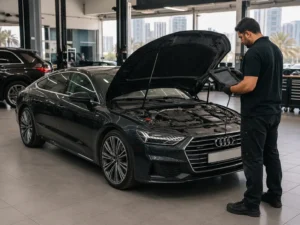
- Paint is inspected under strong lighting before film is applied.
- Existing chips, repainted panels and defects are documented.
- Film type, finish, coverage and warranty are written clearly.
- Panel patterns fit the exact Audi model and equipment.
- Edges are wrapped where appropriate without unnecessary cutting on the paint.
- Sensors, badges, trims and panel gaps remain correctly fitted.
- Visible contamination, stretch marks, silvering, large bubbles and lifting edges are corrected.
Ceramic Coating: What It Does and What It Does Not
A ceramic coating bonds to the prepared surface and changes how water and contamination interact with it. It can improve gloss, make washing easier and provide resistance to some chemicals, oxidation and environmental exposure.
Ceramic coating does not create a thick impact shield. It will not stop a stone from chipping the paint or prevent scratches caused by dirty brushes and careless wiping.
When Ceramic Coating Is the Better Choice
- The car is washed frequently and easier maintenance is the main goal.
- The owner wants enhanced gloss and water behaviour.
- Impact protection is less important than full-body surface protection.
- PPF is already fitted and a compatible coating is being added over the film.
- The vehicle is used mainly in the city but still needs help against contamination and repeated washing.
What Determines Coating Performance?
- Surface preparation and removal of old wax, sealant and contamination.
- Paint condition and whether correction was completed first.
- Product compatibility with paint, matte finishes, film and trim.
- Application conditions, curing and avoidance of moisture during the initial period.
- Wash technique and maintenance after installation.
Paint Correction: Repair Before Protection

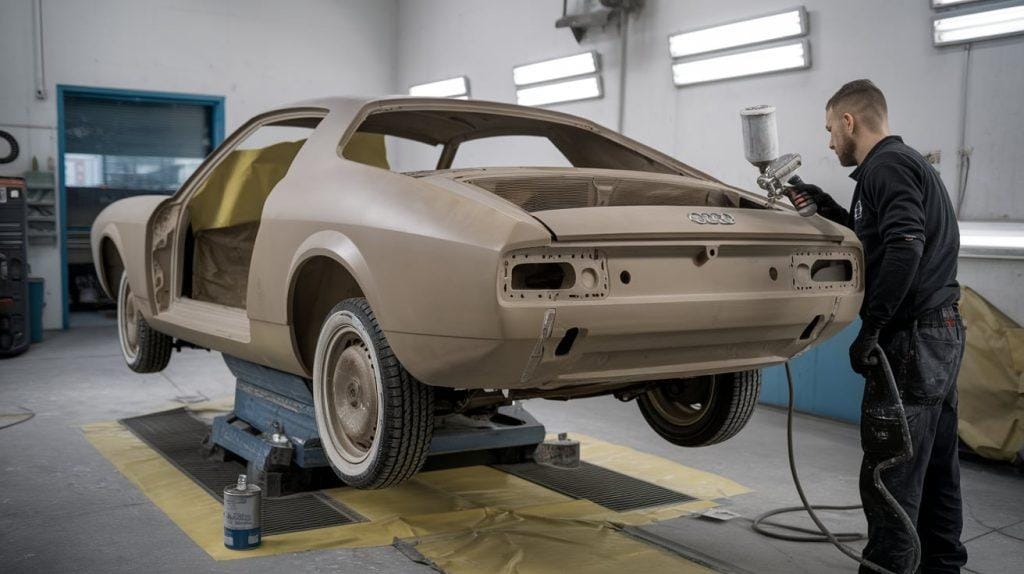
Paint correction uses abrasive compounds and polishing to remove or reduce defects by levelling a small amount of clear coat. It can improve swirls, haze, oxidation and some scratches, but the depth of every defect must be assessed.
A scratch that catches a fingernail, exposes colour or primer, or has already reduced the clear coat too far may need touch-up or repainting rather than additional polishing. Repeated aggressive correction can leave insufficient clear coat.
One-Step or Multi-Step Correction?
- One-step enhancement: improves gloss and reduces light defects with limited cutting.
- Multi-step correction: uses a stronger cutting stage followed by refinement for heavier defects.
- Localised repair: may be suitable for isolated sanding marks, etching or touch-up work.
The technician should measure paint thickness where practical and inspect for previous refinishing before recommending aggressive correction.
Which Combination Should You Choose?
| Your situation | Practical option |
|---|---|
| New Audi used daily on highways | Full-front PPF plus optional compatible ceramic coating on the film and remaining paint |
| City-driven Audi with good paint | Decontamination, light polishing if needed and ceramic coating |
| Used Audi with swirls and haze | Paint correction first, then coating or selected PPF |
| RS, special colour or long-term keeper | Detailed inspection, correction as needed and broader PPF coverage |
| Short ownership period or limited budget | High-impact film areas or a professionally applied sealant, depending on priorities |
Can PPF and Ceramic Coating Be Used Together?
Yes. A common strategy is PPF on impact-prone panels and ceramic coating on the remaining paint. A compatible coating can also be applied over some films to improve water behaviour and cleaning. The installer must use products designed for the surface because matte, satin and gloss films have different appearance requirements.
New Audi Paint Still Needs Inspection
A new car can have transport marks, dealer preparation swirls, water spots, dust nibs, touch-up areas or repainted panels. Inspect it under controlled lighting before protection. Whatever remains beneath film will still be visible, and a coating will not hide defects.
Used or Repainted Audi: Extra Checks
- Measure paint thickness and identify repaired panels where possible.
- Check whether the clear coat is stable enough for correction or film.
- Inspect panel edges for overspray, peeling or poor previous masking.
- Discuss how film removal may affect aftermarket paint.
- Correct body damage and unstable paint before installing protection.
For paint defects, panel repairs and refinishing, see our Audi body shop and paint repair service.
How to Maintain Protected Audi Paint
- Rinse loose dust before touching the surface.
- Use a clean wash mitt, pH-appropriate shampoo and separate wheel tools.
- Dry with clean, soft towels or filtered air rather than allowing mineral-rich water to bake onto the paint.
- Remove bird droppings, insects and tree sap promptly using a safe method.
- Avoid abrasive compounds or strong solvents unless the product manufacturer permits them.
- Inspect film edges and coating water behaviour during maintenance washes.
- Use compatible maintenance products instead of layering unknown waxes and sprays.
Professional decontamination and maintenance can be arranged through our Audi car detailing service.
When PPF Should Be Repaired or Replaced
Have the film inspected when edges lift, contamination becomes trapped, yellowing or staining appears, the surface cracks, a panel has been impacted or bodywork is required. A damaged section can often be replaced by panel rather than removing the entire installation.
Do not pull old film from a repainted panel without assessing paint stability and using the correct removal method.
Common Paint-Protection Myths
- “Ceramic coating is scratch-proof.” It can resist light environmental effects but does not prevent physical scratches and chips.
- “PPF never shows damage.” The film is sacrificial and can mark, stain or tear while protecting the paint beneath.
- “A new car does not need preparation.” New vehicles still require inspection and may need decontamination or light correction.
- “Paint correction adds protection.” Correction improves existing paint but needs a coating, film, sealant or wax afterwards.
- “Protected cars can use any car wash.” Poor washing can damage film edges, create swirls and reduce coating performance.
When you are ready to compare a workshop treatment rather than the options themselves, use the Audi paint protection service page.
Frequently Asked Questions
Is PPF or ceramic coating better for Dubai?
PPF is better for stone chips and impact. Ceramic coating is better for gloss, easier cleaning and environmental resistance. Many owners combine them.
Does ceramic coating prevent scratches?
It may provide limited resistance to very light marring, but it does not prevent scratches from road debris, dirty brushes or contact damage.
Should paint correction be done before PPF?
Only as much as the paint condition requires. Defects visible before installation can remain visible through the film.
Can PPF be installed over repainted panels?
It can be possible, but paint stability and curing must be assessed. Later removal may carry more risk than on stable factory paint.
Can ceramic coating be applied over PPF?
Yes, when the coating is compatible with the film’s material and finish.
Will PPF hide stone chips?
No. Existing chips should be assessed and repaired where appropriate before film is applied.
How long do PPF and ceramic coating last?
Service life varies by product, preparation, exposure, washing and maintenance. Use the written manufacturer and installer warranty rather than a universal number.
Can water spots form on ceramic coating?
Yes. Hydrophobic behaviour does not prevent mineral deposits when water is allowed to dry repeatedly on a hot surface.
Technical References
This guide follows the functional distinctions described by recognised product manufacturers: paint protection film as a physical surface barrier, ceramic coating as a bonded protective coating, and paint correction as an abrasive defect-removal process. Product-specific care and warranty instructions should always be followed.