

Audi Spark Plug Replacement
Audi spark plug replacement should start with the exact VIN, engine code, service history, and current running condition. We match the correct plugs to the engine, separate normal scheduled replacement from misfire diagnosis, install them carefully, and verify the result before the car leaves.
Replace due plugs, but diagnose a running fault before ordering parts
Spark plugs create the controlled spark that ignites the air and fuel mixture in a petrol engine. Their electrode condition, heat range, reach, construction, gap, and installation all matter. When the plugs have reached the applicable service interval, replacement is a planned maintenance job. When the Audi is shaking, hesitating, hard to start, losing power, or showing an EPC or check-engine warning, replacement becomes one possible repair inside a wider diagnostic process.
Worn, fouled, cracked, overheated, incorrectly gapped, loose, or wrong-specification plugs can contribute to a misfire. So can a weak ignition coil, damaged coil connector, injector problem, fuel-pressure fault, intake leak, crankcase-ventilation fault, low compression, valve issue, timing problem, wiring fault, unsuitable software calibration, or contaminated fuel. The correct decision depends on what testing confirms, not which part is easiest to replace.
We identify the vehicle by VIN and engine code, review the history, scan relevant control modules when symptoms exist, inspect accessible ignition components, and compare the evidence across cylinders. If the plugs are simply due, the scope can stay focused. If the condition of a removed plug points toward oil, fuel, cooling, mechanical, or heat problems, that evidence changes the next step.
What you notice and what it can actually mean
The same symptom can come from several systems. We use the timing, cylinder pattern, engine load, temperature, recent work, and physical condition of the parts to narrow the cause.
Rough idle or shaking
Worn plugs can cause misfires, but coils, injectors, air leaks and engine mounts can produce similar symptoms. Cylinder checks help identify the cause.
Hesitation under acceleration
A worn plug or weak coil may struggle under load. Fuel delivery and boost faults also need checking.
Hard starting
Fouled plugs can affect starting. Battery condition, cranking speed, fuel pressure and timing may also be involved.
EPC or check-engine light
We review the full scan and fault conditions. A misfire code alone does not confirm a failed spark plug.
Higher fuel use
Poor combustion can increase consumption, but sensor faults and driving conditions also matter. Replacement follows diagnosis.
Problems after recent work
Check plug specification, coil seating, connectors and disturbed hoses before replacing more parts.
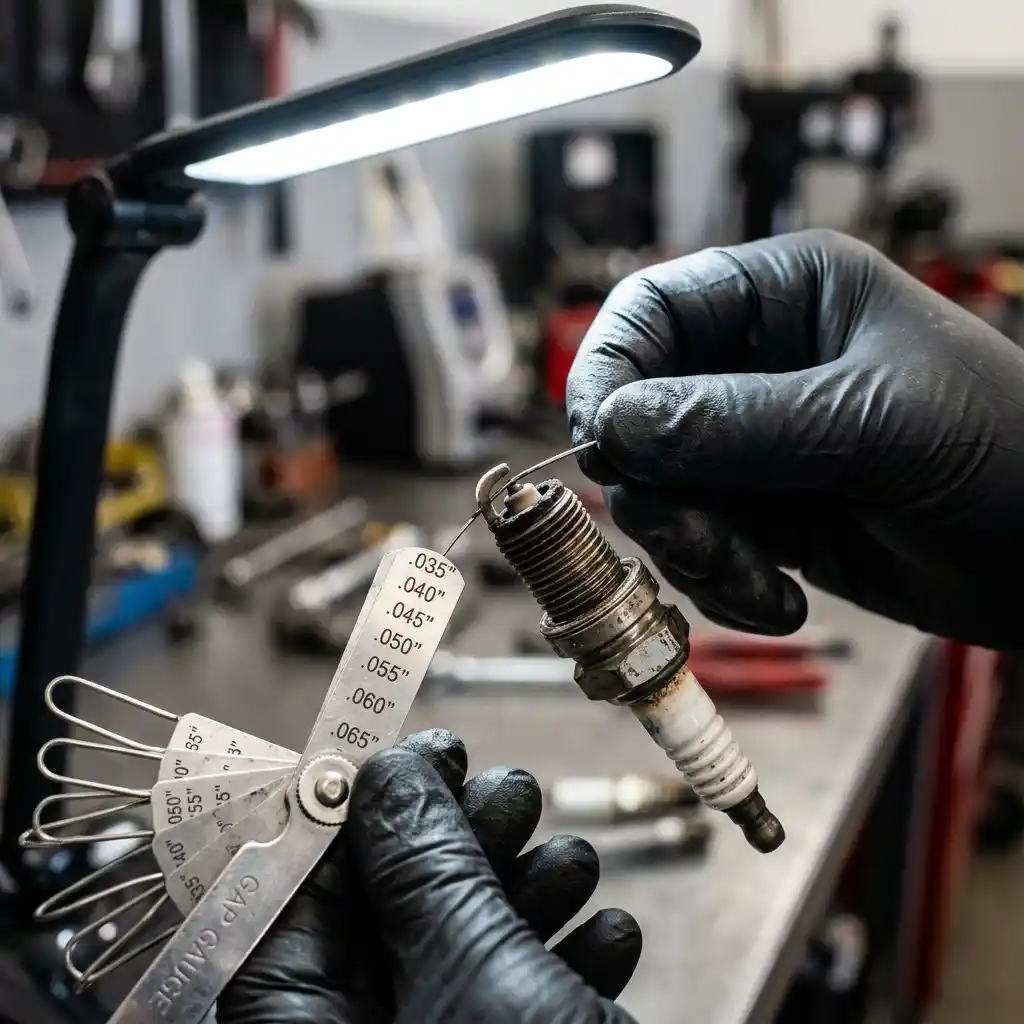
The electrode can reveal evidence without naming the whole fault
Removed plugs are kept in cylinder order when their condition may help diagnosis. One unusual plug among otherwise similar cylinders can be more informative than viewing them as a mixed set.
How we move from complaint to confirmed repair
The sequence is adapted to the engine and symptom. A normal scheduled service does not need every diagnostic step, while a severe intermittent misfire may require evidence captured under very specific conditions.
Identify
Confirm the VIN, model year, engine code, mileage, service records, modifications, current warning messages, and when the complaint occurs.
Scan
Read stored and pending faults, freeze-frame information, cylinder misfire data, fuel corrections, and related module information when symptoms justify it.
Inspect
Check wiring, connectors, coils, plug wells, oil or water entry, intake connections, and signs that recent work disturbed the ignition area.
Compare
Use appropriate cylinder comparison, component testing, plug condition, compression or leak testing, fuel checks, and smoke testing when the evidence points beyond routine wear.
Verify
Install only the approved parts, restore all connections, start and warm the engine as appropriate, check live misfire behavior, and repeat the original condition safely.
If the complaint includes a wider drivability warning, our Audi engine malfunction diagnosis page explains how EPC, check-engine, reduced-power, and misfire symptoms are separated before repair approval.
VIN, engine code, and fitted specification decide the plug
Audi models can share a badge while using different engines across generations, markets, outputs, and production changes. Petrol engines may be naturally aspirated, turbocharged, mild-hybrid, or performance tuned. Cylinder count and packaging also change access. The correct plug cannot be chosen reliably from the model name alone.
Part number, thread reach, seat design, heat range, electrode material, interference clearance, pre-set gap, and tightening procedure must match the application. Some plugs should not have their gap adjusted in the same way as a traditional single-electrode plug. We follow the applicable part information rather than applying a universal gap or torque figure.
S and RS vehicles, modified engines, and cars using non-standard software need particular care. A colder plug or shorter interval should never be assumed just because a car is performance focused. The installed calibration, approved parts information, driving conditions, and actual evidence must guide the decision.
What can change the replacement scope
Coils are inspected and tested when a fault is suspected. They are not automatically replaced as a complete set simply because the plugs are being changed.
Torn boots, corrosion, oil contamination, brittle locks, damaged pins, or wiring strain can leave a misfire after new plugs if they are overlooked.
Some engines require ducts, covers, braces, or intake components to be removed. Seals and single-use hardware are evaluated according to the actual access procedure.
Oil or water around a plug is a separate fault. The source should be corrected and the coil and connector condition checked before the area is reassembled.
Resistance, previous over-tightening, cross-threading, or damaged threads can turn routine replacement into a specialist repair decision. Continuing blindly can increase damage.

Careful installation matters as much as the selected part
The engine is allowed to reach a suitable working condition before access begins. Covers, ducts, connectors, coils, and other components are removed without pulling on brittle wiring or allowing contamination into open plug wells. Debris around the plug area is controlled before a plug is loosened.
Removed plugs are inspected and, when diagnosis matters, kept in cylinder order. New plugs are checked against the verified application and for visible shipping damage. They are started cleanly to avoid cross-threading and tightened according to the applicable procedure. Universal habits such as adding lubricant to every thread or forcing a preset plug gap can change tightening behavior or damage an application that requires a different method.
- Confirm every coil is fully seated and every connector lock is secure.
- Restore hoses, ducts, brackets, seals, and wiring routes disturbed for access.
- Check for oil, coolant, water, or debris remaining in the plug wells.
- Start the engine and assess idle quality, warning lights, and relevant live data.
- Repeat the reported operating condition when it can be done safely and legally.
Use the warning behavior and engine condition to decide the next move
Nobody can confirm that a misfiring vehicle is safe from a message alone. The guide below helps you choose between a prompt inspection and stopping for recovery advice.
Routine booking
The engine runs smoothly, no warning is active, and replacement is due from the verified maintenance history. Arrange the service before the interval is exceeded and send the VIN so parts can be checked.
Inspect promptly
A steady warning, mild intermittent hesitation, or occasional rough start needs diagnosis soon. Avoid hard acceleration and long journeys until the cause is known. If the condition worsens, stop and reassess.
Stop and call
Pull over safely and switch off if the check-engine light flashes, the engine shakes severely, power drops sharply, fuel smell is strong, smoke appears, the car repeatedly stalls, or safe control in traffic is affected. Ask whether recovery is required.
Why a scheduled plug service and a misfire repair are different jobs
A routine replacement on an accessible engine with verified parts has a different scope from diagnosing an intermittent misfire on a tightly packaged engine. We do not publish one price or turnaround time because it could misrepresent the work your Audi actually needs.
Reduce repeat ignition problems without replacing parts blindly
Good maintenance protects the evidence as well as the engine. Record what was fitted, correct leaks that contaminate the ignition area, and investigate new warnings before they become persistent.
Useful owner checks
- Keep the VIN-based maintenance record and the date or mileage of plug replacement.
- Photograph warning messages before switching the car off when it is safe to do so.
- Note whether the fault is cold, hot, at idle, under acceleration, after refueling, or after recent work.
- Use the fuel grade required for the exact vehicle and avoid guessing that fuel quality is the cause without evidence.
- Arrange inspection when oil or water is found near the coils or a connector no longer locks correctly.
These observations help reproduce an intermittent fault. They do not require dismantling the ignition system at the roadside.
Where DIY becomes risky
Access can involve fragile connectors, deep plug wells, tightly packaged intake parts, hot components, and aluminum cylinder-head threads. Using the wrong plug, contaminating an open well, cracking an insulator, damaging a coil boot, cross-threading, or applying an unsuitable tightening method can create a larger repair.
A scan tool also does not turn a fault code into a part diagnosis. Workshop-only steps may include load testing, smoke testing, waveform or electrical checks, compression or cylinder leakage assessment, injector evaluation, safe road verification, and review of live misfire behavior. If the engine is actively misfiring, avoid experiments that allow unburned fuel to continue entering the exhaust.
Audi spark plug replacement near you in Dubai
Our Al Quoz 4 workshop handles scheduled plug replacement and diagnosis when the complaint may extend beyond the plugs. Send the vehicle identity and the behavior you notice before parts are ordered. That lets us distinguish a straightforward maintenance booking from a visit that needs diagnostic time.
Bring previous service invoices or scan reports when available. If the car has been modified, recently tuned, refueled immediately before the fault, or worked on elsewhere, mention that too. These details can change the order of inspection without predetermining the answer.
Audi spark plug replacement FAQs
These answers address the common decisions that remain after the service scope, diagnosis, safety, and vehicle-specific requirements above.
How often should Audi spark plugs be replaced?
There is no single interval for every Audi petrol engine. The applicable schedule depends on the exact model, engine, model year, market specification, and plug application. Service history and current condition matter too. We use the VIN and engine information to identify the correct requirement rather than applying one mileage figure to every car.
Should all spark plugs be replaced together?
For normal scheduled maintenance, the complete engine set is generally treated as one service because the plugs share the same age and operating history. Diagnosis can still focus on one unusual cylinder. If a recently fitted plug is damaged or another fault affects only one cylinder, the final parts decision should follow the inspection and applicable repair information.
Do ignition coils need replacement with the plugs?
Not automatically. Coils should be checked for visible damage, contamination, connector faults, and performance problems when symptoms exist. Replacing every coil without evidence adds cost and can hide the original diagnostic question. A confirmed weak coil, damaged boot, or failed connector is a separate repair decision.
Can worn spark plugs cause an EPC or check-engine light?
Yes, worn or damaged plugs can contribute to combustion misfires that trigger a warning. The same warnings can result from coils, injectors, fuel pressure, air leaks, sensors, wiring, compression, valve timing, or other engine-management faults. The stored code and freeze-frame information must be interpreted with physical testing.
Can spark plugs be cleaned and reused?
Cleaning does not restore eroded electrodes, repair a cracked insulator, correct an unsuitable heat range, or reset a plug that has reached its scheduled life. A temporarily fouled plug may also be evidence of another fault that will foul the replacement. Reuse is not a substitute for identifying condition and cause.
Do turbocharged, S, and RS Audi engines use different plugs?
They can use different part numbers, specifications, and service requirements, but performance branding alone is not enough to choose a plug. Engine code, production date, market, factory specification, and any approved or non-standard calibration must be considered. We verify the exact application before fitting parts.
Will new spark plugs improve fuel economy and power?
They may restore normal combustion if worn or faulty plugs were reducing performance, but no improvement should be guaranteed without evidence. Fuel use and response are also affected by traffic, driving style, tires, air-conditioning load, fuel, sensors, injectors, boost control, compression, and many other conditions.
How long does Audi spark plug replacement take?
Time varies with engine layout, cylinder count, access, diagnosis, component temperature, damaged connectors, oil or water in the wells, previous installation, and thread condition. A routine four-cylinder service and a diagnostic job on a tightly packaged multi-cylinder engine are not equivalent. Timing is confirmed after the vehicle and scope are known.
Can I keep driving with a misfire?
A description cannot confirm safe driving. A mild intermittent symptom still needs prompt inspection. Stop safely and call for advice if the warning flashes, the engine shakes severely, power drops sharply, fuel smell is strong, smoke appears, the car stalls, or normal control in traffic is affected. Continued active misfiring can also send unburned fuel into the exhaust.
What information helps you quote the correct service?
Send the VIN, model year, mileage, engine details if known, last plug replacement, warning-light photo, scan report, exact symptoms, and any recent ignition, engine, tuning, or fuel-related work. We can identify likely parts and the appropriate booking type, while the final scope remains subject to inspection and current parts availability.
Book the right ignition service for your Audi
Send the VIN, mileage, service history, and any warning or running symptom. We will help you choose scheduled spark plug replacement, a diagnostic inspection in Al Quoz 4, or recovery advice when the misfire is severe.