
Audi serpentine belt replacement in Dubai
Book a belt inspection or replacement for your Audi. We check belt wear, tensioners and pulleys, identify any related fault, and fit the correct belt for your engine.
Audi serpentine belt replacement service
Audi serpentine belt replacement includes checking the fitted belt system, removing the worn or damaged belt, fitting the correct replacement and checking its operation. If a pulley, tensioner or fluid leak caused the damage, that fault needs attention before the new belt goes into service.
The auxiliary drive can power the alternator, air-conditioning compressor or other accessories, depending on the engine. We confirm the layout before quoting. A belt-only repair is appropriate when the supporting components are serviceable; additional parts are listed separately when inspection shows why they are needed.
Signs your Audi needs a belt inspection
A noise or warning gives us a starting point. Tell us whether it happens at the first start, after warming up, with the AC operating or following recent engine work.
| What you notice | Possible cause | What we check |
|---|---|---|
| Squeal on starting | Belt slip, contamination, low tension or increased accessory load. | Belt condition, tensioner action and behaviour under the reported load. |
| Rhythmic chirping | Pulley alignment, rib damage or incorrect belt seating. | Tracking, pulley position and the installed belt specification. |
| Cracks or missing ribs | Age, material wear, contact damage or the belt moving sideways. | The complete belt surface, edges, pulley grooves and clearances. |
| Belt moves off centre | Tensioner wear, pulley play, a damaged bracket or accessory fault. | Alignment and movement of the supporting components. |
| Battery warning | Loss of alternator drive or a separate charging-system fault. | Belt drive and charging operation before recommending an alternator. |
| Heavy steering or rising temperature | Loss of a belt-driven function where that layout is fitted. | The vehicle’s accessory arrangement and any resulting system fault. |
A belt can wear without widespread cracking. Rib material loss, fraying, glazing and contamination deserve attention even when the visible backing looks intact.
When to stop the engine
Stop safely and switch off if the belt breaks or comes off, strands collect around a pulley, or you notice smoke, a strong burning-rubber smell or an unexpected change in steering assistance. A charging warning accompanied by rising temperature also calls for an immediate stop.
Do not assume the car can continue because the engine still runs. Cooling and charging consequences depend on the fitted drive. A loose belt can damage nearby parts, and repeated restarts can make that damage worse. Call with the warning message and vehicle condition so recovery can be discussed.
An occasional chirp without warnings still needs a booking, especially if it is getting louder or follows a leak. Keep hands, clothing and tools away from the belt area. Electric fans can operate unexpectedly, and hot components remain hazardous after shutdown.
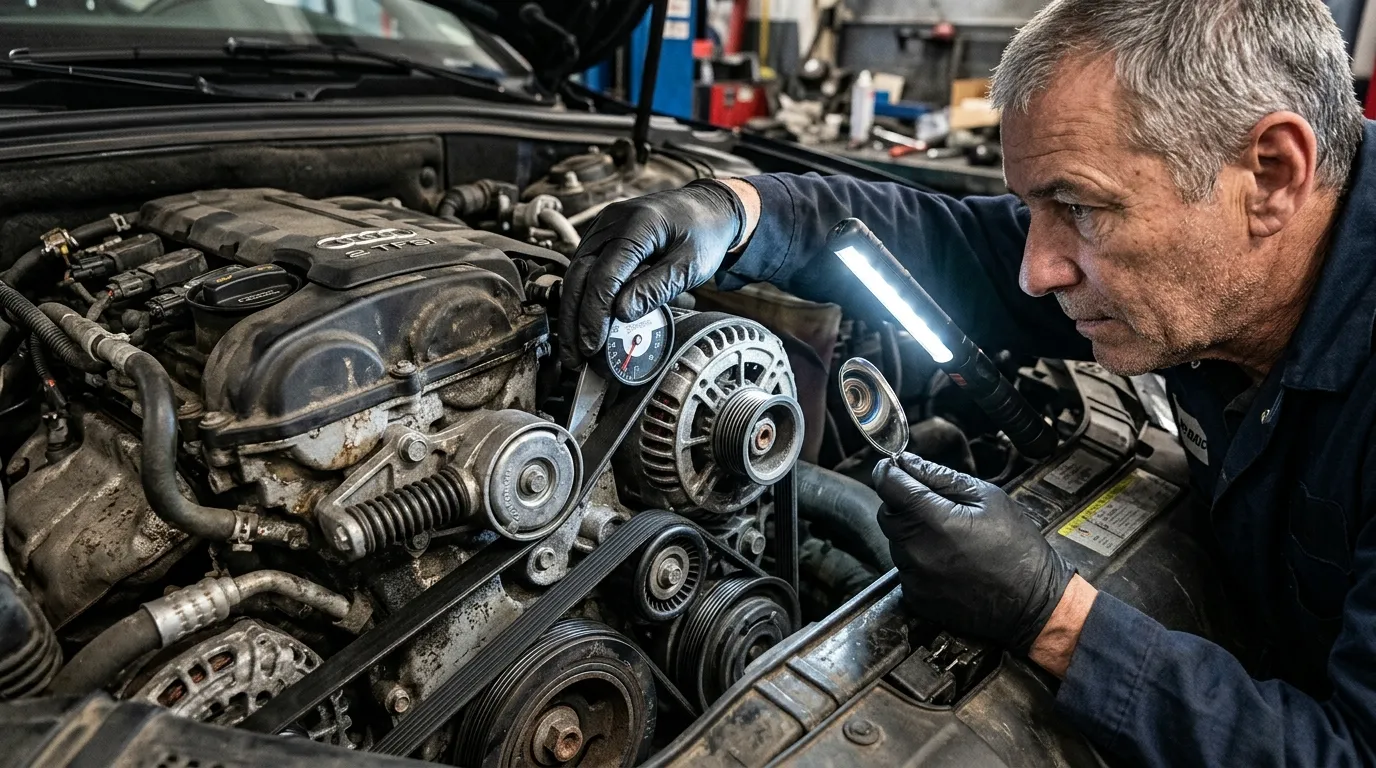
What we inspect before fitting a belt
Confirm the belt layout
We check the VIN, engine details, fitted equipment and recent repair history. Belt length, rib count and routing must match the vehicle. The existing belt is a useful reference, but an incorrect previous installation must not become the specification for the replacement.
Inspect the belt path
The technician checks ribs, backing and edges, then looks for contamination or contact with surrounding parts. Safe observation of tracking and tensioner movement can help reproduce the complaint. With the engine made safe and the belt removed, accessible pulleys are checked for roughness, play and binding.
Find the supporting fault
Checks cover the tensioner, idlers, crankshaft pulley damper and driven accessories as applicable. Oil or coolant traces are followed to their source. An alternator pulley or compressor problem needs its own assessment; the belt’s appearance alone cannot establish which accessory has failed.
Why a new belt can still make noise
Pulley or tensioner wear
A new belt may continue to chirp if a pulley is misaligned or has bearing play. A tensioner with poor damping or restricted travel can also let the belt slip. Movement is assessed in context because accessory behaviour can affect the tensioner as well.
Oil or coolant contamination
Fluid reaching the drive can affect grip and belt condition. Fitting another belt without finding the leak leaves the same exposure in place. We inspect the area above the belt and check whether contamination has also affected the supporting components.
Incorrect fitting
A wrong belt length, missed groove, incorrect route or installation damage can create immediate noise or edge wear. The belt must sit correctly on every pulley. Forcing it into place can damage it before the engine is started.
Noise from another component
Timing components, a water pump, vacuum pump or internal engine fault may sound as though they are near the auxiliary drive. Controlled workshop checks separate these sources. Belt dressing can change a sound temporarily while leaving the mechanical cause unresolved.
If testing confirms a charging component fault, our Audi alternator replacement service covers that separate repair. A battery warning alone does not establish that the alternator needs replacement.
Which parts need replacement?
Belt only
A worn or damaged belt can be replaced on its own when the tensioner, idlers, alignment and accessories are sound. We also check that the belt path is clean and that there is no active leak likely to affect the new part.
Belt and supporting parts
A rough idler, weak tensioner or damaged pulley may need replacement during the same visit. The inspection should identify the defect and the part involved. Replacing every accessory is not a standard requirement of belt fitting.
Repair the cause first
A seized accessory, deteriorated crank pulley or fluid leak can damage another belt quickly. These repairs need separate approval. The quote should show the underlying repair, replacement belt and any access-related hardware required.
How the replacement belt is fitted
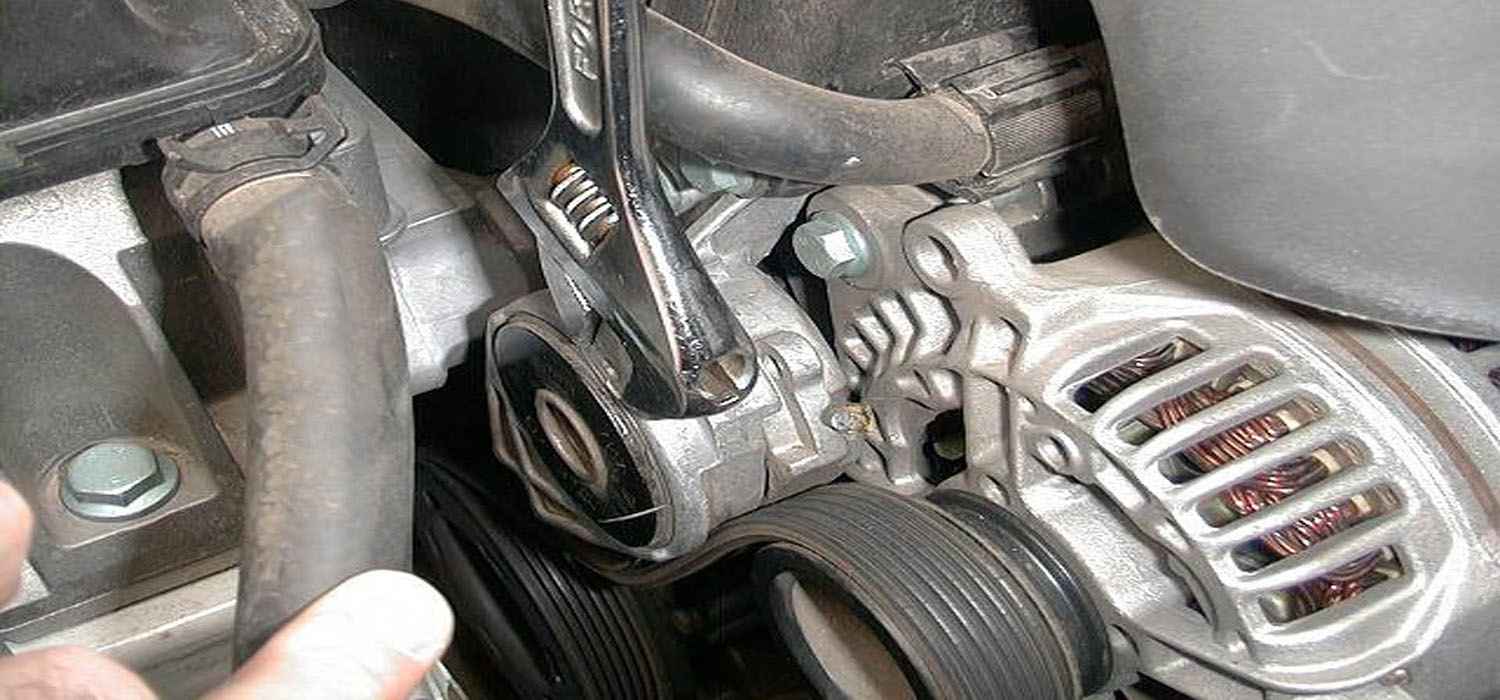
Access depends on the engine installation. Covers, intake ducts or underbody protection may need removal. On some layouts, additional service access is required. Nearby hoses and wiring are protected, and the routing is checked before the tensioner is released using the applicable procedure.
With the old belt removed, the technician completes the pulley checks and the approved related repairs. The replacement is positioned in the specified route, with every rib seated correctly. Fasteners and any one-time hardware are handled according to the component requirements.
A stretch-fit belt requires its own fitting method. It must not be treated like a conventional belt with an automatic tensioner. We check clearance around covers and brackets before operating the drive and refit the access pieces after the installation checks.
Stored spring force, limited access and moving machinery make this a workshop procedure. Do not pry a belt over a pulley, improvise its route or run the engine with an improvised bypass. These shortcuts can damage components or remove a required function.
The correct belt for your Audi

Model and year help narrow the choice, but the engine code, production date and installed equipment determine the part. Similar-looking engines can use different belt lengths, pulley designs or accessory arrangements. VIN and relevant equipment codes are checked alongside the fitted system.
Some layouts use one long multi-rib belt; others have separate drives or a stretch-fit section. Alternator decouplers, AC compressor drives, electric steering and cooling arrangements also vary. A mild-hybrid belt starter-generator drive needs the correct belt and tensioning specification for that system.
Plug-in hybrids require precautions appropriate to the work location. Battery-electric e-tron vehicles do not use a combustion-engine auxiliary belt layout. We identify the actual drive involved before recommending parts or a service.
The timing drive is separate. If your service record calls for that work, see Audi timing belt replacement. Replacing an auxiliary belt does not renew the timing belt or reset its maintenance requirements.
Checks after belt replacement
The replacement is checked against the condition reported at booking. A quiet idle is only part of the handover check when the original noise appeared with load or after warming up.
Belt tracking
We check seating, alignment, clearances and tensioner behaviour during the relevant operating checks. No rib should ride outside its groove. Covers and nearby hoses must remain clear of the moving drive.
Accessory operation
Charging is checked where the alternator is belt-driven. Other affected accessories are assessed according to the layout and complaint. Any relevant fault memory is reviewed after a drive failure or disturbed electrical connection.
Original noise
Cold-start or load-related complaints may require the same conditions to be repeated safely. An appropriate road check is used when it adds useful confirmation, followed by inspection for abnormal tracking or fresh contamination.
Additional procedures
The belt itself normally needs no coding. Fluid bleeding applies only if an approved related repair opens a circuit that requires it. Wheel alignment and driver-assistance calibration are not routine belt-replacement operations.
Audi serpentine belt replacement cost
The cost depends on your engine and the work needed to restore the drive. Send your VIN for the correct belt to be identified, then arrange inspection if there is noise, contamination or repeated belt damage.
What affects your quotation
Access labour, the number of belts and the condition of the tensioner and idlers affect the estimate. A failed crankshaft pulley, alternator decoupler or accessory adds a separate repair. An oil or coolant leak also needs its own scope.
Time depends on access, parts availability and whether the noise can be reproduced. A cold-start complaint may require the car to remain until it has cooled. Tell us before booking if the fault appears only after a long journey.
The quotation should identify the belt, any separately approved parts, access work and final checks. Damage or seized hardware found during removal may change the scope. We discuss those findings before additional work proceeds.
Help prevent repeat belt damage

Inspect during service
Follow the maintenance information for your engine and have the auxiliary drive inspected during relevant service visits. Report a new chirp, fraying or rubber debris promptly. Keep the previous invoice so the age and specification of the fitted belt can be checked.
Keep leaks off the belt
Attend to oil and coolant leaks before they reach the drive. Avoid belt sprays, dressing or unapproved cleaning chemicals. A noise that disappears after spraying has not necessarily been repaired. Check the belt path again after work that disturbed an accessory, bracket or cover.
Report returning symptoms
If the original symptom returns after replacement, note when it happens and contact the workshop. A safely recorded sound from outside the moving-component area may help reproduce an intermittent complaint. Do not reach into the engine bay to obtain a closer recording.
Serpentine belt replacement FAQs
How much does Audi serpentine belt replacement cost?
The price depends on the engine, number of belts, access and the condition of the pulleys and tensioner. Send the VIN and symptoms for a parts check. A quotation can then separate belt fitting from a confirmed leak, tensioner or accessory repair, so you can see what you are approving.
How often should the auxiliary belt be replaced?
Use the maintenance information for the exact engine and the condition found during inspection. Age, mileage, rib wear, contamination and service history all matter. A belt can lose material without extensive surface cracking, so a quick look at the exposed backing cannot establish its remaining life.
Does a squealing belt always need replacement?
A squeal can come from slip caused by poor tension, contamination or accessory resistance. The belt may also be incorrectly specified or routed. Inspection establishes whether the belt is damaged and which supporting fault needs correction. Replacing a sound-looking belt alone may leave the noise unchanged.
Should the tensioner and idlers be changed too?
They need inspection with the belt. Rough bearings, play, poor alignment, binding or abnormal tensioner movement can justify replacement. Sound components are not automatically condemned, but the quotation should explain any recommendation to renew related parts while access is available.
Can I drive if the serpentine belt breaks?
Stop safely and switch off. The affected functions depend on the engine, and continued running may cause overheating, loss of charging or further damage from loose belt material. Arrange recovery rather than restarting repeatedly to find out how far the car will travel.
Is this the same service as timing belt replacement?
No. The serpentine belt drives external accessories. A timing belt, on an engine fitted with one, maintains engine synchronisation. The parts, access and procedures differ. Tell us which belt a previous workshop identified, or send its report so the correct service is booked.
Will the replacement belt need coding or calibration?
The belt itself normally needs neither coding nor calibration. Charging operation and stored faults may require checking after drive failure. Additional setup applies only if another component or system involved in the approved repair requires it. Wheel alignment is not a routine part of belt replacement.
Can an oil-soaked belt be cleaned and reused?
A belt affected by oil should be replaced after the leak is corrected. Cleaning the surface does not establish that its material is still sound. The pulley grooves and nearby components also need inspection so the replacement is not immediately exposed to the same contamination.
Book your belt replacement in Al Quoz 4
For Audi serpentine belt replacement in Dubai, contact AMF AUTO SERVICES LLC at Warehouse 39, Al Quoz 4. Send the VIN, model, year and mileage, plus details of the noise, visible wear or dashboard warning.
Tell us about recent belt, alternator, AC or leak repairs. If the belt has broken or come off, call before travelling so recovery can be discussed. We can prepare the parts check and arrange inspection around the condition you describe.