
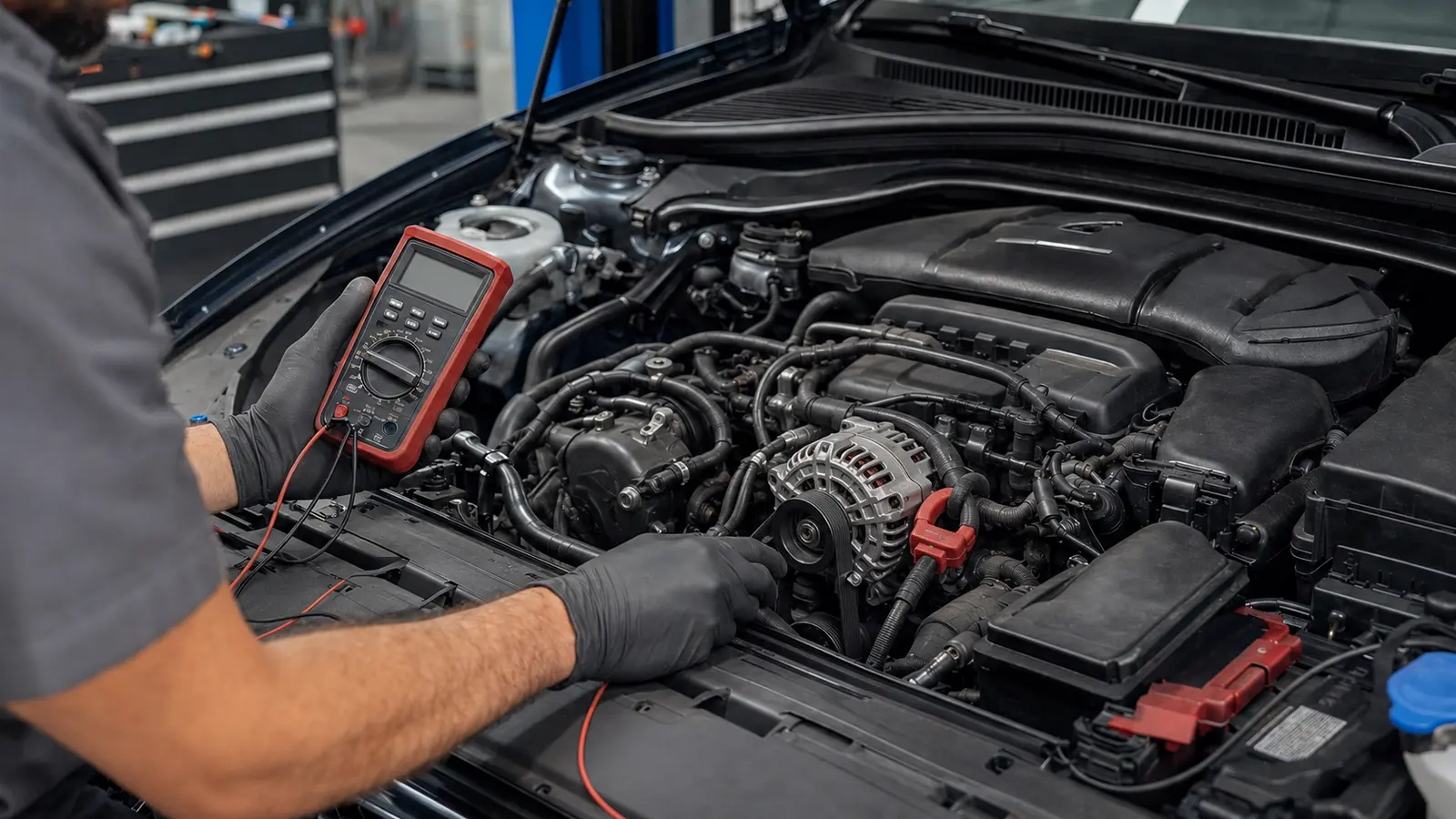
Audi Alternator Replacement in Dubai
Audi alternator replacement should follow proof that the generator, regulator, pulley, or internal rectifier has failed. We test the battery, belt drive, output under controlled loads, voltage drop, ripple, wiring, communication, and energy-management commands before approving a repair, replacement, or a different charging-system solution.
Follow energy from the crankshaft to the battery
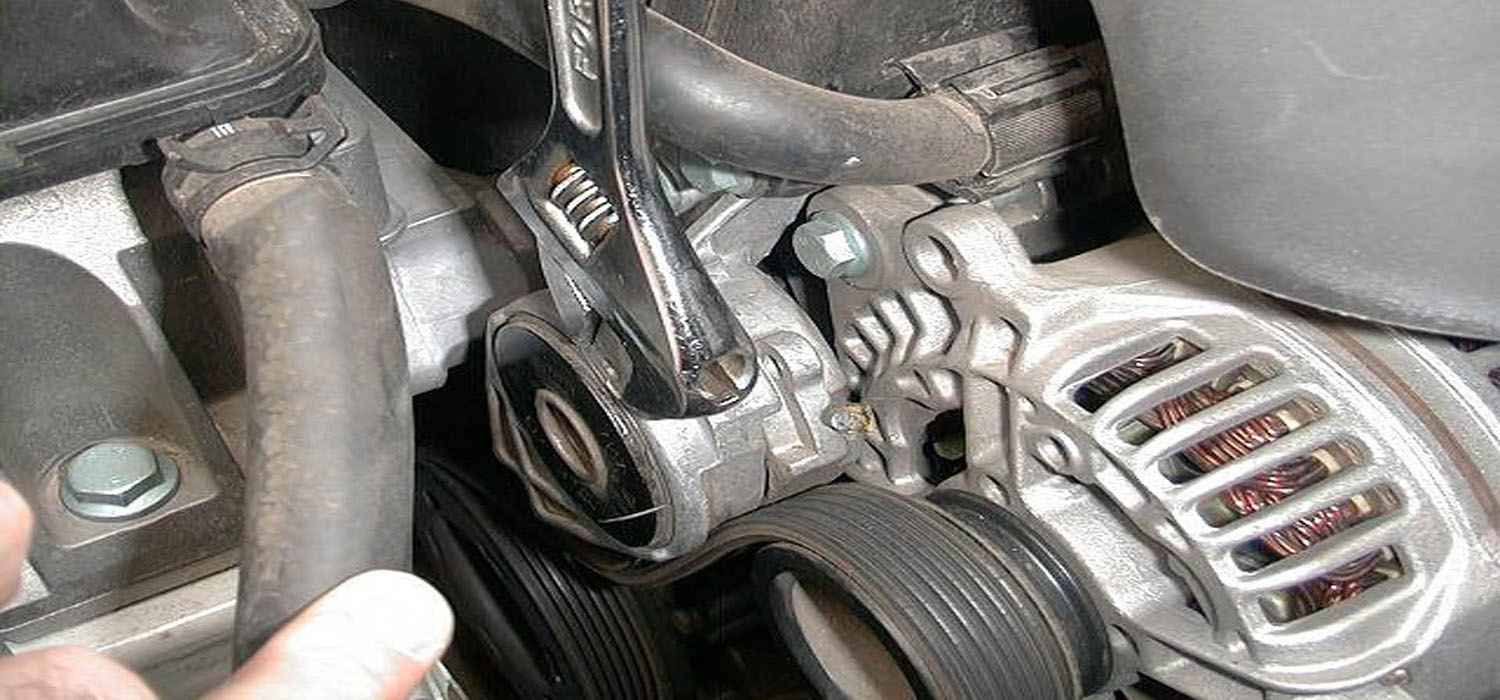
An alternator converts mechanical rotation into electrical energy while the engine runs. Its regulator manages output, a rectifier converts alternating current into usable direct current, and the charging path delivers that current through cables, fuses, junctions, grounds, sensors, and the battery. Modern Audi energy management can vary charging according to battery state, vehicle load, temperature, driving condition, and control strategy.
A battery warning does not prove the alternator has failed. The belt may be missing or slipping, an overrunning pulley can seize or freewheel incorrectly, a tensioner can oscillate, the main cable can lose voltage, a fuse link can open, a ground can fail, a battery-monitoring sensor or communication circuit can misreport, or the battery itself can accept charge poorly.
The correct diagnosis identifies which stage fails and under what condition. We preserve fault data, check physical drive and connections, stabilize the battery for testing, measure output and loss with controlled electrical demand, examine waveform or ripple when relevant, and compare actual behavior with controller requests.
Charging symptoms have several lookalikes
Record when the warning appears, whether the engine is cold or hot, which loads are operating, and whether steering, cooling, or belt noise changes. The pattern directs testing.
| What you notice | Alternator possibility | Important alternatives | Confirming evidence |
|---|---|---|---|
| Battery or charging warning | Low, absent, excessive, or unstable generator output or a communication fault. | Broken belt, cable or fuse loss, battery sensor, weak battery, ground fault, module supply, or DC-DC system on another powertrain. | Capture event Read exact message, fault status, system voltage, engine speed, temperature, and loads before clearing codes. |
| Lights dim or electronics reset | Output may be insufficient or contain unstable ripple under load. | Battery collapse, loose terminal, ground loss, high-resistance connection, module fault, or excessive electrical load. | Load test Monitor battery and system voltage while applying controlled loads and measure positive and ground-path loss. |
| Squeal, rattle, or belt movement | Alternator bearing or pulley can create drag or noise. | Tensioner, idler, compressor, crank pulley, coolant pump on some layouts, belt contamination, or misalignment. | Drive isolation Inspect belt path, pulley behavior, tensioner movement, alignment, heat, and component rotation using a safe procedure. |
| Battery repeatedly goes flat | Insufficient charging can leave the battery undercharged. | Battery capacity loss, parasitic draw, short journeys, module staying awake, charging strategy, loose connection, or user load. | Cause after effect Test battery condition, charging under use, and key-off draw or sleep behavior when the discharge timeline supports it. |
| Burning smell or smoke | Internal short, overheated diode, bearing seizure, cable resistance, or belt slip can generate heat. | Starter cable, battery, fuse box, other driven accessory, oil on exhaust, or unrelated wiring damage. | Stop engine Do not continue driving. Isolate the hot area safely and inspect for melted insulation, belt damage, and electrical heat. |
| Overcharging or battery odor | Regulator control can fail high or charging data can be incorrect. | Battery internal fault, sensor or communication problem, incorrect battery specification, charger misuse, or measurement error. | Protect electronics Measure with suitable equipment, compare commanded and actual behavior, and stop if the battery is hot, swollen, or venting. |
Tests must reproduce the condition, not only produce a number
Charging strategy and expected values depend on the exact vehicle. Results are interpreted with battery condition, temperature, control commands, and electrical load.
Battery baseline
Check battery type, state of charge, capacity or conductance evidence, terminals, physical condition, registration history where relevant, and voltage stability before judging generator output.
Belt and pulley path
Inspect belt, tensioner, idlers, alignment, contamination, crank pulley, alternator pulley, noise, heat, and whether the alternator is being driven correctly at idle and changing speed.
Output under demand
Measure system behavior at controlled engine speed and electrical loads. Smart charging can intentionally vary voltage, so controller command and battery state provide context.
Positive-path loss
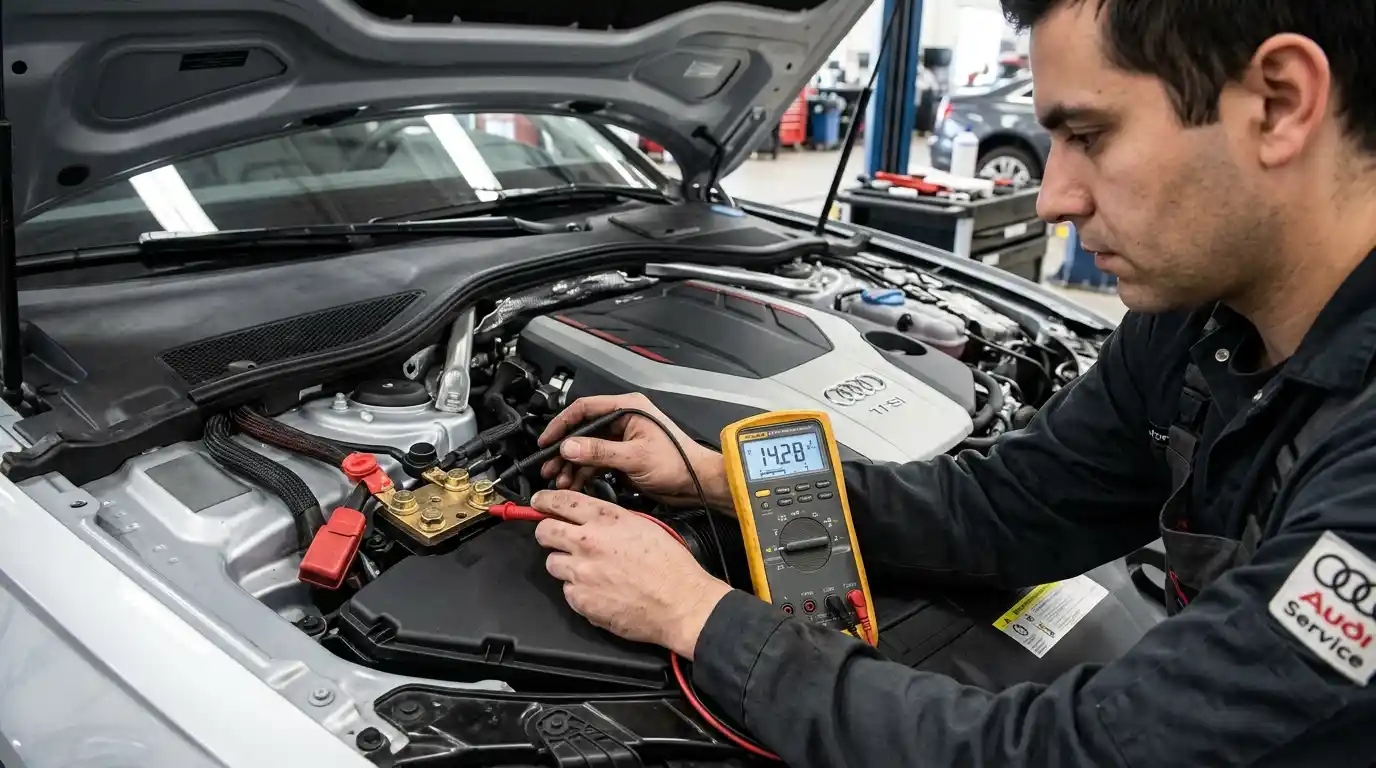
Measure voltage drop from alternator output through cable, fuse or junction points, terminals, and battery while current flows. A cable can look clean yet lose significant voltage under load.
Ground-path loss
Test alternator case, engine, body, and battery ground paths under operating load. Corrosion, loose fasteners, damaged straps, or poor contact can imitate weak output.
Control and waveform
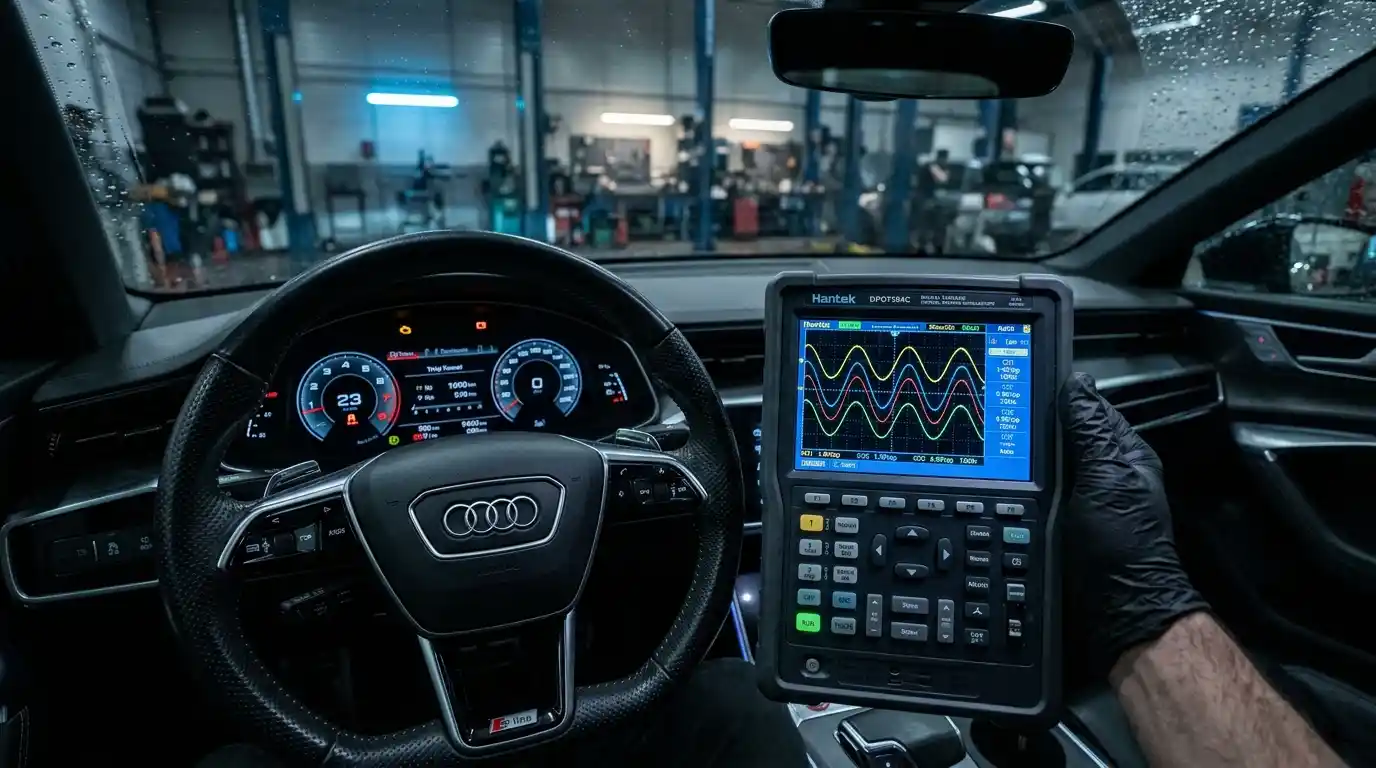
Review relevant faults, commands, communication, field or load response, current measurement, and rectifier ripple where useful. Heat-related or intermittent faults require the right timing.
Current, voltage drop, and ripple answer different questions
Voltage describes electrical potential at the test point. Current describes how much charge is flowing. Voltage drop shows energy lost across a cable, connection, fuse, or ground while current flows. Ripple reveals unwanted alternating content or irregular waveform associated with rectifier, stator, or phase behavior. One measurement cannot replace the others.
Results must be collected with suitable test equipment and a known condition. A freshly supported battery, a nearly full battery, an active energy-management strategy, high ambient temperature, idle speed, and large cabin loads can all change the observation. Intermittent faults may appear only after a hot soak or at a particular load.
Repair, rebuild, replace, or correct another part
The best scope depends on the failed element, alternator design, parts quality, access, vehicle age, electrical load, and the reliability required from the repair.
Repair a serviceable external fault
A cable, ground, connector, fuse, communication wire, belt, tensioner, pulley, or mounting problem may be repairable without replacing a healthy alternator.
- Failure is outside the generator
- Output tests pass after correction
- No internal noise, ripple, or heat concern remains
- Connections and protections can be restored correctly
Rebuild the alternator
A controlled rebuild can suit a serviceable unit when the exact internal fault is known and suitable bearings, regulator, rectifier, slip rings, brushes, or windings can be restored and bench-tested.
- Housing, rotor, stator, and mounting remain suitable
- Correct components are available
- Rebuild quality and test evidence are defined
- Vehicle downtime and ownership plan support it
Install a replacement unit
Replacement can be appropriate for extensive internal damage, seized bearings, damaged housing, unavailable rebuild parts, failed regulator or rectifier assemblies, or a supported reliability decision.
- Exact output and control specification match
- Pulley and connector design are correct
- New, remanufactured, or used status is disclosed
- Related battery, belt, cable, and cause are addressed
A running engine can still stop when charging is lost
Vehicle behavior and battery reserve vary. A web page cannot predict remaining distance, and restarting may be impossible once the engine is switched off.
Intermittent warning only
Reduce unnecessary electrical loads and arrange prompt testing. Record when the message appears because heat, engine speed, steering, AC demand, and bumps can expose the cause.
Warning remains active
A continuing battery warning, unstable voltage, repeated resets, or worsening belt noise can lead to shutdown. Ask whether workshop travel or recovery is appropriate.
Steering, cooling, or lights change
Loss of a shared belt can affect other systems on some engines. Stop if steering assistance changes, temperature rises, lights dim heavily, or multiple systems fail.
Smoke, heat, or belt damage
Do not drive with smoke, burning odor, melted wiring, a hot or swollen battery, seized pulley, shredded belt, sparks, or severe electrical instability.
How the confirmed alternator repair is completed
Not every Audi has a conventional alternator
Belt-driven generator
Many petrol and diesel models use an engine-driven alternator with a regulator, pulley, accessory belt, charging cable, grounds, battery sensor, and controller-managed strategy. Layout and output vary by engine and equipment.
Variable charging behavior
The system can intentionally change voltage and load according to battery state, deceleration, temperature, demand, and control strategy. A fixed “normal voltage” copied from an older vehicle can produce a wrong diagnosis.
Starter-generator system
Some vehicles use belt-driven or integrated starter-generator equipment and a higher-voltage subsystem in addition to the 12-volt network. Isolation, control, cooling, and component identification differ from a normal alternator job.
DC-DC conversion
A battery-electric vehicle has no engine-driven alternator. Its 12-volt supply is supported through high-voltage battery and DC-DC systems. High-voltage safety, interlocks, isolation, charging state, and control diagnostics define the repair.
For a broader separation of 12-volt generation, battery faults, DC-DC systems, and plug-in charging, use our Audi charging fault diagnosis page.
The replacement must charge through the complete path
A new or rebuilt alternator can produce correct output at its terminal while the battery receives less because a cable, fuse, junction, or ground still loses voltage. Verification repeats the measurements that proved the fault and confirms the belt drive, control system, battery, and vehicle loads work together.
We check at idle and controlled engine speed under appropriate electrical demand, observe requested and actual charging behavior where available, measure drop across both supply paths, review ripple if it was abnormal, inspect temperature and noise, and confirm no warning or relevant fault returns. The battery is retested because prolonged undercharging or overcharging can damage it.
- Correct alternator, pulley, connector, output, regulator, mounting, and control specification
- Accessory belt routed correctly with stable tensioner and pulley behavior
- Acceptable positive and ground-path voltage drop under load
- Charging response consistent with battery state and vehicle command
- No abnormal ripple, bearing noise, heat, odor, or cable temperature
- No returning charging, communication, voltage, or belt-related warning
- Battery condition and the original discharge cause explained
What changes the quotation
- Exact engine, alternator or starter-generator design, output, control type, pulley, and availability
- New, remanufactured, rebuilt, or another approved parts route
- Access, service-position needs, belt release, cooling or AC component relationships, and underbody work
- Belt, tensioner, idlers, crank pulley, alternator pulley, brackets, and engine-mount condition
- Battery damage, cable resistance, fuse or junction faults, grounds, sensors, and communication wiring
- Heat damage, seized bearings, oil or coolant contamination, broken fasteners, and previous repairs
- Diagnostic time for intermittent, hot, load-dependent, or parasitic-discharge complaints
The written estimate follows testing and exact unit identification. A battery warning is not enough to quote an alternator replacement responsibly.
Correct the reason the unit was overloaded or damaged
Keep the battery in suitable condition because a deeply discharged or failing battery can place sustained demand on the charging system. Investigate repeated discharge instead of asking the alternator to restore a battery after every start.
Repair oil or coolant leaks that reach the generator or belt, replace damaged undertrays that expose components, and investigate belt dust, tensioner movement, pulley noise, or misalignment early. Use the correct battery type and complete any registration or adaptation required when the battery itself is replaced.
After water exposure, jump-start mistakes, wiring work, or accessory installation, watch for new warnings, hot cables, unstable lights, radio or module resets, and battery discharge. Added electrical equipment must be fused, grounded, sized, and integrated correctly.
Audi alternator replacement FAQs
Does a battery warning always mean the alternator has failed?
No. The warning can result from a broken or slipping belt, cable or ground loss, an open fuse link, weak battery, battery sensor, regulator or communication problem, controller supply fault, or a different charging architecture. Output, voltage drop, load response, and fault context must identify the failed stage.
Can a bad alternator drain the battery while parked?
It can if an internal diode or circuit creates a key-off current path, but modules staying awake, lighting, accessories, wiring faults, battery self-discharge, short trips, and other parasitic loads are also common. The draw must be measured after the vehicle reaches the correct sleep state.
Can I drive with the battery light on?
A running engine can stop when battery reserve is exhausted, and a shared belt problem can affect other systems on some engines. Call before driving. Stop and arrange recovery for smoke, burning odor, belt damage, heavy dimming, steering change, rising temperature, repeated resets, or severe instability.
Can the alternator be repaired instead of replaced?
Sometimes. A rebuild can suit a serviceable unit when the exact internal fault is known, correct components are available, the housing, rotor, stator, and mounting remain suitable, and bench testing can confirm the result. Extensive damage or unsupported parts can make replacement the better route.
Why test the battery when replacing the alternator?
The battery influences charging demand and may be the cause, consequence, or a second fault. Prolonged undercharging can leave it sulfated or weak, while overcharging can damage it. A poor battery can also distort charging tests. Both systems must be assessed together.
What is alternator ripple?
Ripple is unwanted alternating content within the charging output. An abnormal waveform can support a rectifier, diode, stator, or phase fault when connections, load, battery condition, instrument setup, and test method are valid. A simple average-voltage reading may not reveal it.
Does an Audi alternator need coding?
The requirement depends on the vehicle, generator or starter-generator design, controller, software, and repair procedure. A conventional alternator may not require coding, while another system can require adaptation, commissioning, or guided functions. Battery registration is a separate issue when the battery is replaced.
How long does Audi alternator replacement take?
Time depends on engine layout, access, service-position requirements, belt and pulley scope, cooling or AC relationships, seized hardware, wiring repairs, battery condition, unit availability, mild-hybrid or high-voltage procedures, and post-repair load testing. The schedule follows diagnosis and parts identification.
What should I send for an alternator quotation?
Send the VIN, mileage, exact warning text, when it appears, whether the car still starts, battery age and recent discharge history, belt or bearing noise, burning smell, water or fluid exposure, recent jump-starting or wiring work, and a photo of any damaged belt or hot connection.
Arrange an Audi charging test in Al Quoz 4
Send the VIN, exact warning, battery history, and when the fault appears. If there is smoke, burning odor, belt damage, a hot battery, or rapidly failing electronics, stop the vehicle and call for recovery guidance.