
Audi camshaft sensor replacement in Dubai
Audi camshaft sensor replacement starts with confirming the cause. A camshaft-position code can come from the sensor, its power supply, wiring, trigger target, oil control or mechanical timing. We compare the signal with engine behaviour and crankshaft correlation before approving replacement.
Audi camshaft sensor replacement is appropriate only when testing confirms the sensor or its integrated lead is faulty. A correlation code, timing fault or low-voltage event should not be converted into a sensor order without evidence.
What the signal tells us
The engine control system uses camshaft-position information to identify valve-train position relative to crankshaft rotation. Depending on the engine, that information supports starting, sequential injection, ignition control, variable camshaft adjustment and fault monitoring. The exact number and location of sensors vary by engine family and cylinder-bank layout.
Engine phase
The signal helps the controller distinguish engine phase. A missing or implausible signal may extend cranking or force a substitute strategy, but behaviour differs by engine and fault state.
Cam and crank
The controller compares camshaft and crankshaft information. A disagreement can come from sensor data, a trigger issue, cam adjustment or mechanical timing.
Timing response
On engines with variable timing, commanded and actual cam position can help separate a position-signal problem from oil-control, actuator or mechanical movement.
Start with the symptom
Sensor fault or timing fault?
A circuit code may point toward an open circuit, short, supply, ground, connector or implausible electrical signal. A range, performance or correlation code asks a wider question: is the measured cam position believable relative to crank position and commanded timing?
Low oil level, incorrect oil, restricted oil control, a sticking adjustment valve, camshaft adjuster wear or mechanical timing movement can affect correlation. Replacing the position sensor may leave that fault unchanged.
Bank and sensor labels must be matched to the exact engine. “Bank 1,” “Bank 2,” intake, exhaust, sensor A and sensor B are not interchangeable across engines.
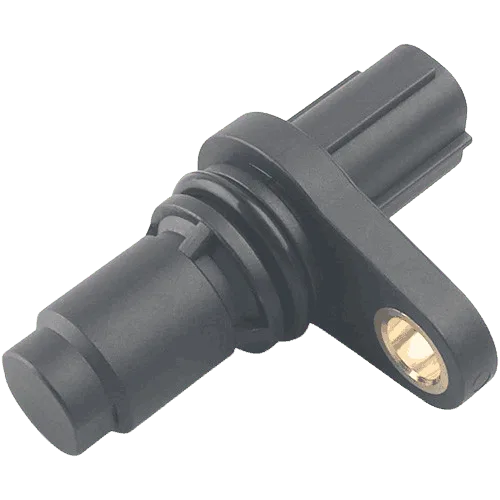
What can disrupt the signal?
Sensor electronics
Internal failure can create an absent, unstable or heat-sensitive signal. The fault should be confirmed under the condition that makes it appear.
Connector and wiring
Oil entry, heat damage, poor terminal tension, damaged insulation or a repair in the harness can affect signal, supply or ground.
Trigger target
A damaged, displaced or contaminated target can produce a poor signal even when the sensor itself operates.
Oil-control problem
Incorrect level, unsuitable specification, contamination or a control-valve issue can prevent cam adjustment from reaching its target.
Mechanical timing
Chain, belt, tensioner, guide, adjuster or installation problems can move correlation. This requires mechanical evidence, not a sensor shortcut.
System voltage
Low voltage during cranking can create implausible or communication events. Power condition should be stable before data is judged.
Trace the fault before replacing
Read the fault record
Identify the exact code, status, frequency, engine speed, temperature and voltage when it set. Clear wording prevents the wrong bank or sensor from being targeted.
Inspect oil and wiring
Review oil level and relevant service information, then inspect the connector, harness routing and signs of oil or heat damage.
Verify electrical integrity
Test the applicable power, ground and signal path according to the circuit design. A generic resistance check is not enough for every sensor type.
Compare live position data
Review requested and actual cam behaviour where available and compare banks or operating states only when the engine design supports that comparison.
Compare cam and crank
When the code or symptom demands it, evaluate whether the signals are individually valid and correctly related rather than simply present.
Confirm the repair target
Approve a sensor only when evidence supports it. Route wiring, oil-control, adjuster or mechanical timing findings to the repair they actually require.
Technical background: HELLA’s camshaft sensor troubleshooting guide describes fault-memory, connection and signal checks. The wiring diagram and limits for the fitted Audi engine still govern the test.
Audi camshaft sensor replacement process
Once the sensor is confirmed, replacement should preserve cleanliness, connector condition and correct part identity. Access may be straightforward on one engine and require removal of covers, ducts or other components on another.
Before removal
- Confirm VIN, engine code, bank and intake or exhaust position.
- Record the fault and relevant data before disconnecting anything.
- Inspect whether oil leakage or harness damage needs separate approval.
- Protect the opening from dirt and loose material.
During installation
- Use the correct sensor and seal arrangement for the application.
- Inspect the connector terminals and harness support.
- Seat the sensor correctly and tighten fasteners by the applicable procedure.
- Reinstall disturbed components without pinching wiring or creating air leaks.
Replacing the sensor does not repair a damaged harness, leaking cover, failed cam-adjustment valve, worn adjuster or mechanical timing fault. Those parts require their own evidence and scope. If testing points to the engine-speed reference rather than cam phase, the separate Audi crankshaft sensor replacement page covers that decision. Wider sensor diagnosis belongs on the Audi sensor replacement page.
Match the repair to evidence
| Finding | Likely repair direction | Required confirmation |
|---|---|---|
| Sensor output fails when hot | Replace the confirmed sensor | Supply and ground remain correct and the harness is stable |
| Damaged connector or harness | Repair the circuit or connector as appropriate | Signal integrity returns and the repair is protected from heat and oil |
| Oil-control response is incorrect | Diagnose valve, oil supply and cam-adjustment mechanism | Commanded and actual behaviour plus mechanical checks support the cause |
| Cam and crank timing disagree | Investigate mechanical timing before sensor replacement | Signal quality is valid and the correlation error is repeatable |
| Historic low-voltage event | Correct and verify the power condition first | The cam fault does not return under normal voltage |
Should you drive or recover?
- Stop for a flashing engine warning, severe shaking, loud mechanical timing noise, smoke, overheating or an oil-pressure warning.
- Arrange recovery if the engine repeatedly stalls, will not restart reliably or runs with severe power loss.
- Do not keep cranking a no-start engine. Repeated attempts can drain the battery and complicate the evidence.
- A stable car with a non-flashing light may still require prompt diagnosis. Call with the exact code and behaviour before deciding on workshop travel.
Match your engine and sensor
Four-cylinder engines
Sensor count, intake and exhaust positions, connector routing and access differ across TFSI generations. Engine code matters more than body badge alone.
V6 and V8 engines
Multiple banks and camshafts make exact code labels essential. A fault on one bank may allow comparison, but mechanical layouts are not assumed identical.
Performance engines
S and RS calibration, packaging and heat can change access and operating data. The correct part must match the specific engine and software context.
Timing belt and chain
A sensor code does not reveal whether the engine uses a belt, chain or which timing elements are involved. VIN and engine identification set the mechanical path.
Hybrid applications
Start-stop and hybrid operation can change when the combustion engine runs. Fault reproduction must account for the vehicle’s operating state.
Aftermarket parts
Connector fit is not the only compatibility test. Signal characteristics, seal, temperature capability and exact application matter when choosing a replacement.
What we check before handover
The original code and symptom set the verification plan. Clearing the fault is only the beginning.
Repeat the starting condition
Repeat cold or hot starting when that condition originally caused the fault, within a practical workshop test.
Verify the signal
Confirm the new sensor output and cam-crank relationship remain plausible through the relevant operating range.
Inspect seals and routing
Inspect the sensor seal, connector lock, harness routing and any covers or ducts removed for access.
Re-scan the systems
Separate resolved historic entries from faults that return. Do not hide a continuing mechanical or oil-control problem.
Road-check the complaint
Confirm starting, idle and power behaviour under safe conditions without treating one short drive as a guarantee.
Explain remaining faults
If another timing or control concern remains, document it and keep it outside the completed sensor replacement.
Reduce repeat faults
A camshaft sensor has no universal preventive replacement interval. The useful prevention work is keeping the engine’s electrical, oil and timing conditions within the requirements of the exact configuration.
Protect the harness
Connector locks, heat shields and harness clips keep wiring away from hot, sharp or moving parts. If work near the cylinder head disturbed the loom, inspect its routing before a new intermittent fault develops.
Use the specified oil
Correct oil level, approval and service condition matter to hydraulically controlled cam adjustment. Oil does not prevent every sensor fault, but poor oil control can imitate or accompany a position problem.
Preserve service history
Keep records of timing, cylinder-head, cam-adjuster and wiring work. A code that begins immediately after nearby repair should be reviewed against the work performed before unrelated parts are replaced.
Respond to new start delay, timing noise, oil-pressure warnings or recurring engine lights promptly. Do not repeatedly clear the code to keep the dashboard clean. Frequency, mileage and operating conditions help distinguish one interrupted signal from a developing mechanical or circuit problem.
Plan your visit to Al Quoz 4
Price the confirmed job
Audi camshaft sensor replacement cost depends on the exact sensor, engine, bank, access, connector or wiring damage and whether diagnosis finds a separate oil-control or timing problem. We do not publish one price for every Audi because a simple accessible sensor and a correlation fault requiring mechanical testing are not the same job.
An estimate should show whether it covers diagnosis, the confirmed sensor, its seal and the final verification. Wiring repair, oil-control work or mechanical timing inspection should remain separate unless evidence makes them necessary.
Allow for fault capture
Workshop time changes with fault repeatability. An intermittent heat-related signal may require cold and hot testing, while a persistent circuit fault can be easier to capture. Part availability and access components also affect the plan.
Tell us if the fault appears after an overnight stop, a short hot soak or a longer journey. The car may need to stay at the workshop so the relevant starting condition can be repeated; discuss this when arranging the inspection rather than assuming a while-you-wait sensor change.
Send the fault details
For diagnosis in Al Quoz 4, send the VIN, model, year, mileage, exact fault codes, warning behaviour, cold or hot pattern, recent oil or timing work and whether the engine cranks, stalls or loses power.
Include the full diagnostic report if you have one, not just a cropped code number. Bank, sensor position, fault status and accompanying codes help us prepare the correct inspection. If the engine has stopped in a car park, explain access restrictions before arranging recovery.
Audi camshaft sensor FAQs
Does a camshaft sensor code prove the sensor has failed?
No. Wiring, supply, ground, trigger targets, oil control and mechanical timing can produce camshaft-related codes. The code type and signal evidence determine the repair.
Can a bad camshaft sensor stop an Audi from starting?
A missing phase signal can contribute to long cranking or a no-start condition on some engines. Crank signal, voltage, fuel, spark, authorisation and mechanical condition must also be checked.
What is the difference between camshaft and crankshaft sensors?
The crankshaft signal describes engine speed and rotational reference, while camshaft signals identify valve-train phase. The controller compares them, so one correlation fault can involve either signal or mechanical timing.
Can low oil cause a camshaft-position fault?
Low level, unsuitable oil or an oil-control problem can affect variable cam timing and create position or correlation faults. It does not normally repair an electrically failed sensor.
Can I drive with a camshaft sensor warning?
Do not drive with severe shaking, stalling, loud timing noise, a flashing warning, oil-pressure warning or major power loss. Call with the exact code and vehicle behaviour for a safer decision.
Does the new sensor need coding?
A conventional camshaft-position sensor often does not need coding, but fault clearing, learned-value checks or a specific setup may apply depending on the engine and repair. The fitted system decides.
Why does the fault happen only when the engine is hot?
Heat can expose internal sensor, connector or wiring faults. Oil viscosity, cam adjustment and starter speed can also change hot, so the condition should be reproduced and measured.
What information should I send before booking?
Send the VIN, model and year, exact codes, whether the fault is cold or hot, starting behaviour, oil level or warning and any recent engine or timing work.
Get your camshaft fault checked
Include the VIN, model, year, mileage, cold or hot pattern and recent oil or timing work. The code wording helps us keep a sensor fault separate from a timing fault.