First broad inspection point
Audi 30,000 KM Service Checklist
At 30,000 KM, the service file should begin showing wear trends. The useful outcome is a measured report, not a longer replacement list.
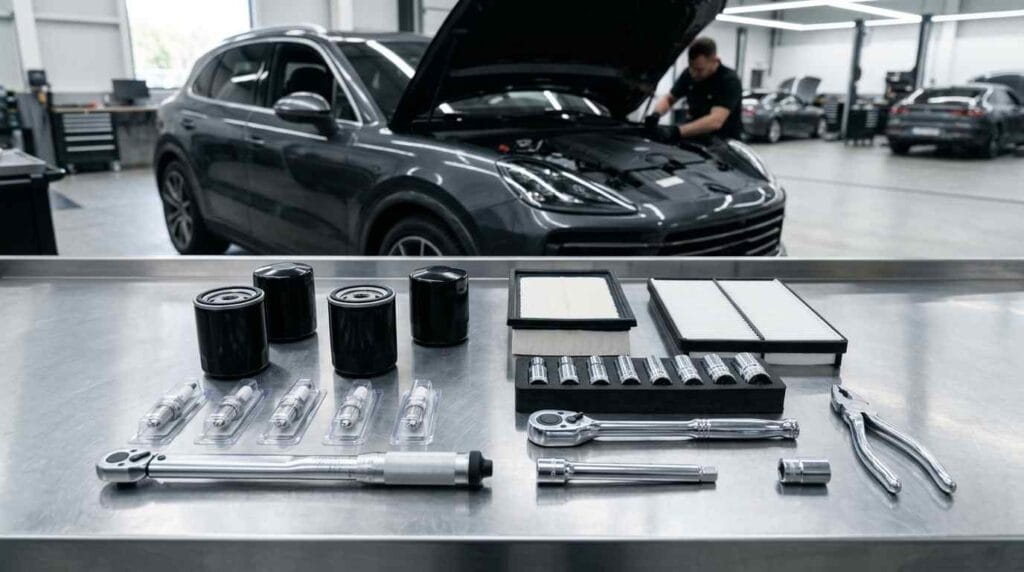
An Audi 30,000 KM service commonly includes a scheduled inspection and may include engine oil, filters or other time-based work, depending on the model and market schedule. It should also measure tire wear, brakes and battery condition, inspect cooling, leaks, suspension and underbody damage, test air conditioning, and review diagnostic warnings. Do not assume spark plugs, transmission fluid, quattro coupling oil or brake components are due on every Audi at 30,000 KM. Confirm each additional item by VIN, elapsed time, equipment and condition.
Schedule confirmation
Read the vehicle schedule before selecting filters
Identify petrol, diesel, plug-in hybrid or battery-electric powertrain and confirm the service market. Some Audi schedules use 30,000 KM or a time limit for a broader inspection and selected filter work, but exact additional items vary.
Review date as well as mileage. A low-use car can still need brake fluid, cabin filtration, battery attention or rubber inspection. Conversely, a high-use vehicle may reach 30,000 KM before every time-based item is due.
The estimate should quote each filter by name. “All filters” can refer to a cabin filter, engine air filter, fuel filter or transmission filter, and those do not share one universal requirement.
Wear trend sheet
Compare tread and brake loss across the first 30,000 KM
Tires
Measure three positions, confirm age and ratings, and compare axle wear.
Brakes
Record friction material, disc surfaces, warning state and road-test behavior.
Suspension
Inspect joints, bushes, dampers and mounts where noise or wear suggests it.
Wheels
Check inner barrels, previous repairs and impact evidence before alignment.
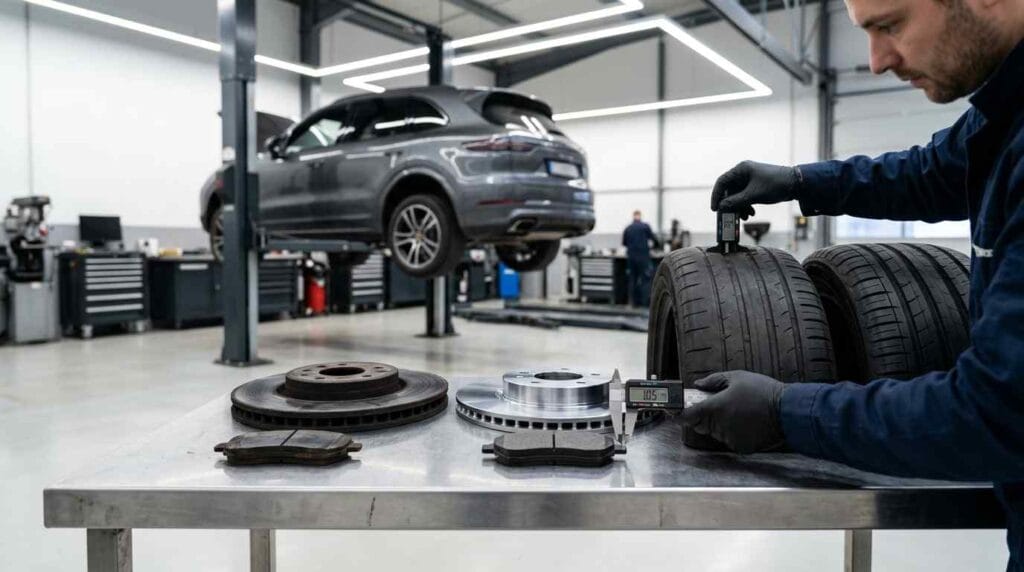
The site’s Audi brake pad and disc guide explains why measurement should come before replacement. Dubai traffic can influence wear, but it does not prove that every vehicle needs brakes at this checkpoint.
Engine and driveline
Inspect leakage and behavior without inventing a fluid interval
Confirm oil approval and service status on combustion models. Inspect coolant residue, engine and gearbox leakage, boost plumbing, mounts and driveline boots. Any rough running, delayed engagement or vibration moves into diagnosis rather than routine service.
Quattro hardware differs across models. A transverse rear coupling, longitudinal center arrangement, sport differential and electric axle do not share the same service. Check the installed system and its history before adding fluid work.
Save diagnostic warnings and readiness information before clearing anything. A service reset should be performed only after the work recorded by that reminder is complete.
Cabin and visibility
Review filter loading and air-conditioning output in real conditions

Inspect cabin filter condition, blower operation, odors, outlet temperature and airflow balance. Replace the filter when the schedule or its condition supports it. A dusty filter does not explain every cooling fault.
Test wipers, washers, lighting, cameras and parking sensors. Check roof, plenum and body drains for blockage. Water entry can create electrical symptoms that appear much later than the first damp area.
Battery testing should include capacity and charging response. If undervoltage faults are stored, determine whether they came from long parking, a weak battery, charging behavior or unwanted current draw.
E-tron checkpoint
Focus on tires, brakes, charging and thermal systems
For an electric Audi, review charging records and warnings, inspect the port and cable, scan thermal and high-voltage systems, and test the 12-volt battery. Tire wear can be influenced by vehicle mass and torque, so record patterns rather than assuming a fixed life.
Inspect friction brakes even when regeneration handles much of the slowing. High-voltage work belongs to trained personnel. Battery replacement is never justified by reaching 30,000 KM alone.
Thirty-thousand budget
Price scheduled work and wear separately
A basic 30,000 KM inspection with oil service on an applicable combustion model may broadly range from AED 850 to AED 2,000. Expanded filter or brake-fluid work may bring the scheduled scope around AED 1,200 to AED 3,000. Tires, brakes and faults must be priced from measurements and diagnosis, not hidden in that range.
Figures are non-binding planning allowances. The written quote should identify the VIN, parts, oil or fluid approvals, labor, VAT, programming and exclusions. If a workshop recommends transmission or quattro service here, ask for the exact installed unit and interval supporting it.
Safe arrival decision
Use current symptoms to decide whether the 30,000 KM visit can wait
The odometer does not determine driveability. A car approaching 30,000 KM may continue operating normally while routine work is arranged, or it may have a separate fault that makes another journey unsafe. Give priority to the warning and physical behavior, not the calendar position of the service.
Stop driving for a red oil-pressure or temperature warning, meaningful brake loss, serious steering change, smoke, rapid fluid loss, severe tire damage or a high-voltage warning that instructs the driver to stop. Arrange recovery when the condition cannot be checked safely. Do not clear diagnostic information or keep testing the vehicle simply to complete the scheduled mileage.
Book prompt diagnosis for changing behavior
Repeated coolant additions, delayed gear engagement, an active misfire, new charging failures, growing vibration or a suspension corner sitting low should be reported before the service scope is agreed. Some cases may still be driveable for a short inspection trip, but that decision requires the exact warning and observed condition. Treat the diagnosis as its own authorization rather than adding guessed parts to the maintenance list.
Three-point comparison
Turn the first 30,000 KM into a wear-rate report
A measurement has more value when it is compared with an earlier number and the way the car is used. Record today’s result, retrieve the previous result when available, then calculate which axle, side or system is changing faster. This can expose a pressure, alignment, wheel, caliper or suspension concern before a dashboard warning appears.
Compare all four tire positions
Measure inner, center and outer tread, and note tire age, repairs and sidewall condition. Faster center wear can suggest a pressure pattern, while one inner shoulder may point toward geometry or a worn component. Differences are clues, not automatic alignment instructions. Inspect wheel and suspension condition before adjusting settings.
Compare braking wear by axle and side
Record remaining friction material and disc condition. One side wearing much faster than its partner can justify a caliper or hardware inspection. A vibration under braking can involve disc runout, hub condition, wheel damage or suspension movement, so a pad measurement alone does not close the complaint.

Compare battery reserve with the warning history
Battery state, charging response and stored undervoltage events should be read together. A car that sits for long periods presents a different pattern from one that displays several warnings during every start. Replacing the battery without checking charging or unwanted draw can leave the reason unresolved.
For each system, state the measured result and the likely recheck point. Avoid predicting an exact replacement date when driving distance and use can change.
Approval order
Sort findings into action, diagnosis and monitoring
Action now covers scheduled work that is genuinely due and condition findings that have reached a safe or serviceable limit. Diagnosis first covers warnings, leakage, noise, poor operation or uneven wear whose source is not yet proven. Monitor covers a usable component with a recorded measurement and a sensible recheck point.
This order protects the owner from paying for an unrelated package. For example, a due oil service can be completed while a separate vibration is investigated. Brake replacement should follow measurements. Transmission fluid should follow the installed-unit schedule, while harsh shifting should be tested as a fault.
The handover should show what changed since the earlier baseline and what did not. Confirm warning status, pressure, fluid levels and road behavior after the completed work. Keep the photos and measurements with the invoice so the 60,000 KM visit starts from evidence rather than memory.
Mileage myths
Do not approve these replacements from 30,000 KM alone
Thirty thousand kilometers is a useful review point, not proof that every consumable or fluid is exhausted. The installed powertrain, elapsed time, service market, previous work and measured condition still control the decision. Ask the estimate to show the evidence beside each item.
Spark plugs and ignition parts
Plug intervals vary by engine and schedule. Coils are not ordinary mileage replacements unless the applicable maintenance information says otherwise. When plugs are removed, keep their cylinder positions and compare deposits, heat appearance and gap. A recurring misfire needs testing even when plugs happen to be due.
Transmission and quattro fluids
Do not authorize a universal gearbox or four-wheel-drive fluid package. Identify the transmission, coupling and differential hardware first. A fluid operation supported by the correct schedule remains maintenance. Delayed engagement, slip, vibration or a warning belongs to fault diagnosis and may change whether service is advisable.
Brake pads, discs and tires
Urban use can create wear before 30,000 KM, while another vehicle may retain substantial usable material. Measure pads and discs, inspect tire age and damage, and compare all tread positions. Replace from condition and safety, not from a sales bundle built around the odometer.

Wheel alignment and suspension parts
Uneven wear, steering pull, an impact or completed suspension work can justify geometry measurement. Alignment is not a cure for a bent wheel, loose joint or damaged tire. Inspect the physical cause first, correct unsafe components, then align when the evidence supports it.
This discipline does not mean delaying legitimate work. It means asking whether the item is scheduled, measured, failed or optional. Those labels make the 30,000 KM invoice easier to understand and protect the next maintenance decision.
Air filters and cabin filters still need separate decisions
Dubai dust can load filtration earlier than distance alone suggests, especially around construction, unpaved parking or frequent outdoor storage. Inspect the engine air box for sealing and contamination, and check cabin airflow and odor. A dirty cabin filter can reduce airflow, but it does not prove that weak cooling comes only from the filter. Replace each item when its schedule or observed state supports it, and investigate a continuing air-conditioning complaint separately.
Ask to see the removed filter or a clear photograph when contamination is used to justify early renewal. The report should identify which filter was changed rather than using the vague phrase “all filters.”
Thirty-thousand questions
What Audi owners ask at 30,000 KM
What is normally done at an Audi 30,000 KM service?
A broader inspection may be due, with oil or selected filters depending on the market schedule, time, model and powertrain. Tires, brakes, cooling and battery should be measured.
Are spark plugs always changed at 30,000 KM?
No. Plug requirements differ by engine and schedule. Use the VIN-specific information rather than a universal package.
Does quattro oil need changing at 30,000 KM?
Not on every Audi. Driveline hardware and intervals differ. Confirm the exact coupling, differential or electric drive system.
Should brakes be replaced at this mileage?
Only when measurements, warning state or condition support it. Mileage alone does not prove replacement need.
How much is an Audi 30,000 KM service in Dubai?
A scheduled combustion-model visit may broadly range from AED 850 to AED 3,000 before tires, brakes or repairs.
What changes for an Audi e-tron?
Engine oil and spark plugs are removed from the checklist. Charging, high-voltage thermal systems, tires, brakes and 12-volt condition receive more attention.