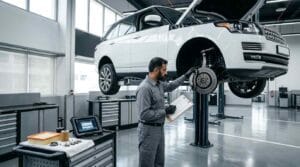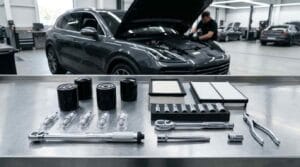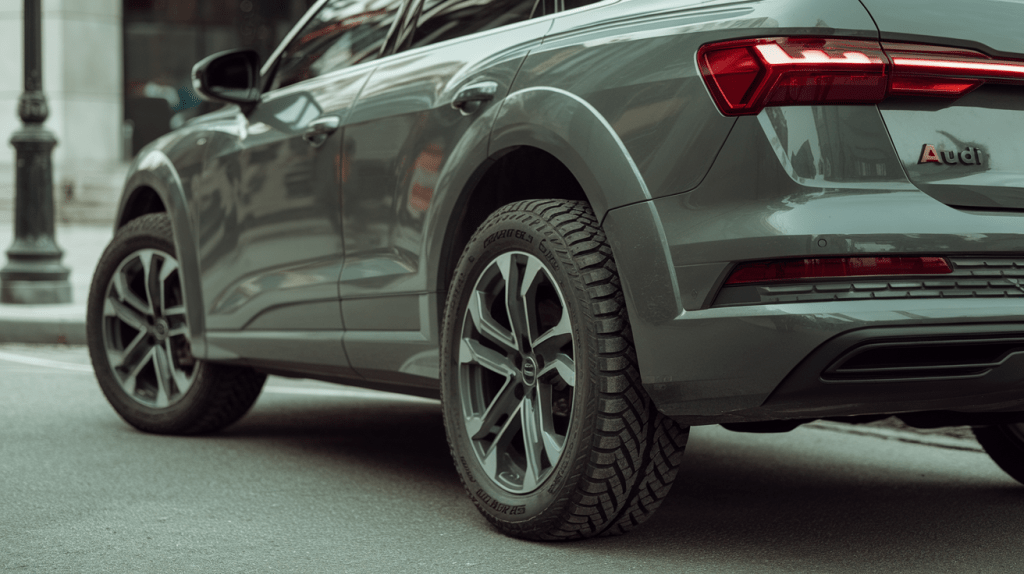
Audi brake repair should be based on measured wear and braking behaviour, not a fixed mileage. A warning message, squeal, vibration, longer stopping distance or a change in pedal feel means the system needs inspection. The correct decision depends on pad thickness, rotor condition and thickness, caliper operation, brake fluid condition and the exact brake package fitted to the car.
When Should Audi Brakes Be Checked?
There is no single replacement interval that applies to every Audi. Urban traffic, vehicle weight, wheel size, engine output, driving style, regenerative braking on electrified models and the front-to-rear brake balance all affect wear. A practical approach is to inspect the brakes at routine service and immediately when a warning or symptom appears.
| What you notice | Possible reason | Urgency | Next step |
|---|---|---|---|
| Brake pad warning | Wear sensor has reached its trigger point, damaged sensor or wiring fault | Prompt inspection | Measure all pads and inspect sensor wiring |
| Metal grinding | Friction material may be exhausted, or debris may be trapped | Stop driving if braking is affected | Inspect pads, rotors and calipers before further use |
| Steering vibration under braking | Rotor thickness variation, runout, deposits, hub corrosion or suspension play | Urgent if severe | Measure rotor runout and thickness, then inspect hubs and suspension |
| Soft or sinking pedal | Hydraulic leak, air, fluid issue or master-cylinder fault | Do not continue driving | Arrange recovery and hydraulic diagnosis |
| Car pulls while braking | Uneven pad wear, sticking caliper, tyre or suspension issue | Urgent | Compare left and right braking components |
| Burning smell or very hot wheel | Dragging brake, seized slider or parking-brake fault | Stop safely | Allow it to cool and arrange inspection |
Audi Brake Pad Thickness: What the Measurement Means
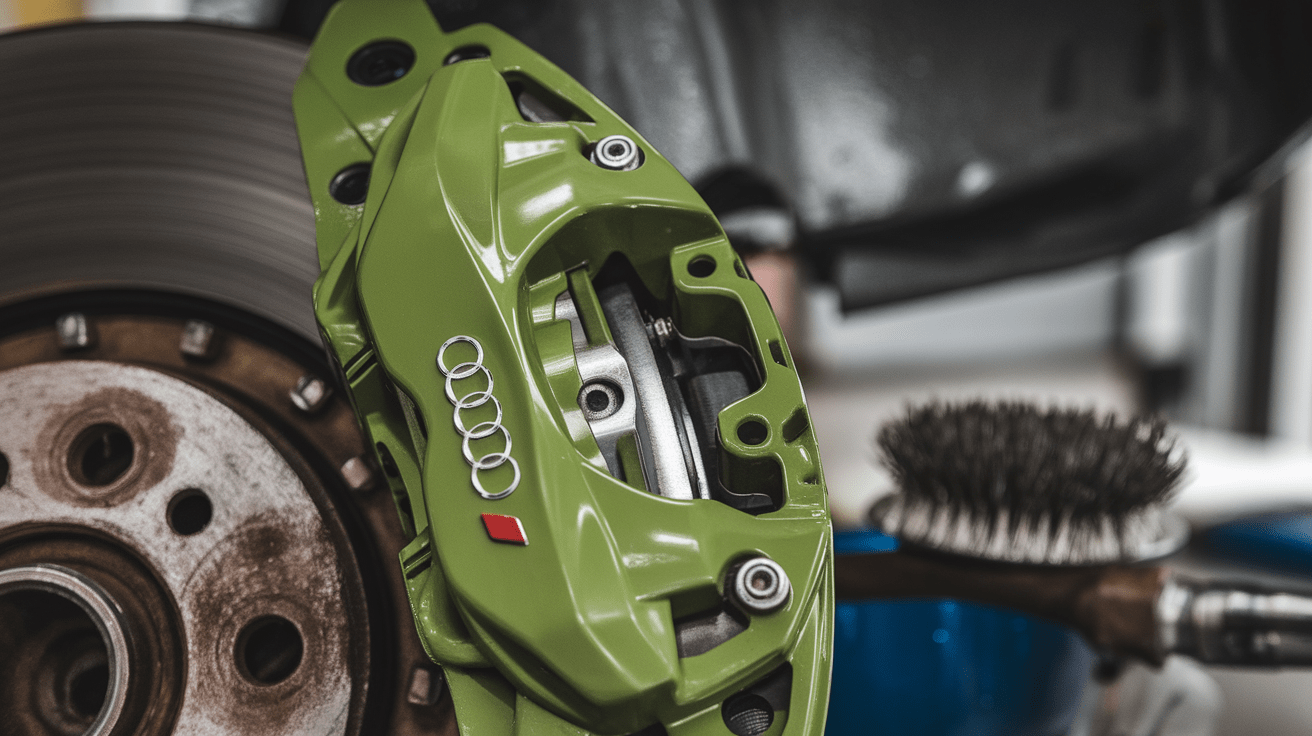
Brake pads have a steel backing plate and a friction layer. The friction material is the part that must be measured. A visual glance through the wheel is not always reliable because the inner pad can wear faster than the outer pad when a caliper slider or piston is sticking.
As a general industry reference, new pads are often around 10 to 12 mm of friction material, while replacement is commonly considered near 3 mm. That is not a universal Audi specification. The workshop should compare the actual measurement with the applicable repair information and consider whether the wear is even across the axle.
What Uneven Pad Wear Can Reveal
- Inner pad thinner than outer pad: possible caliper piston, slider or pad movement issue.
- One wheel wearing faster: possible dragging brake, hose restriction or parking-brake problem.
- Tapered pad wear: possible caliper alignment, slider or installation issue.
- Cracked or glazed material: possible overheating, contamination or unsuitable operating conditions.
Audi Brake Rotors: Measure Them Separately from the Pads
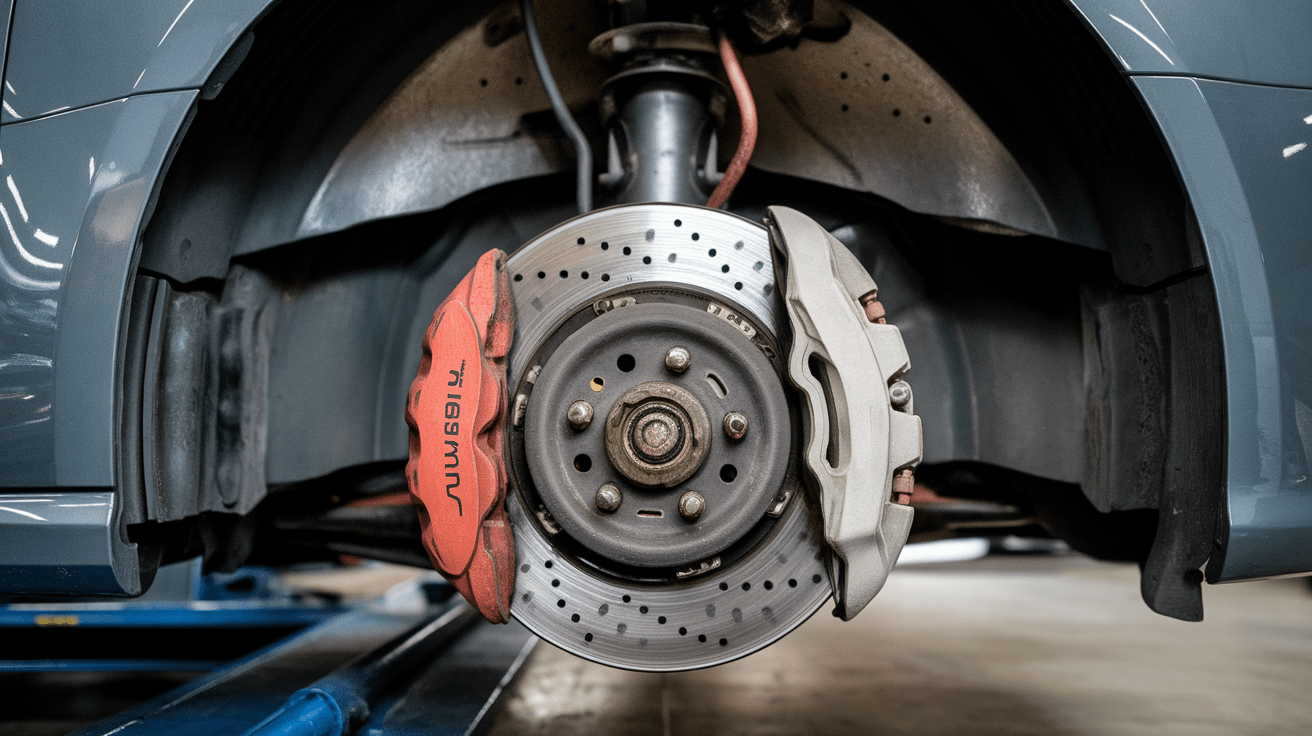
Replacing pads does not automatically mean the rotors must be replaced, but the rotors must be inspected and measured. The technician should record rotor thickness at several points away from the outer lip, compare the lowest reading with the MIN TH value marked on the rotor or the correct technical data, and check both sides of the axle.
Rotor thickness is only one part of the decision. A rotor can be above minimum thickness and still be unsuitable because of deep scoring, cracks, blue heat spots, corrosion on the working surface, excessive runout or thickness variation.
| Condition | Pads only may be suitable | Pads and rotors usually needed |
|---|---|---|
| Rotor comfortably above minimum thickness with an even surface | Possibly, after full inspection | Not automatically |
| Deep grooves or metal-to-metal damage | No | Yes |
| Cracks, blue spots or severe heat damage | No | Yes |
| Brake vibration confirmed as rotor variation or runout | No | Usually, after the hub and suspension are checked |
| Rotor at or below marked minimum thickness | No | Yes, replace as an axle pair |
Pad Wear, Rotor Wear and Other Problems Feel Different
Worn Brake Pads
Typical clues include a pad warning, reduced friction material and squealing that changes when the brake is applied. Noise alone is not proof of worn pads because dust, glazing, hardware movement or contamination can also create noise.
Rotor Problems
Rotor issues are more likely when the pedal or steering wheel pulses during braking, the surface is heavily scored, or measurements confirm excessive variation. Suspension play, wheel-hub corrosion and incorrect wheel-bolt tightening can mimic or contribute to rotor vibration, so replacement without measurement can waste money.
Caliper or Hydraulic Problems
A hot wheel, burning smell, pulling, rapid uneven wear or a soft pedal points beyond normal pad wear. These faults require caliper, hose, fluid and hydraulic checks rather than another set of pads.
Model-Specific Audi Brake Examples
These are diagnostic examples, not universal dimensions or replacement schedules.
- Audi A3 and Q3: different engine, trim and wheel packages can use different front and rear brake sizes. Order parts by VIN or brake code, not only by model name.
- Audi A4, A5 and Q5: S line appearance does not by itself identify the brake hardware. Confirm rotor diameter, caliper type and wear-sensor arrangement.
- Audi A6, A7, Q7 and Q8: greater vehicle mass and larger brake packages can increase parts cost. Measuring rotors early may help avoid unnecessary replacement or prevent worn pads from damaging an otherwise usable rotor.
- Audi S and RS models: performance brakes may use larger iron rotors, two-piece assemblies or carbon-ceramic systems. Inspection criteria, bedding and replacement costs differ significantly.
- Audi e-tron models: regenerative braking can reduce friction-brake use, but low use can allow corrosion or uneven surface contact. The friction brakes still need physical inspection.
Safe to Drive or Arrange Recovery?
| Situation | Decision |
|---|---|
| Pad warning with normal pedal feel and no grinding | Book an inspection promptly and avoid delaying it |
| Light squeal but braking remains normal | Drive cautiously to an inspection, provided no other warning signs exist |
| Grinding, severe vibration, pulling or a hot wheel | Stop driving and arrange inspection or recovery |
| Soft, sinking pedal or visible fluid leak | Do not drive |
| Red brake warning that remains on after parking brake release | Check the owner’s manual and arrange urgent diagnosis |
What a Proper Audi Brake Inspection Should Include
- Confirm the complaint and dashboard messages.
- Identify the exact brake package from the VIN or vehicle data.
- Measure inner and outer pad material at every wheel.
- Measure rotor thickness at multiple points and compare it with the correct minimum.
- Inspect rotor surfaces for cracks, scoring, corrosion and heat damage.
- Check caliper pistons, sliders, pad movement and dust boots.
- Inspect hoses, hard lines and the hydraulic system for leakage.
- Assess brake fluid condition according to the vehicle’s maintenance information.
- Check wheel hubs, bearings, tyres and suspension if vibration or pulling is present.
- After repair, perform the required bedding procedure and verify braking operation.
Repair Decision: Pads, Rotors, Calipers or Fluid?
- Pads only: pads are worn, rotors remain within specification and the calipers operate correctly.
- Pads and rotors: rotors are below minimum thickness, damaged, distorted or unsuitable for the new pads.
- Caliper repair or replacement: sticking piston, damaged slider, torn boot, leakage or uneven clamping force is confirmed.
- Hydraulic repair: soft pedal, leakage, contaminated fluid or a pressure-control fault is found.
- ABS or electronic diagnosis: warning lights or stored faults point to wheel-speed sensors, wiring, control units or related systems.
For parts and workshop service, see our Audi brake pads and rotor replacement service. For a narrower explanation of pad replacement, read the Audi brake pad replacement guide.
For a commercial repair assessment after symptoms and measurements are recorded, use the Audi brake repair service.
Frequently Asked Questions
How many millimetres should Audi brake pads have?
The correct decision depends on the brake system and repair data. As a general reference, many new pads have roughly 10 to 12 mm of friction material and are commonly replaced near 3 mm, but the workshop must inspect every pad and follow the applicable specification.
Can Audi brake pads be replaced without replacing rotors?
Yes, when the rotors remain above minimum thickness, have a suitable surface and show no cracks, major scoring, heat damage or excessive variation.
Why does my Audi vibrate only when braking?
Possible causes include rotor thickness variation, runout, pad deposits, hub corrosion, suspension play or wheel-related issues. Measurement is needed before parts are replaced.
Does a brake warning always mean the pads are finished?
No. It may indicate a triggered wear sensor, but sensor wiring can also fail. The pads must be measured.
Why is one Audi brake pad wearing faster?
A sticking caliper piston, seized slider, restricted hose or pad movement issue may be causing uneven wear.
Should rotors be replaced in pairs?
Yes, rotors should normally be replaced as an axle pair to maintain balanced braking.
How should new brakes be driven after replacement?
Follow the component manufacturer’s bedding instructions. Generally, use controlled, progressive braking and avoid unnecessary severe stops while the contact surfaces settle.
Technical References
Brake measurements and replacement decisions in this guide follow component-manufacturer principles described by Brembo’s minimum rotor thickness guidance and its brake pad wear guidance. Always use the exact Audi repair data and owner information for the vehicle being inspected.