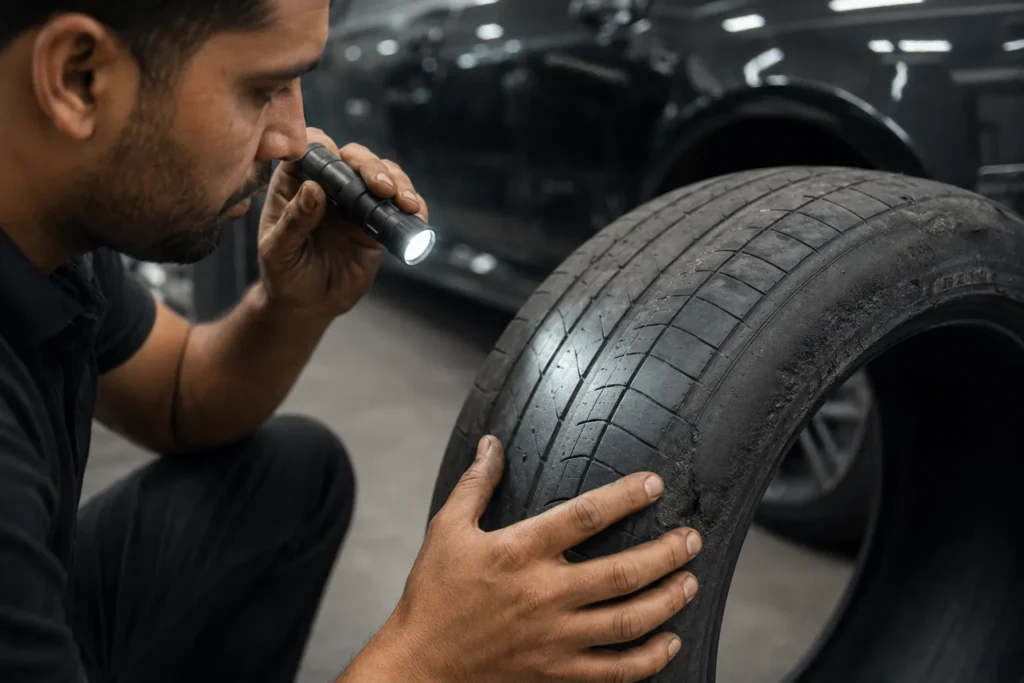
The best tires for an Audi in the UAE cannot be chosen from a brand list alone. The answer changes with the VIN, wheel size, axle arrangement, load, speed capability, suspension, drivetrain and the way the car is used. A tire can be excellent in a test and still be the wrong specification for the Audi being fitted.
Start with the vehicle requirements, then compare products available in that exact fitment. This prevents a common buying error: choosing a familiar model name or an attractive price before confirming that its size, service description, construction and approval suit the car.
This guide does not rank brands because test results from one size do not automatically transfer to another. It provides a repeatable selection method for an A, Q, S, RS or e-tron model driven in Dubai and across the UAE.
Build the specification from the Audi, not the old tire
Check the tire-information label, model-specific owner information and approved wheel data for the vehicle. Record the front and rear size, load index, speed rating, inflation pressures for normal and full load, and whether the car uses a staggered setup.
The tire currently installed is only a clue. A previous owner may have fitted a different size, lower rating or non-approved wheel. If the door label, owner information and installed tire disagree, resolve the discrepancy with the VIN before ordering another set.
Also record the full vehicle description. An A6, Q5 or e-tron badge is not enough because engine, drivetrain, brake package, wheel option and model year can change the fitment. Do not rely on a marketplace filter that asks only for the model name.
If alternative wheel and tire sizes are being considered, treat that as a fitment change rather than an ordinary replacement. Clearance, wheel width and offset, brake clearance, overall rolling circumference, load capacity, speed rating and approval all need checking.
Decode the sidewall before comparing Audi tire models
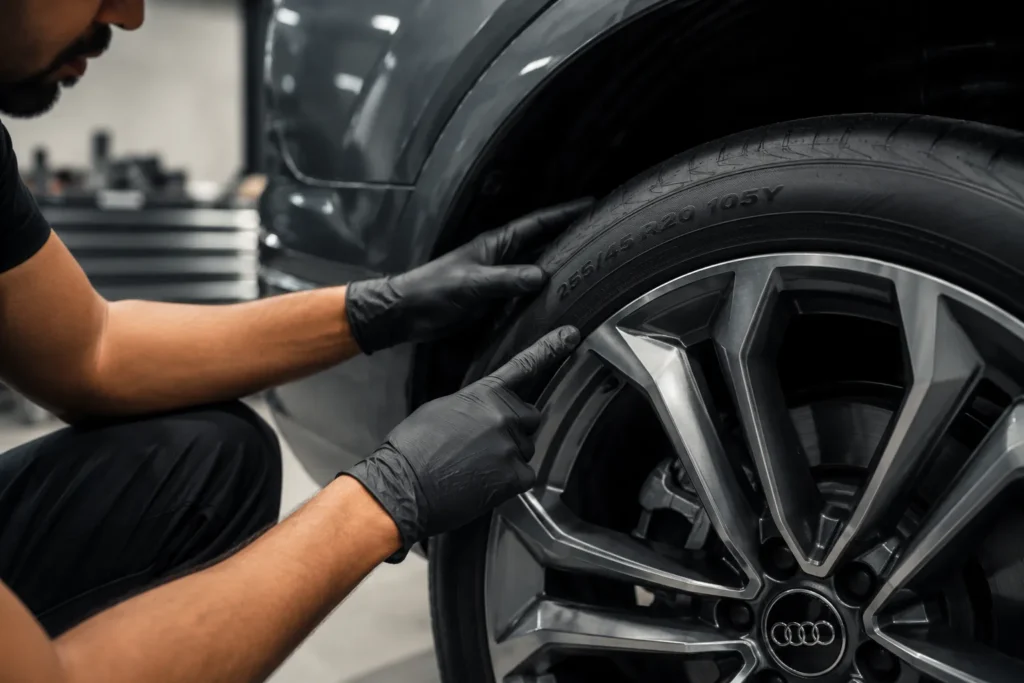
Consider the example 255/40 R20 101Y XL. It is an illustration, not a recommendation for a particular Audi. Each element communicates a different constraint.
- 255: Nominal section width in millimeters. It does not by itself establish wheel compatibility or clearance.
- 40: Aspect ratio. The sidewall height is a percentage of the nominal section width, not a fixed 40 millimeters.
- R20: Radial construction for a 20-inch wheel diameter. Diameter alone does not specify the correct wheel width or offset.
- 101Y: The load index and speed symbol. Both must meet the requirements for the vehicle and fitment.
- XL: An extra-load designation. It does not mean the tire can be inflated or loaded without reference to its specification and the vehicle label.
Continue reading beyond the large size code. Check the full product name, construction, original-equipment marking where required, date code, country and plant information, rotation direction or inside/outside marking, maximum load and other regulatory markings.
Do not treat the maximum pressure molded into the sidewall as the Audi’s normal inflation pressure. Set cold pressure from the vehicle information for the installed fitment and expected load.
Understand Audi original-equipment markings
Some tires are developed in variants for particular vehicle manufacturers. Audi-related markings can include AO, AO1 or other specified codes, while the correct requirement can depend on the model and tire. The same commercial tire name may exist in several constructions or manufacturer-marked versions.
Michelin’s official explanation of original-equipment tire markings lists Audi codes including AO, AO1, AO2 and AOE, and notes that marked versions can differ in handling, comfort, noise, rolling resistance and interaction with vehicle systems. That does not mean every Audi uses every marking.
Match the marking specified for the vehicle rather than assuming any tire with “AO” is correct. Size, load index, speed rating and axle use still matter. A manufacturer-marked tire for another Audi model is not automatically interchangeable.
If the original tire has no Audi-specific marking, do not add one as a substitute for checking fitment. Use the VIN and approved vehicle information to establish whether a marked version is required or preferred for the replacement.
Choose the performance category for how the car is used
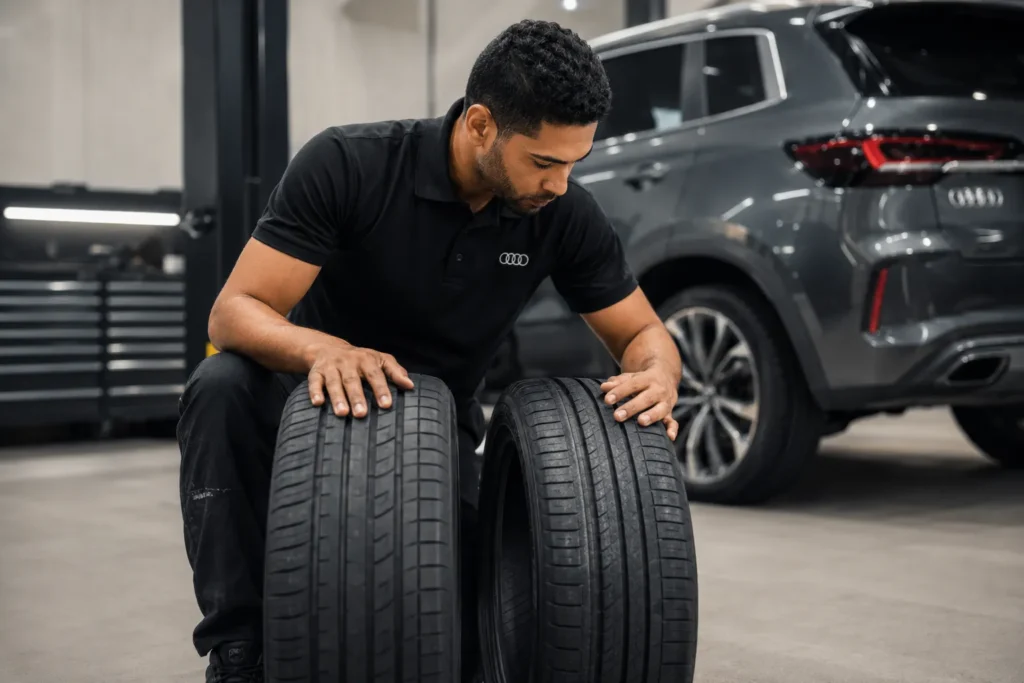
Once the technical specification is fixed, compare tires within a suitable category and exact size. A comfort-oriented daily tire, an ultra-high-performance road tire and a track-focused product trade noise, ride, wet behavior, steering response, wear and efficiency differently.
- Daily commuting and touring: prioritize predictable wet and dry braking, stability, noise, ride and credible wear performance. A tire does not need the most aggressive tread or steering response to be appropriate for regular Dubai driving.
- S and RS road use: retain the correct load and speed capability and compare independent tests in the same size or a closely relevant fitment. Strong dry performance should not hide poor wet braking or aquaplaning behavior.
- Q models and heavier loads: confirm load capacity for the actual axle and vehicle. An SUV label in the product name is less important than the complete service description and approved fitment.
- Electric Audis: vehicle mass, immediate torque, noise and rolling resistance can make tire characteristics more noticeable. An EV-specific marketing label is not enough; the tire must still satisfy the exact Audi specification. Audi Dubai also notes that tire pressure and vehicle condition affect e-tron efficiency.
Avoid a universal “GCC tire” claim without a defined standard or product evidence. Confirm that the exact tire offered is approved for sale, correctly stored, suitable for the intended operating conditions and supported by a local warranty.
Run-flat capability, acoustic foam, self-sealing construction and EV-focused versions are separate product features, not interchangeable labels for quality. Confirm whether the Audi was designed around a particular arrangement and what puncture equipment it carries. Changing from a run-flat product to a conventional tire can alter roadside mobility and driving feel, while sealant may be incompatible with some damage or internal tire technologies. Make the decision for the complete vehicle setup, not one feature in isolation.
Protect quattro and staggered fitments from mismatch
All four tires contribute to the rolling behavior seen by the drivetrain and stability systems. Substantial differences in outside circumference, construction, tread pattern or wear can create undesirable behavior even when each sidewall shows a nominally acceptable size.
Do not apply one universal tread-depth difference to every quattro model. Determine the allowable combination for the exact vehicle and tire setup. When replacing fewer than four tires, measure all grooves across all four tires and compare the actual product versions, not only the brand.
Some Audi configurations use different front and rear sizes by design. A staggered setup is not a mismatch when it is the approved combination, but front-to-rear rotation may not be possible. The installer must keep directional tires rotating correctly and asymmetric tires with the correct side facing outward.
If an Audi develops binding, vibration, stability-control intervention or a drivetrain warning after tire work, record the fitted sizes, pressures and measured circumferences before replacing unrelated components.
Use condition and history to reject Audi tires
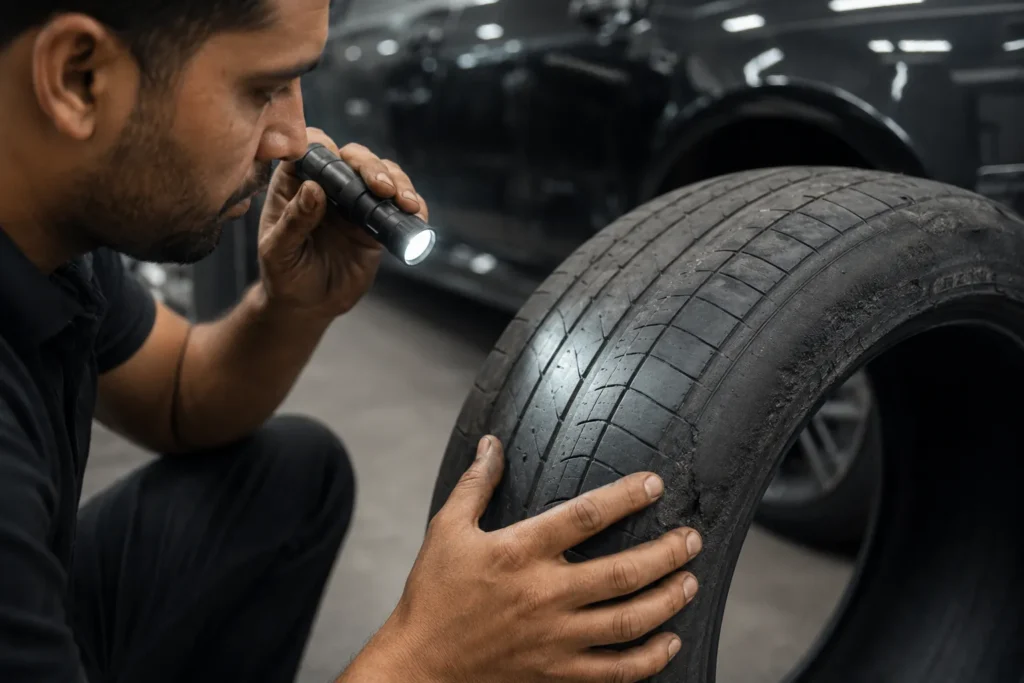
A correct specification does not make a damaged tire acceptable. Inspect the tread and both sidewalls for cuts, bulges, cracking, exposed material, impact marks, punctures, repairs and uneven wear. Inspect the inner sidewall whenever the wheel is removed because damage there is easy to miss on the vehicle.
Date information is part of the assessment, but age alone is not a complete condition test. Storage before sale, heat exposure, inflation history, impacts, load and repairs all matter. Obtain the tire manufacturer’s current service-life guidance for the exact product and comply with UAE requirements.
A puncture repair also depends on its location, size, angle, internal condition and any driving while underinflated. An external plug can conceal damage inside the casing. The tire should be removed and inspected when the applicable repair standard requires it, and a repair should never be used to approve sidewall or structural damage that the tire maker excludes.
Abu Dhabi Police identifies low or high pressure and overloading among causes of tire bursts and advises buyers to check manufacturing information and possible heat or humidity damage. The official UAE tire-safety guidance supports checking condition and pressure instead of relying on tread appearance alone.
Make the installation part of the purchase
Ask the supplier to put the exact manufacturer, product line, marked version, size, service description and quantity on the quotation. Confirm production information and local warranty before fitting, then inspect the tires delivered against the order.
The installer should examine the wheels, valve or TPMS components, bead seats and mounting surfaces. A bent or cracked wheel can create vibration or air loss that a new tire will not cure. If damage is found, use an evidence-based Audi wheel repair assessment to decide whether the wheel can be repaired or should be replaced.
Balance each assembly with clean mating surfaces and correct centering. Follow the specified wheel-bolt procedure and torque for the vehicle. Impact tightening without final controlled torque can damage hardware or leave inconsistent clamping.
Wheel alignment is not automatically included in tire replacement, but uneven wear, steering pull, an off-center wheel or recent suspension impact justifies measurement. Alignment should not be used to hide a bent wheel, damaged suspension joint or tire-force problem.
Reset or store the tire-pressure monitoring reference only after cold pressures are set correctly. The system may be direct or indirect depending on the Audi. A successful reset confirms that the procedure was accepted, not that the pressure or tire condition is safe.
Investigate vibration instead of balancing repeatedly

A vibration that begins immediately after fitting should be reproduced by speed, road surface, load and steering input. Recheck centering, balance, wheel runout, tire runout, bead seating and mounting. Road-force measurement can help when ordinary balance numbers appear acceptable but the assembly still produces force variation.
Do not keep adding weights to compensate for a bent wheel, incorrectly seated tire or contamination between the wheel and hub. Marking the tire and wheel positions before correction can preserve evidence of what changed.
Noise also needs classification. A new tread pattern can sound different, while a rhythmic hum, thump or pitch that changes during gentle curves may indicate wear, force variation or another rotating component. Compare the symptom before and after fitting rather than assuming every new sound is normal.
Keep a tire record that makes the next decision easier
Save the invoice with the full tire description, production information, installation date, odometer, cold pressures, balance results and alignment report if performed. Photograph the sidewall markings and record which tire is fitted at each corner.
Recheck cold pressures after the installation period recommended by the service provider and before long trips or major load changes. Inspect after pothole or curb impacts even when the tire-pressure warning does not appear.
The most suitable Audi tires for UAE roads are the ones that satisfy the car’s exact specification, match its real use, arrive in verifiable condition and are installed without introducing vibration, pressure or drivetrain mismatch. Brand comparison comes after those requirements, never before them.