

Audi Window Tint Service in Dubai
Audi window tint service should begin with glass identification, a measured visibility goal, a legal suitability check, and a film selected for the vehicle’s glazing and electronics. We inspect factory privacy glass, existing film, defroster lines, antennas, sensors, frameless windows, seals, and edge condition before installation.
Start with the finished glass, not a sample card
An Audi window tint service changes how much visible light, solar energy, and ultraviolet radiation passes through the glazing, but the result depends on both the film and the original glass. Factory glass may already be tinted, laminated, heat-reflective, acoustic, privacy-colored, antenna-equipped, or shaped around cameras and sensors. Applying the same film to two different windows can produce different measured and visual results.
The useful specification records visible light transmission, reflectivity, appearance, product construction, warranty terms actually offered for the selected film, and manufacturer test data for heat and UV performance. Shade names such as light, medium, dark, smoke, or limo are not consistent measurement standards. We use a sample and a meter-based discussion so the customer understands what will be installed.
We also separate comfort from darkness. A darker-looking film is not automatically the best heat performer, and a high-performing film does not need to make every Audi look heavily tinted. Night visibility, underground parking, wet roads, mirror use, rear visibility, and the driver’s eyesight are part of the decision.
Existing glass and the expected combined light transmission.
Film construction to heat, glare, privacy, appearance, and electronics.
Current legal, registration, insurance, and vehicle-use requirements.
Choose tint for comfort and visibility
We check your existing glass, driving needs and fitted equipment before recommending a film. Current requirements are confirmed before installation.
Existing glass
Measure or identify the factory glass first. Privacy-colored rear glass, acoustic laminates, and previous film change the finished reading and appearance.
Daylight comfort
Consider glare, solar exposure, cabin surfaces, driving direction, parking pattern, passenger needs, and how the film looks against the body and interior.
Night visibility
Check side-mirror use, reversing, underground ramps, poorly lit streets, rain, and rear visibility. A sample viewed only in bright sunlight can hide a poor nighttime choice.
Tint requirements
Allow for the original glass, meter variation, product tolerance, and current rules. Do not select a film whose marketing label only sounds compliant.
Vehicle compatibility
Confirm windshield camera areas, rain and light sensors, head-up display, antennas, defroster grids, frameless-window movement, and door-seal contact before choosing coverage.
Compare products by performance data and fit
Construction names vary across manufacturers. The selected product should be supported by a clear data sheet, suitable installation guidance, and terms that match the actual invoice.
Dyed film
Color is created primarily through dye. It can provide privacy and glare control at a lower product cost, but color stability, heat performance, and aging depend on the exact product quality and exposure.
Metal-containing film
Metal layers can influence solar performance and reflectivity. Compatibility with radio, mobile, GPS, keyless, toll, antenna, and other signal-dependent systems must be checked for the exact vehicle and product.
Carbon-type film
Products marketed as carbon can offer a non-metal appearance and selected heat or color-stability characteristics. The label alone is not proof, so published product data and sample appearance still matter.
Ceramic-type film
Ceramic or nano-ceramic products are often chosen for heat management with a relatively neutral appearance and reduced signal concern, but performance and optical quality differ widely across product lines.
Each Audi window has a different installation risk
| Glass area | What must be inspected | Installation concern | Finished check |
|---|---|---|---|
| Front side windows | Factory tint, scratches, chips, seals, guides, frameless movement, felt contamination, mirror visibility, and legal suitability. | Edge height, roll-up contact, water control, trim protection, and adequate visibility in low light. | Operate the window repeatedly after the advised curing period and check edges, seals, mirror view, and optical clarity. |
| Rear side and quarter glass | Privacy glass, fixed or moving construction, antenna elements, tight trim, demister or sensor features, and existing film. | Access around deep trim, small fixed panes, dot-matrix borders, compound curves, and color match with adjacent glass. | View from inside and outside under several light angles, then inspect borders and consistency across the side profile. |
| Rear windshield | Defroster grid, antennas, brake light, camera view, wiper sweep, existing film, dot matrix, scratches, and contamination. | Film forming across curvature, water control near electronics, cutting safety, and removal risk to printed conductors. | Confirm rear visibility, defroster and antenna function where testable, high-level brake light visibility, and clean edges. |
| Windshield area | Current official restrictions, camera and sensor zones, mirror mount, rain and light sensors, head-up display, inspection markings, and existing treatment. | Do not apply unapproved coverage. Film can affect visibility, optical distortion, cameras, sensors, and legal compliance. | Confirm the exact permitted scope, unobstructed driver view, clear camera areas, and no distortion in the primary sight line. |
| Panoramic roof glass | Factory solar coating, laminated construction, cracks, chips, heat history, shade, seals, and manufacturer film suitability. | Thermal stress and glass compatibility require product-specific approval. A darker roof is not automatically safe or useful. | Check optical appearance, roof function, seals, shade clearance, and any product or glass limitations explained before work. |
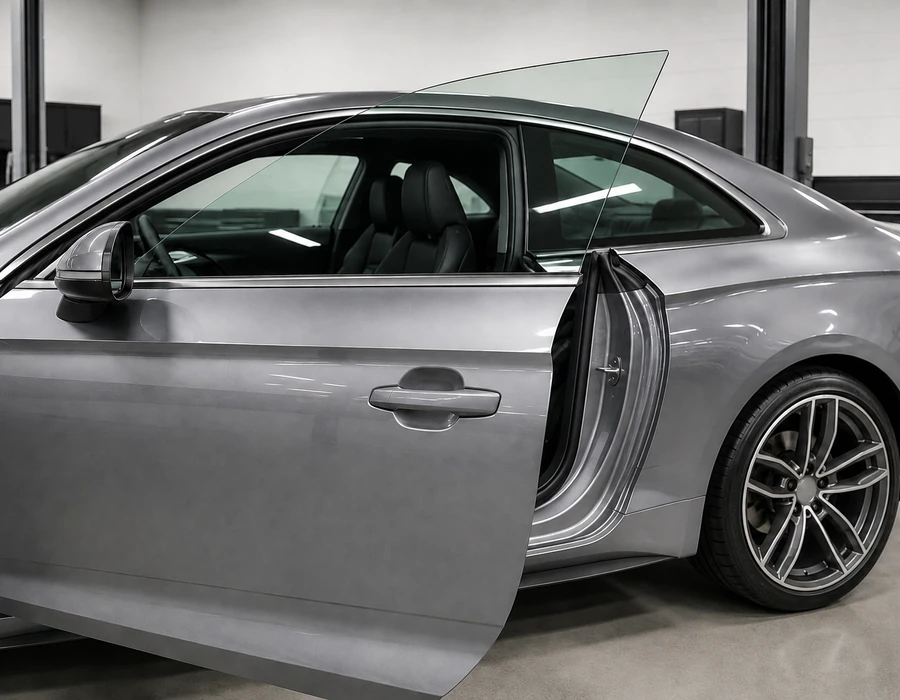
Existing film, damaged glass, and electronics change the job
Old film can bubble, turn hazy, discolor, scratch, separate, or leave adhesive. Removal is a separate operation because heat, steam, chemicals, scraping, and pulling can damage defroster conductors, antenna lines, printed borders, seals, trim, or glass if used incorrectly. The rear windshield usually needs the most careful assessment.
We record glass chips, cracks, scratches, pitting, edge damage, tint already inside the laminate, water leaks, trim condition, non-working windows, weak regulators, noisy guides, seals, defroster lines, antennas, cameras, and previous removal marks. A cracked glass panel should be evaluated before film is added, and a window that does not operate correctly may require repair first.
Identify layers, adhesion, bubbles, haze, discoloration, contamination, and removal risk before quoting a replacement.
Document chips, scratches, cracks, dot matrix, ceramic borders, heating conductors, antennas, labels, and markings.
Check regulator movement, auto-drop, pinch protection, seals, guides, rattles, and edge contact.
Protect door modules, speakers, switches, cameras, sensors, brake light, parcel shelf, headliner, and surrounding finishes from water and tools.
Review mirror use, rear view, camera view, optical distortion, existing darkness, and low-light needs before changing the glass.
How tint is fitted without treating the car like flat glass
Confirm product, shade or VLT target, existing glass, included windows, exclusions, legal suitability, and customer priorities.
Cover sensitive trim and electronics, manage water, inspect door cards and parcel areas, and choose safe access for each glass panel.
Remove old film and adhesive when included, clean glass edges and seals, reduce dust sources, and avoid damaging printed elements.
Cut safely without scoring glass or trim, form the material to curved glass, keep required sensor and legal areas clear, and control contamination.
Apply the film using the approved method, remove solution and air, set edges around seals and dot matrix, and avoid excessive handling.
Check clarity, contamination, creases, edges, function, and appearance, then give product-specific window use, cleaning, and curing guidance.
Judge the tint from inside, outside, and through the controls
A dark workshop view can hide contamination and a bright exterior view can hide optical distortion. The finished car needs several checks.
Look through the glass
- No severe distortion in normal sight lines
- Consistent appearance across adjacent windows
- Acceptable clarity at day and night
- Rear camera and mirror views remain usable
- No crease, cut, hard particle, or lifted edge
Operate the vehicle
- Windows, auto-drop, and pinch function remain correct
- Door seals and trim are seated
- Defroster, antenna, brake light, and sensors are not obstructed
- Door electronics and speakers are dry and functional
- Glass markings and required areas remain visible
Know the product
- Invoice identifies film and covered windows
- Customer receives applicable product terms
- Curing and cleaning guidance is clear
- Legal suitability remains the owner’s ongoing responsibility
- Future glass, film, and repair history is retained
Confirm current rules for the exact vehicle and glass area
Window-tint rules can distinguish between vehicle categories, individual glass areas, visibility requirements, special permissions, and enforcement measurements. Because rules and procedures can change, we do not turn an old percentage copied from another website into a permanent promise.
Before installation, confirm the current official requirement that applies to the registered vehicle, intended road use, and each glass area. The combined glass-and-film result matters. Factory privacy glass is not permission to add any film without measuring the finished transmission.
The owner should also review insurer, fleet, lease, finance, employer, or cross-border requirements where relevant. A visually discreet film can still be unsuitable if the measured result or covered area conflicts with current rules.
What changes the quotation
- Audi model, body style, number and size of glass panels, and window construction
- Existing clear, privacy, laminated, coated, or previously filmed glass
- Film brand, series, construction, shade, performance data, and availability
- Front sides, rear sides, quarter glass, rear windshield, windshield area, or roof scope
- Removal of old film and adhesive, especially around defroster and antenna lines
- Frameless doors, tight trim, dot matrix, compound curvature, and electronic equipment
- Glass, regulator, seal, trim, defroster, leak, or electrical repair needed first
The written estimate for Audi window tint service follows glass inspection and product selection. We do not publish one time or price because removal risk and vehicle layout vary substantially.
Protect the film after installation
Follow the curing guidance for the selected product and current conditions. Do not lower moving windows until advised. Avoid pressing edges, attaching suction devices, or placing stickers on the film during curing.
Clean the inside surface with a compatible product and a clean, soft microfiber cloth. Avoid abrasive pads, sharp tools, harsh chemicals, and scraping around defroster or antenna elements. Ask before using ammonia-containing products because suitability depends on the film.
If an edge lifts, a bubble remains after the expected drying period, visibility changes, a window catches the film, or defroster or antenna performance changes, photograph the area and arrange inspection. Do not puncture bubbles or apply household adhesive.
Audi window tint service FAQs
What does VLT mean for car window tint?
Visible light transmission, or VLT, describes how much visible light passes through a material. The final reading comes from the original glass and added film together. A film label alone does not describe the completed window, especially when the Audi already has tinted or privacy-colored glass.
Which tint is best for reducing cabin heat?
The best choice depends on measured product data, glass, desired visible light, solar exposure, reflectivity, appearance, electronics, budget, and legal suitability. Darkness alone does not prove heat performance. Compare manufacturer data for the exact film series and view samples under realistic conditions.
Will tint interfere with Audi antennas or electronics?
Some metal-containing films can affect certain signals, while vehicle antenna locations and technologies vary. Cameras, rain and light sensors, toll devices, GPS, keyless systems, radio antennas, defrosters, and head-up displays also need consideration. We match the product and coverage to the exact equipment.
Can you tint an Audi with factory privacy glass?
Yes, when the combined result is measured and suitable. Privacy glass may be colored within the glass rather than covered by removable film, and it may provide a different balance of visible light, heat, and UV performance. Adding film changes the finished transmission and must remain compliant.
Can old tint be removed without damaging the rear defroster?
Careful removal reduces risk, but no responsible installer can guarantee every aged film will release harmlessly. Adhesive condition, film age, previous removal, heat, printed conductor condition, and antenna lines matter. We inspect first and use a method intended to protect the glass and printed elements.
How long must windows stay closed after tinting?
The instruction depends on the exact film, glass, installation method, weather, humidity, and storage conditions. Follow the handover guidance for the installed product. Operating a moving window too early can catch an edge before the film has stabilized.
Are small bubbles normal after installation?
Light moisture patterns or haze can be visible during curing and may change as the installation dries. Hard contamination, a crease, cut, lifted edge, severe distortion, or a bubble that remains beyond the advised review period needs inspection. Do not puncture or press it yourself.
How long does Audi window tint installation take?
Time depends on vehicle size, number and shape of windows, frameless glass, film construction, old-film removal, adhesive condition, defroster and antenna risk, trim access, contamination, glass or regulator faults, and final testing. The schedule is confirmed after inspection and product selection.
What should I send for a tint quotation?
Send the VIN or model and year, clear photos of each glass area, whether factory privacy glass or old film is present, which windows you want covered, your day and night visibility needs, desired appearance, heat and glare priorities, and any known regulator, seal, antenna, camera, or defroster problem.
Plan your Audi tint in Al Quoz 4
Send the model, year, photos of every glass area, existing film or privacy-glass details, and your visibility, heat, glare, and appearance priorities. We will inspect the vehicle and define the film and coverage before installation.