Cold start
A short blue puff after overnight parking can support oil entering a cylinder while the engine rests, but it is not proof by itself.

Blue smoke and oil consumption can involve valve stem seals, but turbocharger leakage, crankcase ventilation, piston rings, cylinder wear, external leaks and incorrect oil level can produce similar evidence. We diagnose the smoke pattern and engine condition before recommending cylinder-head work.
Valve stem seals meter oil around the valve stems and guides inside the cylinder head. They are unrelated to tire valve stems, wheel valves or TPMS sensors. If the complaint is air loss from a tire, this is the wrong service route.
A short blue puff after overnight parking can support oil entering a cylinder while the engine rests, but it is not proof by itself.
Smoke after extended idling and then throttle can increase suspicion around guides, seals or ventilation behaviour.
Smoke after a long overrun or downhill event can provide useful vacuum-related evidence when reproduced safely.
Smoke mainly under load redirects testing toward turbo, ring, bore, oil-control or ventilation causes.
The symptom history starts with oil grade, service level, top-up quantity, mileage, recent work and the exact point at which smoke appears. A scan checks misfire, mixture, boost and ventilation-related evidence, but a fault code alone does not identify a valve seal.
We inspect the intake and turbo oil paths, crankcase ventilation behaviour, external leakage and spark-plug condition. Compression and leak-down testing can assess cylinder sealing, yet a healthy result does not prove the valve seals are good, and a poor result may indicate a larger engine condition.
For wider engine symptoms, the Audi engine repair page owns rebuild and internal-damage intent. This page remains focused on confirming and replacing valve stem seals.
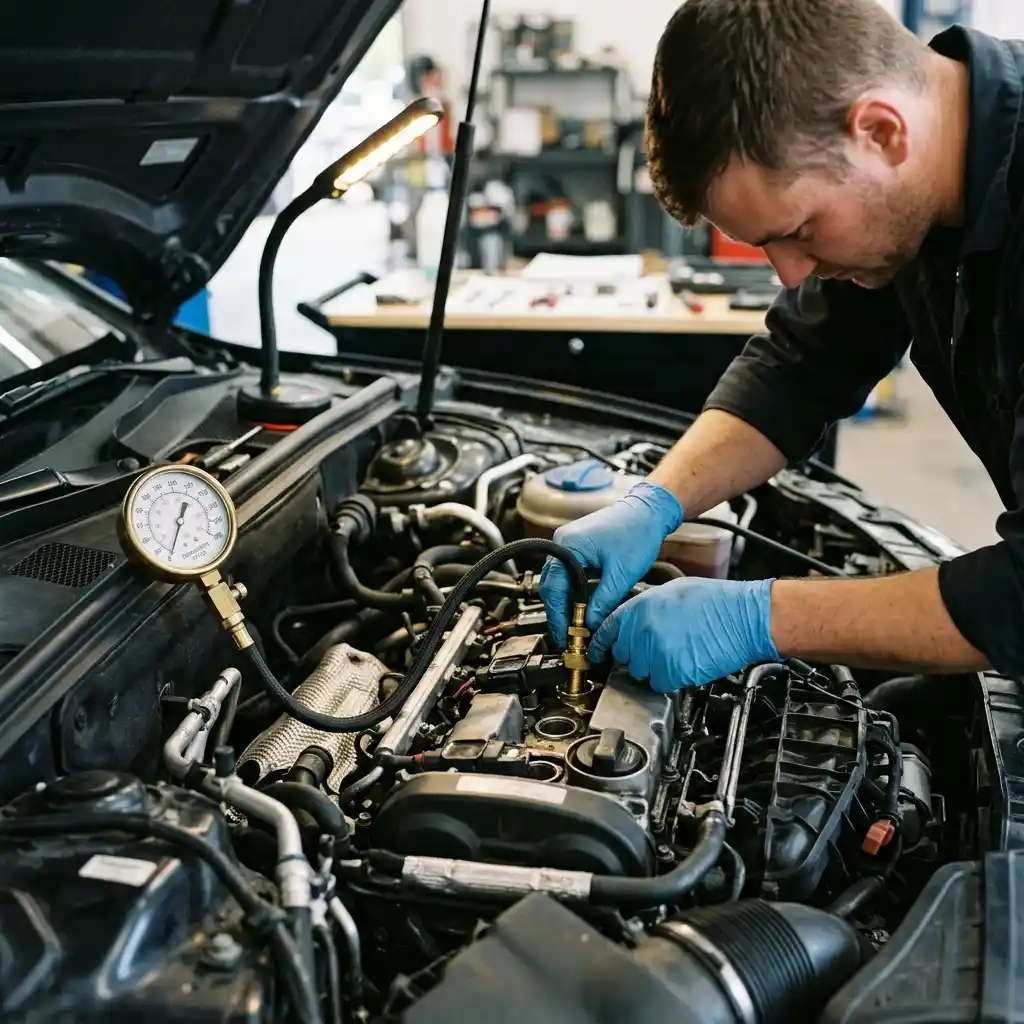
A turbocharged Audi can pass oil into the intake or exhaust when the turbocharger oil return is restricted, the oil level is too high or crankcase pressure is excessive. A ventilation fault can alter pressure balance and imitate a valve-seal complaint.
The diagnosis checks charge pipes, turbo inlet and outlet evidence, oil feed and return condition where accessible, ventilation operation and whether smoke follows boost rather than idle or overrun. If the turbo route is confirmed, the dedicated Audi turbo oil-leak page is the correct repair owner.
External oil loss must also be measured. Oil retained by an undertray can hide the leak point, so top-up history without a clean inspection is not enough.
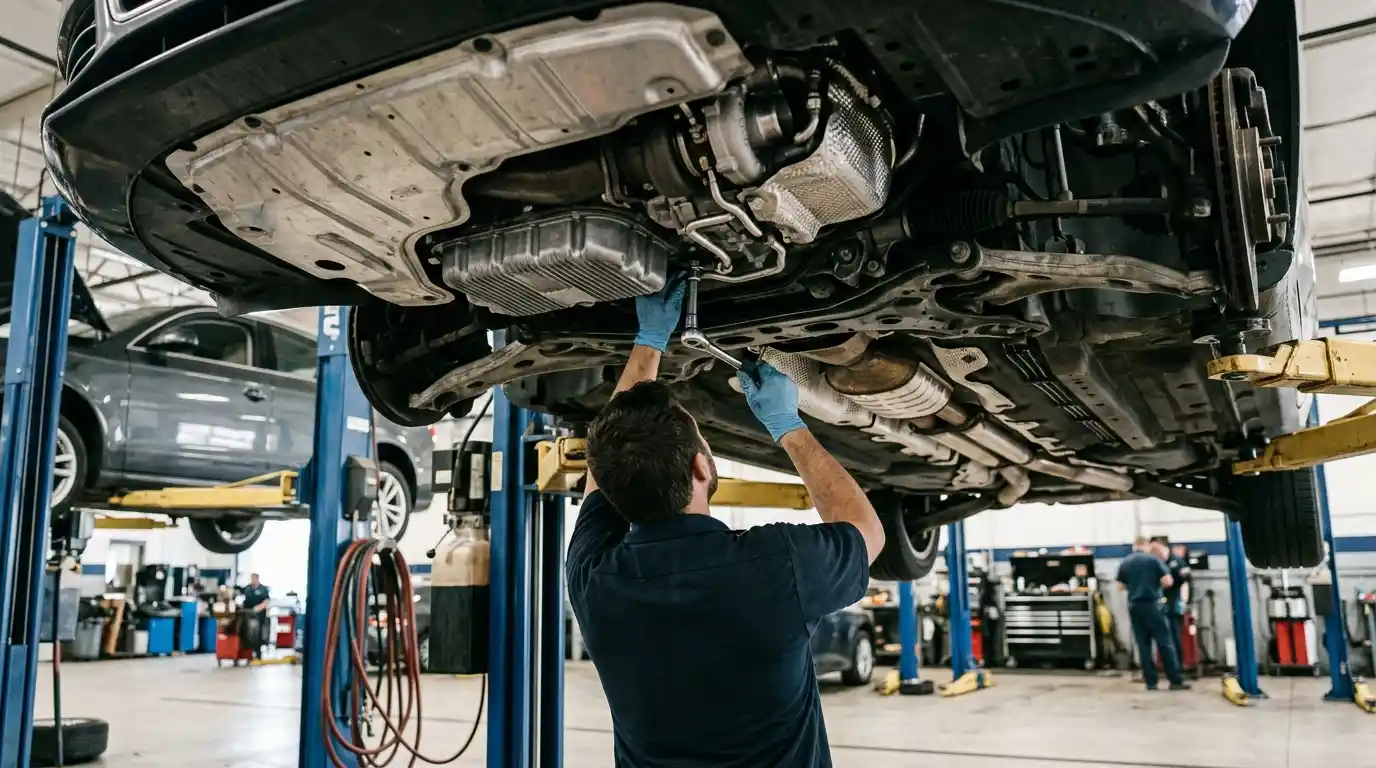
When the evidence supports seal leakage and guide condition is acceptable, valve stem seals may be replaced using the engine-specific access route.
New seals cannot correct excessive guide wear. Cylinder-head removal and specialist measurement may be required before a durable repair is approved.
If cylinder sealing and oil-control evidence point lower in the engine, a seal-only quotation would not address the cause.
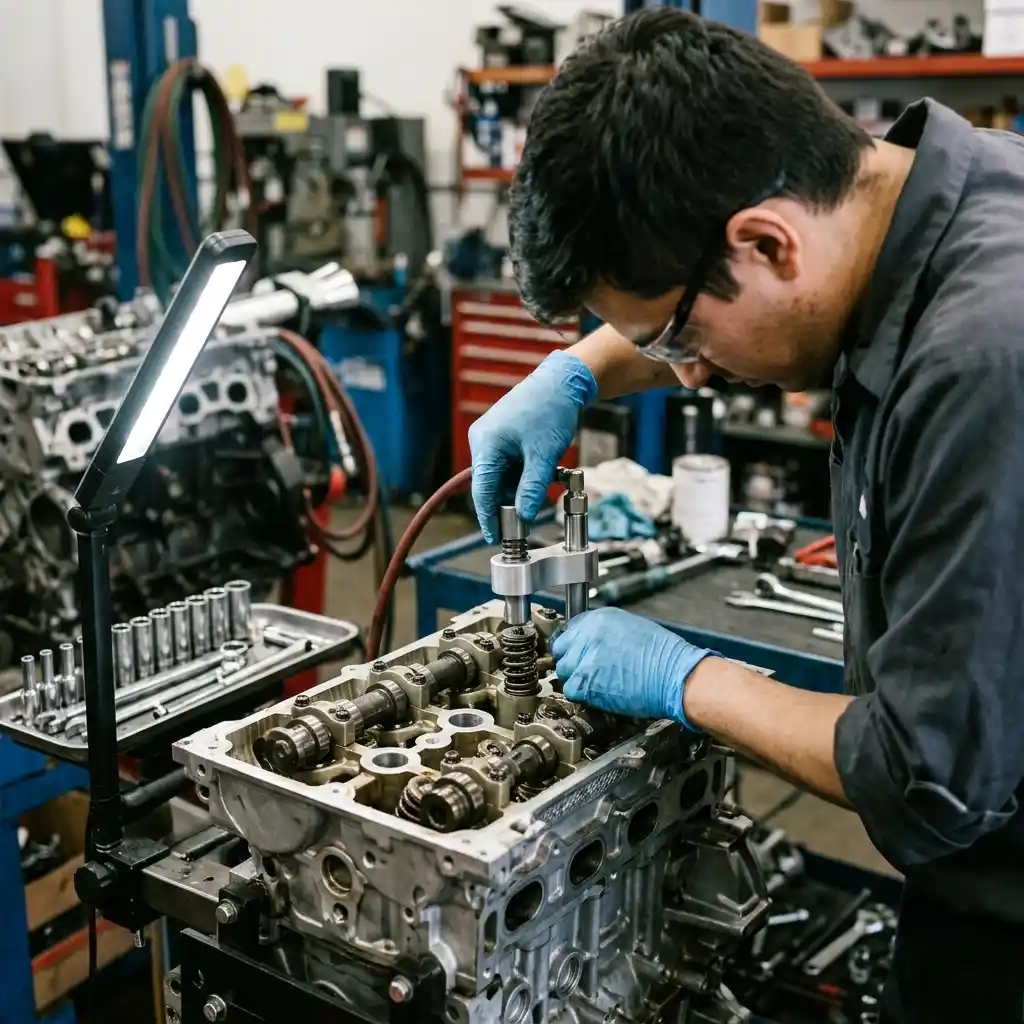
The repair path depends on the engine family, cylinder layout, valve-train design, timing arrangement and access. Some applications allow the seals to be replaced with the cylinder head installed using controlled valve support and spring-compression tooling. Others require greater dismantling or cylinder-head removal.
Timing references, camshaft position, valve keepers, springs and sealing surfaces must be controlled throughout the job. If a valve drops, timing is lost or debris enters the engine, the scope can expand significantly. The repair is therefore planned from engine code and workshop information, not from a generic labour figure.
Guide wear, valve condition and deposits are assessed as far as the access route permits. Replacing soft seals over worn or out-of-round guides can create a short-lived result.
| Factor | Why it changes the scope | Evidence needed before approval |
|---|---|---|
| Engine family and cylinder count | Changes access, valve count, timing controls and required parts. | VIN, engine code and installed configuration. |
| Head-on or head-off method | Determines dismantling, sealing work, fluids and specialist machining needs. | Access review and guide-condition plan. |
| Valve guide wear | New seals cannot compensate for excessive guide clearance or damage. | Measurement or justified condition assessment. |
| Timing and valve-train parts | Single-use hardware, gaskets and disturbed components vary by engine. | Vehicle-specific parts list. |
| Turbo, PCV or lower-engine cause | A different oil path changes the repair completely. | Smoke-pattern and engine-condition diagnosis. |
The Audi repair cost guide gives wider budgeting context. A final estimate requires the exact engine and a confirmed oil-entry route.
After reassembly, fluid level and disturbed systems are checked, the engine is started under controlled conditions and fault status is reviewed. The original smoke event is repeated only when safe and appropriate.
Residual oil in the intake or exhaust can take time to clear, so one start is not always a complete verdict. The handover record should state what was repaired, what was measured, whether smoke changed and how oil consumption should be monitored.
Owners should record oil level on level ground using the correct procedure and avoid overfilling. If the warning returns, smoke increases, the engine misfires or oil level drops rapidly, stop the test and arrange reinspection.

Stop and verify the level using the correct procedure. Do not assume the warning is only a sensor issue.
Avoid continued testing because oil burning can affect catalysts, plugs, oxygen sensors and safe visibility.
Arrange inspection before a lubrication shortage or larger engine fault develops.
Possible signs include a blue puff after cold start, smoke after long idling or overrun, increased oil use and oil-fouled plugs. None of these signs proves the seals without excluding turbo, PCV, ring, bore and leak causes.
Yes. Compression testing primarily evaluates cylinder sealing and can be normal even when oil passes the valve stem seals. It is useful for separating a larger engine problem, not for proving the seals by itself.
Some Audi engines permit a controlled head-on method with appropriate valve support and spring tooling. Others require more dismantling. The engine code and access route decide the method.
No. Excessive guide clearance can overwhelm new seals and affect valve seating. Guide condition must be considered before a seal-only repair is approved.
Residual oil may remain in the intake or exhaust. Verification should compare the original trigger after the residue has cleared and continue with measured oil-level monitoring.
Include the Audi model, year, engine, mileage, oil top-up amount, whether smoke occurs at cold start, idle, deceleration or acceleration, and any turbo, PCV or engine work.
Independent Audi workshop. The repair route is selected from the exact engine and measured condition, not smoke colour alone.