
Audi transfer case replacement in Dubai
Binding in tight turns, a driveline warning, shudder or a leak can involve the transfer case, but tires, wheel speed data, prop shaft joints, differential mounts and gearbox behaviour can feel similar. We confirm the torque-path fault before repair or replacement.
Transfer case replacement is justified only when the fitted quattro system is identified and testing separates internal transfer damage from tires, controls, shafts, mounts, differentials and gearbox faults.
Start with the exact quattro layout
“Transfer case” is often used as a broad name for the unit or mechanism that distributes drive between axles. Audi uses different longitudinal and transverse driveline layouts across models and generations. Some systems use a centre differential arrangement, while others use an electronically controlled coupling. An e-tron with separate electric drive units follows another diagnostic path entirely. The VIN, gearbox code, drivetrain and fitted equipment determine what is actually on the vehicle.
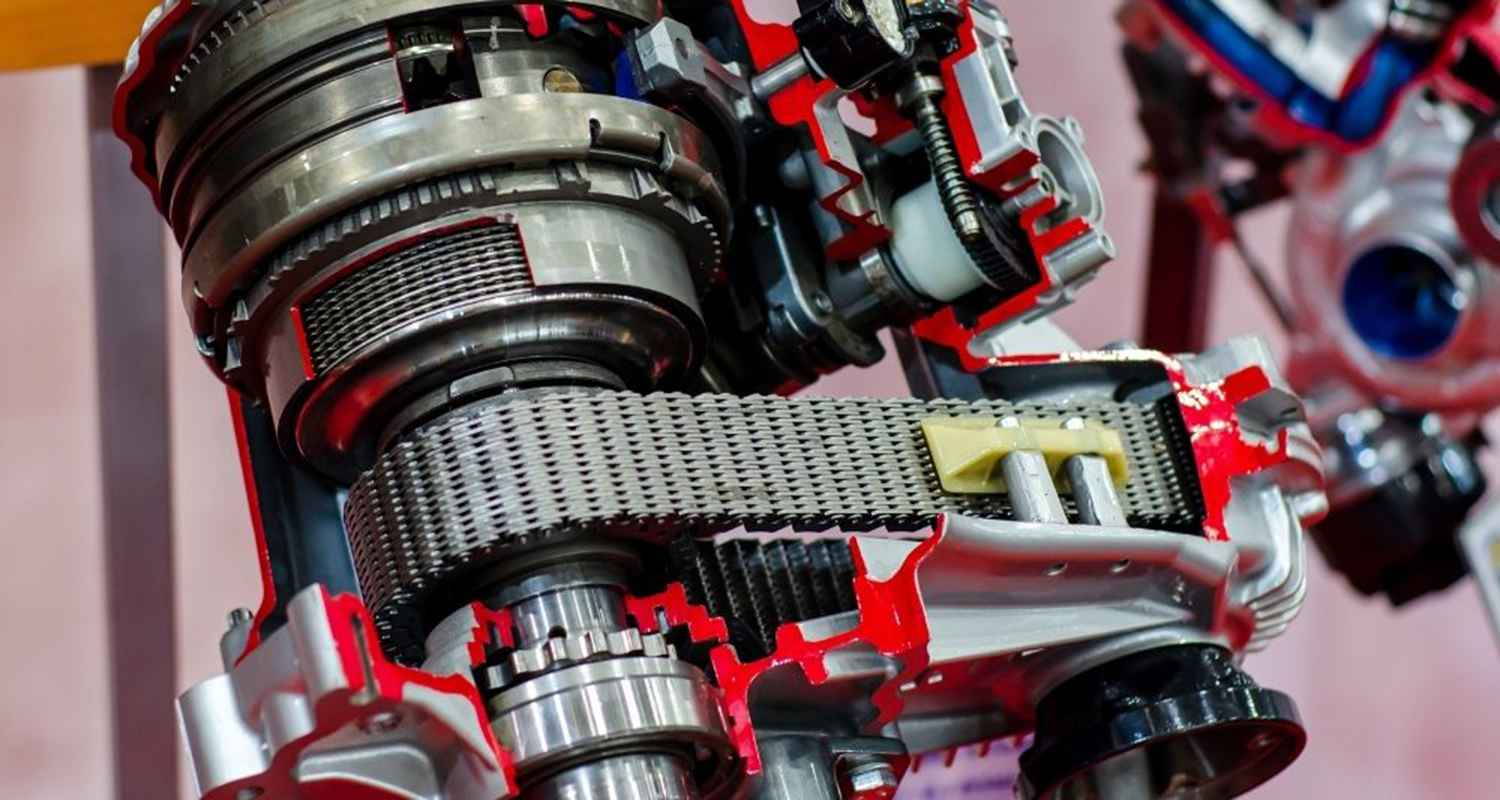
Gearbox output
Confirm that the transmission is delivering power correctly and is not creating a shift or engagement symptom that is being blamed on the transfer unit.
Torque distribution
Identify the centre-drive hardware, its fluid or lubrication requirements, electronic control and the conditions under which it engages.
Axle output
Check shafts, joints, final drives, bearings, mounts and wheel-speed agreement before assigning the noise or binding to one assembly.
Symptoms that need driveline testing
A transfer-related problem may be load-sensitive, speed-sensitive, temperature-sensitive or most noticeable during tight low-speed turns. Record when it happens instead of describing every sensation as a generic vibration.
Binding in turns
The car may resist, hop or feel wound up in a parking manoeuvre. Tire mismatch, coupling control and internal transfer behaviour all need consideration.
Shudder on acceleration
A shudder under torque can come from a prop shaft joint, support bearing, inner CV joint, mount, gearbox or transfer component.
Whine or rumble
Pitch that changes with road speed, drive or overrun helps localise bearings and gears, but cabin transmission can disguise the source.
Leak below the driveline
Fluid at a case joint or output seal requires identification. Engine, gearbox and differential fluid can travel before dripping.
Quattro warning
A warning may begin with control data, wheel-speed disagreement, voltage or communication, not necessarily internal mechanical failure.
Clunk on load change
Excess movement can involve splines, joints, mounts, differential backlash or another driveline connection.
Uneven tire wear
Different rolling circumferences can keep a controlled coupling working when it should not and can imitate or aggravate driveline stress.
Intermittent behaviour
A condition that appears only hot, after highway driving or during a particular turn needs a repeatable road-test pattern.
How the fault is isolated
Inspection follows the torque path and the symptom pattern. Scanning alone cannot confirm worn gears, bearings or clutch packs, while a noise alone cannot identify which connected assembly produced it.
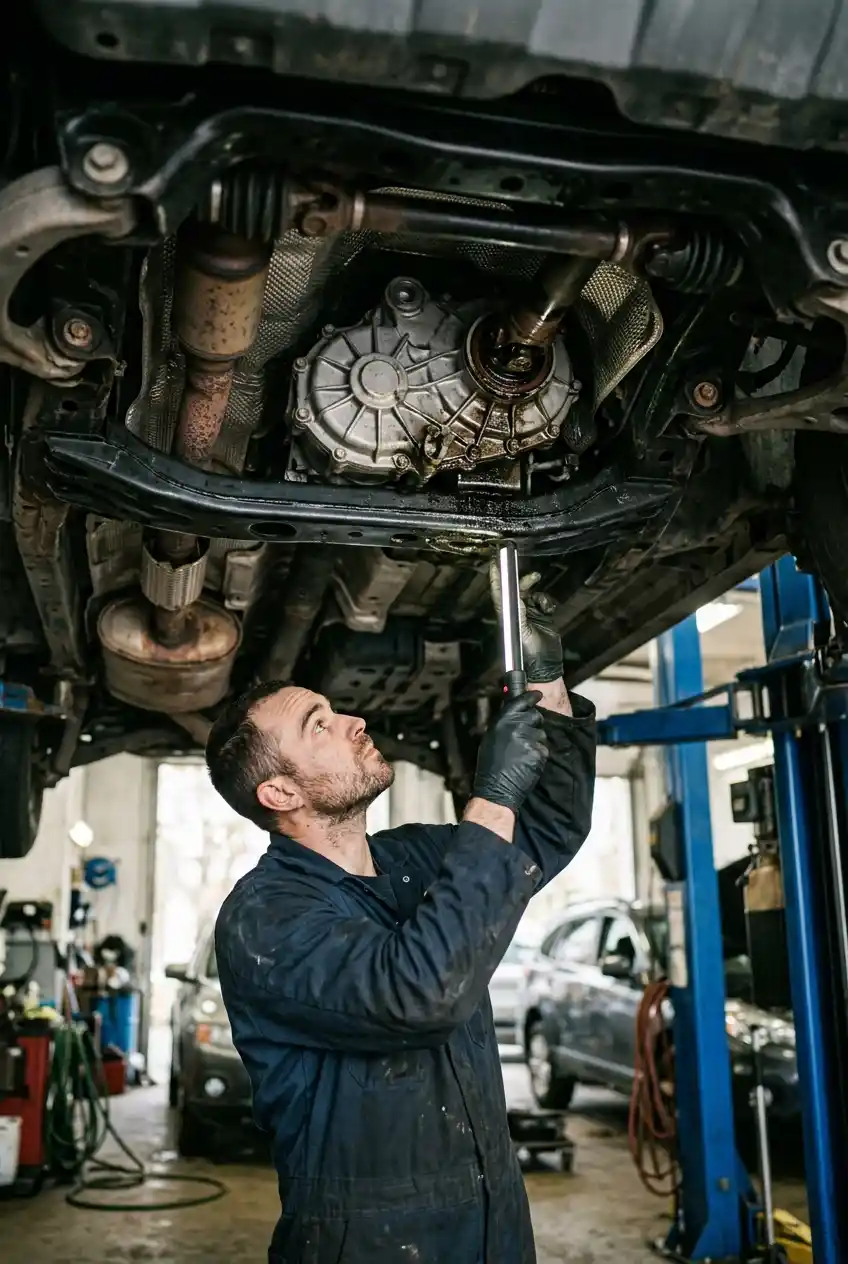
Define the operating condition
Record speed, steering angle, throttle, temperature, gear and whether the symptom appears on drive, coast, reverse or a tight turn.
Verify tires and basic geometry
Compare tire size, type, wear and pressure across the vehicle. A visually similar set can still have a meaningful rolling-circumference difference.
Read relevant control systems
Check drivetrain, gearbox, ABS and related fault status and live data. Wheel-speed, temperature and engagement data are interpreted in context.
Inspect fluid and external condition
Identify the fluid source, level-check method and evidence of contamination or overheating where the installed unit permits those checks.
Localise play, vibration and noise
Inspect mounts, shafts, CV joints, supports, flanges and differentials. Controlled lift and road testing are selected according to safety and driveline design.
Set repair boundaries
Only after the failed unit and related damage are supported by evidence do we compare service, repair, replacement and connected-part work.
Common reasons for a wrong diagnosis
Mismatched rolling circumference
Mixed sizes, uneven wear or incorrect pressure can create sustained driveline correction. Replacing a transfer assembly without correcting the tire condition risks repeating the symptom.
Joint or support wear
A centre support, universal joint, CV joint or flange can shudder or clunk under torque. The symptom may be felt through the same tunnel area as the transfer unit.
Powertrain movement
Engine, gearbox and differential mounts can amplify load-change movement. Visible case movement does not by itself prove internal case damage.
Wheel-speed or voltage faults
Bad input data or unstable system voltage can alter electronically controlled torque distribution and create warnings without internal gear damage.
Engagement and shift behaviour
A delayed take-up, harsh shift or clutch judder can be described as a transfer fault. The event must be tied to the correct operating phase.
Differential bearing noise
Front or rear final-drive noise can travel through the body and prop shaft. Load and overrun comparison helps narrow the source.
When the complaint follows a shift or delayed engagement, our Audi gearbox repair service explains the separate transmission assessment.
Repair, service or replacement
The correct decision depends on the exact unit, what failed, parts support and whether contamination or damage has spread. A fluid service is not a repair for confirmed mechanical wear, and a replacement assembly is not a substitute for proving the cause.
| Decision | When it may apply | What must still be verified |
|---|---|---|
| Correct an external cause | Tire mismatch, pressure difference, mounting fault, wiring or input-data problem | The transfer unit has not suffered secondary damage and the original symptom is gone |
| Seal or focused repair | An accessible seal, connector or serviceable external component is confirmed | Shaft surface, bearing play, fluid condition and the reason the seal failed |
| Internal repair | The specific assembly is serviceable and damage can be defined | Availability of correct internal parts, measurements and contamination scope |
| Replacement | Internal damage is extensive, the unit is not reasonably serviceable or a verified replacement route is more appropriate | Exact part identity, ratios, software needs, fluid specification and connected driveline condition |
Match the assembly, not just its appearance
Before approving Audi transfer case replacement, ask which unit code and part revision have been identified. A casing that looks identical is not enough to establish compatibility. The quote should specify whether the proposed unit is new, remanufactured or used, what is supplied with it, and which compatibility checks are included. Availability, condition and the agreed parts route must be confirmed for your vehicle.
Audi transfer case replacement scope
- Confirm the VIN, drivetrain, gearbox code and transfer-unit identification before ordering parts.
- Document fault status, leaks, noise, play and tire condition before dismantling.
- Support the powertrain and driveline correctly for the installed layout.
- Disconnect relevant shafts, mounts, wiring, cooling or exhaust components only as required for access.
- Inspect flanges, splines, seals, supports and mounts that could damage or misalign the replacement.
- Use the vehicle-specific fluid and level procedure where applicable.
- Complete coding, basic settings or adaptation only when the installed system requires them.
Audi model and generation differences
Transverse-platform models
Some A3, Q3 and TT-family configurations use a rear-drive coupling rather than the longitudinal arrangement found in larger platforms. Coupling service and control data are configuration-specific.
Longitudinal quattro models
A4, A5, A6, A7, A8 and related Q models span several centre-drive designs, gearboxes and generations. Naming alone cannot select the part or procedure.
Performance variants
S and RS models can have different final drives, sport differential equipment, torque management and cooling. Higher output also changes how load-related symptoms present.
SUV packaging
Q5, Q7 and Q8 access can be affected by exhaust, underbody protection, suspension and driveline packaging. Lifting and support points must match the vehicle.
Hybrid configurations
A plug-in hybrid may combine the combustion powertrain with additional electrical and cooling systems. Isolation and access planning can differ from the petrol-only version.
Electric quattro
An Audi with separate front and rear electric drive units does not use a conventional transfer case in the same way. A drive-system warning must follow the electric drivetrain path.
Safe-to-drive guidance
Stop and arrange recovery if there is grinding, severe binding, repeated heavy clunks, fluid loss, a burning smell, smoke, loss of drive or a warning accompanied by unstable vehicle behaviour. Continuing can spread damage through shafts, gears or final drives.
A mild noise still needs prompt assessment. Avoid towing, launch-style acceleration, tight repeated manoeuvres and unnecessary distance until the source is known. If the Audi has one visibly damaged tire or a temporary spare, ask before driving because circumference mismatch can matter to an all-wheel-drive system.
Recovery and DIY limits
Tell the recovery operator that the Audi is all-wheel drive and describe any binding or loss of drive. The transport and loading method must follow the vehicle’s recovery instructions. Do not assume that towing with only one axle raised is suitable; report locked wheels or a vehicle that cannot select neutral before collection.
A driver can record the symptom and check the tire size markings and obvious pressure warning. Do not run the vehicle in gear while unsupported, crawl beneath it on a roadside jack, open a hot driveline unit or guess fluid from colour. Transfer and final-drive fluids can differ by unit and application.
Verification before handover
Post-repair checks must address the original complaint and the systems disturbed during the work.

Leak and level check
Confirm seals, plugs and connections remain dry and the applicable fluid level was set by the correct procedure.
Fault and data check
Re-scan involved controllers and verify any required setup without hiding unresolved faults through clearing alone.
Low-speed turns
Repeat the original parking-turn condition in both directions and compare binding, hop and noise.
Load and coast test
Check acceleration, steady speed and overrun for the vibration, whine or clunk that led to the repair.
Wheel alignment is not automatically part of Audi transfer case replacement. It becomes relevant if access disturbs alignment-setting components or testing finds a separate geometry concern. Cooling-system filling, bleeding or additional calibration belongs in the scope only when the fitted equipment and work performed require it.
Reducing avoidable quattro driveline stress
There is no universal transfer case replacement interval. Prevention is mainly about using the correct vehicle-specific maintenance information and avoiding conditions that force the driveline to compensate continuously.

Manage tires as a set
Use the approved sizes for the vehicle and keep pressures correct. When one tire is damaged, compare the remaining tread depth and rolling circumference before fitting a single replacement. A matching sidewall label does not guarantee identical real-world circumference when wear differs.
Investigate leaks early
A light film and an active leak are not the same, but both should be identified. Repairing an external leak before the unit runs low can limit secondary bearing or gear damage. Do not top up with an assumed fluid because colour is not a reliable specification.
Record new noises
Note whether a new sound follows road speed, engine speed, gear, throttle or steering angle. Early localisation can separate a wheel bearing, shaft support or differential concern before unnecessary transfer case work is approved.
After tire, suspension, gearbox or prop-shaft work, pay attention to any new vibration or binding that was not present before. Return promptly with the invoice and symptom conditions so installation, part identity and related adjustments can be checked while the sequence is still clear.
Check the Audi fluids and specifications guide before discussing service products; final selection must match the exact unit and vehicle information.
Cost, timing and Al Quoz 4 booking
A useful estimate starts with the fitted unit and the evidence behind the repair.
No fixed transfer case replacement price or time applies without identifying the unit. Cost changes with diagnosis, new or alternative parts route, internal versus complete-unit work, fluid, seals, mount or shaft damage, programming requirements and access. Parts availability can also affect workshop time.
For an inspection in Al Quoz 4, send the VIN, model, year, mileage, tire sizes, dashboard message, a description of when the symptom occurs and any recent tire, gearbox, shaft or differential work. A short video can help with a low-speed clunk, but do not record while driving.
Intermittent faults may require the Audi to remain so the unit can be checked cold, hot or after the driving condition that triggers the concern. We confirm the inspection plan before dismantling.
Ask for an itemised Audi transfer case replacement estimate covering diagnosis, the assembly, access labour, fluids, seals, one-time-use hardware where required, setup and final testing. Any extra shaft, mount or differential repair should have its own explanation. This makes it easier to compare scopes and understand what could change after dismantling.
Audi transfer case FAQs
Does binding in a tight turn prove the transfer case has failed?
No. Tire circumference, pressure, coupling control, wheel-speed data and differential or shaft faults can also cause binding or hop. The quattro layout and operating data need to be checked.
Can mismatched tires damage an Audi quattro system?
Different rolling circumferences can keep parts of the driveline compensating continuously. The acceptable difference depends on the system and vehicle guidance, so size, type, wear and pressure should be reviewed as a set.
Can a transfer case leak be repaired without replacing the unit?
Sometimes an external seal or serviceable area can be repaired. The source, shaft surface, bearing play, fluid condition and reason for the leak must be checked first.
Is a transfer case fluid change enough to fix shudder?
Only when diagnosis supports a fluid-related service condition and the unit has no confirmed mechanical damage. Fluid service cannot restore worn gears, bearings, splines or damaged clutch hardware.
Will the replacement transfer case need coding?
That depends on the fitted system and whether electronic control components are replaced or transferred. Some applications may require basic settings or adaptation; others are primarily mechanical.
Why does the noise change between acceleration and coasting?
Load direction changes across gears, bearings, joints and mounts. Comparing drive and overrun helps localise the source, but it does not identify the exact part without inspection.
Can I drive with a quattro or drivetrain warning?
Do not drive if there is severe binding, grinding, loss of drive, smoke, burning smell or active fluid loss. For a stable vehicle with only a warning, call with the exact message before deciding whether workshop travel is appropriate.
What details help with a transfer case estimate?
Send the VIN, model, year, mileage, tire details, exact warning, when the symptom occurs and any previous driveline repairs. A final estimate still depends on inspection and part identification.
Let’s trace your quattro fault
Send the VIN, tire details, warning message and whether the symptom changes with steering angle, speed, acceleration, coasting or temperature.