
Audi ignition faults diagnosis in Dubai
An Audi ignition warning does not identify one failed part. We separate key authorisation, ignition-switch, battery, starter, wiring, engine-speed and combustion faults before recommending a repair.
The first decision is not which ignition part to buy. It is whether the Audi has a start-authorisation fault, a cranking fault, a crank-no-start condition or a running-engine misfire.
Ignition fault can mean different systems
Drivers use “ignition fault” for several different events. Audi dashboard wording can refer to the start and access system, the ignition-switch or terminal state, while rough running may come from the high-voltage ignition system that fires the spark plugs. Those paths share symptoms, but they do not share one automatic repair.
Start authorisation
The key, immobiliser, steering-lock or access/start control may not approve the start request. A weak key battery can affect remote operation, but it does not prove the vehicle immobiliser or key itself has failed.
Cranking circuit
The battery, main cables, terminals, relays, starter control and starter motor affect whether the engine turns. A click, slow crank and complete silence point to different tests.
Engine combustion
Coils and spark plugs matter after the engine is turning. Fuel pressure, injector control, engine-speed signals, timing and compression can produce similar crank-no-start or misfire symptoms.
What the warning wording changes
The full dashboard message matters. Photograph it before cycling the ignition because the message may disappear, change or become a stored event after the vehicle is restarted.
Match the symptom to the first checks
The same dashboard phrase can accompany different physical behaviour. The workshop starts with what the car actually does, then connects that behaviour to voltage, control requests, fault status and mechanical evidence.
| What the driver notices | Possible areas | Evidence needed before repair |
|---|---|---|
| No dash response or rapid clicking | Battery state, terminal connection, main power supply | Resting and loaded voltage, cable condition and voltage drop |
| Dash wakes up but engine does not crank | Start authorisation, selector position, brake input, relay, wiring or starter circuit | Start request data, terminal states, power and ground at the affected circuit |
| Engine cranks at normal speed but does not start | Engine-speed signal, fuel delivery, spark control, timing or authorisation | Fault context, live speed signal, fuel and spark evidence, timing correlation where relevant |
| Engine starts and immediately stops | Authorisation, power supply, air or fuel control | Immobiliser status, voltage stability, stored events and running data |
| Rough running with EPC or engine warning | Coil, plug, injector, air leak, compression or control fault | Cylinder-specific counts and tests that move or isolate the fault |

A fault code is not a parts verdict
A cylinder-misfire code names the detected event, not automatically the component that caused it. A coil can fail, but a worn or incorrect plug, injector problem, air leak, wiring fault, low compression or mechanical timing issue can create the same counter.
Likewise, a starter or terminal-related code may be stored after low system voltage. Replacing the named module without checking battery condition, voltage drop, connections and event timing can leave the original fault unchanged.
Useful evidence to send
Send the exact dashboard wording, model, year, mileage, what the car does when the start button is pressed, recent battery or key work, and any fault codes already read. A short video with clear sound can preserve clicking, cranking speed or the start-and-stall pattern.
How an Audi ignition fault is confirmed
The sequence changes with the symptom and vehicle configuration, but the aim stays the same: prove which part of the start or combustion chain is missing before opening the repair scope.
Preserve the event
Record the exact message, warning colour, start behaviour and whether the fault is current, intermittent or linked to heat, parking time, rain, recent work or a particular key.
Stabilise power
Check battery condition and system voltage before treating low-voltage communication or terminal faults as failed modules. Inspect accessible power and ground connections for a symptom-led reason.
Scan the relevant systems
Read the controllers involved in access, authorisation, engine control and power distribution. Status, frequency and event context matter more than a code description alone.
Follow the missing function
Confirm whether the start request is recognised, authorised and delivered, whether the engine turns correctly, and whether speed, spark and fuel control appear when expected.
Isolate the component
Use circuit checks, comparison data and controlled substitution only where appropriate. For a misfire, compare cylinders and inspect the plug, coil, connector and mechanical evidence.
Approve the repair scope
Explain the confirmed fault, related damage, parts options and any configuration, adaptation or coding requirement before replacement begins.
Repair depends on the failed branch
Audi ignition fault repair may be a connection repair, battery-related correction, ignition-switch repair, starter-circuit repair, key or authorisation diagnosis, coil or plug replacement, sensor circuit repair, or a wider engine fault investigation. The page does not assume those jobs belong in one package.
Repair may be reasonable
A damaged connector, accessible wiring fault, poor terminal connection or a serviceable component may allow a focused repair when its condition and the repair method support it. The affected circuit still needs a final load or function check.
Replacement may be justified
An internally failed sealed component, heat-damaged unit, mechanically worn switch or starter, or an ignition coil that fails confirmation testing may require replacement. Part identity must match the VIN, engine and installed system.
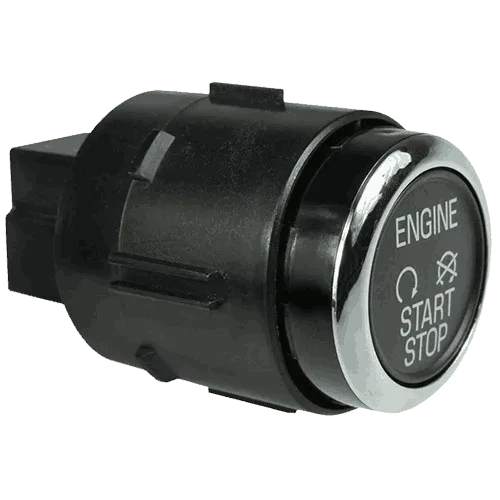
If testing confirms a coil, see Audi ignition coil replacement. If the switch or start-control interface is confirmed, see Audi ignition switch replacement.
Configuration changes the diagnostic path
Key and start system
A physical key, start button, advanced key and market-specific security configuration do not use an identical authorisation path. The VIN and fitted equipment help identify the correct components and procedures.
Engine generation
Petrol engine families differ in coil type, plug specification, sensor arrangement, timing system and control strategy. Cylinder count and packaging also change access and the value of comparison testing.
Hybrid and e-tron
An electrified Audi may use “ready” logic rather than a conventional engine-start experience. High-voltage warnings and isolation procedures require a different path from a petrol-engine ignition diagnosis.
Gear selector and brake input
Some no-crank complaints begin with an unrecognised selector position or brake-pedal input. Those signals should be checked before a starter motor is condemned.
Software and component identity
A replacement control component may need matching, coding, parameterisation or adaptation depending on the vehicle and part. That requirement must be checked, not assumed.
Intermittent conditions
Heat-soak, overnight parking, low battery state or one particular key can change the symptom. An intermittent car may need to remain for cold or repeated testing so the fault can be observed.
When to stop and arrange recovery
- Stop safely if the engine is shaking heavily, a warning is flashing, smoke appears, or there is a strong fuel or electrical burning smell.
- Do not keep attempting to start a no-crank vehicle. Repeated attempts can flatten the battery and make the original evidence harder to interpret.
- If the message says not to switch off the engine, do not assume that means a long drive is safe. Consider the vehicle’s running condition and location, then call for advice.
- Use recovery when the Audi cannot start reliably, stalls, has unstable electrical power, or would need unsafe roadside testing.
What happens after the repair
A successful repair is more than clearing the warning. Verification should reproduce the original operating conditions as closely as practical and confirm that connected systems remain stable.
Cold and warm start
Check start behaviour under the conditions that previously triggered the complaint when practical. Check every supplied key after key or control-unit work.
Voltage and terminal state
Confirm stable supply and the expected start-request path after work on the cranking or power circuit. Complete any applicable coding or adaptation.
Fault status
Re-scan the relevant controllers and distinguish resolved historic entries from faults that return.
Running quality
For combustion faults, check misfire data, idle quality and a suitable road test. Check replaced plugs or coils for correct fitment and oil, coolant or connector damage.
What changes cost and workshop time
No single price or turnaround applies to every ignition complaint. The estimate changes with the fault state, access, test time, vehicle configuration, whether the problem is intermittent, part identity and whether programming or additional mechanical testing is required.
- A repeatable no-crank condition is usually easier to isolate than a fault that appears only after overnight parking or heat-soak.
- Damage to wiring, connectors or multiple circuits can expand the scope beyond a single replaceable component.
- Key and immobiliser-related work may depend on identity, compatibility and security procedures.
- A misfire with low compression, timing correlation or fuel-system evidence requires a different estimate from a confirmed coil fault.
What to send us
- Vehicle detailsVIN, model, year and mileage
- Warning and starting behaviourExact message, when it appears and whether the engine cranks
- Recent work and reportsBattery or key work, plus any existing scan report
Tell us before moving the Audi so we can discuss workshop arrival or recovery.
Audi ignition fault FAQs
What does an Audi starter ignition fault mean?
It means the vehicle has detected a problem somewhere in the start request, authorisation, power supply or cranking path. The wording alone does not prove that the starter motor or ignition switch has failed. The exact message and what the car physically does are needed for diagnosis.
Should I switch off an Audi showing “Do not switch off engine”?
The message warns that the car may not restart. If it is running normally and you are in an unsafe position, move only as far as needed to become safe. Do not treat the message as permission for a long drive. Call and describe the warning and vehicle behaviour before deciding whether to move it further.
Why does my Audi click but not start?
Clicking can occur with low battery voltage, resistance at a terminal or cable, a relay or solenoid action without sufficient current, or a starter problem. Cranking voltage and voltage-drop checks help separate those possibilities.
Can a weak battery create ignition fault messages?
Yes. Low or unstable voltage can create terminal, communication and start-system faults, especially during cranking. That does not mean every ignition warning is caused by the battery. Battery condition and loaded voltage should be tested before the warning is interpreted.
Does a misfire code mean the ignition coil needs replacement?
No. A coil is one possible cause. The spark plug, injector, wiring, air leak, compression and timing can produce a cylinder misfire. A useful diagnosis checks whether the fault follows a component or remains with the cylinder and reviews the other evidence.
Can I drive with an ignition or EPC warning?
It depends on the message and the way the engine runs. Stop if the warning flashes, the engine shakes heavily, power drops severely, or there is smoke, fuel smell or an electrical burning smell. A stable vehicle with a non-flashing warning still needs prompt assessment rather than an assumed parts replacement.
Why is the fault intermittent after the car gets hot?
Heat can expose resistance, internal component faults, starter wear, sensor signal loss or connection problems. The car may need to stay at the workshop for heat-soak or repeated testing so the symptom can be captured rather than guessed.
Will an ignition repair require coding?
Some keys, security-related components and control units may require matching, coding or adaptation. Coils and conventional spark plugs generally follow a different replacement path. The VIN, fitted system and exact part determine the requirement.
Send what the Audi does before another attempt
Tell us whether it is silent, clicks, cranks without starting, starts then stops, or runs with a warning. Include the exact message, VIN, model, year and a short video if it is safe to record.