
Audi Fuel Pump Replacement
Starting problems, stalling or power loss? Book fuel-pressure testing and Audi fuel pump replacement at our Al Quoz 4 workshop. We identify the failed supply stage before quoting the repair.
Understand the fuel supply
Which fuel pump needs attention?
From the tank
The low-pressure supply system moves fuel from the tank towards the engine. Depending on the Audi, the pump may be part of a module with a strainer, level sender and other components. Poor delivery here can leave the engine-side pump short of fuel, even when that pump is serviceable.
At the engine
Direct-injection petrol and common-rail diesel engines use a high-pressure stage to supply their injectors. Its construction, drive and control vary by engine. A low rail-pressure reading must be traced to its cause before Audi high-pressure fuel pump replacement is approved.
At the injectors
The injectors meter fuel into the engine. Leakage, excessive return flow on applicable diesel systems or a control fault can affect pressure and running. A pump should not be replaced simply because the engine hesitates or a fuel-pressure code appears.
The repair recommendation should name the pump or control component, explain the test findings and identify any contamination or related damage. The model badge alone cannot tell us which fuel system is fitted. Send the VIN and engine information before parts are ordered.
Starting and driving symptoms
When to book a fuel-system inspection
| What you notice | What needs checking |
|---|---|
| Long crank or no start | Pressure build-up during starting, electrical supply and the wider starting conditions. A battery, immobiliser or engine-speed signal fault can produce a similar complaint without a failed pump. |
| Power fades under load | Whether delivery keeps up with demand. An engine may idle normally but hesitate on acceleration. Restricted supply, pressure regulation and other engine faults need to be separated. |
| Intermittent stalling | The conditions around the event: engine temperature, fuel level, warning messages and restart behaviour. Heat-related wiring or control faults may disappear before the vehicle reaches the workshop. |
| New tank-area noise | Where the noise comes from and whether pressure or flow is affected. Pump sound alone does not confirm failure; fuel level, mounting and supply restrictions can influence what you hear. |
Record symptoms while safely parked. Keep the original fault report and tell us whether the problem began after refuelling, previous repairs or a long period of storage. Avoid clearing codes before the inspection, because the stored operating conditions can help reproduce an intermittent complaint.
Before travelling
Stalling or leaking fuel? Call first.
A car that keeps stopping
Repeated stalling or sudden power loss can make the journey unsafe. Stop in a safe place and contact the workshop about recovery rather than repeatedly attempting the same drive. Explain whether the engine restarts and how long it runs before stopping again.
Fuel smell or visible leakage
Switch off and keep away from ignition sources if you suspect a fuel leak. Do not open fuel lines or loosen high-pressure fittings to test delivery. Let us know where the smell or leakage was noticed so the vehicle can be assessed appropriately.
If the wrong fuel may have been added, do not start the engine to see whether it runs. Tell the workshop what was added, the approximate quantity and whether the engine has already operated. That history affects the inspection and cleanup required.
Before a replacement quote
Four checks that guide the repair
Confirm the complaint
We start with the reported symptom, stored faults and relevant live readings. Requested pressure is compared with actual behaviour under the conditions that cause the problem. A low-pressure code is evidence to investigate, not a parts order. Starting speed, fuel level and recent work also affect the test plan.
Check supply and electrics
The low-pressure circuit needs adequate delivery and a sound electrical supply. Pump command, connectors, wiring and control equipment are assessed as applicable. A poor connection or restricted filter can imitate a weak pump. Pressure and delivery must be judged against the exact vehicle specification, not a generic internet figure.
Assess the high-pressure stage
Once the feed is established, the engine-side pump, regulation and pressure measurement can be assessed. The installed system determines the supported tests. Sensor plausibility, internal leakage and the pump drive may matter. A rail-pressure shortfall does not automatically identify the high-pressure pump as the failed component.
Look for a repeat-failure cause
Fuel condition, debris, damaged terminals and prior modifications can change the repair scope. Replacing a pump without addressing an established supply or contamination problem risks another failure. Findings that require extra dismantling or additional parts should be explained before the quotation is expanded.
Petrol and diesel applications
High-pressure fuel pump replacement

Petrol direct-injection engines
On applicable petrol engines, the high-pressure pump is mechanically driven and electronically regulated. The repair procedure may require checks of the drive interface and associated components. The drive arrangement and any required follower checks depend on the engine code and installed pump.
Common-rail diesel engines
Diesel high-pressure systems require particular attention to cleanliness and the condition of the fuel. If pump damage has circulated debris, the inspection may extend to the tank, lines, rail and injectors. The approved repair must follow the findings and relevant procedure rather than treating a new pump as a complete cure.
A pressure problem can also involve an injector or a broader engine fault. When testing points elsewhere, we can explain the relevant Audi fuel injector replacement or engine repair work separately. Related services are considered only where the evidence supports them.
Parts and compatibility
Match the pump to your Audi
VIN, engine and production details
Audi A3, A4, A5, A6, A7, A8, Q3, Q5 and Q7 models span different engines and fuel systems. S and RS variants may have further differences. The VIN, engine code, production date and installed part number help establish compatibility. A listing that names your model is not enough on its own.
Complete module or separate component
An in-tank module, pump insert, control unit and high-pressure pump are different repairs. Confirm exactly what the quote includes and which existing components remain in service. Connector layout, fuel-level sender arrangement and revisions can matter. An older retrofit or previous replacement may require physical identification alongside the vehicle records.
Ask whether the quoted part is Audi Genuine, an identified alternative or another agreed option. Confirm the supplier terms and any applicable warranty before approval. Parts availability and coverage depend on the actual item; no universal stock, lifespan or warranty promise applies to every pump.
Replacement and refitting
From confirmed fault to finished repair
Prepare and remove
Fuel-system pressure is handled using the correct procedure before components are disturbed. Access may involve the tank area, interior trim or engine components, depending on the pump. Surrounding surfaces and open connections need protection so dirt does not enter the system during removal.
Fit the correct parts
The replacement is installed with the required seals, fasteners and any specified single-use lines. Connections and routing are checked for strain or damage. Where the procedure calls for setup, priming or adaptation, that work forms part of the repair rather than assuming every pump is ready after fitting.
Verify fuel delivery
Leak checks, starting behaviour and relevant pressure readings are reviewed after installation. The original complaint guides the final checks. An intermittent warm fault may need a different verification period from a permanent no-start, and some issues require observation under specific operating conditions.
Safe fuel-system work depends on the installed engine and pump type. Do not use a general replacement video as a substitute for the vehicle procedure. High-pressure fuel can remain hazardous after the engine is switched off, and opening a line is not an appropriate owner-level diagnostic check.
Quotation and scheduling
Audi fuel pump replacement cost
What the quotation covers
The estimate should identify the failed pump or module, the part specification, diagnostic labour, access work and installation items. Ask whether taxes and post-repair checks are included. Replacing an accessible control component is a different job from a high-pressure pump repair with related damage, so one online price cannot represent both.
What can extend the work
Fuel contamination, tank cleaning, damaged wiring, difficult access or additional confirmed faults can increase the scope. Parts sourcing and an intermittent complaint can also affect scheduling. Confirm whether the first appointment is for diagnosis only and whether the car needs to remain for cold-start or warm-running observation.
Approve the confirmed work first. If dismantling reveals further damage, request the findings and an updated estimate before additional repairs proceed. We can discuss booking arrangements from your vehicle details, but an exact price and completion time depend on inspection and the required parts.
Before collection
Know what was repaired
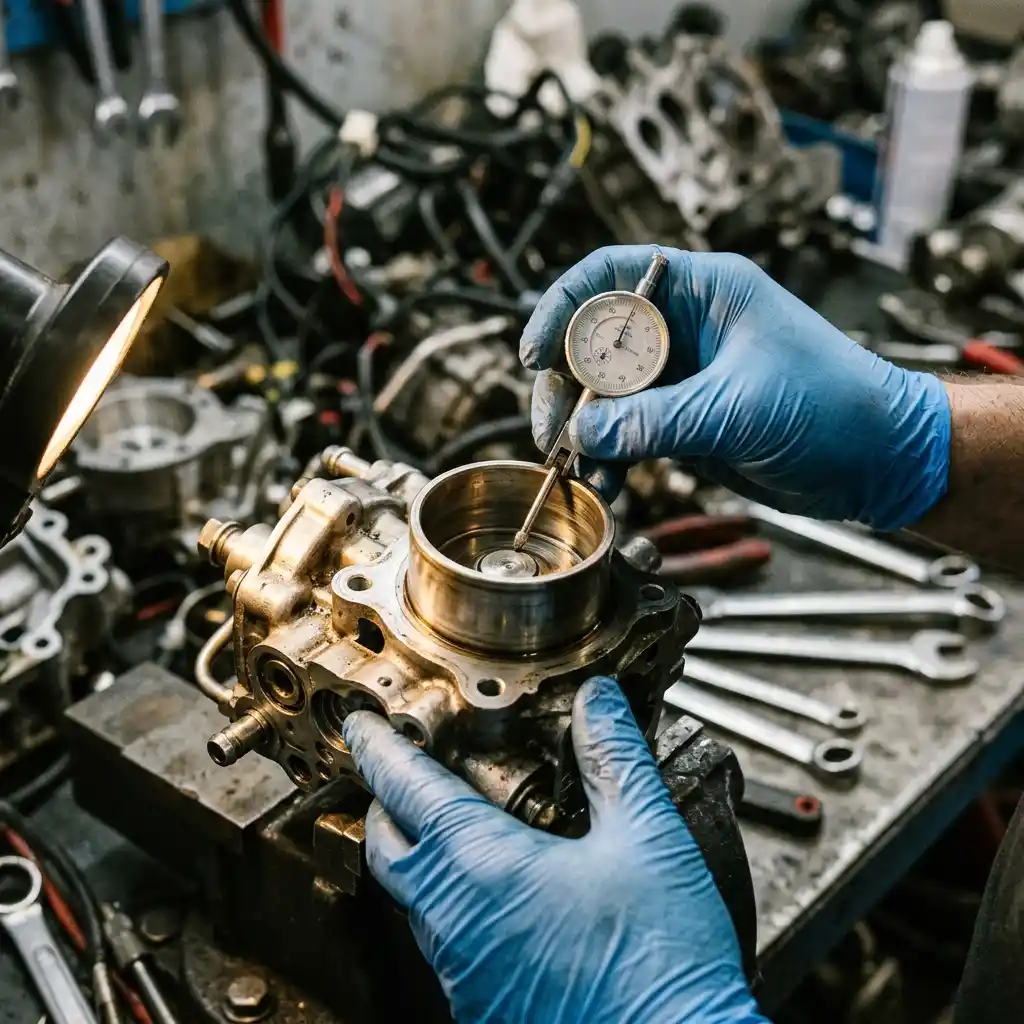
Review the findings
Ask which component failed, how it was identified and whether any related restriction, electrical problem or contamination was found. The invoice should distinguish the replaced pump from seals, lines, filters or control components supplied with the job. Keep the part description and repair report for future servicing, particularly if the vehicle has previously had similar symptoms.
Confirm the final checks
Discuss whether the original starting or driving complaint was reproduced and checked after repair. If the symptom was intermittent, ask what conditions were observed and what to record if it returns. A cleared dashboard warning alone is not a complete explanation of the result. Any remaining fault or recommended follow-up should be described clearly before collection.
Fuel gauge concerns?
For a car with a fuel-level reading problem as well as a pump fault, mention both concerns at booking. The sender and pump can share an assembly, but a delivery repair should not silently be assumed to correct every gauge issue. The quotation and final checks should reflect the symptoms actually reported.
After the repair
Protect the fuel supply
Follow the correct service schedule
Use the specified fuel and follow the maintenance requirements for the exact engine, including applicable filter service. Report suspected contamination promptly. Pump replacement depends on condition and confirmed faults. Follow your Audi’s maintenance schedule rather than replacing the pump at an arbitrary age or mileage.
Act on returning symptoms
If long cranking, stalling or a fuel smell returns, contact the workshop with the circumstances and repair details. Keep the invoice and diagnostic report so new findings can be compared with the original fault. Do not repeatedly restart a leaking or severely affected vehicle to demonstrate the complaint.
Questions before booking
Audi fuel pump replacement FAQs
Does low fuel pressure mean the pump has failed?
No. Restricted supply, electrical faults, pressure regulation, sensor errors and leakage can also affect the reading. The low-pressure and high-pressure stages need to be assessed in the right sequence. Replacement should follow evidence that identifies the failed component.
Can a fuel pump run but still be faulty?
Yes. Hearing a pump does not establish that it delivers the required pressure and volume under demand. Conversely, not hearing it at one moment does not prove failure, because operating strategy varies. Vehicle-specific testing gives a more useful answer than sound alone.
Do both fuel pumps need to be replaced together?
Not automatically. A confirmed failure in one stage does not establish a failure in the other. Shared contamination or additional test findings may justify wider work, but the quotation should explain that reason rather than include both pumps as a standard package.
Will a replacement pump fix a no-start problem?
Only if the confirmed pump fault is responsible and any related issues are addressed. Starting also depends on electrical, control and mechanical conditions. Diagnose the no-start before ordering parts, especially when the car has recently had battery, engine or fuel-system work.
Does the fuel tank always need cleaning?
No. Tank cleaning depends on the condition found and the applicable repair procedure. Dirt, water, incorrect fuel or debris can make cleanup necessary. Installing a new pump into a contaminated system without addressing the cause can undermine the repair.
How long does fuel pump replacement take?
Access, pump type, parts availability and the checks needed for the original fault determine the schedule. Contamination or intermittent symptoms can require additional work or observation. Ask for timing after the inspection rather than relying on one duration for all Audi models.
Can I bring my own replacement pump?
Discuss the part before booking installation. The exact specification, source, condition and compatibility need checking, along with responsibility for parts-related problems. A matching photograph or model description does not confirm that a supplied pump is suitable for the installed fuel system.
Al Quoz 4, Dubai
Book your fuel pump inspection
Call Audi Repair Dubai to arrange an inspection for starting trouble, stalling or suspected fuel-pressure loss. Send the VIN, model year, engine details and existing fault report so we can prepare for the vehicle.
Tell us whether the fault happens cold, fully warm, after refuelling or under acceleration. Include any previous pump, injector or wiring work. If the Audi cannot be driven safely, contact us before travelling to discuss suitable arrival arrangements.
Keep symptom videos brief and record only when safely parked. There is no need to buy diagnostic equipment to make a booking; the information you already have helps us plan the first inspection and explain the next step.