
Audi A6 allroad Repair and Service in Dubai
The Audi A6 allroad spans several generations of raised quattro wagons, from older C5 and C6 cars through C7, C8 and the newer fifth-generation model. Engines, transmissions, air-suspension control, electronics and driver-assistance systems changed substantially across that history. This service page organizes diagnosis by generation, ride-height evidence, powertrain code, driveline behavior and Avant-body condition so age and complexity do not become excuses for guesswork.
Use an A6 allroad generation ledger before ordering parts
| Family | What changed | First workshop questions |
|---|---|---|
| C5 allroad | Early electronic air suspension, older quattro and automatic or manual applications, age-related wiring and pneumatic components | How quickly does height change, which level is selected, what is the battery condition and what previous air-system work was done? |
| C6 allroad | Revised chassis electronics, broader engine range and more integrated suspension control | Which engine and gearbox codes apply, are faults mechanical or network-related and does the issue change cold to warm? |
| C7 allroad | Newer MMI, assistance systems, drivetrain strategies and air-suspension calibration requirements | Are tires matched, is geometry correct, what software or collision history exists and was height calibrated after repairs? |
| C8 allroad | More advanced electronics, mild-hybrid equipment in applicable versions and greater chassis integration | Is low-voltage support stable, which 48-volt features are installed and are multiple warnings connected by supply or communication? |
| Fifth generation | New adaptive air suspension, all-wheel steering and drivetrain options including newer hybrid applications by market | Use the current VIN data. Do not apply C8 procedures to new chassis, steering or hybrid hardware. |
Diagnose the A6 allroad air suspension as a complete pneumatic system
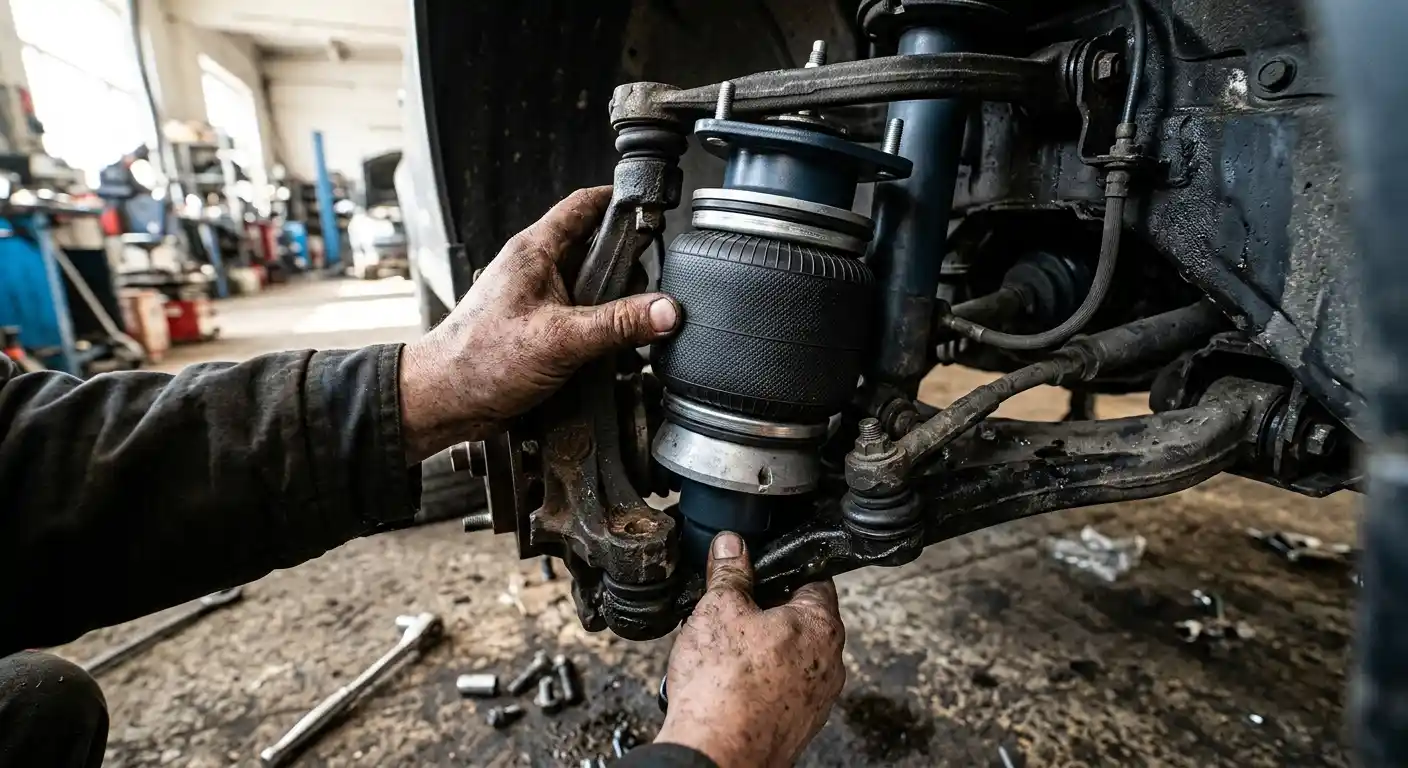
Air leakage
Measure every corner at a defined level, temperature and parking duration. Inspect springs, lines, fittings and valve behavior. One low corner does not automatically prove the spring is the only leak.
Compressor and reservoir performance
Record build time, current draw, temperature protection and pressure behavior. A compressor can be overworked by an unresolved leak and fail again if only the pump is changed.
Level sensors and links
Compare physical height with scan values, inspect linkage orientation and test signal plausibility through suspension movement. Bent or misinstalled links can produce misleading calibration.
Valves, control and power supply
Check valve commands, wiring, fuses, relays where applicable, battery voltage and controller events. Pneumatic and electrical faults can produce similar dashboard messages.
A6 allroad powertrains vary too widely for one maintenance package
Build the plan from the Audi maintenance schedule guide, record approved lubricants with the Audi fluids guide, and see the Audi A4 allroad repair page when the vehicle is the smaller raised Avant.
Across generations and markets, the A6 allroad appears with different petrol, diesel and newer electrified powertrains. Oil approval, filters, ignition or fuel-system work, timing components, emissions hardware and cooling parts must follow the exact engine.
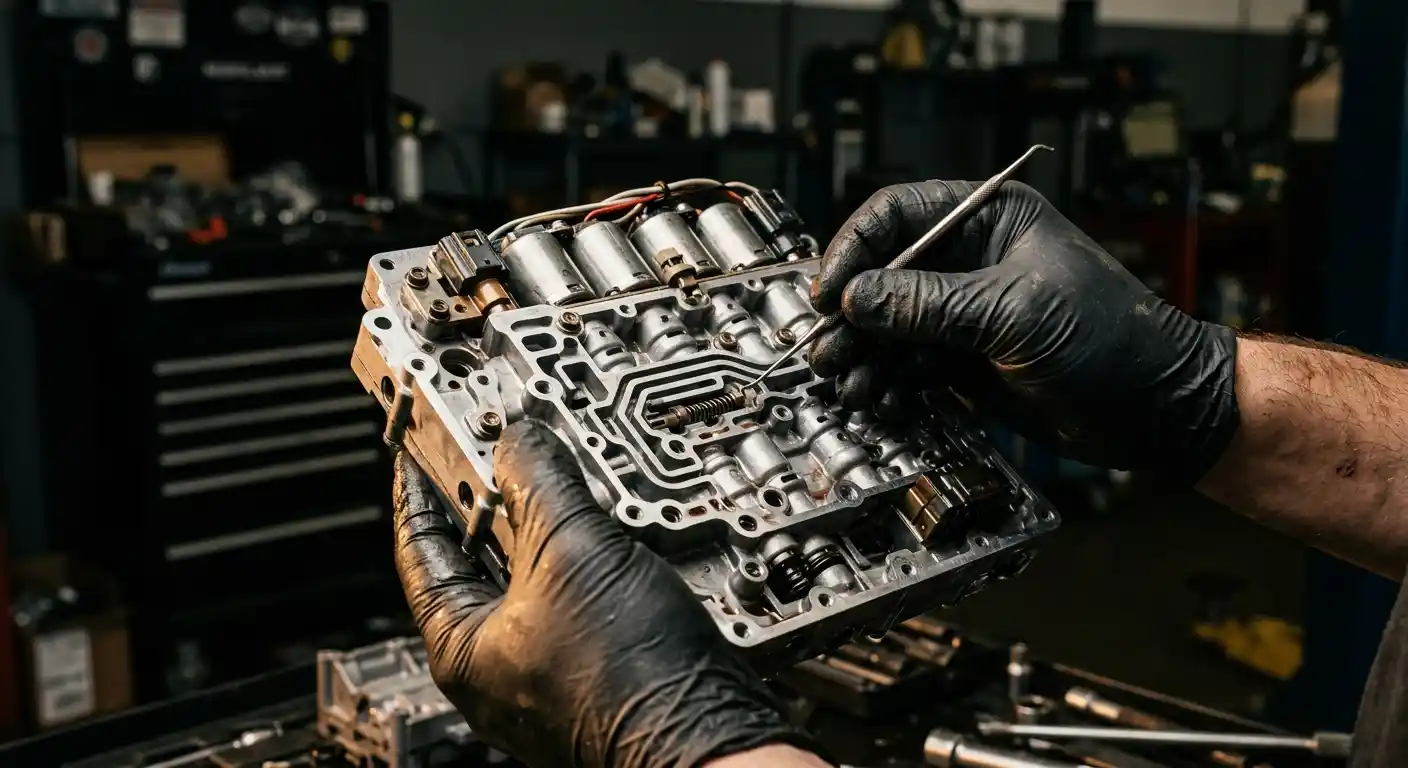
Cold-start evidence
Record noise duration, idle, smoke, warnings, oil and coolant condition, leaks and first gearbox engagement. A warm arrival can hide the most useful clues.
Load and temperature data
Compare boost or intake behavior, fuel and ignition information where relevant, cooling response and exhaust data only for the installed engine.
Transmission identity
Name the manual, dual-clutch or automatic unit. Select fluid, filter, temperature and adaptation information by transmission code.
Quattro hardware
Verify center and rear driveline arrangements, tire circumference, leakage and service history. Different generations do not share one differential procedure.
Electrical support
Test the 12-volt system and 48-volt equipment where installed. Supply faults can spread warnings across engine, suspension and assistance controllers.
Completion test
Road-test cold and fully warm as needed, rescan the car and repeat the original load, shift, temperature or warning condition.
Follow the symptom from parking bay to warm road test
For an unclear warning or mixed drivability complaint, use the Audi symptom-led problems guide to choose the safest next diagnostic route.
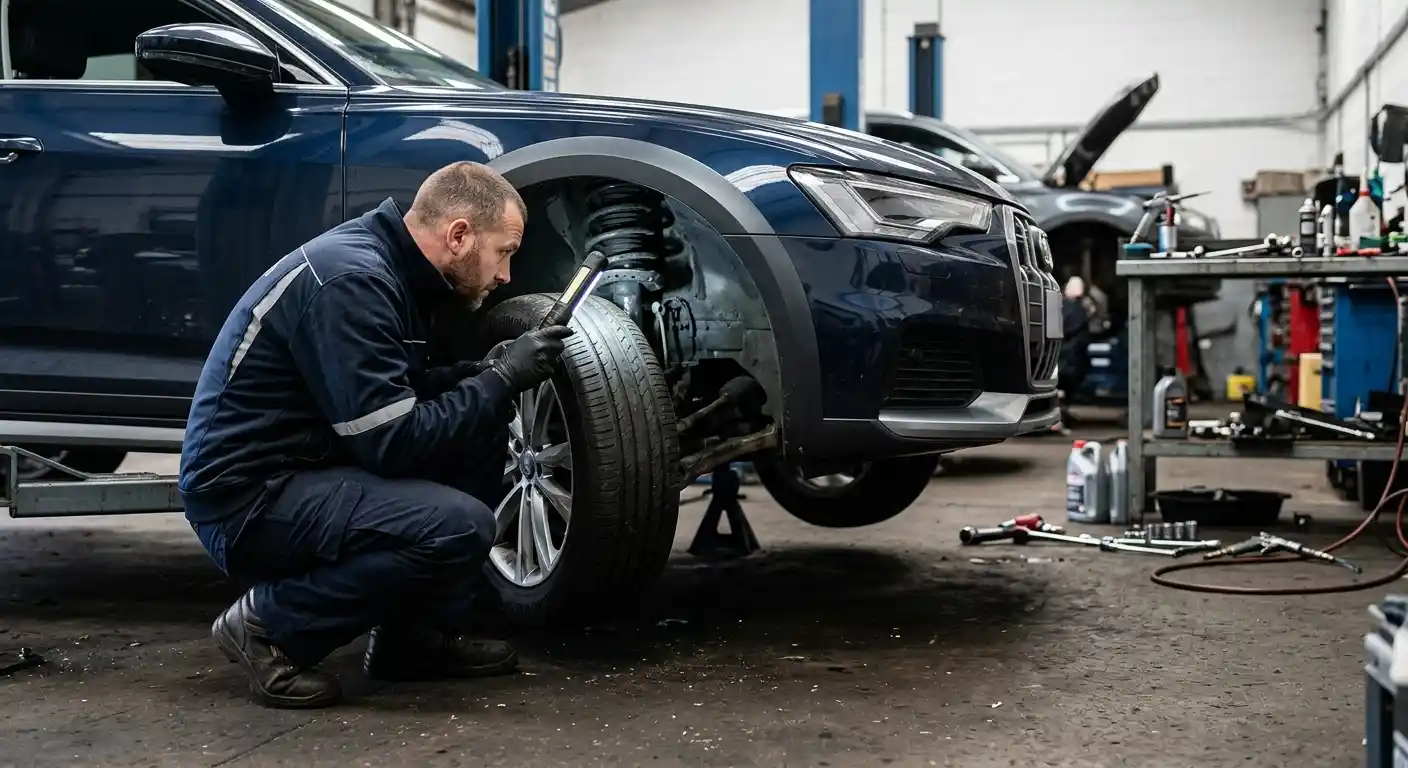
Observe before unlocking and starting
Photograph ride height, tire stance and visible leaks. Ask how long the car was parked and whether a compressor operated before arrival.
Capture startup and network events
Scan all systems before clearing faults. Note battery voltage, suspension level, warning order, engine behavior and first transmission response.
Inspect on the lift
Check air-suspension hardware, control arms, undertrays, coolant and oil leaks, exhaust, driveshafts, differentials, brakes, tires and prior collision repair.
Measure in motion
Reproduce vibration, shift, height, steering or power concerns while recording relevant data. Change one condition at a time so the evidence remains useful.
Return and compare
Rescan warm, remeasure ride height and check temperatures or leakage. The difference between arrival and return often narrows the fault.
Water paths and underbody impact belong in the same inspection
The long roof, tailgate, rear lamps, washer plumbing and cargo-area trim create several water paths. Trace moisture before replacing rear electronics, especially when faults appear after rain, washing or glass work.
Raised ground clearance offers more access-road capability, but underbody panels, exhaust, cooling parts and suspension arms can still be damaged. After impact, inspect wheels, tires and geometry as well as visible protection. A steering change or fluid loss warrants prompt attention.
For towing-equipped cars, identify the factory or retrofitted system, wiring integration and actual history. Do not infer capacity or service needs from the presence of a tow bar.
Value the car after the air system settles and the powertrain warms
Arrange a true cold start and note ride height before the seller moves the car. Verify VIN, generation, engine, gearbox, market, keys, service invoices and previous suspension parts. Repeated replacement of compressors without leak records deserves investigation.
Scan cold, inspect on a lift, then drive until engine, transmission and suspension systems reach normal operating condition. Test all height modes, braking, steering, vibration, quattro behavior, AC, MMI and driver-assistance equipment. Park on level ground and compare height again.
Calculate due maintenance, tires, brakes, pneumatic leaks, powertrain faults and body-electrical findings as separate costs. Refusal of an independent scan, lift inspection or overnight height observation leaves too much risk.
Find why the A6 allroad compressor had to work
A noisy or overheated compressor may be the failed part, but it may also be the result of a leaking air spring, line, fitting or valve path. Replacing the pump without measuring system loss can create a repeat failure. Record compressor current, pressure build, temperature protection and operating time.
One corner that lowers after parking needs a timed test on level ground. Compare height at arrival, after settling and after the owner’s reported parking period. Temperature changes can affect pressure, so note conditions. Use appropriate leak detection and controller commands rather than spraying or opening components without a plan.
If the car is low on several corners, check supply voltage, reservoir pressure, valve behavior and whether the system was disabled or calibrated incorrectly during prior work. A weak battery or communication fault can prevent normal correction while the pneumatic components remain sealed.
The completion record should show repaired leakage, compressor or valve performance, final corner measurements, calibration and a repeat parking test. A dashboard message that stays away for ten minutes is not enough evidence for an overnight-height complaint.
Older wiring faults and newer network faults need different methods
C5 and C6 cars may present age-related connectors, grounds, harness damage, moisture and previous repair alterations. Inspect physically and test voltage drop instead of replacing a control unit because communication is intermittent.
C7 and C8 vehicles integrate suspension, drivetrain, infotainment and assistance systems more closely. Stable 12-volt supply, correct coding and network event order become more important. On applicable 48-volt cars, identify which system owns the warning before working across voltage domains.
The newest generation adds its own chassis and hybrid configurations. Current service information and VIN identification are essential. A scan tool menu that finds a similarly named control unit does not prove the older procedure applies.
After battery, glass, wheel, steering or suspension work, verify configuration and calibration only after mechanical condition and supply voltage are correct. Keep the calibration report, alignment and final scan together.
An A6 allroad estimate should show what creates the total
| Cost factor | Why it varies | Evidence before approval |
|---|---|---|
| Generation and access | Air lines, engine components, electronics and suspension assemblies occupy different locations across five generations. | VIN, chassis code, installed parts and labor path. |
| Powertrain specification | Petrol, diesel, hybrid, gearbox and quattro applications require different fluids, filters, tools and procedures. | Engine, transmission and driveline codes with service references. |
| Air-suspension boundary | A leak, sensor, valve, compressor or control fault can produce a similar warning but a different repair. | Height loss, pressure behavior, electrical tests and calibration status. |
| Related wear | Tires, brakes, arms and mounts can affect vibration, geometry and chassis calibration. | Measurements kept separate from the confirmed primary fault. |
| Parts and programming | New, OEM, aftermarket, remanufactured or used routes may need coding, adaptation or calibration. | Written compatibility, included work and qualifying warranty terms. |
Audi A6 allroad repair FAQs
Does every A6 allroad use the same air-suspension system?
No. Hardware, controller strategy, sensors and procedures vary across generations. Identify the chassis and installed components before testing.
Why does one corner drop after parking?
Possible causes include an air spring, line, fitting, valve control or sensor issue. Measure the rate and conditions of height loss before replacing parts.
Can a weak battery create A6 allroad suspension warnings?
Low voltage can disrupt compressor or controller operation and create communication faults. Test supply quality while checking the physical air system.
Are all A6 allroad models diesel?
No. Petrol, diesel and newer hybrid applications vary by market and generation. Engine-code confirmation is essential for service information.
What causes load-related vibration?
Tires, wheels, shafts, joints, mounts, transmission, differentials and engine behavior can contribute. Reproduce the vibration by speed and torque.
What should I send before an A6 allroad booking?
Provide VIN, year, mileage, engine and gearbox if known, ride-height photos, exact warnings, parking duration, service history and recent suspension or tire work.
Book an A6 allroad inspection in Al Quoz 4
Share the VIN, chassis generation, engine and gearbox if known, current ride height, warning text, leak or noise location and whether the concern changes after parking.