
Identify the system before selecting the part
Audi Actuator Replacement in Dubai
Audi actuator replacement starts with the function that has failed. A lock that will not release, clicking air flap or boost-control warning needs different tests. We check the command, wiring and driven mechanism before recommending a part at our Al Quoz 4 workshop.
Actuator family map
Which actuator needs attention?
An Audi actuator replacement begins by identifying which controlled movement has failed. “Actuator” can mean a door-lock motor, HVAC flap drive, turbo wastegate control, intake-runner unit, throttle assembly, fuel-flap release or another electromechanical device. Similar symptoms can come from wiring, power supply, linkage, sensors, control modules or mechanical restriction, so our Al Quoz 4 inspection tests the complete command path before a replacement decision.
An actuator converts an electrical, pneumatic or vacuum command into movement. Some contain a motor and reduction gears; others include a position sensor, control electronics or linkage. A component may be available separately on one Audi but integrated into a lock, turbocharger, throttle body, intake manifold or climate housing on another. That is why part selection from a generic description or fault code is unreliable.
Door-lock actuator
May cause one door not to lock or unlock, repeated clicking, an incorrect door status or intermittent central locking. The latch, handle cable, wiring through the door hinge, key or comfort-control command can produce overlapping symptoms.
Fuel-flap actuator
A flap that stays locked or will not latch may involve the release actuator, mechanical pin, flap alignment, wiring or the vehicle’s locking command. Forcing the flap can damage trim and does not diagnose the cause.
HVAC flap actuator
Clicking behind the dashboard, uneven temperature or air from the wrong vents can reflect a failed motor, stripped gears, a jammed flap, lost adaptation or control fault. Access varies by flap location and dashboard layout.
Turbo or wastegate actuator
Low boost, overboost, limp mode or rattling can involve the actuator, wastegate mechanism, vacuum supply where used, boost leaks, sensors or the turbocharger itself. Testing must separate control failure from mechanical wear.
Intake-runner actuator
Runner-position faults or drivability changes may come from linkage wear, carbon restriction, position feedback, wiring or an integrated manifold mechanism. A scan description does not automatically mean the motor alone is replaceable.
Throttle actuator assembly
The throttle motor, position sensing and electronics are commonly part of one assembly. Power, ground, wiring, contamination and air-path faults must be considered before replacement; safety-critical throttle work needs controlled testing.
Command-path diagnosis
Follow the fault through four checks
The useful question is not simply “Does the actuator move?” It is whether the control unit requested movement, whether the command reached the device, whether the mechanism could move through its intended range and whether position feedback agreed. The sequence changes by system, but the logic remains consistent.
Request
Confirm the customer action and operating conditions. A lock request, temperature selection or requested boost event must be reproduced safely before interpreting the result.
Command
Read relevant module data and faults. The controller may withhold a command because of another condition, so absence of motion does not immediately condemn the actuator.
Movement
Inspect electrical supply, ground, connectors, wiring and any vacuum line or linkage. Check for obstruction, excess play, corrosion, water ingress or a mechanism that binds.
Feedback
Compare requested and actual position where data is available. An implausible signal can come from the position sensor, wiring, calibration, mechanical travel or integrated electronics.
A code needs confirming evidence
A code describes what the control unit detected: an electrical circuit condition, position outside tolerance, adaptation limit, implausible response or control deviation. It does not always identify the failed item. Freeze-frame information, related codes, live data, wiring checks and physical inspection determine whether replacement, wiring repair, linkage repair, cleaning where approved, calibration or another system repair is appropriate.
Symptoms, causes, confirmation
Avoiding common actuator misdiagnoses
Repeated clicking may be stripped gears, but it can also be a mechanism reaching an obstruction or a controller repeatedly retrying. A door that works from one switch but not another may indicate an input or communication issue. Weak cabin airflow can be a blower or filter problem rather than a flap actuator. Low boost can result from charge-air leaks, vacuum faults, sensors, exhaust restrictions or turbo wear. Each symptom must stay separate from its possible causes until evidence joins them.
Intermittent failures deserve attention to temperature, vibration, moisture and door or harness movement. A connector that looks seated can still have terminal tension or corrosion problems. Previous body, dashboard, turbo or engine work can leave disturbed wiring, misrouted linkages or missing basic settings. We record those factors instead of assuming age alone caused the failure.
Parts swapping can add new faults without resolving the first one. Used modules or integrated assemblies may carry different software, calibration or component-protection considerations. Aftermarket part compatibility cannot be inferred from appearance. VIN, part revision, connector, option code and installed control strategy all matter.

| Complaint | Possible causes beyond the actuator | Confirming evidence |
|---|---|---|
| One door will not lock | Latch binding, damaged cable, hinge-harness wiring, power or comfort-control issue | Command test, door-status data, voltage and wiring checks, manual mechanism inspection |
| Clicking behind dashboard | Jammed flap, damaged linkage, lost adaptation, trim contact | Location-specific output test, travel observation and adaptation result |
| Boost warning or limp mode | Charge leak, sensor error, vacuum fault, wastegate wear, turbo damage | Requested-versus-actual data, pressure-path test and mechanical range inspection |
| Runner position code | Carbon restriction, linkage separation, wiring, feedback sensor or manifold fault | Electrical tests, commanded movement and inspection of the complete mechanism |
Repair decision
Three possible repair decisions
Repair the circuit or linkage
Appropriate when testing finds a damaged wire, connector, vacuum hose, external rod or separate mechanical obstruction. The actuator should not be replaced merely because it sits at the end of the circuit.
Replace the actuator
Appropriate when the device has the correct command and supply but cannot move correctly, has failed internal electronics or feedback, and the part is separately serviceable for that configuration.
Replace an assembly
Some actuators are supplied only with a latch, throttle body, turbocharger, intake manifold or other assembly. This decision requires exact parts identification and confirmation that the wider assembly is responsible.
Component-specific access
What replacement can involve

Access and inspect
After system identification, the vehicle is made safe and access panels, trim, ducts, shields or connected components are removed as required. Electrical and vacuum connections are documented. The technician checks the driven mechanism before fitting the replacement; installing a new motor against a seized flap, tight wastegate or damaged latch can repeat the failure.
Fit the correct revision
The correct revision is installed without forcing gears or changing linkage length casually. Fasteners, seals, clips and one-time hardware are handled according to the component and location. Door and dashboard work includes checking trim attachment and avoiding damage to airbags or wiring. Engine and turbo-area work includes heat management and inspection for connected air, oil, coolant or exhaust issues where applicable.
Workshop precautions
DIY replacement is limited by access, diagnosis and post-installation requirements. Door airbags, sharp internal panels, hot turbocharger parts, high-current circuits and moving throttle components introduce risk. Applying power directly to unidentified pins can damage electronics. Do not perform unsafe output tests or defeat protective strategies; workshop diagnosis is the sensible route when wiring diagrams, controlled activation, access support or calibration is needed.
Audi-specific fit and setup
VIN, options and model differences
An A3, A4, A6, Q3, Q5 or Q7 badge does not define one actuator. Generation, body style, engine, turbocharger, gearbox, steering position, climate-control zones, keyless-entry options, door equipment and PR codes can change the installed component. S and RS models can use different boost-control hardware and tighter packaging. Even within one production year, superseded part numbers or software levels may apply.
Climate systems may have several flap motors with similar symptoms but different locations. Door locks can vary with keyless entry, soft-close or market specification. Turbo control may be electronic or use vacuum-operated elements depending on engine family. An actuator can be calibrated separately on one version and supplied as part of a larger assembly on another. The VIN starts identification; a physical part number, engine or gearbox code and diagnostic module information may complete it.
Setup and proof
Setup and final checks
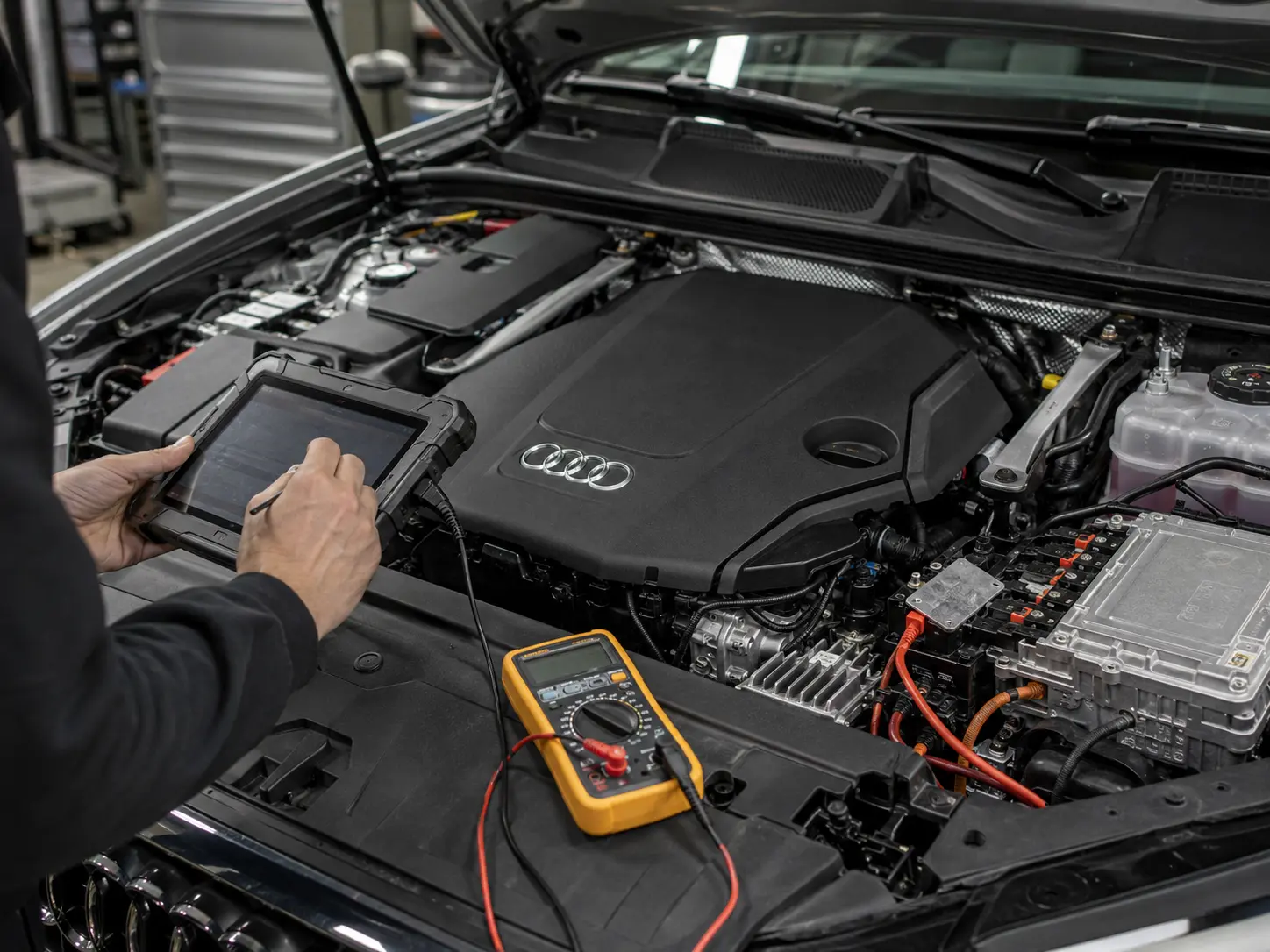
Set the travel range
Not every actuator requires coding. Some need basic settings, end-stop learning or adaptation so the controller understands the new travel range. Others are plug-and-test components, while integrated electronics may require coding or software-compatible commissioning. We determine the requirement from the installed system rather than promising a blanket procedure.
Repeat the original complaint
Post-repair verification repeats the original complaint and checks the entire operating range. Door functions are tested from relevant switches and locking methods; climate flaps are tested across temperature and distribution requests; engine actuators are checked with safe live-data observation and an appropriate road test. Related faults are re-read, connectors and removed trim are checked, and no new warning or abnormal sound should remain. A cleared code alone is not a pass.
Check related requirements
Wheel alignment is not normally related to actuator replacement. Calibration of driver-assistance cameras or sensors is also not automatic unless the actual job disturbs those components or the service concerns one of their actuators. Any extra requirement must be tied to the work performed.
Safety and recovery
Can you drive with an actuator fault?
A single door-lock or HVAC flap fault may permit a careful trip if the door securely latches, visibility is not compromised and no other warnings are present. Do not drive if a door cannot latch, a fuel flap cannot be secured safely, demisting is unavailable in conditions that require it, or loose trim interferes with controls.
Arrange recovery for severe loss of engine power in unsafe traffic conditions, uncontrolled engine response, repeated stalling, overheating, smoke, a red warning, or a boost-control fault accompanied by abnormal turbo noise. Avoid repeated hard acceleration to “test” a boost complaint. A limp-mode journey is not automatically safe simply because the car still moves.
Information that shortens diagnosis
- VIN, model, year and mileage
- The exact function that does not work
- Whether the problem is constant or intermittent
- Dashboard message and fault codes, if available
- Weather, temperature or speed when it happens
- Recent battery, door, dashboard, turbo or engine work
- A short video showing the sound or failed movement
Do not place yourself near moving engine components to record a video.
Plan your workshop visit
Audi actuator replacement near Al Quoz 4
At our Al Quoz 4 workshop in Dubai, booking begins with the affected function rather than the word “actuator.” Send the VIN, model year, symptoms, warning text and any scan report or short video. That information helps identify the correct system and prepare a focused inspection.
Time and cost depend on diagnostic access, intermittent behaviour, actuator location, trim or powertrain removal, whether the device is separately supplied, part revision, wiring or mechanism repairs, and required setup. We do not assign one price or turnaround to every actuator family. The scope follows testing and exact vehicle identification.
For a fault limited to door mechanisms, see our Audi door repair service. For boost-control findings involving the wider assembly, our Audi turbo replacement guide explains that separate repair decision.
After the repair
Reducing repeat actuator problems
Address the load
A replacement motor still has to move the original mechanism. Report a stiff latch, repeated flap clicking or a new rattle early rather than repeatedly cycling the control. Any obstruction, damaged linkage or water-entry route found during inspection should be included in the repair discussion. Replacing the motor without addressing that condition can leave the underlying problem unresolved.
Protect the connections
Keep water jets and unapproved cleaning products away from electrical connectors. After door or dashboard work, check that trim fits correctly and the affected function operates normally. Tell the workshop about battery problems or faults that began after other repairs. There is no single preventive replacement interval for every Audi actuator; maintenance follows the fitted system and vehicle information.
Allow time for an intermittent fault
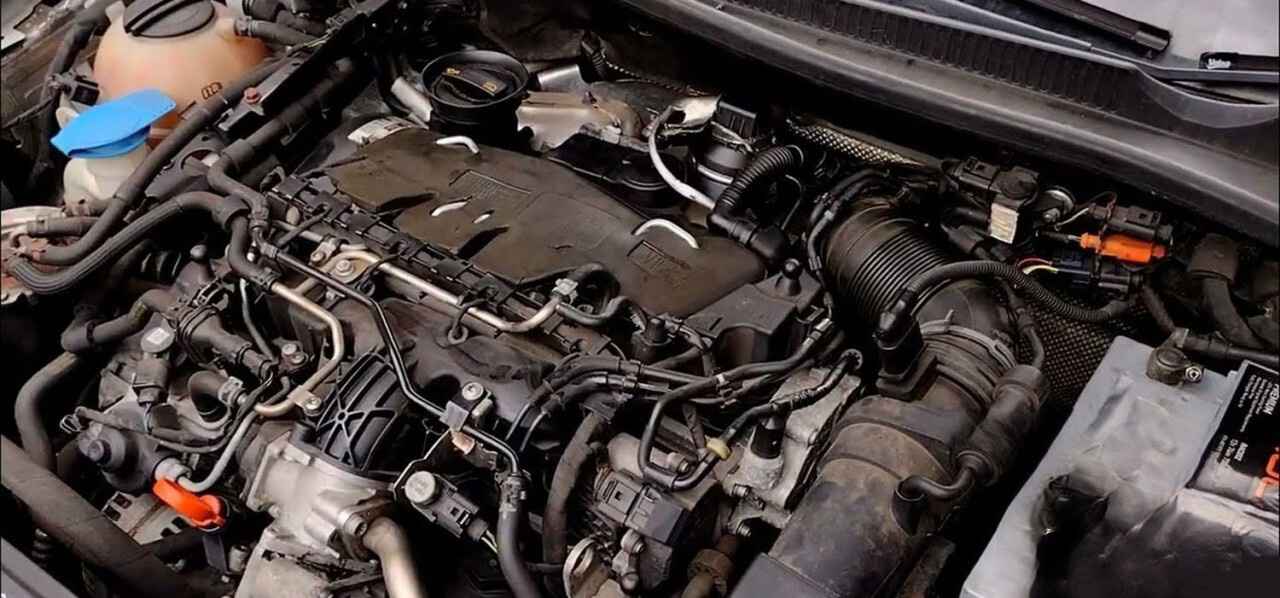
A fault that appears only after a hot journey or on the first start may not repeat during a short appointment. Tell us when it occurs before booking and ask whether the car should stay for observation. Keep the original scan report rather than clearing faults before inspection. A photograph of the warning and a safely recorded sound can help reproduce the complaint.
Ask for a scope that separates diagnosis, the identified part or assembly, access labour, any damaged clips or seals, required setup and verification. Fluid draining or bleeding belongs in the quote only if the actual repair opens a relevant circuit. On hybrid and e-tron models, high-voltage precautions depend on the location and work involved; an engine wastegate procedure does not apply to a battery-electric drivetrain.
Useful questions
Audi actuator replacement FAQs
What does an actuator do in an Audi?
It turns a control request into movement. Depending on the system, that may lock a door, move an air flap, regulate a wastegate, change intake-runner position or control a throttle. Construction and testing differ substantially between those functions.
Does an actuator fault code prove the actuator is faulty?
No. A code may describe a circuit, position, range or response problem caused by wiring, supply, feedback, calibration, linkage, restriction or another system condition. Testing must connect the code to physical evidence.
Can only the small motor be replaced?
Sometimes, but not universally. Certain devices are separate; others are integrated with a latch, manifold, throttle body, turbocharger or climate housing. The VIN, part revision and Audi repair information determine the serviceable unit.
Does a replacement actuator need coding?
Some require coding, basic settings, end-stop learning or adaptation; others do not. Integrated electronics and option-dependent systems may have additional requirements. The fitted system determines the correct setup.
Why does a dashboard actuator click?
The motor may have damaged gears, but a jammed flap, linkage problem, lost adaptation or repeated controller command can sound similar. Locating the sound and testing commanded travel avoids replacing the wrong unit.
Can a wastegate actuator cause limp mode?
It can, but boost leaks, sensors, vacuum supply, wiring, wastegate wear, exhaust conditions and turbocharger damage can also cause control deviation. Requested and actual boost data plus mechanical testing guide the decision.
Is an actuator problem safe to drive with?
It depends on the system. A securely latched door with a minor locking fault is different from uncontrolled engine response, major power loss or a door that will not latch. Stop and arrange recovery when safe control or engine operation is affected.
What should I send when booking?
Send the VIN, model year, mileage, affected function, warning wording, fault codes, when the fault occurs, recent related work and a safe video if the problem is audible or visible.
Name the function, then test the path
Book an actuator-system diagnosis
Tell us whether the problem affects a lock, air flap, boost control, intake system or another function. With the VIN, symptoms and warning details, we can plan the relevant Audi checks and explain whether the actuator, its circuit, its linkage or a connected assembly needs attention.